Aluminium Bifold Doors are made from multiple glazed panels that fold and stack to one or both sides. Open them, and a solid wall can become a wide route to the garden. Close them, and the panels meet along a line of seals, hinges, and locking points. The effect is simple. The mechanism is not.
Each panel travels on rollers within a track, while hinges link neighboring sections. A lead panel usually guides the movement. Depending on the design, the track may sit at floor level or within a raised threshold. That small detail matters: a smooth-looking opening still needs careful drainage, weather sealing, and accurate installation. Even a slight adjustment can change how the panels meet.
As a practical expert line, an aluminium systems specialist might say, “A good bifold should glide, seal, and stack without fuss.” This is proposed wording, not a verified quotation; add a named expert only after checking the original source. That caution belongs here. Product claims are easy to repeat, but real performance depends on panel size, hardware, glazing, and fitting quality. This guide explains how Aluminium Bifold Doors work, what their parts do, and which details deserve a closer look before choosing a system.
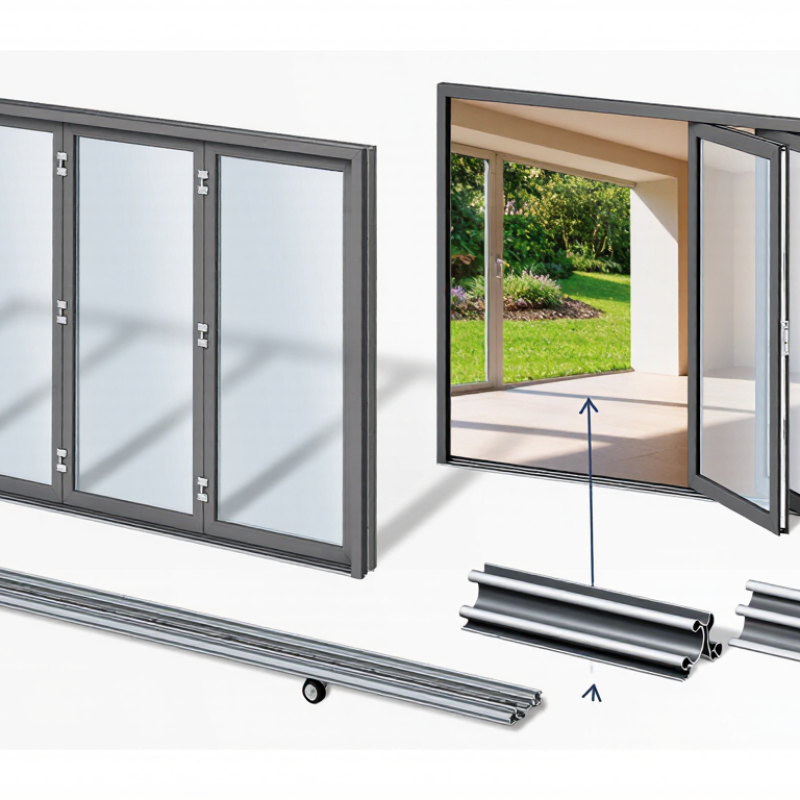
Aluminium bifold doors are glazed panels joined by hinges and guided by tracks. When opened, the panels fold and stack at one or both sides, creating a wide passage between rooms or between a home and garden. They are commonly used for patios, balconies, kitchen-diners, and commercial spaces such as cafés. The frames are usually slim, so more glass remains visible; still, the exact opening width depends on the layout, panel count, and structural support.
Their usefulness is practical, not automatic. In a kitchen-diner, folded panels can connect a table area to a paved terrace, while closed panels provide a weather barrier. The U.S. Department of Energy’s Energy Saver guidance says windows account for about 25–30% of residential heating and cooling energy use. That figure is not specific to bifold doors, but it underlines why glazing and frame performance matter. Check published U-factor and solar heat gain ratings, plus the door’s tested air and water resistance. A broad opening can feel wonderful. It can also expose a room to drafts if poorly specified.
Tips: Measure the finished opening, not just the existing frame. Ask how the threshold drains, where folded panels will stack, and whether a low threshold suits the site. Check the manufacturer’s performance documentation and installation details. Small details matter. A beautiful opening may still need a blind for glare and privacy.
An aluminium bifold door is made from framed panels that fold together and stack at one or both sides of an opening. The aluminium frame holds the glazing and gives each panel its shape. Hinges connect adjacent panels, while a pivot or guide connects the leading panel to the frame. The exact arrangement varies by system.
Rollers travel along a track, guiding the panels as they open and close. Some systems use a top-hung track; others carry more weight at the threshold. Locks and handles secure the closed panels. Weather seals sit between frames and around the perimeter, limiting draughts and water entry. Small parts matter. A poorly adjusted roller can make a heavy panel scrape or feel difficult to move.
Glass and seals also affect comfort. The U.S. Department of Energy’s Energy Saver guidance estimates that windows account for 25–30% of residential heating and cooling energy use. That figure covers windows broadly, not bifold doors alone, but it shows why glazing and airtightness deserve attention. The North American Fenestration Standard (AAMA/WDMA/CSA 101/I.S.2/A440) assesses products for air, water, and structural performance. Check ratings against the project’s climate and opening size. Even good components can disappoint when installation or alignment is slightly off.
How it works: Panels are connected by hinges and guided by rollers in a track. As the door opens, the panels fold together and stack to one side. A locking mechanism secures the door when closed.
The chart shows illustrative stages of a normalized opening sequence, not measured product-performance data.
Aluminium bifold doors use several framed glass panels joined by hinges. When you turn the handle and push the leading panel, linked panels begin to pivot together. Small rollers, usually fitted near the top, guide the panels along a horizontal track. A lower track or guide keeps them steady. The exact arrangement varies by door system.
The panels fold like a concertina and gather at one or both sides of the opening. Smooth movement depends on the hinges and rollers staying aligned. Keep the tracks clear of grit and leaves; even a small pebble can make a panel judder. That sound matters. It may point to dirt, wear, or misalignment, but it does not identify the cause on its own.
A level opening helps the panels move evenly, while seals between the frames limit draughts when the doors are closed. The folded stack still takes up some space, so check where it will sit before choosing the opening direction. Wide doors can also feel heavy in use, despite their slim aluminium frames. It is easy to assume the track is the only part needing attention; hinges and locking points deserve a look too.
Aluminium bifold doors use hinged panels that fold together and slide along a track. Common layouts include two-panel pairs, wider sets of three or more panels, and split configurations that stack to both sides. A single lead panel can often open independently for everyday access. With a one-way stack, panels gather at the left or right; a split stack meets near the centre. The best choice depends on the opening width, furniture, and clear space outside or inside. Direction matters. An outward-opening set can keep panels clear of indoor furniture, but may be exposed to wind and rain.
Panel count changes the clear opening and the number of joints. More joints mean more seals and hardware to maintain. The U.S. Department of Energy estimates that heat gain and loss through windows account for 25–30% of residential heating and cooling energy use. That figure concerns windows, not bifold doors specifically, but it highlights why glazed-door performance deserves attention. A configuration that looks generous may still feel awkward if the access panel is on the wrong side. Recheck the plan.
Tips: Mark the panel swing and stack area on the floor with tape before ordering. Check thresholds, handles, and nearby walls, too. Keep it simple. Ask the installer to confirm the opening direction, track drainage, and required clearances for your site.
Aluminium bifold doors use hinged panels that fold and slide along a track, opening a wide section of wall. Their performance depends on more than the frame material. Panel size, glass weight, hinge strength, and roller quality all affect how smoothly the doors move. Heavy glazing can feel solid, but it places greater demands on the hardware. Smooth movement matters.
Installation is equally important. A slightly uneven opening can make panels drag, leave uneven gaps, or resist locking. Check that the track is level and clear of grit, especially near the threshold. Weather seals also influence comfort: worn or poorly fitted seals may let in draughts and rain. Drainage channels need to remain open. Small details count.
Routine care is simple, though easy to neglect. Wipe frames with mild soapy water and a soft cloth; abrasive pads can mark the finish. Vacuum the track, then inspect rollers, hinges, and seals for wear. Avoid forcing a stiff panel. That can worsen the problem. In coastal or dusty locations, more frequent cleaning may help, but maintenance needs vary with exposure and use. If adjustment is needed, follow the door maker’s instructions or ask a qualified installer; not every rubbing sound means a major fault.
| Component or Factor | How It Works | Effect on Performance | Maintenance and Practical Checks |
|---|---|---|---|
| Aluminium frame | Multiple glazed panels are held in slim aluminium frames and connected by hinges. The panels fold and stack to one or both sides as they travel along a track. | Aluminium is strong and dimensionally stable, allowing relatively narrow frame profiles. Frame design and panel size affect strength, weight, and the usable opening. | Wash frame surfaces with mild soapy water and a soft cloth. Avoid abrasive cleaners that may damage the finish. |
| Thermal break | A low-conductivity insulating section separates the inner and outer parts of a thermally broken frame. | It reduces heat transfer through the frame compared with a similar unbroken metal frame. The overall result also depends on glazing, seals, installation, and local test standards. | Keep frame joints and drainage openings clear. Check for damage or gaps if you notice persistent drafts or condensation. |
| Glazing | Each door leaf contains glass, commonly double- or triple-glazed units with sealed cavities between panes. | Glass specification affects heat loss, solar gain, daylight, noise reduction, and safety. The whole-door performance is not determined by the glass alone. | Clean with a non-abrasive glass cleaner. Look for cracks, damaged edge seals, or moisture between panes; a failed sealed unit may need professional replacement. |
| Hinges and rollers | Hinges link the panels, while rollers or carriages guide their movement along the track. | Correct alignment and smooth-running hardware help the panels fold evenly and reduce operating effort. Heavy or wide panels place greater demands on the hardware. | Remove grit from the track regularly. Inspect for loose fixings, unusual noise, or stiff movement; use lubricant only where the hardware instructions permit it. |
| Top and bottom tracks | The tracks guide the moving panels. Depending on the design, the lower track may be raised, flush, or recessed. | Track design affects movement, accessibility, weather exposure, and how easily water and debris can be managed. | Sweep or vacuum tracks to remove dirt and leaves. Keep drainage paths open and avoid forcing panels over obstructions. |
| Weather seals | Compressible seals between panels and around the frame limit air and water passage when the doors are closed. | Seal condition, compression, and alignment influence draft resistance and weather performance. Seals cannot compensate for poor installation or blocked drainage. | Clean seals gently and check for tears, hardening, or sections that have come loose. Replace worn seals with compatible parts. |
| Threshold and drainage | The threshold supports the bottom of the door; drainage channels and outlets help carry away water that reaches the system. | Threshold height can affect access and weather protection. Effective drainage depends on a suitable installation and unobstructed outlets. | Clear drainage slots and outlets of dirt and leaves. Check that exterior paving or decking does not block drainage or direct water toward the interior. |
| Installation and adjustment | The frame must be fixed to a suitable, stable opening, set level and square, and adjusted so the leaves meet and operate correctly. | Incorrect installation can cause binding, uneven gaps, poor sealing, or excess strain on hinges and rollers, even when the door components are well made. | Arrange professional inspection if panels drop, gaps change, locks become difficult to engage, or the frame appears to move. |
| Finish and exposure | The coating protects the aluminium surface and provides its colour. Exposure to coastal air, pollution, and building-site residue can increase cleaning needs. | A sound finish helps protect the frame, but harsh chemicals, abrasive tools, and prolonged contamination can mark or damage it. | Rinse and clean periodically, with more frequent washing where salt or pollutants accumulate. Follow the finish supplier's care guidance. |
| Everyday operation | Operating handles and locking points secure the panels; the door is generally opened by releasing the lock and folding the leaves along the track. | Using the intended sequence reduces stress on the locking points and moving hardware. Forcing a misaligned door can worsen the problem. | Operate the handle gently and keep locking points clean. If the door will not lock without force, check for an obstruction and seek adjustment rather than forcing it. |
Performance varies with the door design, glass specification, dimensions, installation, exposure, and local requirements. Follow the product-specific care instructions for cleaning, lubrication, and adjustment.
They are glazed panels joined by hinges and guided along tracks. The panels fold and stack to open a wide passage.
They suit patios, balconies, kitchen-diners, and some cafés. A dining table can sit beside an open terrace.
Push the leading panel, and linked panels pivot together. Rollers guide them along a track. The layout varies.
The panels gather at one or both sides. Check the stack position before choosing the opening direction. It takes up space.
Panel size, glass weight, hinges, rollers, and installation all matter. A slightly uneven opening can make panels drag or resist locking.
Vacuum grit and leaves from the tracks. Wipe frames with mild soapy water and a soft cloth. Avoid forcing a stiff panel.
Review the door’s tested air and water resistance, plus its glazing ratings. Inspect seals and drainage channels. Small details matter.
Not necessarily. Worn seals may let in draughts, and broad glazing can cause glare. A blind may help, though it can reduce the open view.
Aluminium Bifold Doors are made from a series of connected panels that fold neatly to one side, creating a wide opening between indoor and outdoor spaces. They are often used for patios, balconies, garden rooms, and open-plan living areas. A typical system includes aluminium-framed panels, hinges, rollers, top or bottom tracks, handles, and locking hardware. Together, these components support the panels and help them move smoothly.
When opened, the panels slide along their tracks and fold at their hinged joints, gathering at one or both ends of the doorway. Configurations vary in panel number, folding direction, and whether the doors open inward or outward. Performance depends on factors such as panel alignment, track condition, glazing, seals, and installation quality. Regularly cleaning the tracks, checking moving parts, and maintaining seals can help the doors operate smoothly and retain their weather resistance over time.