0%

Choosing an Aluminum Door With Window involves more than comparing frame colors or glass shapes. Buyers need to consider climate, opening size, security, maintenance, and how much daylight a room can use. A coastal home may need durable finishes, while a shaded entry could benefit from a larger glazed panel. Small details matter.

This guide explores seven aluminum door styles for buyers in different markets, from practical hinged designs to wider sliding systems. It explains what each option may suit and which details deserve a closer look, including frame depth, glazing type, hardware, and installation requirements. These features can vary by manufacturer and region, so product specifications should be checked before ordering. A photograph alone is not enough.

There are trade-offs. Larger windows can brighten a hallway, but they may reduce privacy or increase heat gain if the glass is poorly matched to the setting. Slim frames can create a clean appearance, yet strength and performance depend on the complete door system, not appearance alone. That distinction is easy to miss.

The best choice is not always the most expensive or dramatic. It is the door that fits the building, local weather, daily use, and budget—with reliable documentation to support its stated performance. Some decisions remain imperfect. A thoughtful comparison can still prevent costly surprises and help global buyers choose with greater confidence.
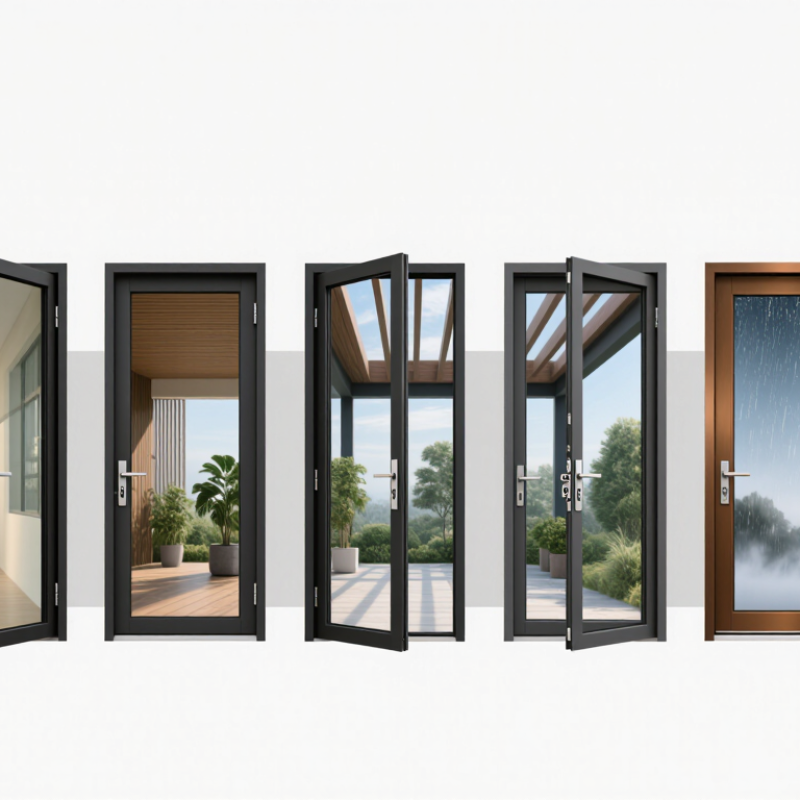
7 Best Aluminum Doors With Windows for Global Buyers

Understanding Aluminum Doors With Windows and Their Main Features

Aluminum doors with windows pair a strong, relatively slim frame with glass panels that admit daylight. The frame is commonly made from extruded aluminum, while insulated glass can help reduce heat transfer and outside noise. A thermal break separates the frame’s inner and outer sections, limiting heat flow through the metal. Details matter. Without one, a frame may feel cold indoors in winter.

Performance depends on more than the material. Check the glass specification, weather seals, drainage paths, locking hardware, and frame finish. Double glazing can improve insulation, but its value depends on the climate and the quality of the installation. Look closely at the sill: poor drainage or an uneven threshold can invite water problems, even with a well-made door. Not always.

For coastal or humid locations, ask how the finish resists corrosion and how often it needs care. Also compare the opening style with the room layout; a sliding panel saves swing space, while a hinged door may provide a wider clear opening. Product labels can be useful, but they do not replace installation details. One easy mistake is choosing glass for appearance alone. Balance daylight and privacy with orientation, shading, and the room’s actual use.

Common Styles and Configurations of Aluminum Doors With Windows

Aluminum doors with windows commonly appear as hinged, sliding, folding, and French-door systems. Single hinged doors suit compact entries, while double-leaf designs create wider openings for patios. Sliding panels save floor space; folding sets stack aside but need room beside the opening. Details matter. Narrow aluminum frames can preserve daylight and sightlines, yet frame design and glass choice affect comfort. The U.S. Department of Energy’s Energy Saver guidance estimates that windows account for 25%–30% of residential heating and cooling energy use. That figure makes glazing and frame performance worth checking, not just appearance.

Configurations range from a glazed door with sidelights to a full-height panel with a transom above. Sidelights brighten a narrow hall; a transom can bring light through a taller entry without widening it. For large openings, confirm panel weight, track capacity, drainage, and clearance before choosing a multi-panel layout. A thermal break can limit heat transfer through the aluminum frame, while low-emissivity glass may help manage solar gain. Ask for rated U-factor and solar heat gain coefficient values, then compare them against local climate and orientation. South- or west-facing glass may need more solar control. Bigger glass is not always better. Site conditions can change the best configuration, and measurements are easy to underestimate before installation.

7 Best Aluminum Doors With Windows for Global Buyers

Common Styles and Configurations

Representative configurations range from single-panel hinged and pivot doors to multi-panel sliding and folding doors. Panel counts shown are examples, not fixed standards; available layouts vary by manufacturer and project.

Key Factors for Comparing Aluminum Door and Window Systems

Aluminum door-and-window systems should be compared as complete assemblies, not by frame appearance alone. A slim profile may widen the view, yet glass area, seals, and installation details strongly affect comfort. Look for thermal breaks inside the frame, continuous weatherstripping, and drainage paths that do not trap rain. Small details matter.

The U.S. Department of Energy’s Energy Saver guidance highlights the impact of windows. They account for 25–30% of residential heating and cooling energy use. Compare certified U-factor and solar heat gain coefficient (SHGC) values for the same size and configuration. A lower U-factor generally means less heat transfer; suitable SHGC depends on climate and orientation. Check the National Fenestration Rating Council label where available, then ask about air leakage, water management, hardware durability, and warranty coverage. I would not rank systems by one number alone. Even a strong rating can disappoint when an opening is poorly installed. That caveat is easy to overlook.

Tips: Request a frame cross-section and installation details. Compare the same glass configuration, and ask how the sill drains after wind-driven rain. A glossy finish can distract from these basics.

Seven Aluminum Door Styles With Windows for Global Buyers

Aluminum doors with windows suit buyers who need daylight, slim frames, and durable everyday access. The right style depends on opening width, room layout, climate, and maintenance capacity. A glazed door can brighten a narrow hallway. It can also expose furniture to strong afternoon sun.

Seven useful styles cover different needs: sliding doors save floor space; French doors create a broad, balanced opening; single-hinged doors fit everyday entrances; folding doors open wide onto patios; tilt-and-turn doors offer controlled ventilation; pivot doors create a clean, modern entrance; and fixed-glass panels paired with an operable door maximize daylight. Small spaces benefit. Large openings need careful planning. Folding and sliding systems require accurate installation, or their panels may drag and seals may underperform.

Performance matters as much as appearance. The International Energy Agency’s Tracking Buildings 2023 report estimates that building operations account for about 30% of global final energy use and 26% of energy-related emissions. The U.S. Department of Energy says windows account for roughly 25–30% of residential heating and cooling energy use; that figure is not specific to doors. For each design, compare whole-unit U-factor and solar heat gain coefficient, then check weather seals and hardware suitability for local conditions. A large glass area is not automatically better. North- and south-facing openings behave differently, and the best choice deserves a site-specific review.

Global Sourcing, Standards, and Installation Considerations

Global sourcing for aluminum doors with windows starts with the opening, not the catalogue. Send suppliers measured width, height, wall depth, and photos of the finished opening. A small mismatch can mean costly site adjustments. Ask whether dimensions refer to the frame or the rough opening, and confirm handing, threshold height, glazing type, and hardware before production. I would check twice.

Standards differ by destination and building type. Request current test reports for air leakage, water penetration, wind resistance, and thermal performance, where applicable. Check that the tested configuration matches the door being quoted; glass, frame size, and hardware can change results. For cold or hot climates, compare whole-door thermal data rather than glass figures alone. Paperwork helps, but it is not the whole story.

Shipping details deserve equal attention. Confirm protective packaging, spare hardware, lead time, and who handles damage claims. Before installation, inspect the frame for twists and verify the opening is square, level, and adequately supported. Follow the approved fixing and sealing instructions, leaving movement clearance where specified. A neat bead of sealant cannot correct a poorly aligned frame. Local installers may also need to account for wind exposure, drainage, and adjoining wall materials. The awkward part is that these details are easy to overlook when schedules are tight.

FAQS

Which aluminum door style works best in a small room?

Sliding doors save floor space because their panels move along a track. Check the track and floor clearance. Small spaces benefit.

When should I choose French doors?

French doors create a wide, balanced opening, often for patios. They need enough room for both hinged panels to swing.

What are folding aluminum doors useful for?

Folding doors can open a large patio entrance by stacking panels aside. They need space beside the opening and careful installation.

How can a glazed door bring more light indoors?

Sidelights brighten narrow halls, while a transom adds light above a tall entry. Fixed-glass panels beside an operable door can increase daylight.

Does a larger glass area always improve a room?

Not always. Strong afternoon sun can expose furniture to heat and glare. I might still be tempted by bigger glass, but orientation matters.

What performance details should I compare?

Check whole-unit U-factor, solar heat gain coefficient, weather seals, and hardware suitability. Low-emissivity glass and thermal breaks may help manage heat transfer.

What should I check before choosing a multi-panel door?

Confirm panel weight, track capacity, drainage, and clearance. Accurate measurements matter; a small oversight can make panels drag or seals perform poorly.

Do different directions affect glass-door comfort?

Yes. South- or west-facing glass may need more solar control, while local climate also matters. Site conditions can change the best choice.

Conclusion

This guide explores how aluminum doors with windows combine natural light, durability, and practical access for residential and commercial spaces. It explains key features such as frame strength, glazing options, thermal performance, security, and weather resistance, then compares common configurations, including sliding, hinged, folding, and multi-panel designs. Buyers can use these differences to match a door style to available space, daily use, privacy needs, and local climate.

The article also presents seven aluminum door styles with windows for global buyers and outlines what to assess when comparing complete door and window systems, from materials and hardware to maintenance and installation requirements. It highlights the importance of checking product specifications, applicable regional standards, accurate measurements, and site conditions before sourcing or fitting a unit. With these considerations in mind, buyers can choose an Aluminum Door With Window that balances appearance, performance, and long-term value.

Amelia

Amelia

Amelia is a dedicated marketing professional with a deep understanding of the company’s products, services, and customer needs. With extensive experience in market research, content strategy, and digital communication, she transforms complex product information into clear, practical, and engaging......