Finding the China Best Aluminium Doors And Windows Suppliers requires more than comparing prices or browsing attractive catalogs. Reliable sourcing begins with evidence: factory experience, product testing, material traceability, and consistent communication. A capable supplier should explain alloy grades, thermal-break profiles, glass specifications, drainage design, and hardware performance in clear terms.
Small details matter. Ask for profile samples, coating reports, corner-joint samples, and installation drawings. Check whether the supplier understands your local climate. Coastal projects may need stronger corrosion protection, while cold regions require effective thermal insulation and accurate sealing. Fire performance, wind resistance, water tightness, and acoustic ratings should be verified through relevant test documents, not vague promises.
A serious factory welcomes an audit.
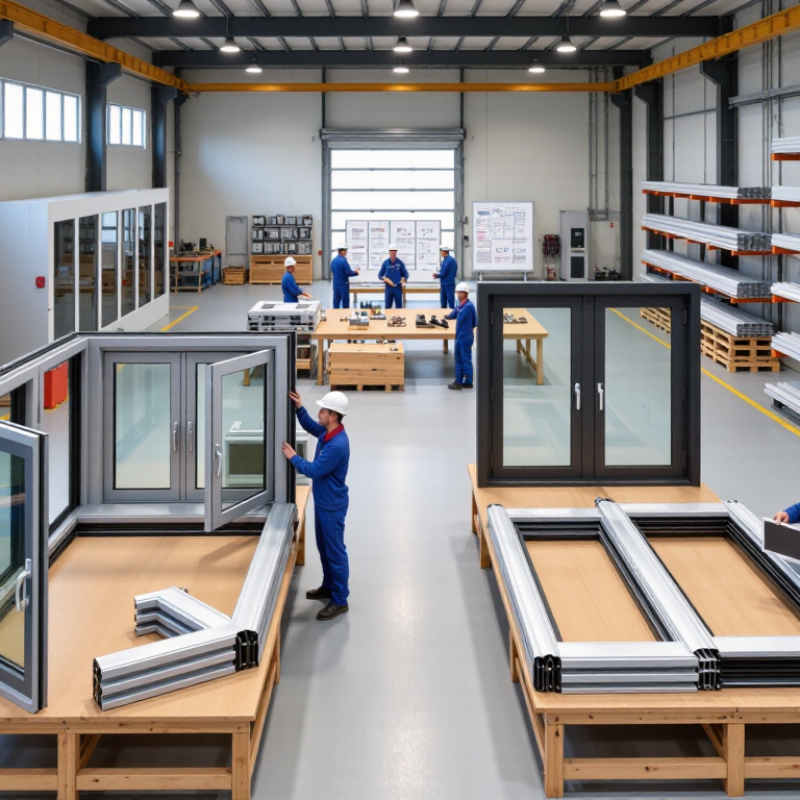
Site visits can reveal useful facts. Look at extrusion storage, powder-coating lines, cutting accuracy, assembly areas, and final inspection records. Speak with engineers, not only sales staff. Their answers often show practical experience. References from completed hotels, apartments, or commercial buildings can also support a supplier’s credibility.
Still, no supplier is perfect. Delivery delays, color variation, or unclear responsibility may appear after an order is signed. I have found that careful drawings and written inspection standards prevent many disputes. However, buyers should also review their own requirements honestly. A low quotation may exclude packaging, testing, replacement parts, or installation support. This guide compares important supplier factors, helping buyers select Aluminium Doors And Windows with stronger performance, clearer documentation, and more dependable long-term value.
China’s 2023 Primary Aluminium Output Reached 41.4 Mt (USGS)
China Best Aluminium Doors And Windows Suppliers?
China’s 2023 primary aluminium output reached 41.4 million metric tons, according to USGS. This figure shows the country’s strong smelting capacity and broad material supply. However, high output does not automatically mean better doors or windows. Fabrication quality still depends on alloy selection, extrusion accuracy, heat treatment, and surface finishing.
Experienced buyers should inspect more than product photos. Ask suppliers for alloy certificates, test reports, dimensional tolerances, and coating specifications. A reliable factory should explain its production process clearly. It should also provide sample sections before large orders. Check wall thickness with a caliper. Test corner joints, drainage holes, locks, and gasket compression. Small details often reveal weak quality control. I would not rely on production volume alone.
Tips:
Compare at least three suppliers. Request recent project evidence. Confirm whether quoted aluminium is primary, recycled, or blended material. Ask about salt-spray testing for coastal projects. Review packaging, lead times, replacement procedures, and communication records. A factory may appear professional, yet its drawings can contain overlooked errors. Have an independent technician review critical specifications before approval.
How ISO 9001 and GB/T 19001 Credentials Identify Reliable Suppliers
China Best Aluminium Doors And Windows Suppliers?
How ISO 9001 and GB/T 19001 Credentials Identify Reliable Suppliers
When sourcing aluminium doors and windows in China, certification can narrow the field. ISO 9001 and GB/T 19001 show documented quality-management procedures. They cover responsibilities, inspections, corrective actions, and process improvement. They do not guarantee excellent thermal performance or flawless installation. That distinction matters.
Ask for the current certificate before discussing volume or price. Check the legal company name, factory address, certification scope, issue date, and expiry date. The scope should mention manufacturing activities, not only trading services. A credible supplier should explain how aluminium, glass, hardware, and finishes are inspected. Request sample records for water, air, and load testing. Details reveal practice better than polished promises.
GB/T 19001 closely aligns with ISO 9001 and may support domestic procurement requirements. Still, verify the certificate through the issuing body or its public database. During a factory visit, observe barcode tracking, corner assembly, protective wrapping, and defective-product handling. Small gaps can become scratches, leaking joints, or delayed replacements. It is easy to overvalue certification. Confirm alloy, wall thickness, glazing, delivery tolerances, warranty terms, and service response in writing. A reliable supplier should welcome these checks, even when they slow the decision.
Comparing Window Thermal Ratings: Uw ≤1.0 W/m²K Under EN 10077-1
When comparing aluminium doors and windows suppliers, Uw ≤1.0 W/m²K is a useful performance filter. It measures the complete window’s thermal transmittance, not only the glass. Under EN 10077-1, the calculation considers frame Uf, glazing Ug, spacer Ψg, and the window dimensions. Lower Uw means less heat passes through the assembled unit.
This matters because buildings remain energy-intensive. UNEP’s 2023 Global Status Report states that buildings and construction produced about 37% of global energy and process-related carbon emissions in 2022. A thermally broken aluminium frame, low-emissivity glazing, and a warm-edge spacer can reduce heat loss. Triple glazing may help, but it is not automatically necessary or sufficient. The window size changes the result.
Ask suppliers for the declared Uw value, calculation method, product dimensions, and supporting test documentation. A small sample window may achieve Uw 0.9, while a larger door performs differently. Installation also matters. Poor perimeter sealing can create cold edges, condensation, and uncomfortable drafts, even when the laboratory rating looks excellent.
Do not trust one number alone.
Check air permeability, water tightness, solar factor, and installation details. The European Commission identifies building renovation and energy performance as key priorities under its building policy framework. Yet specifications can still be misunderstood. I would treat Uw ≤1.0 as a starting requirement, not a complete purchasing decision. Suppliers should explain assumptions clearly, including climate conditions and frame-to-wall connections.
Comparing Window Thermal Ratings: Uw ≤ 1.0 W/m²K
Representative Uw values for generic thermally broken aluminium window configurations, calculated using the principles of EN 10077-1. Lower Uw indicates better thermal insulation.
Configurations at or below 1.0 W/m²K meet the highlighted thermal target. Actual Uw performance depends on frame Uf, glazing Ug, spacer design, window dimensions, and installation details.
Testing Air, Water and Wind Resistance to EN 12207, EN 12208 and EN 12210
China Best Aluminium Doors And Windows Suppliers?
Reliable aluminium doors and windows should prove performance, not just display attractive profiles. EN 12207 measures air permeability under controlled pressure differences. EN 12208 evaluates water tightness during spray and pressure testing. EN 12210 examines resistance to wind load and frame deflection.
A professional test begins with accurate installation. The sample must match the proposed production design, including glass, gaskets, locks, drainage holes, and corner joints. Technicians gradually increase pressure and record leakage, water entry, and movement. Test reports should identify the product size, configuration, pressure levels, and achieved classification. Without these details, a high-sounding claim means little. In practical reviews, small installation gaps often change results. That detail is easy to overlook.
Tips: Ask for complete reports from a competent laboratory. Check whether the tested configuration matches your project. Confirm the required classes before comparing suppliers. Inspect drainage paths and gasket compression during factory quality checks. A perfect laboratory result can still disappoint when site installation is rushed. This is where projects often need more discipline.
China Best Aluminium Doors And Windows Suppliers? - Testing Air, Water and Wind Resistance to EN 12207, EN 12208 and EN 12210
Reference classification and test requirements for aluminium doors and windows. Final classification must be confirmed by an accredited laboratory test report for the complete product.
| Performance Area |
Applicable Standard |
Classification |
Reference Test Pressure |
Key Acceptance or Performance Criterion |
Recommended Supplier Evidence |
| Air permeability |
EN 12207 |
Classes 1 to 4
Class 4 is the highest standard classification. |
Up to 600 Pa, depending on class |
For Class 4, maximum air leakage is approximately 0.30 m³/(h·m²) at 100 Pa and 0.75 m³/(h·m²) at 600 Pa. |
Laboratory report showing specimen size, opening type, leakage rate, test pressures and final class. |
| Air permeability |
EN 12207 |
Class 3 |
100 Pa and 600 Pa |
Maximum air leakage is approximately 0.75 m³/(h·m²) at 100 Pa and 2.25 m³/(h·m²) at 600 Pa. |
Test report issued for the same frame, sash, hardware, seals and installation configuration offered for supply. |
| Watertightness |
EN 12208 |
1A to 9A |
0 to 600 Pa |
Higher class indicates resistance to water penetration at a higher pressure. Class 9A corresponds to 600 Pa during the standard water-tightness sequence. |
Report stating spray duration, pressure stages, visible leakage observations and classification. |
| Watertightness |
EN 12208 |
E900
Additional exposure class |
900 Pa |
The additional class is used when the product is tested at pressures above the standard 9A sequence; the exact pressure must be stated in the report. |
Independent report showing the additional test pressure, test method and absence or location of water penetration. |
| Resistance to wind load |
EN 12210 |
Classes 1 to 5 |
400 to 2,000 Pa nominal test pressure |
Class 1 corresponds to 400 Pa and Class 5 to 2,000 Pa. The class reflects pressure resistance and deformation performance. |
Report listing test pressures, specimen dimensions, permanent deformation and functional operation after testing. |
| Deflection performance |
EN 12210 |
A, B or C |
Evaluated during the wind-load test |
A: relative frontal deflection up to 1/150; B: up to 1/200; C: up to 1/300. Class C provides the strictest deflection limitation. |
Test report identifying the deflection class together with measured deflection at the critical location. |
| Product comparability |
EN 12207, EN 12208 and EN 12210 |
Complete tested assembly |
As specified by each standard |
Results apply to the tested configuration; changes in size, glazing, hardware, seals, mullions or installation may affect performance. |
Signed laboratory report, product drawings, tested dimensions, bill of materials and installation details. |
Evaluating Profiles, Hardware, MOQ, Lead Time and Warranty Terms
China Best Aluminium Doors And Windows Suppliers?
When evaluating Chinese aluminium door and window suppliers, start with the profile, not the catalogue image. The 2024 USGS Mineral Commodity Summaries estimated global primary aluminium production at about 70 million metric tons in 2023. Large output does not guarantee accurate extrusion. Request alloy grades, wall-thickness tolerances, thermal-break details, and powder-coating test records. Profiles should match project loads, climate, and opening size.
Hardware deserves equal attention. Ask for corrosion resistance, cycle-test results, replacement availability, and installation instructions. A door may look excellent yet fail through weak hinges or poorly adjusted rollers. The Window and Door Manufacturers Association and AAMA standards provide useful benchmarks for performance testing, although local building requirements still control acceptance. Check the actual test scope. Paperwork can be incomplete.
MOQ and lead time expose the supplier’s operating discipline. Confirm whether MOQ applies per colour, profile, or complete order. Standard profiles may ship in 20–30 days, while custom dies and finishes often require six to ten weeks. Treat these figures as planning ranges, not promises. Warranty terms should state coverage periods, exclusions, response times, and who pays replacement freight. A five-year warranty sounds strong. It means little without spare-part support. The International Aluminium Institute’s sector reports also highlight aluminium’s recycling value, so ask about recycled content and traceability; however, environmental claims should be verified, not politely accepted.
Conclusion
China’s aluminium industry provides a strong manufacturing foundation, with primary aluminium output reaching approximately 41.4 million tonnes in 2023 according to USGS data. When selecting reliable Aluminium Doors And Windows suppliers, buyers should look beyond production capacity and verify quality-management credentials such as ISO 9001 and GB/T 19001. These certifications can indicate that a supplier follows documented processes for design, manufacturing, inspection, and continuous improvement.
Product performance should also be assessed through measurable standards. Energy-efficient windows may achieve a thermal rating of Uw ≤1.0 W/m²K under EN 10077-1, while air permeability, watertightness, and wind resistance should be tested according to EN 12207, EN 12208, and EN 12210. Buyers should compare aluminium profile quality, hardware durability, minimum order quantities, production lead times, packaging, and warranty terms. A dependable supplier should provide clear technical documentation, consistent quality control, transparent communication, and practical after-sales support for the intended project requirements.