Aluminium Windows Prices in 2026 can vary sharply, even when two quotes show similar frame sizes. The reason is practical: glazing, thermal breaks, hardware, finish, installation, and warranty all change the final figure. A slim, fixed window is not a fair comparison with a large opening sash. Nor is a supply-only quote comparable with a fully installed price.
Industry data helps explain why material costs deserve attention. The International Aluminium Institute and CRU projected global aluminium demand to rise from 86.2 million tonnes in 2020 to 119.5 million tonnes by 2030. That projection is not a forecast of window prices. It does, however, show why buyers should check the quote date, material specification, and any stated price-validity period. The Royal Institution of Chartered Surveyors’ BCIS data also tracks construction-cost movement, a useful wider context for installation budgets.
Look beyond the headline number. Ask whether the quote includes measured fitting, removal of old units, finishing, and disposal. Get the U-value, glass build-up, frame depth, and hardware grade in writing. Small details matter.
Architect Carl Elefante’s widely cited line is, “The greenest building is the one that is already built.” It is not a pricing rule, but it points to a useful question: will the cheaper window perform well enough to avoid early replacement? Compare like with like, then weigh upfront cost against durability and documented performance. Quotes can still leave gaps; flag them before deciding.
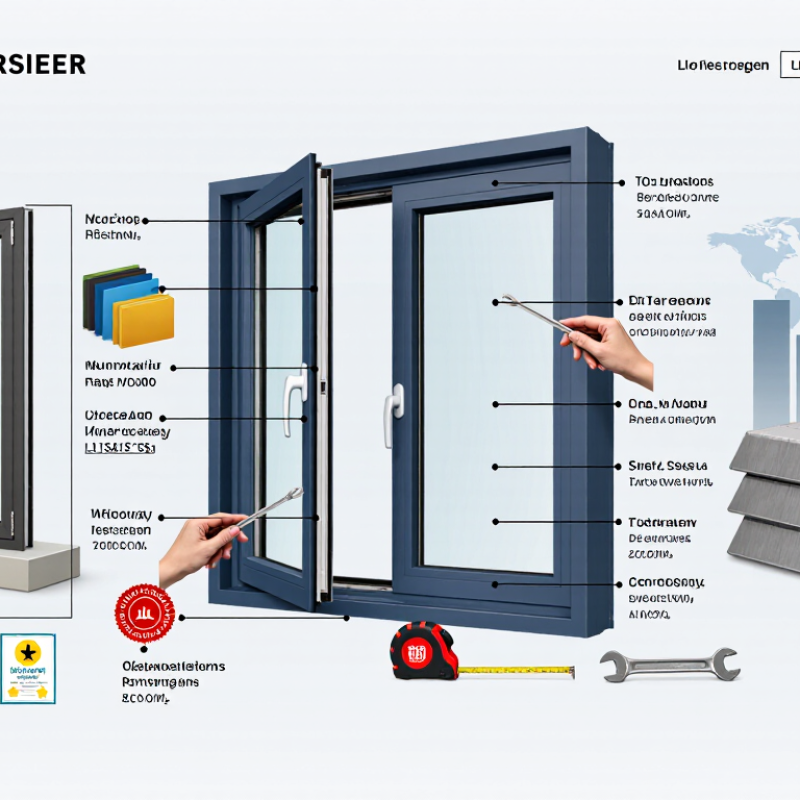
Define the Quote Scope: Frame, Glass, Hardware, Size, and Installation
A 2026 aluminium-window quote is comparable only when every supplier prices the same scope. Record each opening’s width and height, and specify whether measurements are frame-to-frame or masonry-to-masonry. A small measurement difference can change the frame area, glass quantity, and installation work. List frame depth, finish, thermal break, and opening style; “aluminium window” alone is not a useful specification. State the glass build-up too: pane count, low-emissivity coating, gas fill, and safety-glass requirements. The U.S. Department of Energy’s Energy Saver guidance estimates that windows account for 25–30% of residential heating and cooling energy use. Glass performance is worth comparing, not just its price.
Hardware needs its own line: hinges, locks, handles, restrictors, and corrosion-resistant finishes can vary between quotes. Ask suppliers to identify the exact configuration and any included screens. Details matter. The National Fenestration Rating Council’s ratings provide standardized U-factor and solar heat gain coefficient (SHGC) values, helping buyers compare product performance rather than vague claims. Installation should be itemized separately, including removal, disposal, access equipment, flashing, sealing, and interior making-good. Confirm who measures on site and who handles adjustments if an opening is out of square. A lower quote may exclude these tasks; I have seen comparisons go wrong at precisely this point. Keep the scope in writing, even when a supplier says the difference is minor.
How to Compare Aluminium Window Prices in 2026? - Define the Quote Scope: Frame, Glass, Hardware, Size, and Installation
The figures below are illustrative U.S. dollar budgeting ranges for one standard 36 × 48 in (about 914 × 1,219 mm) residential window in a retrofit project. Actual quotes vary by location, specifications, access, and supplier. Ask each bidder to price the same scope.
| Quote Dimension | What to Specify | Illustrative Cost per Window | Check Whether the Quote Includes | Common Price Differences |
|---|---|---|---|---|
| Frame | Aluminium frame; frame depth; finish; thermal-break construction; opening style; and whether the unit is fixed, sliding, or casement. | $180–$350 | Frame, sash, standard finish, and the stated thermal-break specification. | Thermal breaks, larger frame sections, custom finishes, and more complex opening styles can increase the price. |
| Glass | Single or insulated glass; number of panes; low-emissivity coating; gas fill, if specified; safety glazing where required; and any acoustic or impact requirements. | $120–$250 | The exact glass build-up and any specified coatings or safety-glass requirements. | Upgraded coatings, laminated or tempered glass, and special performance requirements typically cost more than basic insulated glass. |
| Hardware | Handles, locks, hinges or rollers, restrictors, and insect screens, listed according to the chosen opening style. | $25–$75 | All hardware needed for normal operation and the quantity of screens, if included. | Heavy-duty hardware, multiple locking points, upgraded finishes, and screens can change the total. |
| Size and Configuration | Exact frame or opening dimensions, measurement method, quantity, and any mullions, transoms, unusual shapes, or custom configurations. | $0–$150 adjustment for a comparable standard-size unit; custom sizes require a specific quote. | Whether dimensions refer to the window unit or the rough opening, and whether measurement is included. | Larger units, non-standard proportions, divided sections, and custom shapes may require different materials or fabrication. |
| Installation | Retrofit or full-frame replacement; number of windows; site access; and whether interior or exterior trim will be disturbed. | $200–$450 | Removal of the existing unit, setting and fastening, sealing, basic adjustment, and cleanup. | Full-frame work, difficult access, repairs to the opening, scaffolding, and extensive trim work may be additional. |
| Other Charges | Delivery, disposal, permits, taxes, and any work needed to repair water-damaged framing or finishes. | Quote separately | Which charges are included in the quoted total and which are excluded. | Delivery distance, local requirements, disposal, and concealed damage can affect the final project cost. |
| Illustrative subtotal for one standard-size retrofit window | $525–$1,275 | Excludes separately quoted charges, taxes, and repairs to concealed damage. | ||
Cost ranges are planning estimates, not published market averages or a supplier quotation. They are not a guarantee of 2026 pricing. For an apples-to-apples comparison, provide every contractor with the same dimensions, frame and glass specifications, hardware list, installation method, and exclusions.
FAQS
Record each opening’s width and height. Note whether measurements run frame-to-frame or masonry-to-masonry. Include frame depth, finish, thermal break, and opening style. Small differences matter.
Different measurements can change frame area, glass quantity, and installation work. Ask who measures each opening on site. I would check this twice.
Ask for pane count, glass thickness, Low-E coating, and gas fill. Request thermal-performance figures in writing. “Energy efficient” alone is too vague.
Not necessarily. It adds glass and a cavity, which can increase cost and weight. Its insulation may matter more in colder conditions than mild ones. Details matter.
These figures describe heat transfer and solar heat entering through a window. Compare ratings for the complete window, not just the glass. I once might overlook that distinction.
Check for removal, disposal, delivery, access equipment, flashing, sealing, and interior making-good. Confirm who handles adjustments if an opening is out of square. Small print counts.
Ask for separate details on hinges, locks, handles, restrictors, finishes, and included screens. Hardware can differ between otherwise similar quotes. It is easy to miss.
Ask about sealed-unit warranties and service terms. Gas can escape slowly if seals fail. Also confirm that the quoted performance applies to the entire window. Worth checking.
Conclusion
Comparing Aluminium Windows Prices in 2026 starts with making sure every quote covers the same scope: frame type, glass, hardware, window dimensions, and installation. Then compare performance figures, including NFRC U-factor in Btu/h·ft²·°F and solar heat gain coefficient (SHGC) on a scale from 0 to 1. Lower U-factors generally indicate less heat transfer, while the right SHGC depends on the climate and the building’s needs.
Check that air, water, and structural performance ratings are reported under AAMA/WDMA/CSA 101, and compare glass packages by pane count, Low-E coating, and gas fill. Finally, review each quote’s cost breakdown separately: materials, labor, freight, and warranty. A consistent comparison makes it easier to identify what is included, evaluate performance alongside price, and avoid choosing a quote based on the initial total alone.