For global buyers, selecting an Aluminium Washroom Door means balancing moisture resistance, privacy, durability, and ease of maintenance. The right choice depends on the building’s daily use, ventilation, cleaning routine, and budget. A door installed in a busy airport restroom faces different demands from one serving a small office washroom.
A useful design reminder comes from Charles Eames: “The details are not the details. They make the design.” That principle matters here. Frame finish, hinge quality, ventilation gaps, lock operation, and panel construction can shape performance over time. A smooth anodized finish may suit a humid environment, while a powder-coated surface offers more color choices. Neither option is automatically best. Check the complete assembly, not just the door leaf.
Small details matter. Buyers should also confirm dimensions, opening direction, hardware compatibility, and cleaning requirements before placing an order. Product descriptions can sound reassuring, yet leave practical questions unanswered. Ask suppliers for clear specifications, finish samples, and relevant test documentation. These checks help compare options more fairly across markets and projects.
This guide introduces common Aluminium Washroom Door types for 2026, including panel styles and construction choices. It focuses on where each type may fit, what to verify, and which trade-offs deserve attention. There is no universal winner. A sensible specification is the one that suits the site—and still works after years of daily use.
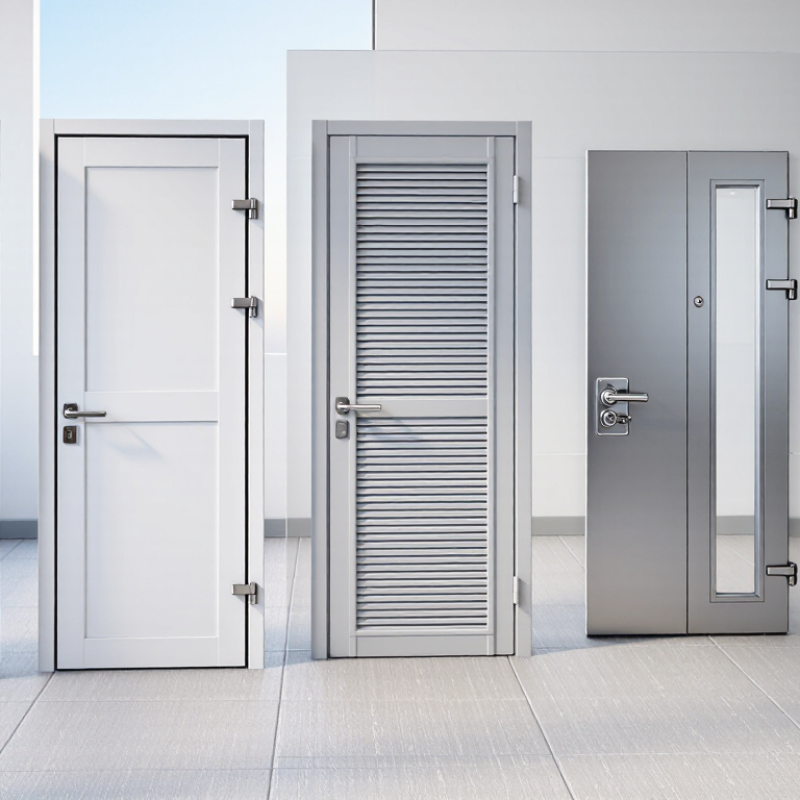
What Aluminium Washroom Doors Are and Where They Are Used
Aluminium washroom doors are lightweight interior door systems made from aluminium frames, panels, hinges, and privacy hardware. The infill may use compact laminate, glass, or moisture-resistant board. Therefore, “aluminium door” does not always mean an entirely aluminium leaf.
They are common in airports, schools, hospitals, offices, gyms, restaurants, and shopping centres. These locations need frequent cleaning and reliable daily operation. Aluminium resists corrosion better than untreated steel, especially in humid washrooms. Still, coating quality and hardware selection matter. Coastal projects need stronger protection.
The International Aluminium Institute reported about 70 million tonnes of global primary aluminium production in 2023. This large supply supports broad material availability, but it does not prove every aluminium door is sustainable. The UNEP Global Status Report for Buildings and Construction 2023 stated that buildings and construction created 37% of global energy and process-related emissions in 2022. Buyers should therefore check recycled content, panel lifespan, and repairability. A durable door can reduce replacement waste, but only when fittings remain serviceable.
From practical specification work, poorly aligned hinges often cause more complaints than the door panel itself. That detail is easy to underestimate. Buyers should compare frame thickness, hinge capacity, lock performance, water exposure, and installation tolerances. Fire, accessibility, and privacy requirements also vary by location, so one universal door specification is risky.
2026 Best Aluminium Washroom Door Types for Global Buyers? - What Aluminium Washroom Doors Are and Where They Are Used
Aluminium washroom doors use aluminium frames, profiles, or panels, often combined with materials such as glass, compact laminate, or other infill panels. The appropriate type depends on available space, privacy, ventilation, moisture exposure, accessibility, and local building requirements.
| Door type | Typical construction | Common applications | Practical advantages | Selection considerations |
|---|---|---|---|---|
| Hinged swing door | Aluminium frame or profile with a suitable opaque or glazed infill; opens on hinges. | Homes, hotel bathrooms, office washrooms, and individual toilet rooms. | Familiar operation, straightforward hardware, and a wide choice of panel finishes. | Allow sufficient swing clearance. Check the opening direction, privacy, threshold, and accessibility needs. |
| Sliding door | Aluminium-framed panel running on a track, typically along a wall or within a pocket. | Compact bathrooms, en-suites, and washrooms where a swinging leaf would obstruct circulation. | Does not require the same floor area for door swing as a hinged door. | Provide wall space or a suitable pocket, and keep the track accessible for cleaning and maintenance. Confirm privacy and locking hardware. |
| Bi-fold door | Two or more connected panels, often with aluminium framing, that fold to one side. | Small bathrooms, utility washrooms, and openings with limited swing clearance. | Folds into a relatively small area and can provide a wider clear opening than some hinged arrangements. | Check folding clearance, panel stability, finger-safe details, and the suitability of the track and hardware for frequent use. |
| Louvred door | Door leaf or panel with angled slats; aluminium may form the frame, slats, or both. | Ventilated toilet rooms, service washrooms, and locations where airflow is needed. | Allows air to pass through the door when designed with open louvres. | Open slats can reduce visual and acoustic privacy. Confirm ventilation requirements and choose a layout appropriate for the room. |
| Aluminium-framed glass door | Aluminium perimeter frame with safety glass; glass may be frosted, patterned, or otherwise obscured. | Hotel bathrooms, residential en-suites, and contemporary washroom entrances. | Offers a slim-framed appearance and can allow light to pass through when appropriate glazing is selected. | Use safety glazing suitable for the application. Check privacy at different lighting conditions, hardware compatibility, and local safety rules. |
| Aluminium-framed opaque panel door | Aluminium frame or stiles with an opaque infill panel, which may be compact laminate or another moisture-suitable material. | Public toilet cubicles, schools, workplaces, and shared washrooms. | Provides visual privacy and allows the panel material and frame finish to be selected for the project. | Check panel moisture suitability, edge protection, clearances, hardware durability, and the overall cubicle or door system requirements. |
| Accessible washroom door | An aluminium-framed hinged or sliding door configured with suitable clear opening, handles, locking, and operating hardware. | Accessible toilets and washrooms in public, commercial, hospitality, and residential buildings. | Can be specified to support easier approach and operation when designed as part of an accessible layout. | Dimensions, maneuvering space, thresholds, hardware, and opening force must follow the applicable local accessibility code. |
| Exterior washroom entrance door | Weather-suitable aluminium door assembly with appropriate frame, seals, glazing or opaque infill, and hardware. | External washroom blocks, pool facilities, and other washrooms with direct outdoor access. | Aluminium is commonly used in exterior door framing and can be finished for the project environment. | Specify for local weather exposure, drainage, corrosion conditions, security, thermal performance, and relevant building regulations. |
Buyer note: “Aluminium washroom door” describes a range of door assemblies rather than one fixed design. Confirm the opening size, installation location, panel material, ventilation and privacy requirements, hardware, maintenance needs, and applicable local codes before specifying a door.
FAQS
Match the door to the project’s use, moisture levels, and cleaning routine. Coastal sites may need corrosion-resistant hardware and a suitable finish. A sturdy appearance alone proves little.
Look for reinforced hinges and replaceable parts in schools, stations, and stadiums. These details can reduce downtime. Check the latch, too.
Measure the finished opening, not only the plans. Check opening direction, floor slope, wall construction, and privacy gaps. Measure twice.
Not necessarily. A thicker panel may feel reassuring, but added weight puts more demand on hinges. I might be overvaluing thickness if I ignore the hardware.
Existing frames and uneven walls can complicate installation. Allow for a site survey, and confirm the actual opening before ordering. Plans can miss a few millimetres.
Quieter latches and a consistent finish may matter more than maximum impact resistance. Check sample finishes under the room’s actual lighting.
Use anchors suited to the wall material and leave suitable movement and cleaning clearance. An out-of-plumb door may scrape the floor or fail to latch. Check the first installed door before repeating the design.
Rinse away soap residue and wipe with a soft cloth and mild cleaner. Avoid abrasive pads. Inspect hinges, screws, and seals regularly, especially near showers. Water finds gaps.
Conclusion
This guide explores the main Aluminium Washroom Door options available to global buyers in 2026, from practical hinged designs to space-saving sliding and folding styles. It explains where these doors are commonly used, including homes, offices, hotels, schools, and public facilities, and compares how different door types can meet varied privacy, accessibility, and space requirements. Readers will also learn about frame and panel materials, surface finishes, hardware choices, and design details that influence appearance and everyday performance.
The article offers a practical framework for selecting a door according to the project’s location, intended use, budget, and local market expectations. It also covers key considerations for accurate measurement and installation, suitable standards, durability in humid environments, and routine maintenance. By weighing these factors together, buyers and project teams can make informed choices that balance functionality, appearance, service life, and ease of care.