Choosing the best Aluminum Bathroom Door involves more than comparing prices or surface colors. Humidity, ventilation, daily use, and installation quality all influence its performance. A door beside a steamy shower faces constant moisture, soap residue, and temperature changes. The right design should resist corrosion, close smoothly, and remain easy to clean.
Architect and materials specialist Andrew M. Shapiro often emphasizes, “Durability begins with understanding the environment.” That principle fits bathroom doors especially well. An anodized aluminum frame may provide a hard, refined surface, while powder coating offers broader color choices and a softer visual character. Stainless-steel hinges, sealed corners, and properly fitted glass also matter. They are small details.
A practical comparison should examine the complete door system, not aluminum alone. Check the frame thickness, drainage design, hinge strength, and compatibility with the bathroom wall. A sliding door can save space, but its lower track may collect water and hair. A hinged model feels more open, although it needs clear floor space. Frameless designs look elegant, yet they often demand more precise installation.
There is no perfect choice. Even a well-finished Aluminum Bathroom Door can develop stains if water remains trapped around its edges. That is an easy point to overlook. This guide compares hinged, sliding, framed, and frameless options. It also considers finishes, privacy glass, maintenance, safety, and long-term value. The goal is simple: identify a door that looks appropriate, performs reliably, and suits the bathroom’s actual conditions.
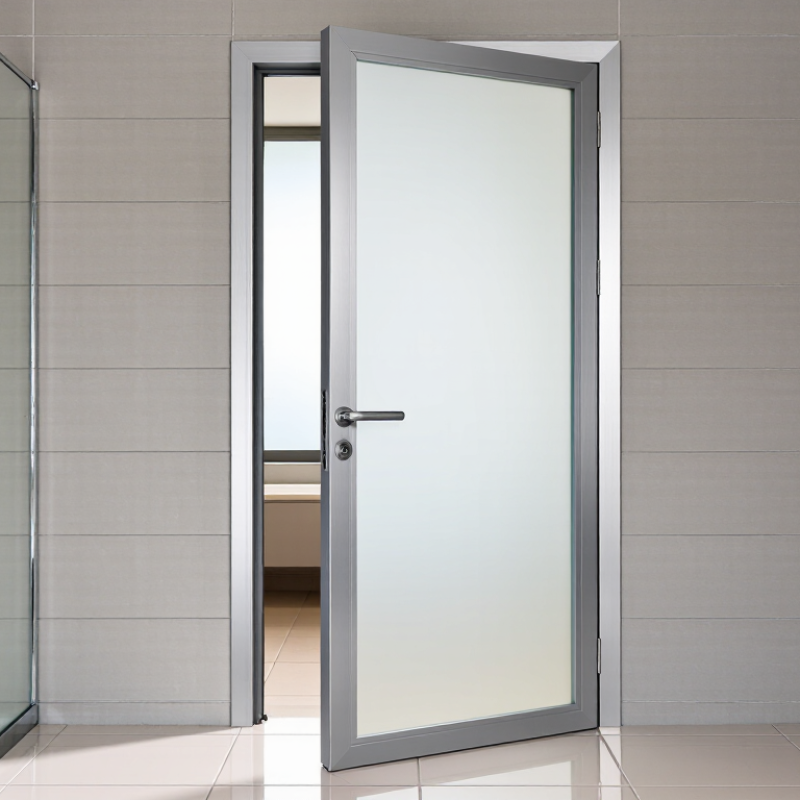
Aluminum Bathroom Door Basics and Key Selection Criteria
Choosing the best aluminum bathroom door starts with understanding the room’s conditions. Bathrooms face daily moisture, soap residue, temperature changes, and limited ventilation. An aluminum door with a corrosion-resistant finish is usually a practical choice because the frame stays light and does not swell like untreated wood.
The door style should match the available space. A hinged door needs clear floor space, while a sliding door suits narrow bathrooms. Check the aluminum frame for firm joints and an even surface. Tempered safety glass is preferable for glazed panels. Door seals should close tightly without dragging across the floor. Small gaps can allow water to reach the wall, especially near the shower area.
Measure the opening at several points, not just once. Walls are often slightly uneven. I once saw a door installed from one measurement, and the lower corner leaked after a week. That mistake was avoidable. The threshold, drainage slope, hinge strength, and handle position also deserve attention. A qualified installer should confirm the wall condition and follow applicable local safety requirements. Ask how the finish resists cleaning chemicals, and inspect the warranty terms carefully. A door may look excellent in a showroom, yet poor ventilation can still cause buildup around its seals. Even the best frame needs regular wiping and occasional hardware checks.
What Is the Best Type of Aluminum Bathroom Door? - Aluminum Bathroom Door Basics and Key Selection Criteria
| Selection Dimension | Recommended Option | Typical Specifications or Facts | Why It Matters | Best Application |
|---|---|---|---|---|
| Door Type | Aluminum-framed hinged door | Uses side hinges and requires a clear swing area. | Provides a familiar opening action and generally offers a straightforward installation. | Standard bathrooms with sufficient floor space. |
| Space-Saving Design | Aluminum-framed sliding or folding door | Moves along a track or folds into sections instead of swinging into the room. | Reduces the clearance needed in front of the doorway. | Compact bathrooms and wet-room layouts. |
| Frame Material | Anodized or powder-coated aluminum | Aluminum is lightweight and naturally forms a protective oxide layer; surface coatings add finish and protection. | Helps the frame resist routine bathroom humidity while keeping the door relatively easy to handle. | Most residential and light commercial bathrooms. |
| Surface Finish | Anodized finish for a metallic appearance; powder coating for a wider color range | Anodizing is an electrochemical surface treatment, while powder coating is a baked-on protective finish. | A quality finish improves cleanability and helps protect the aluminum surface from wear. | Choose according to appearance, cleaning habits, and moisture exposure. |
| Panel Material | Safety glass or moisture-resistant solid panel | Tempered safety glass is heat-treated and breaks into smaller granules rather than large sharp shards. | The panel affects safety, privacy, light transmission, weight, and cleaning requirements. | Use clear glass for openness, frosted or patterned glass for privacy, and solid panels where privacy is the priority. |
| Glass Thickness | Select a thickness approved for the specific door system | Common shower-door glass thicknesses include approximately 6 mm and 8 mm, but the frame and hardware must be designed for the selected panel. | Thicker glass can feel more substantial but also increases weight and hardware requirements. | Follow the door system's engineering and local safety requirements. |
| Moisture Control | Replaceable seals, a bottom sweep, and a properly aligned threshold | Seals limit water escape at joints and edges; they do not make a door completely watertight. | Correct sealing reduces splashing and helps protect adjacent flooring and walls. | Shower enclosures and bathrooms where water containment is important. |
| Hardware | Corrosion-resistant hinges, rollers, handles, and fasteners | Stainless steel or suitably protected hardware is preferable in damp environments. | Hardware quality affects smooth operation, alignment, service life, and maintenance. | Bathrooms with frequent use or high humidity. |
| Ventilation and Privacy | Choose the panel and door configuration to match the room's ventilation plan | A bathroom still needs adequate mechanical or natural ventilation; a door alone does not remove humidity. | Good ventilation helps limit condensation, odors, and moisture-related damage. | Enclosed bathrooms and rooms with limited windows. |
| Cleaning Requirements | Smooth profiles with accessible drainage paths | Wipe water and soap residue regularly with a soft cloth and use cleaners compatible with the finish. | Regular cleaning helps prevent mineral deposits, staining, and buildup around tracks and seals. | Homes with hard water or frequent shower use. |
| Measurement | Accurate opening width, height, plumb, level, and wall condition | Measure at multiple points because walls and floors may not be perfectly square. | Correct measurements help prevent binding, uneven gaps, and poor water control. | Every replacement or new installation. |
| Maintenance | Routine rinsing, drying, inspection, and adjustment | Inspect seals, screws, hinges, rollers, and tracks periodically; replace worn seals when needed. | Preventive care preserves smooth movement and reduces water leakage. | All aluminum bathroom door types. |
| Overall Best Choice | A properly measured aluminum-framed door with a durable finish, safety glazing, corrosion-resistant hardware, and replaceable seals | The best configuration depends on room size, swing clearance, privacy needs, water exposure, ventilation, and installation conditions. | Balancing safety, moisture control, ease of use, appearance, and maintenance produces the most suitable result. | Select the design that fits the bathroom rather than choosing by appearance alone. |
FAQS
A sliding door usually works best because it needs no swing clearance. It fits beside toilets, vanities, or washing machines. Its track collects hair and soap, so weekly cleaning is necessary.
Choose a hinged door when the bathroom has clear floor space. It feels sturdy and usually controls splashes better. An outward-opening design can improve access during emergencies. Keep the doorway unobstructed.
No door is perfect. Folding doors save space but require accurate hinge alignment. Pivot doors create a wide opening, yet they may release more water onto the floor.
Use safety-rated tempered glass with smooth, protected edges. Clear glass makes a small room appear larger. Frosted or patterned glass provides more privacy. Clear surfaces show water spots quickly.
Glass improves light and visual space. Solid aluminum or moisture-resistant composite panels offer stronger privacy and easier cleaning. Check the panel core, coating, and sealed edges. Cheap panels may warp or feel hollow.
Select corrosion-resistant aluminum with smooth drainage channels. Stainless-steel hinges, adjustable rollers, and replaceable seals support long-term use. Hardware should be easy to tighten and clean. Small details matter.
Installation strongly affects performance. The frame must remain square, and the bottom seal should touch the floor evenly. Seal every joint with suitable bathroom sealant. Measure twice.
Wipe soap residue weekly using mild detergent and clean water. Dry sliding tracks after showers. Avoid abrasive pads, strong chlorine cleaners, and harsh solvents. Check screws, seals, and hinges every few months.
Yes. Poor ventilation can trap steam and encourage mold around neglected joints. Keep air moving after showers. A tight seal helps control splashes, but it cannot replace ventilation.
Confirm the opening width, wall slope, drainage, glass rating, seal quality, and hinge load. Check the threshold height and available swing space. One missed measurement can create an expensive adjustment.
Conclusion
Choosing the best Aluminum Bathroom Door starts with understanding the room’s moisture levels, available space, ventilation, privacy needs, and overall design. Common options include sliding, hinged, folding, and framed or semi-frameless doors, each offering different benefits. Sliding doors can save space, while hinged doors may provide easier access in larger bathrooms. The choice of glass, solid panels, frame design, seals, handles, and hinges also affects privacy, water resistance, appearance, and daily convenience.
A suitable door should be made from corrosion-resistant materials and fitted with reliable hardware for long-term performance. Frosted or textured glass can improve privacy, while clear glass can create a more open feeling. Proper installation is essential for stable operation, safe movement, and effective water control. Regular cleaning, checking seals and hardware, and promptly addressing loose parts or moisture buildup will help maintain the door’s appearance and function. Overall, the best Aluminum Bathroom Door balances durability, safety, space efficiency, privacy, maintenance requirements, and personal style.