0%

For global buyers, choosing an Aluminum Door manufacturer is not just a price comparison. It is a decision about performance, consistency, and long-term supply. A door may look flawless in a sample room, yet poorly aligned hinges or uneven coating can become obvious after installation. Small details matter.

The International Aluminium Institute’s sector-demand reporting places building and construction at roughly one-quarter of global aluminium use. The Aluminum Association reports that recycled aluminium requires about 95% less energy than primary production. These figures make material sourcing and manufacturing capability relevant buyer questions, not side issues. They do not, however, prove that any individual supplier is responsible or reliable.

As Aluminum Association president and CEO Tom Dobbins has emphasized, “Aluminum is infinitely recyclable.” For buyers, that principle is useful, but it is not a complete purchasing test. Ask manufacturers for alloy and finish specifications, test records, production capacity, packaging details, and references from comparable projects. Check how they handle corner joints, drainage paths, and hardware compatibility. These are the details that photographs often hide.

This guide compares manufacturers against practical criteria: product range, customization, quality controls, export experience, and communication. It also considers how suppliers respond when drawings change or a shipment arrives with a problem. No ranking can replace factory checks or project-specific verification. That caveat matters. The best shortlist is the one buyers can independently test against their own climate, building requirements, and delivery schedule.
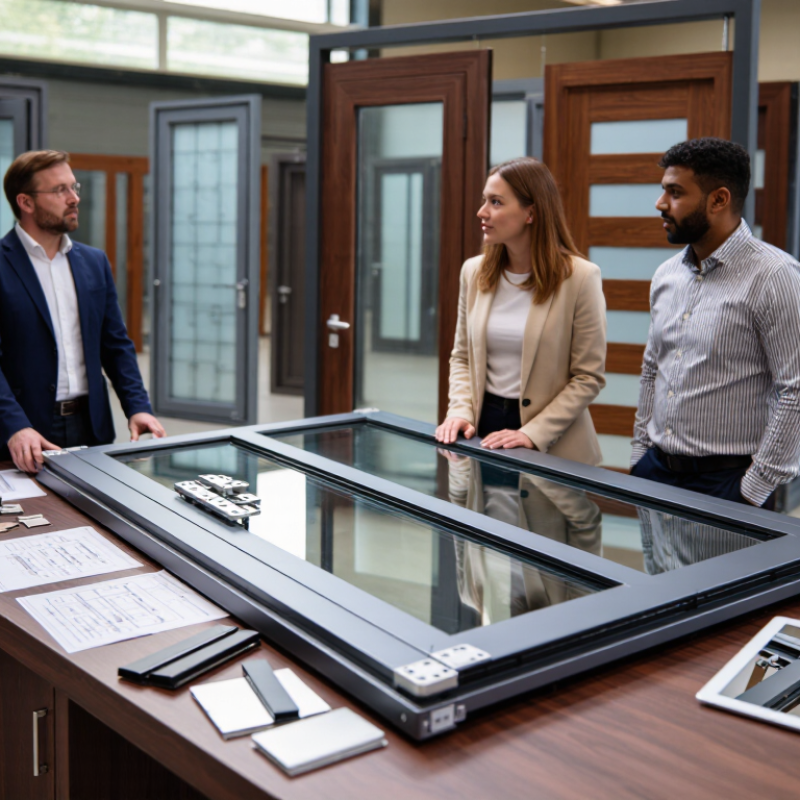
Top Aluminum Door Manufacturers for Global Buyers

How the Global Aluminum Door Manufacturing Market Is Structured

The global aluminum door market is structured as a supply chain, not a single group of factories. Upstream suppliers produce aluminum profiles, glass, seals, locks, and other hardware. Fabricators cut and assemble these components into door systems, while distributors and project contractors connect products with buyers and installation teams. Some manufacturers manage design, fabrication, and testing in-house; others rely on specialist suppliers. These models can affect lead times, customization, and quality control.

Tips: Ask who makes each component. Request drawings, finish samples, and documented performance data. Check how packaging protects corners during shipping. Small details matter.

For global buyers, the right supplier depends on project scale and local conditions. A hotel renovation may need consistent finishes across hundreds of openings, while a coastal home may need hardware suited to frequent exposure to moisture and salt air. Confirm that dimensions, glazing, and opening styles match the project drawings before production begins. Clarify who handles installation guidance and replacement parts after delivery. Pricing alone can be misleading; freight, packaging, and communication delays may change the real cost. Even careful planning misses something occasionally, so keep a written record of approved specifications and sample changes.

What Defines a Leading Aluminum Door Manufacturer

A leading aluminum door manufacturer proves performance with measured results, not polished catalog language. For global buyers, that means published air-leakage, water-penetration, and structural-load test results linked to clearly stated standards. Inspect the frame: corner joints should be tight, coating even, and drainage paths free of obvious blockages. Small details matter. Ask whether thermal breaks, glazing, and hardware have been tested together, since component choices can change whole-door performance.

The 2023 Global Status Report for Buildings and Construction, from UNEP and the Global Alliance for Buildings and Construction, estimated that buildings and construction accounted for 34% of global energy demand and 37% of energy- and process-related CO2 emissions in 2022.

That sector-wide finding makes door efficiency worth checking, though a door alone cannot solve a building’s energy use. A capable manufacturer can provide project-specific thermal data, installation details, finish specifications, and access to replacement parts. Look for batch traceability and documented quality checks, not broad claims about premium materials. Ask how test results apply to your door sizes and climate. Generic answers are a warning sign. No supplier gets every choice right; an attractive profile may still complicate repairs or increase shipping costs.

Major Manufacturers by Region, Product Type, and Market Reach

Top Aluminum Door Manufacturers for Global Buyers

Major Manufacturers by Region, Product Type, and Market Reach

Manufacturers in East Asia often combine high-volume production with competitive pricing. Their aluminum sliding doors suit apartments, retail spaces, and large residential projects. Many factories offer thermal breaks, powder-coated finishes, and customized glass sizes. Buyers should request recent test reports, not only attractive catalog images.

European manufacturers commonly emphasize insulation, narrow sightlines, and refined hardware. Their systems often target energy-conscious homes and commercial buildings. North American producers usually focus on impact resistance, larger openings, and project-specific engineering. Regional standards vary, so installers must confirm dimensions, drainage details, and performance ratings before ordering.

Different product types require different suppliers. Hinged doors fit entrances and service areas, while lift-and-slide systems serve wide patios. Folding doors create open storefronts but need accurate floor preparation. Manufacturers with wider market reach usually provide multilingual documentation, export packaging, spare parts, and technical support across time zones. That support can matter more than a low unit price.

A serious comparison should include lead time, minimum order quantity, warranty terms, and replacement hardware availability. Ask for finished samples. Small coating differences become obvious under direct sunlight. No regional map is perfect; smaller manufacturers may outperform larger exporters on custom work. Still, a polished website does not prove factory capacity. Verify production photos, inspection records, and references from similar climates before committing.

How Global Buyers Can Compare Manufacturers and Door Systems

Choosing top aluminum door manufacturers requires more than comparing catalog photos. Global buyers should examine system performance, production experience, and documented quality controls. Ask for test reports covering air leakage, water resistance, wind pressure, thermal performance, and hardware durability. A polished sample can mislead.

Compare the complete door system, not only the aluminum frame. Review profile thickness, thermal breaks, glazing options, seals, drainage paths, hinges, locks, and threshold design. Check whether the manufacturer can meet your project’s local building requirements. Factory audits, inspection records, and references from similar climates provide stronger evidence than general marketing claims. Request clear drawings, installation manuals, and replacement-part policies.

Lead time also deserves careful attention. Confirm material sources, finish standards, packaging methods, and shipment schedules in writing. Ask how the manufacturer handles color variation, damaged panels, and production changes. I have seen attractive quotations become expensive after unclear installation responsibilities. That risk is easy to miss. A useful comparison sheet should include unit price, testing, warranty coverage, maintenance needs, and technical support. Do not judge reliability from one successful sample order. Review repeat-order consistency, communication speed, and the manufacturer’s response when specifications change. Some buyers overlook after-sales training, yet poor installation can reduce the performance of a well-made door.

Top Aluminum Door Manufacturers for Global Buyers - How Global Buyers Can Compare Manufacturers and Door Systems

Compare suppliers using project-specific test evidence, declared product performance, and the complete door configuration. Performance depends on the tested size, frame, glazing, hardware, weather seals, and installation; confirm that certificates and reports apply to the proposed product.

Comparison dimension What to compare Evidence or specification to request Why it matters to global buyers
Door system type Choose among hinged, sliding, lift-and-slide, or folding systems. Confirm opening direction, number of panels, clear opening, and threshold arrangement. Dimensioned drawings, operating details, maximum tested panel dimensions, and installation instructions for the selected configuration. Different systems suit different openings and space requirements. A system’s performance cannot be assumed to apply to another operating style.
Thermal performance Compare whole-door U-factor or U-value, not just the center-of-glass value. Check whether the quoted figure covers the specified frame, glass, and door size. Product-specific calculation or test report, declared measurement method, glazing build-up, and the applicable local energy-code requirements. Lower U-factor or U-value generally indicates less heat transfer. Ratings and calculation methods differ by market, so compare results using the same method.
Air leakage Review the tested air-leakage rate at the stated pressure and door size, including the operating configuration. Test report citing a recognized method, such as ASTM E283 or EN 1026, with the reported result and test pressure. Air leakage can affect comfort, energy use, and drafts. Results are meaningful only when test conditions and units are stated.
Water penetration Check the water-test pressure, test duration, pass criteria, and whether the tested threshold and drainage details match the project. Test report citing a method such as ASTM E547 or EN 1027, together with the tested assembly and result. Exposure varies with climate, building height, and façade location. Select a suitable project requirement rather than relying on a general claim of “weatherproof.”
Structural resistance Compare the design pressure and deflection criteria for the complete door assembly, including large panels and hardware. Structural test report or engineering calculation; relevant methods may include ASTM E330/E330M or applicable regional standards. Wind loads depend on location, building height, exposure, and opening size. Confirm that the proposed configuration is covered by the evidence.
Frame and thermal break Review frame material and profile design, including whether a thermal break is used and how frame sections are joined. Profile drawings, material specifications, thermal-performance data, and details of frame-to-wall connections. A thermal break reduces heat flow through the aluminum frame, but whole-door performance also depends on glazing, seals, and installation.
Glazing and safety Specify glass type, thickness, insulating-glass build-up, low-emissivity coating if required, and safety-glazing locations. Glass make-up schedule, applicable safety-glazing compliance documents, and confirmation of compatibility with the door system. Local codes may require safety glazing in particular locations. Glass selection also affects thermal, acoustic, weight, and impact performance.
Hardware and operating life Compare rollers, hinges, locks, handles, track design, replacement availability, and stated operating-cycle testing where applicable. Hardware specifications, load limits, maintenance guidance, spare-parts list, and any relevant durability test results. Hardware suitability is especially important for heavy or frequently used panels. Confirm service and replacement options in the destination market.
Finish and corrosion resistance Specify finish type, color, gloss, surface preparation, and any project-specific exposure requirements. Finish specification and test documentation; for powder coatings, ask whether coating performance is supported by a recognized quality program or applicable test method. Coastal, industrial, and high-UV environments can require different finish choices and maintenance. A finish warranty should state its scope and exclusions.
Quality assurance and compliance Check factory quality controls, traceability, inspection procedures, and compliance with the destination market’s product rules. Current certificates and test reports, scope of certification, production-quality documentation, and product labels where required. Relevant frameworks vary by market, such as EN 14351-1 in Europe or applicable North American standards. A certificate is useful only if its scope covers the product, factory, and configuration being purchased. Verify current validity with the issuing body where possible.
Customization and project support Assess available sizes, colors, glazing options, screen compatibility, threshold choices, drawing support, and response to project-specific requirements. Approved shop drawings, a written scope of supply, finish and glazing schedules, and a documented change-approval process. Clear documentation helps reduce specification gaps and avoid differences between the approved design and delivered product.
Delivery and after-sales service Compare production lead time, packaging, export documentation, warranty terms, spare-parts availability, and technical support arrangements. Written delivery schedule, packing details, warranty document, claims procedure, and named service contact or regional support plan. Delivery terms and service capability affect total project risk. Confirm responsibilities for transport, installation, commissioning, and warranty claims.

What to Verify Before Ordering Aluminum Doors Internationally

Top Aluminum Door Manufacturers for Global Buyers

What to Verify Before Ordering Aluminum Doors Internationally

Before choosing a manufacturer, request company registration details, factory photographs, and recent project references. A polished website proves little. Ask who controls production, testing, and final inspection. Reliable suppliers should provide technical drawings, alloy information, profile thickness, and clear tolerance ranges. Details matter.

Check the door’s thermal-break design, glass specification, drainage path, hinges, locks, and sealing method. Confirm whether the stated performance applies to the complete door, not only the aluminum profile. Request test reports for air leakage, water resistance, wind pressure, and thermal performance from recognized laboratories. Test standards may differ between countries, so compare requirements with your project location.

Finish quality deserves physical evidence. Ask for coating thickness records, color samples, and salt-spray results when coastal exposure is expected. Packaging should protect corners, glass, and hardware during long sea transport. Confirm dimensions, quantities, replacement parts, production time, payment terms, delivery responsibility, and customs documents in writing. Ask twice.

I have seen buyers focus on the lowest unit price, then pay more for damaged frames and missing fittings. That mistake is easy to repeat. A small sample installation can reveal awkward handles, poor drainage, or inaccurate measurements before full production. Allow room for correction. Door schedules, opening directions, and installation instructions should be reviewed by someone familiar with local building practice. Expect a few unanswered questions; unresolved details are a warning, not an inconvenience.

FAQS

What evidence shows that an aluminum door manufacturer is reliable?

Look for test reports covering air leakage, water penetration, and structural loads. Check that the stated standards and door sizes match your project.

Which physical details should buyers inspect?

Examine tight frame corners, even coating, and clear drainage paths. Small details matter. A blocked channel can create trouble later.

Why request project-specific thermal information?

Door efficiency matters, but one door cannot solve a building’s energy use. Ask for thermal data that fits your glazing, frame, and climate.

Do manufacturers in different regions offer different strengths?

East Asian suppliers often offer high-volume production and customization. European systems commonly emphasize insulation, while North American producers often focus on impact resistance and large openings. Not always.

Which door type suits a wide patio?

A lift-and-slide system can serve wide openings. Hinged doors often suit entrances, while folding doors need accurate floor preparation.

What support matters after delivery?

Check for replacement hardware, spare parts, installation details, and technical support across time zones. A low unit price may not stay low.

How can buyers compare total project costs?

Compare lead times, minimum order quantities, warranty terms, and shipping costs. Ask for finished samples; sunlight can reveal coating differences quickly.

How can buyers verify a supplier’s production claims?

Request inspection records, recent production photos, and references from similar climates. A polished website is not proof. I’d still verify the details twice.

Conclusion

The global Aluminum Door manufacturing market includes a diverse network of regional factories, specialized system developers, contract manufacturers, and export-oriented suppliers. Leading manufacturers are typically distinguished by consistent product quality, advanced production capabilities, reliable testing procedures, customization options, and the ability to support large international projects. Their product ranges may include entrance doors, sliding systems, folding doors, thermal-break models, fire-rated solutions, and other applications for residential, commercial, and industrial buildings.

For global buyers, comparing manufacturers requires more than reviewing price lists. Buyers should assess material grades, hardware compatibility, system performance, production capacity, quality-control processes, certifications, lead times, packaging standards, and after-sales communication. Before placing an international order, it is also important to verify technical drawings, finish specifications, sample quality, warranty terms, shipping responsibilities, installation guidance, and the supplier’s experience with overseas projects. A structured evaluation helps buyers select a dependable Aluminum Door partner that can meet project requirements, delivery expectations, and long-term performance goals.

Evelyn

Evelyn

Evelyn is a professional marketing specialist with a strong understanding of the company’s products, services, and the evolving needs of its customers. With a background in market research, content strategy, and customer communication, she transforms complex product information into clear,......