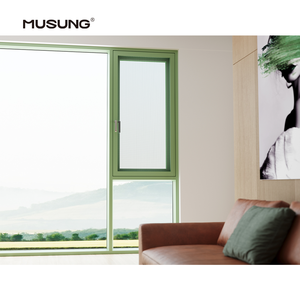
Ultra Narrow Glass Double Glazed Aluminium Slimline Casement Window
Profile Sightline: 20mm Visible Frame
Thermal Value: Uw ≤ 1.1 W/m²K
Tested for extreme wind-load resistance, acoustic isolation, and high thermal performance across global climate zones.
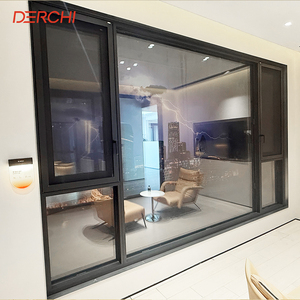
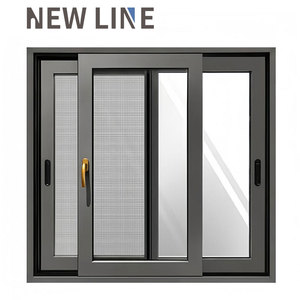
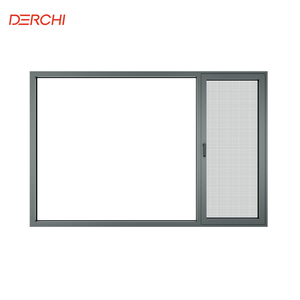
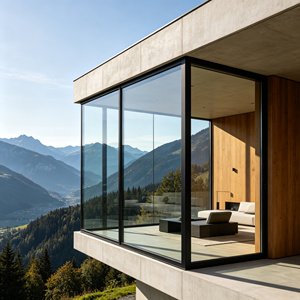
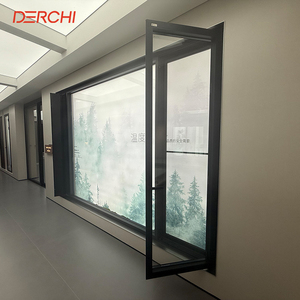
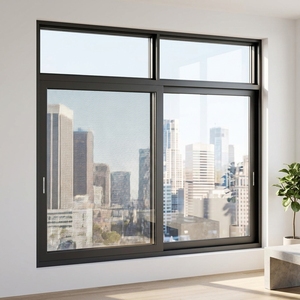
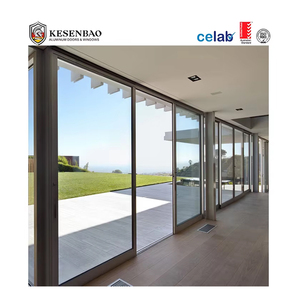
A rigorous examination of material selection, structural mechanics, thermal break integration, and international regulatory compliance for modern fenestration.
The global demand for high-performance architectural envelope systems has catalyzed a paradigm shift toward ultra-narrow aluminium slimline windows. Modern architectural aesthetics prioritize continuous daylighting, expansive visual transparent surfaces, and minimal structural framing profiles. However, reducing profile sightlines down to 20mm–26mm while maintaining rigorous structural integrity under extreme wind pressure requires advanced extrusion engineering, precise alloy tempering, and multi-chamber thermal break mechanics.
For international real estate developers, facade contractors, and structural engineers, procuring fenestration products backed by authentic CE Certification (Harmonized Standard EN 14351-1) is a critical risk-mitigation measure. CE marking confirms compliance with European Union Construction Products Regulation (CPR No 305/2011), ensuring verified metrics for Air Permeability (EN 12207), Water Tightness (EN 12208), Wind Load Resistance (EN 12210), and Overall Thermal Transmittance ($U_w$).
"Slimline fenestration is not merely a minimalist visual trend; it is a structural engineering discipline where glass acts as a load-bearing diaphragm integrated with high-tensile 6063-T5 aluminium profiles and polyamide insulation strips."
— Structural Engineering & Facade R&D DivisionTo achieve high structural load resistance without increasing visible frame bulk, top-tier manufacturers utilize primary 6063-T5 aluminium alloy extrusions. Compared to secondary recycled scrap aluminum, primary 6063 alloy offers superior tensile yield strength (≥110 MPa) and web-wall thickness consistency (≥1.8mm to 3.0mm according to structural calculations).
Extruded strictly from 6063-T5 billet, subjected to artificial aging to achieve optimal Webster hardness (≥12 HW). Provides high flexural resistance against dynamic wind pressures.
Employs 24mm to 34mm Polyamide (PA66) reinforced with 25% glass fiber. Prevents thermal bridging across internal and external profile chambers.
Certified Qualicoat Class 2 / AkzoNobel Interpon fluorocarbon (PVDF) electrostatic spray treatments providing 25+ years of UV resistance and color stability.
The total heat transfer coefficient of a fenestration unit ($U_w$) is derived from the frame performance ($U_f$), glass performance ($U_g$), and linear thermal bridge spacer coefficient ($\Psi_g$):
By engineering multi-cavity thermal break profiles filled with continuous aerogel or expanding polyurethane foam, combined with triple-pane Low-E insulated glass units (argon gas filled, warm-edge swisspacers), our exported slimline windows achieve benchmark $U_w$ values down to 0.85 W/m²K, easily fulfilling Passive House and net-zero energy building requirements.
Selecting the optimal slimline system depends on project height, structural deflection limits ($L/175$ or $L/300$), opening operation type, and acoustic isolation mandates. The comparative matrix below outlines key technical parameters:
| System Configuration | Sightline Width | Max Panel Height | Wind Load (EN 12210) | Water Tightness | U-Value (Uw Range) | Compliance Standards |
|---|---|---|---|---|---|---|
| Ultra-Narrow Fixed Window | 18 - 22 mm | 4,200 mm | Class C5 (3000 Pa) | Class E1200 (1200 Pa) | 0.85 - 1.1 W/m²K | CE, EN 14351-1, ISO 9001 |
| Slimline Casement Window | 35 - 45 mm | 2,800 mm | Class C4 (2400 Pa) | Class 9A (600 Pa) | 1.1 - 1.3 W/m²K | CE, AS2047, NFRC |
| Panoramic Sliding System | 20 - 25 mm (Interlock) | 3,800 mm | Class C4 (2400 Pa) | Class 8A (450 Pa) | 1.2 - 1.4 W/m²K | CE, EN 12207, BS 6375 |
| Lift & Slide Heavy Duty | 45 - 55 mm | 4,000 mm | Class C5 (3000 Pa) | Class 9A (600 Pa) | 1.0 - 1.3 W/m²K | CE, ASTM E1300, AS2047 |
| Bifold / Folding System | 108 - 120 mm (Pair) | 3,200 mm | Class C3 (1600 Pa) | Class 7A (300 Pa) | 1.3 - 1.6 W/m²K | CE, EN 14351-1 |
As international energy codes tighten and architectural design favors clean spatial integration, B2B buyers must anticipate major technical developments shaping window manufacturing and export logistics:
Future high-end residential and commercial projects are moving from manual operation to automated, motorized sliding tracks. Integrated 24V DC brush-less linear drives, concealed inside top tracks, communicate directly with KNX, Crestron, and Smart Home automation protocols via IoT gateways.
EU Carbon Border Adjustment Mechanism (CBAM) regulations are driving demand for low-carbon extruded aluminum. Procurement specs increasingly require certified low-carbon billets smelted using renewable hydro-electric energy, keeping carbon intensity below 4.0 kg CO₂/kg Al.
Traditional raised threshold tracks are being replaced by fully concealed, recessed stainless steel drain channels. Sub-floor drainage systems remove rain water via hidden linear slots while maintaining a 100% barrier-free floor transition.
Global architectural firms require manufacturers to provide fully parametric Building Information Modeling (BIM) objects (Revit, IFC) featuring exact structural weight, thermal boundaries, anchor fixing zones, and shop drawing fabrication details.
Meric Window Systems operates state-of-the-art automated manufacturing facilities equipped with 5-axis CNC machining centers, automatic corner-crimping presses, and digital air/water tightness testing rigs. Every exported order follows an enterprise-grade Quality Assurance workflow:
Profile cutting and hardware mortising are executed on automated CNC lines with dimensional precision within ±0.3mm, ensuring perfect frame squareness and gasket alignment.
Glazing units are secured using continuous EPDM weather-sealing gaskets alongside structural silicone application, guaranteeing long-term elastic resilience against thermal expansion cyclic stress.
Finished windows receive protective film wraps, corner corner-guards, and are anchored into customized, ISPM-15 compliant fumigated wooden crates designed for safe sea freight container transport.
Clear, technical answers to common queries regarding CE testing, custom dimensions, shipping logistics, and structural performance.