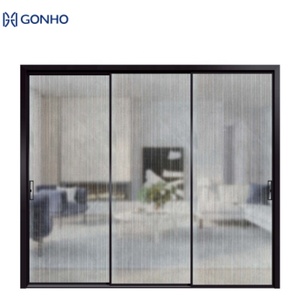
Extremely Narrow Electric Sliding Door Single Ground Glass Panel Narrow Aluminum Frame Interior Sliding Door
Get Catalog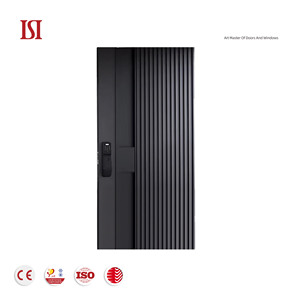
European Luxury Entrance Doors With Anti-Theft Security Modern Residential Exterior For Luxury Villas Manual Opening
Get Catalog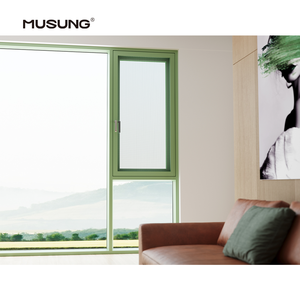
Ultra Narrow Glass Windows And Doors Double Glazed Aluminum Alloy Line Slimline Window Casement Windows
Get Catalog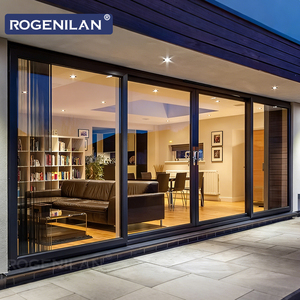
ROGENILAN Custom Aluminum Heavy Duty Double Glass Outdoor Patio Sliding Doors Thermal Break Lift and Slide Door for Houses
Get Catalog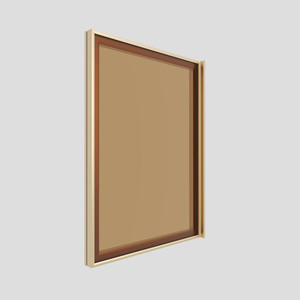
Aluminum Frame Glass Cabinet Door MR201
Get Catalog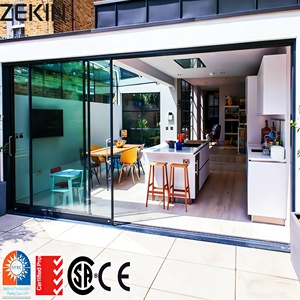
Noiseless Aluminum Custom Made Aluminum Sliding Flyscreen Doors Windproof Anti-theft Interior Safety Door
Get Catalog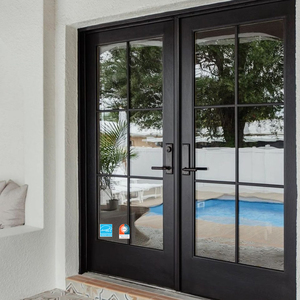
AMJ NFRC Excellent Quality Interior Door Tempered Glass USA Swing French Door Aluminum French Casement Door
Get Catalog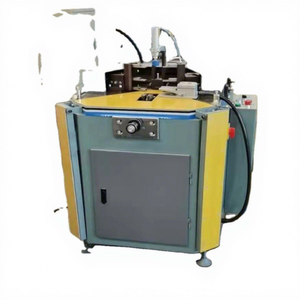
SHANGDONG LZJ--160 Aluminum Door and Window Corner Combining Making Machine
Get CatalogStructural Mechanics & CE Compliance in Crank Out Fenestration
A comprehensive analysis of load-bearing profile design, thermal break kinematics, and European Normative (EN) structural validation for international architects and project procurement teams.
CE Certification & EN 14351-1 Validation
In accordance with the EU Construction Products Regulation (CPR 305/2011), our aluminum crank-out and awning systems are rigorously tested under EN 14351-1:2006+A2:2016. Factory Production Control (FPC) audit trails verify continuous compliance with mandatory performance criteria across all global export batches.
Testing protocols cover mandatory Initial Type Testing (ITT) for mechanical durability, proving our dual-arm rotary operators endure excess torque loads up to 450 N without gear teeth deformation or linkage binding.
Thermal Transmittance & Isotherm Mapping
To eliminate thermal bridging, profile cross-sections feature PA66-GF25 Polyamide Thermal Barrier Strips engineered with 25% glass fiber reinforcement. This structural configuration isolates the outer aluminum extrusion from the interior envelope.
Finite Element Analysis (FEA) isotherm calculations demonstrate whole-window U-factors ($U_w$) down to 1.1 $W/m^2K$ when specified with argon-filled triple-glazing, preventing interior condensation even in cold climates down to -20°C.
Aviation-Grade 6063-T5 Metallurgy
Profiles are extruded exclusively from high-purity primary ingot 6063-T5 aluminum alloy. Yield strength ($\sigma_{0.2} \ge 170\text{ MPa}$) and tensile strength ($\sigma_b \ge 215\text{ MPa}$) guarantee frame rigidity under extreme wind loads.
Unlike secondary recycled scrap extrusions, our virgin alloy matrix maintains structural grain uniformity, enabling precision CNC corner crimping and resistance to stress corrosion cracking in high-humidity coastal environments.
Product Performance & Specification Matrix
Comparative engineering parameters for system selection across high-rise, commercial, and ultra-luxury residential projects.
| System Model | Opening Mechanism | Thermal Break Width | Air Permeability | Water Tightness | Wind Load Resistance | Acoustic Rating (STC/Rw) | CE Certification |
|---|---|---|---|---|---|---|---|
| FW142 Ultra-Narrow Awning | Top-Hung Rotary Crank Out | 24 mm PA66-GF25 | Class 4 (600 Pa) | Class E1050 (1050 Pa) | Class C5 (3000 Pa) | 42 dB (Triple Glazed) | Certified (EN 14351-1) |
| JW157 Slim Casement | Side-Hung Truth Crank | 20 mm PA66-GF25 | Class 4 (600 Pa) | Class 9A (600 Pa) | Class C4 (2400 Pa) | 38 dB (Double Glazed) | Certified (EN 14351-1) |
| Heavy Duty Architectural Awning | Dual-Arm Heavy Operator | 34 mm Thermal Bar | Class 4 (600 Pa) | Class E1200 (1200 Pa) | Class C5 (3600 Pa) | 45 dB (Laminated IGU) | Certified (EN 14351-1) |
| Slimline French Casement | Dual Outward Crank/Swing | 18 mm Polyamide | Class 3 (300 Pa) | Class 7A (300 Pa) | Class C3 (1800 Pa) | 36 dB (Double Glazed) | Certified (EN 14351-1) |
| Motorized Electric Awning | Chain Actuator / Smart BMS | 24 mm PA66-GF25 | Class 4 (600 Pa) | Class E1050 (1050 Pa) | Class C5 (3000 Pa) | 40 dB (Double Glazed) | Certified (CE / EMC Directives) |
EPDM Continuous Vulcanized Gasket Sealing
Traditional window frames suffer air and water leakage at glued corner joints. Meric Window utilizes continuous, vulcanized EPDM (Ethylene Propylene Diene Monomer) gasket loops with pre-molded 90° corner keys. This prevents shrinkage over decades of UV exposure and maintains compressed perimeter air-tightness under extreme typhoon-level wind pressures.
Concealed Multi-Point Locking Hardware
Safety and weather-proofing are reinforced via high-grade Stainless Steel 304/316 Multi-Point Lock Rods driven directly by the heavy-duty crank handle. When turned, multiple mushroom head keepers engage hardened zinc-alloy strike plates along the frame perimeter, pulling the sash evenly against dual perimeter gaskets to resist forced entry and wind-driven rain infiltration.
Future Procurement Trends in Architectural Aluminum Windows (2025–2030)
As global building energy codes tighten and smart automation accelerates, commercial buyers and developers must align fenestration specifications with emerging regulatory and technological shifts.
1. Near-Zero Energy Buildings (NZEB) & Low-Carbon Billets
EU Green Deal directives and North American Energy Star 7.0 standards mandate lower solar heat gain coefficients (SHGC) and minimal frame conductivity. Procurement is shifting toward Low-Carbon Recycled Primary Aluminum Billets (smelted via hydroelectric power to keep carbon intensity under 4.0 kg CO2/kg Al).
Window specifications will increasingly require Environmental Product Declarations (EPD) alongside CE Mark documentation to satisfy LEED v4.1 and BREEAM decarbonization points.
2. Smart Building Management System (BMS) Integration
Manual rotary handles are rapidly evolving into Concealed Electric Chain Actuators linked via KNX, Modbus, or Zigbee protocols to automated BMS systems. These smart windows open automatically for natural night-purge cooling, indoor air quality (CO2/VOC sensor-driven ventilation), and rain-sensor emergency closing.
Export manufacturers must provide low-voltage (24V DC) motorized crank-out variants with concealed cable routing and CE EMC compliance.
3. Ultra-Slim Sightlines with High Structural Wind Load Capacities
Architectural demand for glass wall continuity has driven visible profile face widths down from 80mm to under 30mm ultra-narrow sightlines. However, slimming profiles increases structural deflection risk under wind loads.
Future procurement favors factories utilizing internal steel reinforcement channels or structural silicone glass bonding (SSG) to achieve maximum glass-to-frame ratios while passing Class C5 wind resistance tests.
Why Global Developers Partner with Meric Window Systems
Factory-direct engineering precision, state-of-the-art CNC automation, and end-to-end export quality control for complex structural fenestration projects worldwide.
5-Axis CNC Machining & Automated Corner Crimping
To maintain tighter fabrication tolerances ($\pm0.3\text{ mm}$), Meric Window operates German-imported 5-axis CNC machining centers. Profiles undergo automated lock cavity milling, water drainage slot punching, and hardware positioning in a single setup, eliminating human error.
Frame corners are joined using heavy-duty hydraulic corner combining machines (utilizing aluminum corner keys inject-coated with dual-component structural adhesive) to ensure 100% frame squareness and seamless watertight corner joints.
AkzoNobel Fluorocarbon & Powder Coating Lines
Exterior surfaces are protected by automated electrostatic powder coating lines certified to Qualicoat Class 2 & AAMA 2605 specifications. Utilizing premium AkzoNobel Interpon fluorocarbon (PVDF) resins, our window frames withstand 3,000 hours of continuous salt spray testing without blistering, chalking, or color fading.
Custom color matching (RAL palette, anodized bronze, metallic sheen, and architectural woodgrain transfers) is completed in-house to accommodate bespoke architectural themes.
In-House Air/Water/Wind Pressure Chamber
Before mass production, prototype mockups undergo full-scale structural testing in our factory test lab. We simulate hurricane wind forces up to 5,000 Pa and extreme wind-driven rainfall to verify system performance before shipping.
100% Pre-Shipment Inspection (PSI)
Every finished window unit undergoes rigorous Quality Assurance checking: dimensional accuracy, hardware torque resistance, glass seal integrity, and operational smooth-cranking checks are recorded prior to boxing.
Export-Grade Heavy Duty Craters
Windows are protected with protective film, foam edge guards, shrink wrap, and packed inside ISPM-15 compliant fumigated solid plywood crates with integrated steel lifting lugs for safe ocean freight and container unloading.
Frequently Asked Technical & Procurement Questions
Detailed answers to critical questions asked by international project engineers, commercial buyers, and fenestration importers.
Partner with a Certified Aluminum Window Manufacturer
Request comprehensive technical catalogs, CE compliance certificates, CAD profile cross-sections, or submit your architectural drawings for a factory-direct engineering estimate.