CE-Marked Architectural Aluminum Porch & Entrance Doors
Engineered for structural resilience, energy efficiency, and modern aesthetic elegance. Fully customizable for international residential, commercial, and hospitality developments.
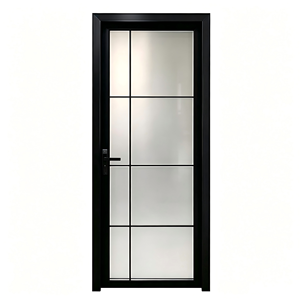
Aluminum Bathroom Door Black Frame Frosted Glass Waterproof Anti Corrosion Dry Wet Separation Hotel Apartment OEM Custom
Send an Inquiry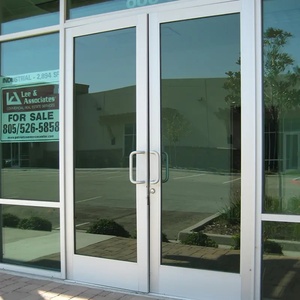
High Quality Aluminum Fixed Windows Hurricane Impact Glass Storefront Entrance Door
Send an Inquiry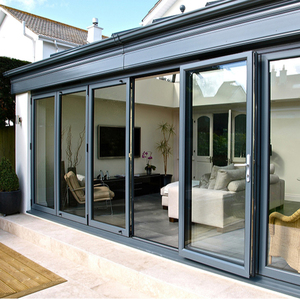
Custom Thermal Break Heavy Duty Aluminum Sliding Door Windproof Tempered Double Glazed Glass Sliding Doors For Houses
Send an Inquiry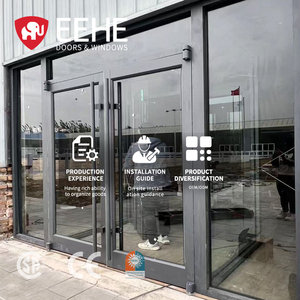
EEHE Storefront Door Modern Heavy Duty Aluminum Energy Efficient Slim Frame Tinted Glass Commercial Door For Durable Design
Send an Inquiry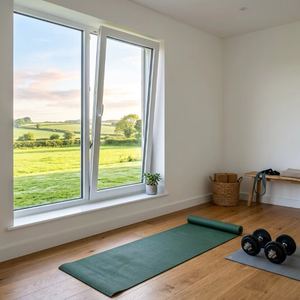
BOCHARM Eco-Friendly Aluminum Tilt and Turn Window Garden View Double Tempered Low-E Glass Soundproof Fitness Room Window
Send an Inquiry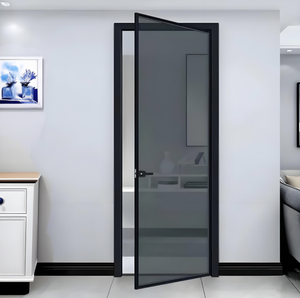
A60 Fire Rated Aluminum Casement Door 60Min Fire Resistance Tempered Glass for Commercial Fire Exit Villa Factory Test Report
Send an Inquiry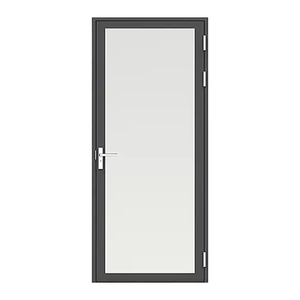
Aluminium Profile Slim Door Frame Wardrobe Customized Doors for Kitchen Bathroom Usage
Send an Inquiry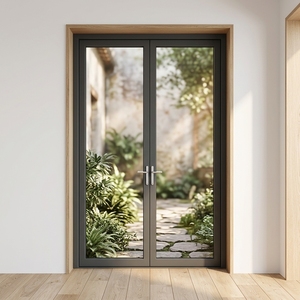
Waterproof and Thermal Insulated Aluminum Double Front Door with Multi Point Locking System for Villa Entrance
Send an InquiryIndustry Procurement Insight: Modern architectural envelopes demand a seamless blend of structural integrity, low solar heat gain coefficients (SHGC), and zero-maintenance durability. As a specialized CE certified aluminum porch door factory and exporter, Meric Window Systems bridges the gap between high-end architectural engineering and cost-optimized OEM manufacturing, delivering pre-tested, unitized porch entrance systems built for harsh European, North American, and Australian climatic extremes.
Factory Infrastructure & Quality Assurance Protocol
Our state-of-the-art aluminum extrusion and window fabrication facilities operate under strict ISO 9001 and CE execution guidelines, ensuring every porch door conforms to international safety and thermal metrics.
Certified CE & EN Compliance
Every structural porch door configuration undergoes rigorous type testing according to EN 14351-1:2006+A2:2016 standards. We provide fully documented Declarations of Performance (DoP) covering air permeability, water tightness, wind resistance, and thermal transmittance.
PA66GF25 Thermal Break Barriers
We utilize precision-engineered Technoform polyamide thermal break strips (24mm to 34mm PA66 reinforced with 25% glass fiber). This effectively eliminates thermal bridging, preventing indoor condensation while drastically lowering HVAC energy expenditures.
Automated CNC Fabrication
Utilizing 5-axis German-made CNC machining centers, profile cutting, hardware slotting, and corner crimping are executed to tolerances within ±0.1mm. High-strength corner keys and dual-component polyurethane corner adhesives guarantee structural rigidity.
100% Pre-Shipment Trial Assembly
Prior to international container packing, 100% of custom porch doors undergo factory pre-assembly. Lock alignments, hinge smooth-motion tolerances, EPDM seal compression, and glass glazing fitments are fully verified and recorded via video documentation.
Export-Grade Protective Packaging
Aluminum profiles are shielded with anti-scratch protective film and impact-resistant foam corner guards. Complete assemblies are sealed in heavy-duty vacuum shrink wrapping and bolted into steel-reinforced fumigated wooden crates designed for seamless crane offloading.
Global Architectural Hardware
Outfitted exclusively with premium hardware systems from Siegenia, Hoppe, GU, and Roto. Multi-point locking configurations offer anti-burglary protection rated up to RC2/RC3 (EN 1627 standard) with effortless mechanical operation.
Aluminum Porch Door Specification & Performance Matrix
Review engineering metrics across our primary CE certified aluminum porch and entrance door series to select the exact profile configuration for your project's climate zone and structural load demand.
| System Category | Aluminum Profile Alloy | Thermal Break Width | Glazing Specification | Thermal Transmittance (Uw) | Wind Load Resistance | Water Tightness | Acoustic Rating (Rw) |
|---|---|---|---|---|---|---|---|
| Heavy-Duty Porch Entrance | 6063-T6 High-Tensile | 34mm PA66GF25 | 6mm Low-E + 16Ar + 6mm Toughened | 1.1 W/m²K | Class C5 (≥ 3000 Pa) | Class E900 (900 Pa) | 42 dB |
| Panoramic Slim Porch Sliding | 6063-T5 Structural | 24mm Polyamide | 8mm Low-E + 14Ar + 8mm Toughened | 1.3 W/m²K | Class C4 (≥ 2400 Pa) | Class 9A (600 Pa) | 38 dB |
| Hurricane Impact Storefront | 6063-T6 Reinforced | 28mm Polyamide | 6mm + 1.52PVB + 6mm Laminated | 1.4 W/m²K | Class C5 / High Velocity Hurricane Zone | Class E1050 (1050 Pa) | 45 dB |
| A60 Fire-Rated Entrance Door | Special Thermal Frame | Ceramic Fiber Core | 26mm Fire-Resistant Intumescent IGU | 1.6 W/m²K | Class C3 (≥ 1800 Pa) | Class 7A (300 Pa) | 40 dB |
| Ultra-Narrow Bi-Fold Porch Door | 6063-T5 Extruded | 20mm Polyamide | 5mm Low-E + 12Ar + 5mm Toughened | 1.5 W/m²K | Class C3 (≥ 1800 Pa) | Class 8A (450 Pa) | 36 dB |
Future Procurement & Design Trends in Aluminum Porch Systems
An in-depth whitepaper analysis for procurement officers, real estate developers, and facade engineers navigating evolving building codes and eco-conscious architectural demands.
01. Decarbonization & Passivhaus Level Thermal Efficiency
The global building envelope market is undergoing a rapid regulatory shift. European Energy Performance of Buildings Directive (EPBD) updates and stricter US energy codes require residential porch and entrance doors to achieve thermal transmittance values of Uw ≤ 1.0 - 1.2 W/m²K. Factory exporters must go beyond standard aluminum frames by integrating multi-chambered polyamide break cavities, warm-edge spacer bars (TGI/Swiss-spacer), and argon-filled triple glazing. Purchasing managers are prioritizing manufacturers capable of presenting verified thermal simulation reports (LBNL THERM modeling) alongside physical CE certification test data.
02. Architectural Minimalist Sightlines & High-Load Engineering
Modern architectural aesthetics dictate ultra-narrow frame profiles that maximize natural daylight harvesting. However, reducing aluminum visible width while increasing glass panel weight (often exceeding 350 kg per leaf in oversized porch entrances) presents structural engineering challenges. Future procurement trends focus on high-tensile 6063-T6 aluminum alloys coupled with concealed heavy-duty stainless steel rollers, multi-point lock rods, and structural glass bonding. Exporters who provide structural wind-pressure calculations and finite element analysis (FEA) for custom wide-span porch doors hold a distinct competitive edge.
03. Smart Access Control & Integrated Automation
Porch doors are transitioning from basic barrier entryways into intelligent access hubs. Leading commercial and high-end villa procurement projects now request factory-integrated electromechanical multi-point locks compatible with biometrics (fingerprint scanning, facial recognition), Bluetooth low energy (BLE), and building management system (BMS) protocols. Factory pre-wiring, concealed cable conduits within profile cavities, and magnetic contact sensors are rapidly becoming baseline requirements for high-margin export projects.
04. Sustainable Aluminum Sourcing & Surface Treatment Lifespans
Environmental Product Declarations (EPD) are becoming mandatory in public and commercial tenders across Europe and Oceania. Overseas buyers are scrutinizing recycled content ratio in 6063 billets and enforcing strict surface treatment standards. Advanced Qualicoat Class 2 powder coatings and fluorocarbon (PVDF) finishes offering 25+ year color retention, anti-chalking, and salt-spray corrosion resistance (up to 3000 hours EN ISO 9227 testing) are mandatory for coastal porch installations.
B2B Buyer Verification Guide: Evaluating Aluminum Porch Door Exporters
To eliminate risks associated with non-compliant imports, poor thermal performance, or structural failure under severe wind conditions, professional buyers should execute a multi-tier factory evaluation.
1. Verify Authenticity of CE Certification
Ensure the manufacturer provides valid Notified Body (NB) initial type testing (ITT) reports according to EN 14351-1. Authentic certificates detail specific test values for air permeability (EN 12207), water tightness (EN 12208), and resistance to wind load (EN 12210), rather than generic self-declarations.
2. Audit Aluminum Profile & Glass Build-Up
Inspect primary wall thickness. CE compliant exterior doors require primary wall thickness of ≥ 2.0mm. Confirm double/triple glazed units use certified tempered safety glass (EN 12150 / IGCC certified) with primary butyl and secondary silicone edge seals to prevent seal failure.
3. Evaluate Sealing & Drainage Mechanics
Superior porch doors utilize multi-layer continuous EPDM (Ethylene Propylene Diene Monomer) gasket seals rather than cheap PVC gaskets. Check for pressure-equalized drainage channels with anti-backflow caps that effectively purge driven rainwater during high-wind storms.
Frequently Asked Questions: B2B Procurement & Engineering
Direct answers to critical technical questions asked by importers, architects, and structural engineers during project specification.
What exact CE certifications and EN standards apply to aluminum porch doors imported into the European Union?
Aluminum porch and exterior entrance doors must comply with harmonized European standard EN 14351-1:2006+A2:2016 (Windows and doors - Product standard, performance characteristics). Key mandatory test performance metrics include Air Permeability (EN 12207, typically Class 3 or 4), Water Tightness (EN 12208, Class 7A to E900), Resistance to Wind Load (EN 12210, Class C3 to C5), and Thermal Transmittance (EN ISO 10077-1/2, Uw value calculation). The exporter must issue a formal Declaration of Performance (DoP) and affix the CE mark to product packaging.
How does profile thermal break design (PA66GF25) impact building envelope energy ratings?
Aluminum is inherently a highly conductive material (k ≈ 160-200 W/m·K). Without a thermal break, extreme heat or cold transfers directly into the building interior, causing massive thermal losses and indoor condensation. By inserting a low-conductivity polyamide strip (PA66 reinforced with 25% glass fiber, k ≈ 0.3 W/m·K) between the inner and outer aluminum extrusions, the thermal bridge is broken. Widening the polyamide strip from 14mm to 34mm lowers total frame thermal transmittance (Uf) from ~3.5 W/m²K down to under 1.5 W/m²K, enabling overall door U-values (Uw) of ≤ 1.1 W/m²K when combined with Low-E insulated glass.
What is the difference between 6063-T5 and 6063-T6 aluminum alloys for heavy-duty porch entrance doors?
Both belong to the Al-Mg-Si alloy family, but differ in heat treatment and mechanical properties. 6063-T5 is artificially aged after extrusion, offering an ultimate tensile strength of around 150-160 MPa and yield strength of ~110 MPa. It provides an exceptionally smooth surface finish ideal for powder coating and anodizing. 6063-T6 undergoes solution heat treatment and artificial aging, raising ultimate tensile strength to ≥ 205 MPa and yield strength to ≥ 170 MPa. We utilize 6063-T6 for high-load structural porch mullions, hurricane-impact frames, and heavy commercial entrance doors requiring maximum wind pressure deformation resistance.
How do your factory porch doors prevent water infiltration and air leakage in coastal climates?
We employ a triple-seal system featuring continuous, non-aging EPDM gaskets along the door frame and sash perimeters. Pressure-equalized inner chambers ensure water that penetrates under extreme wind pressure is diverted immediately away from the structural thermal break. Rainwater flows downward into engineered drainage channels equipped with one-way anti-backflow flap valves that prevent high wind pressure from driving water back into the internal frame profile.
What customization capabilities are available for commercial storefront vs. residential luxury porch doors?
For commercial storefront applications, we offer heavy-duty continuous hinges, automatic overhead door closers, panic hardware exit devices (EN 1125 certified), single-glazed or laminated hurricane glass, and high-traffic anodized surface finishes. For residential luxury porch doors, customization includes ultra-narrow sightlines, flush threshold sills for barrier-free access (ADA compliant), concealed multi-point locking systems, decorative glass mullions, integrated insect screens, and dual-color powder coating (different interior/exterior RAL colors).
What export packing standards are used to eliminate glass breakage and surface scratching during ocean freight?
All finished units are coated with a 70-micron protective film, wrapped in shock-absorbing polyethylene foam, and reinforced with hard plastic edge guards. Assembled frames or unitized glass panels are stacked systematically inside heavy-duty fumigated wooden crates or steel-framed export pallets. Rubber isolation strips separate adjacent glass panels to prevent vibration friction. Sealed containers include industrial-grade desiccant packs to prevent moisture condensation (container rain) during trans-oceanic shipping.
Partner with a Trusted CE Certified Aluminum Porch Door Manufacturer
Submit your architectural drawings, door schedules, or project specifications. Our engineering design team will provide structural wind load verification, shop drawings, thermal simulation reports, and a competitive factory-direct quote within 24 hours.