Featured Aluminium Coated Window Systems
High-performance architectural window units engineered with 6063-T5 aluminium alloy, thermal barrier profiles, and weather-resistant surface treatments.
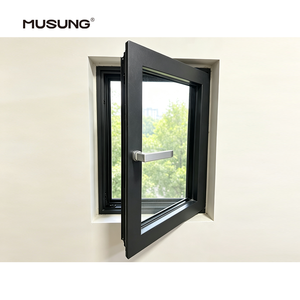
High Efficiency Windproof Aluminum Casement Windows
- Wind Resistance: Up to Class 9 (ASTM E330)
- Double Tempered Low-E Insulated Glazing
- Heavy Duty Multi-Point Lock Systems
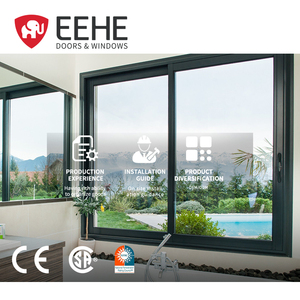
EEHE Hurricane Impact NFRC Certified Sliding Windows
- NFRC Certified Thermal Insulation
- Laminated Soundproof Impact Glass
- Precision Stainless Steel Rollers
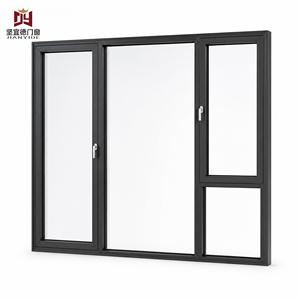
European Standard Tilt & Turn Windows with Mesh
- CE Certified Dual-Action Hardware
- Integrated Flyscreen & Burglar Proofing
- Polyamide PA66 Thermal Break Strip
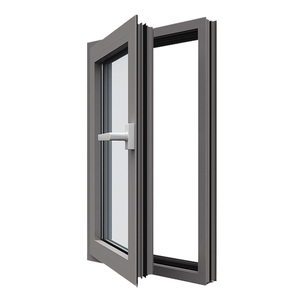
Storm Impact Resistant Double Glazed Windows
- High-Velocity Hurricane Zone (HVHZ) Ready
- Argon Gas Filled Thermal Insulation
- Fluorocarbon PVDF Coated Frame
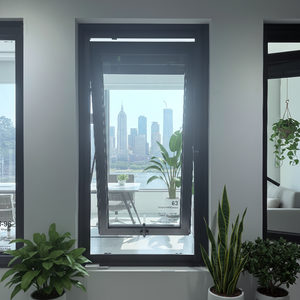
DERCHI Series Modern Hurricane Proof Casement Window
- Ultra-Narrow Sightline Frame Design
- Multi-Chambered Profile Structure
- Seamless Corner Crimping Technology
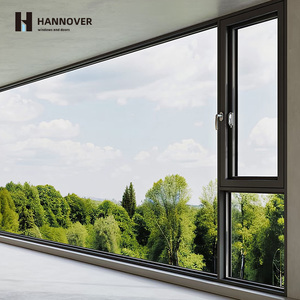
Fireproof Safety Rated Commercial Thermal Break Window
- Fire-Resistant Intumescent Seals
- Class 4 Water Tightness Sealability
- Architectural Powder Coating Finish
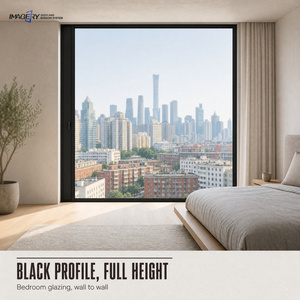
Micro-Ventilation Burglar Proof Casement Window
- Integrated Micro-Ventilation Gap
- Concealed Hinge & Lock Mechanism
- EPDM Continuous Gasket Seal
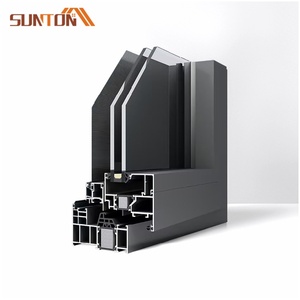
Commercial Heavy-Duty Low-E Soundproof Window
- Uw Value ≤ 0.8 W/m²K (Passive House)
- Acoustic Reduction up to STC 45dB
- High-Durability Anodized Coating
Precision Surface Coating & Profile Engineering
Understanding why specialized aluminium coating technology directly determines building lifespan, structural durability, UV degradation resistance, and thermal performance.
PVDF Fluorocarbon Coating
Utilizing 70% resin-based Kynar 500 / Hylar 5000 PVDF coatings applied electrostatically. Delivers unmatched chalking resistance, chemical inertness, and salt-spray tolerance exceeding AAMA 2605 specifications for coastal exposures.
Polyamide Thermal Barriers
Integrated PA66-GF25 (25% Glass Fiber Reinforced Polyamide) thermal break strips create a mechanical structural separator between inner and outer extruded aluminium frames, eliminating thermal bridging and condensation.
Electrostatic Powder Coating
Architectural grade polyester powder coatings meeting AAMA 2604 standards. Free of VOC solvent emissions, offering 1000+ custom Qualicoat Class 2 colors, wood-grain heat transfers, and scratch-resistant matte textures.
1. Technical Architectural Overview: Aluminium Coated Windows Manufacturing in China
In modern architectural engineering, exterior fenestration systems serve as the structural line of defense between dynamic environmental forces and internal microclimates. As global building energy codes tighten—driven by the international push toward Zero-Net Energy (ZNE) and Passive House (Passivhaus) standards—the role of premium aluminium coated window manufacturers and exporters in China has evolved from raw material processing to high-precision facade system engineering.
Architectural aluminium profiles extruded from 6063-T5 or 6063-T6 virgin alloys possess exceptional strength-to-weight ratios; however, unprotected aluminium rapidly oxidizes when exposed to oxygen, humidity, industrial airborne pollutants, and ultraviolet radiation. Advanced surface coating technology—specifically Fluorocarbon (PVDF) spray finishing, architectural polyester powder coating, and anodic conversion oxidation—transforms structural aluminium into an inert, highly durable building envelope system capable of delivering 30 to 50 years of maintenance-free performance.
Information Gain Insight: The longevity of an aluminium coated window depends not merely on the thickness of the frame, but on the chemical adhesion of the chromate/titanium conversion pre-treatment layer prior to top-coat application. High-tier Chinese factories utilize automated multi-stage dip tank pre-treatments that ensure zero delamination or blister formation under extreme UV and coastal salt fog conditions (ASTM B117 compliance).
2. Surface Treatment Technologies Compared: PVDF vs. Powder Coating vs. Anodizing
When specifying fenestration systems for international real estate development, commercial high-rises, or custom luxury residential villas, selecting the correct coating metallurgy is crucial for long-term project viability. The table below delineates the structural performance metrics of primary surface coating methods utilized by top-tier Chinese window exporters:
| Coating Specification | PVDF (Fluorocarbon 3-Coat) | Architectural Powder Coating | Hard-Coat Anodizing |
|---|---|---|---|
| Primary Resin / Chemistry | Polyvinylidene Fluoride (70% Kynar 500) | Super-Durable Polyester / TGIC-Free | Electrochemical Aluminum Oxide ($Al_2O_3$) |
| Standard Compliance | AAMA 2605 | AAMA 2604 / Qualicoat Cl. 2 | AAMA 611 Class I |
| Salt Spray Resistance (ASTM B117) | 4,000 + Hours | 3,000 + Hours | 3,000 + Hours |
| UV Degradation Resistance | Exceptional (Minimal Color Shift ΔE < 5) | High (Color Shift ΔE < 5 at 5 yrs) | Total (Inorganic Metallic Finish) |
| Optimal Application Zone | Coastal, Tropical, Severe UV & Industrial | Urban Residential, Commercial Inland | Modern Minimalist, Coastal Architectural |
| Color & Texture Versatility | Metallic, Solid, Pearl Finishes | Unlimited Colors, Matte, Wood Grain | Silver, Champagne, Bronze, Black |
3. Structural Engineering & Thermal Insulation Dynamics
Beyond surface protection, modern aluminium window design relies on mechanical thermal isolation. Unbroken aluminium profiles exhibit high thermal conductivity ($k \approx 200 \text{ W/m}\cdot\text{K}$), which leads to significant thermal bridging, cold interior surfaces, condensation buildup, and elevated HVAC energy loads. To solve this, leading Chinese factories employ precision-machined Polyamide PA66-GF25 thermal breaks.
Polyamide PA66-GF25 Strip Assembly Mechanics
The thermal barrier is created by inserting two parallel strips of 25% glass-fiber-reinforced polyamide between the inner and outer extruded aluminium profiles. The glass fiber reinforcement matches the linear coefficient of thermal expansion ($\alpha = 2.3 \times 10^{-5}/\text{K}$) of aluminium, ensuring that the composite profile maintains structural integrity under extreme temperature swings (from $-40^\circ\text{C}$ to $+80^\circ\text{C}$) without structural shear failure or frame warping.
Glazing System Integration: Low-E & Inert Gas Cavities
The frame operates as part of an integrated insulated glass unit (IGU) assembly. High-performance exports typically feature:
- Double/Triple Tempered Safety Glass: Standard configurations range from $6\text{mm} + 12\text{Ar} + 6\text{mm}$ double glazed up to triple glazed units with dual Low-E coatings.
- Magnetron Sputtered Low-E Coatings: Applied to surface #2 or #3 to reflect long-wave infrared heat back into the interior during winter while blocking short-wave solar radiation during summer.
- Warm Edge Spacer Technology: Polymer-composite or stainless-steel hybrid spacers replace traditional aluminium box spacers at the glass perimeter, mitigating thermal bridging at the IGU edge.
- Sound Transmission Class (STC) Attenuation: Asymmetrical glass thickness configurations (e.g., $8\text{mm laminated} + 16\text{Ar} + 6\text{mm tempered}$) damp sound waves across diverse frequencies, achieving acoustic dampening ratings up to STC 45dB.
4. Future Global Procurement Trends in B2B Window Sourcing (2025–2030)
As commercial developers, architectural firms, and procurement directors navigate changing global market landscapes, several dominant trends are shaping how aluminium windows are specified and procured from leading manufacturing hubs in China:
A. Ultra-Narrow Sightlines and Panoramic Glass Elevation
Architectural aesthetics increasingly demand minimal structural visual sightlines. Next-generation sliding doors and casement windows feature interlocks measuring as slim as $20\text{mm} \text{ to } 30\text{mm}$. To support massive structural glass weights (up to $500\text{kg}$ per panel), factories are incorporating structural silicone bonding ($SSG$) where the glass panel itself acts as a load-bearing stiffener for the slim aluminium frame.
B. Strict Carbon Footprint & Recycled Aluminium Usage
European and North American regulatory bodies are introducing embodied carbon metrics into building codes. Premier Chinese exporters are transitioning toward low-carbon primary aluminium smelted using hydroelectric power, alongside incorporating post-industrial recycled aluminium content ($>30\%$), drastically reducing the global warming potential ($\text{GWP}$) per square meter of finished fenestration.
C. Smart Fenestration & Automated Building Integration
Commercial facades increasingly demand motorized lift-and-slide doors, automated awning windows, and rain-sensor-activated casements connected directly to Building Management Systems (BMS). Embedded actuator drives are fully concealed within the thermally broken profiles, maintaining seamless interior design aesthetics while enabling smart micro-ventilation strategies.
Window System Selection Matrix for Global Projects
Matching architectural typologies, climate zones, and structural demands to the optimal coated aluminium window configuration.
Coastal Luxury Villas
Recommended: PVDF Coated Hurricane Impact Sliding & Outward Casement Systems.
Key Drivers: Resistance to 4,000-hour salt spray, laminated impact glass for storm protection, and high water penetration tightness ($>700\text{Pa}$).
High-Rise Commercial Towers
Recommended: Unitized Thermal Break Curtain Wall & Inward Tilt & Turn Windows.
Key Drivers: Extreme structural wind load resistance (Design Pressure up to $\pm 5000\text{Pa}$), dual-action safety tilt ventilation, and fireproof perimeter sealing.
Cold Climate Passive Houses
Recommended: Triple Glazed Tilt & Turn Windows with $34\text{mm}$ Polyamide Strips.
Key Drivers: Ultra-low thermal transmittance coefficient ($U_w \le 0.8 \text{ W/m}^2\text{K}$), airtightness Class 4 (EN 12207), and multi-barrier EPDM gasket systems.
5. Enterprise Advantage: Why Meric Window Systems Represents Manufacturing Excellence
As a specialized manufacturer of architectural aluminium fenestration systems, Meric Window Systems Co., Ltd. operates at the intersection of metallurgical engineering, structural design, and international logistics. Our modern manufacturing facility is engineered around a zero-defect quality control framework, providing institutional buyers with guaranteed supply chain predictability.
In-House Tooling & Extrusion
Operating dedicated extrusion presses producing custom profile geometries up to 2.5mm wall thickness. Every billet of 6063-T5 alloy is verified via optical emission spectrometry for chemical purity before extrusion.
Automated Coating Lines
Equipped with vertical and horizontal Swiss Gema electrostatic powder coating lines and multi-stage dip pretreatments, ensuring 100% uniform coating thickness ($60\mu\text{m} - 80\mu\text{m}$ for powder, $>25\mu\text{m}$ for PVDF).
Full-Scale Fenestration Testing
In-house air-water-structural test chambers capable of evaluating full-size window units according to ASTM E283 (Air Leakage), ASTM E331 (Water Penetration), ASTM E330 (Structural Performance), and AS2047 standards.
Complete Export Logistics & Unitized Crating Security
Overseas shipment of glass fenestration demands rigorous protective packaging. Every window manufactured by Meric Window Systems is protected via:
- Peelable protective film applied to all coated aluminium surfaces to prevent jobsite mortar staining and scratch damage.
- Custom-molded corner guards and high-density EPDM foam wrapping.
- Fully enclosed, fumigated ISPM-15 wooden crates or heavy-duty steel A-frame racks equipped with air-cushioned bases for containerized ocean freight.
- Detailed unit labeling indexed directly to the client's architectural window schedule for rapid, error-free jobsite sorting and installation.
B2B Procurement & Technical FAQ
Detailed technical answers for procurement directors, project developers, and structural engineers sourcing aluminium windows from China.
What differentiates PVDF coating from standard powder coating on aluminium windows?
PVDF (Polyvinylidene Fluoride) fluorocarbon coating is a liquid resin system (typically 70% Kynar 500) that offers superior resistance to chemical weathering, UV radiation, and chalking compared to standard polyester powder coatings. PVDF is recommended for severe coastal environments and commercial high-rises requiring AAMA 2605 performance. Standard architectural powder coatings (AAMA 2604) offer excellent impact resistance, a broader spectrum of matte colors, and wood-grain textures at a more economical price point for inland residential developments.
How does a thermal break aluminium frame prevent interior condensation?
Condensation occurs when warm, humid interior air contacts a cold frame surface whose temperature drops below the dew point. A thermal break frame integrates a low-conductive polyamide strip (PA66-GF25) between the exterior and interior aluminium profile sections. This structural barrier dramatically reduces thermal transfer (lowering the frame $U_f$ value), keeping the interior aluminium surface temperature close to ambient room temperature and preventing condensation moisture from damaging interior drywall and finishes.
Can Meric Window Systems supply products tested and certified to local building codes (NFRC, CE, AS2047)?
Yes. Our window systems are engineered and tested to satisfy major international standards. We supply NFRC thermal performance ratings and Miami-Dade/Florida Product Approval hurricane impact testing for North America, CE marking according to EN 14351-1 for the European Union, and AS2047 / AS1288 structural and glazing compliance documentation for Australia and New Zealand.
What information is required to obtain a formal project quotation and shop drawings?
To generate an accurate engineering quote, please provide: 1) Architectural CAD elevation drawings or a window schedule specifying opening rough dimensions; 2) Desired opening typologies (e.g., casement, tilt & turn, sliding); 3) Glass specifications (double/triple glazed, Low-E, tinted, laminated); 4) Surface coating preference and color code (RAL / AAMA); and 5) Project geographic location for wind load design pressure calculations.
What is the typical lead time from drawing sign-off to container loading?
Standard production lead time is 25 to 35 calendar days following client approval of shop drawings and color samples. For specialized custom extrusion dies or non-standard glass configurations (such as curved laminated impact glass), lead times range from 40 to 45 days. We provide continuous video and photographic inspection updates throughout the fabrication process.
How are structural wind loads ($P_3$) calculated for high-wind or hurricane-prone coastal regions?
Our structural engineering team performs structural calculations using finite element analysis (FEA) software. We calculate structural deflection based on building height, terrain category, exposure velocity, and basic wind speed (in accordance with ASCE 7-16 or Eurocode 1). We then specify appropriate profile wall thickness, internal steel or aluminium mullion reinforcements, and laminated glass interlayers (e.g., SentryGlas® SGP) to ensure zero glass blowout or structural frame yield under maximum design pressure.
Request Custom Engineering Proposal & Product Catalog
Connect directly with our fenestration technical sales team. We provide complimentary drawing reviews, structural wind load assessments, thermal modeling, and factory-direct pricing for your project window schedule.
Get Catalog