Featured Aluminium Crittall Style & Architectural Glazing Systems
Explore our certified export-grade thermal break aluminium doors and windows. Engineered for hurricane-resistant, energy-efficient, and minimal sightline architectural projects worldwide.
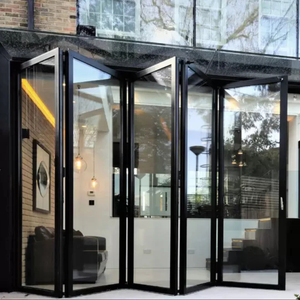
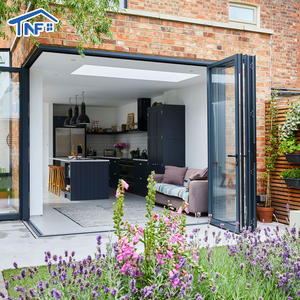
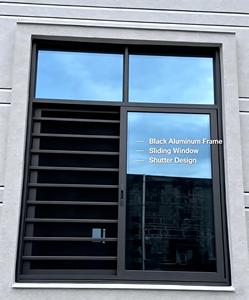
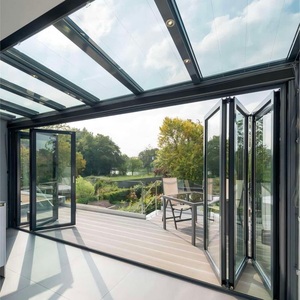
1. Executive White Paper: The Architectural Evolution of Crittall-Style Systems
The architectural demand for steel-look, heritage grid glazing—traditionally categorized as "Crittall style"—has undergone a paradigm shift over the last decade. While classic hot-rolled steel profiles laid the groundwork for industrial visual aesthetics, their modern exterior application is severely restricted by systemic thermal bridging, prohibitive unit weight, susceptibility to atmospheric oxidation in coastal environments, and high procurement costs. Leading global architects, façade engineers, and B2B procurement heads are systematically replacing legacy steel with thermally broken exterior aluminium Crittall-style doors and window systems.
As China's premier architectural aluminium manufacturer and global exporter, Meric Window Systems Co., Ltd. has re-engineered the classic industrial grid design into a high-performance external building envelope product. By integrating CNC precision joinery, multi-point lock security, applied astragal bars, and argon-filled Low-E insulated glass units (IGU), Chinese suppliers now provide developers with a solution that delivers heritage aesthetic value alongside modern structural and energy standards.
Structural Integrity & Alloys
Fabricated from primary 6063-T5 extruded aluminium alloy featuring wall thicknesses ranging from 2.0mm to 3.0mm. Profile geometry is stress-analyzed to withstand extreme wind deflection limits (L/175 to L/250).
Advanced Thermal Barriers
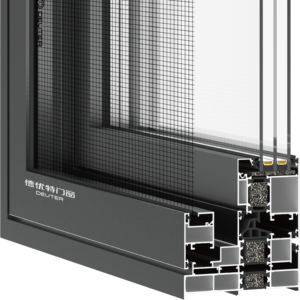
Interlocking 24mm to 34mm German-engineered PA66 polyamide strips reinforced with 25% glass fiber eliminate thermal bridges, drastically reducing HVAC thermal load and eliminating internal condensation risk.
Acoustic & Weather Proofing
Features continuous triple-layer vulcanized EPDM gaskets paired with concealed multi-point lock systems, achieving sound attenuation up to STC 42 dB and water resistance up to 1050 Pa.
2. Engineering Comparison: Steel Crittall vs. Thermally Broken Aluminium
To validate profile selection for high-end residential villas, commercial facades, and hospitality projects, technical specifiers must evaluate core engineering metrics across material categories:
| Performance Standard | Legacy Hot-Rolled Steel | Standard Non-Thermal Aluminium | Meric Thermally Broken Aluminium |
|---|---|---|---|
| Frame U-Value (W/m²K) | 4.5 – 5.8 (Poor Insulation) | 5.0 – 6.2 (High Thermal Bridge) | 1.1 – 1.6 (High Energy Efficiency) |
| Sightline Interlock Width | 25mm – 35mm | 45mm – 65mm | 20mm – 35mm (Slim Architectural Grid) |
| Corrosion Resistance | Low (Requires constant repainting) | Moderate | Superior (Fluorocarbon PVDF / Anodized) |
| Wind Load Deflection | High Structural Mass | Moderate Mass | Optimized (Alloy 6063-T5 Structural Ribs) |
| Impact Rating Capabilities | Limited Glazing Options | Standard Tempered Glass | ASTM E1996 / Florida TAS 201/202/203 |
| Manufacturing Lead Time | 14 – 20 Weeks | 4 – 6 Weeks | 4 – 6 Weeks (Precision CNC Scalability) |
3. Future Procurement & Sourcing Trends (2025–2030)
The B2B procurement environment for exterior fenestration systems is undergoing rapid structural transformations driven by global building decarbonization codes, digital manufacturing standards, and advanced material science. Global buyers sourcing from China are prioritizing suppliers aligned with the following key industry vector shifts:
A. Low-Embodied Carbon Aluminium Billets
Regulatory frameworks like the EU Carbon Border Adjustment Mechanism (CBAM) and US LEED v4.1 certifications demand transparent Environmental Product Declarations (EPD). Modern Chinese exporters are shifting toward green-hydroelectric smelted aluminium billets, capping embodied carbon emissions below 4.0 kg CO₂/kg Al compared to the legacy industry average of 12.0 kg CO₂/kg Al.
B. Smart Glass & Concealed Motorization Integration
Next-generation external Crittall-style doors are incorporating sub-surface concealed automation. Motorized multi-point drives operating on 24V DC brush-less motors are seamlessly integrated within narrow 30mm stiles, interfacing directly with KNX, Crestron, and smart building management systems (BMS).
C. Ultra-Thin Vacuum Insulated Glazing (VIG)
To maintain slender Crittall profiles without heavy double or triple glass depth, leading manufacturers are adopting Vacuum Insulated Glass (VIG). VIG technology achieves U-values under 0.60 W/m²K within an overall glass profile thickness of just 8.3mm, enabling historically accurate grid proportions with passive-house performance.
D. High-Durability Marine-Grade PVDF Coatings
Exterior doors in coastal villa projects require extreme resistance to salt spray and UV degradation. Procurement specifications now mandate 3-coat/2-bake Kynar 500® PVDF fluorocarbon coatings exceeding AAMA 2605 testing standards (capable of surviving 4,000+ hours of continuous salt spray testing without blistering or chalking).
4. Industry Development Trends: Aesthetic Authenticity Meets Modern Engineering
Architectural design trends show a strong preference for minimal industrial aesthetics across both modern minimalist structures and historic adaptive-reuse projects. The engineering evolution of external aluminium Crittall doors focuses on three architectural breakthroughs:
1. True Divided Lites (TDL) vs. Applied Astragal Bars
While legacy systems relied on cutting small glass panes into True Divided Lites—increasing leak risk and thermal bridging—modern design utilizes single-pane double/triple glazed IGUs with CNC-machined exterior astragal bars and internal warm-edge duplex spacers. This retains authentic shadow lines while ensuring watertight performance.
2. Flush Thresholds & Concealed Drainage
Transitions between interior living rooms and outdoor patios demand zero-barrier flush thresholds. Modern Chinese profile engineering integrates invisible sub-floor drainage channels equipped with check-valves to prevent water back-flow during storm surges.
3. Hurricane Impact Security System Integration
By embedding internal steel reinforcements inside 6063-T5 extrusions and utilizing SentryGlas® (SG) ionoplast interlayers, narrow-frame Crittall doors achieve Florida Building Code (FBC) compliance for High Velocity Hurricane Zones (HVHZ).
5. Why Partner with Meric Window Systems: Factory Capabilities & OEM Expertise
As a premier Chinese exporter specializing in high-performance fenestration systems, Meric Window Systems Co., Ltd. bridges technical design with scalable factory production. Our infrastructure is structured to serve global architects, facade contractors, real estate developers, and wholesale importers:
Full-Custom BIM & CAD Support
Our in-house facade engineering department reviews architectural drawings, providing complete shop drawings, wind load calculations (ASCE 7-16), thermal simulation reports (THERM/WINDOW 7.7), and 3D BIM models for precise site integration.
Precision German CNC Machining
Profile cutting, lock pocket milling, and corner key crimping are conducted using 5-axis German CNC machining centers. Cast corner keys injected with dual-component polyurethane corner adhesive ensure airtight structural joints.
Stringent Pre-Shipment QC
Every door unit undergoes a 100% factory pre-assembly test: checking diagonal tolerances (≤ 1.5mm), operating hardware friction, weather gasket compression, and water tightness before export packing in steel-framed wooden crates.
6. Frequently Asked Questions (FAQ) for Global Buyers
Find detailed technical answers to key questions asked by overseas procurement managers, structural engineers, and general contractors during the sourcing phase: