China Best Aluminium Entrance Doors Suppliers & Exporter

Industrial Whitepaper & Global Sourcing Guide: Architectural-Grade Thermal Break Entrance Systems, Ultra-Narrow Sightlines, and High-Performance Facade Engineering

Export Portfolio

Featured Aluminium Entrance & Patio Door Systems

Precision-engineered door configurations complying with global architectural and energy efficiency standards.

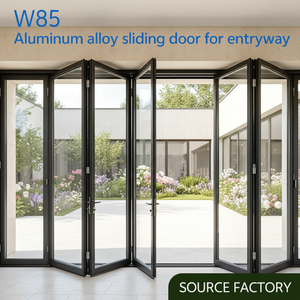
NFRC Aluminium Outdoor Accordion Door

NFRC Aluminium Outdoor Accordion Door, Thermal Break Double Tempered Glass Exterior Bi-fold Sliding Patio Door

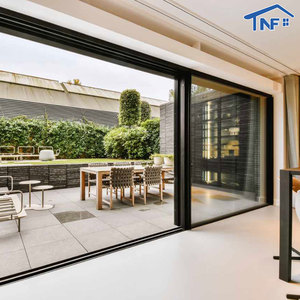
Modern Glass Sliding Door Soundproof Slim Frame

Modern Glass Sliding Door Soundproof Slim Frame Tempered Glass Exterior Aluminum Patio Sliding Doors For Houses

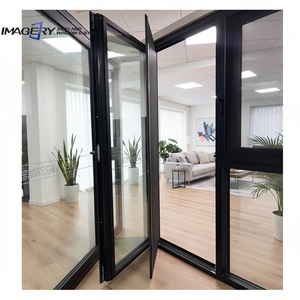
Modern Aluminium Glass Double Swing Doors

Wholesale Modern Aluminium Glass Double Swing Doors Design Tempered Glass Soundproof Door for Home Houses Business

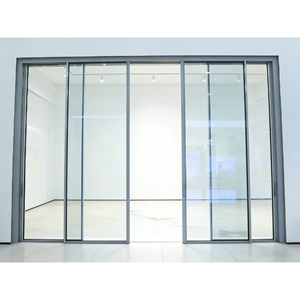
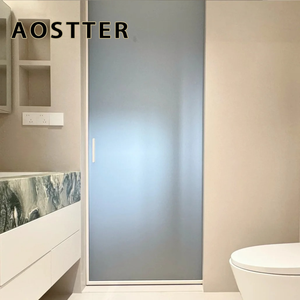
Invisible Internal Sliding Pocket Door

Aluminum Alloy Invisible Internal Sliding Pocket Door with Double Glazing Tempered Glass Sound Insulation for Interior Hotel Use

ISO Indoor Aluminum Glass Pocket Hidden Sliding Door

Modern Minimalist ISO Indoor Aluminum Glass Pocket Hidden Sliding Door for Bedroom and Kitchen with Decoration

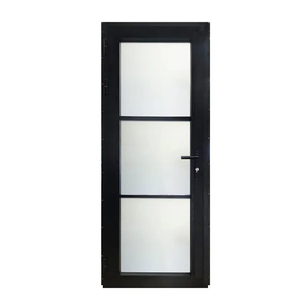
French Style Black Color Thermal Break Aluminum Doors

French Style Mainly Export to American Black Color Thermal Break Aluminum Doors Glass Hinged Front Door Exterior Patio

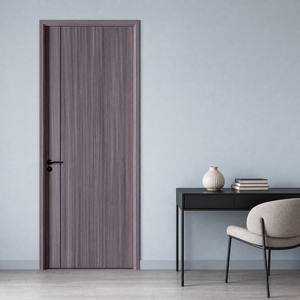
High-End Aluminum Alloy Door Wood Grain Finish

High-End Aluminum Alloy Door Aluminum Interior Door Wood Grain Finish Rust-proof Use in Home School Classroom Ward

Profile Aluminum Doors Factories Foshan China

Profile Aluminum Doors and windows Factories in Foshan China - Technical Manufacturing Standard

6063-T5
Architectural Aluminum Alloy
Uf ≤ 1.1
Thermal Break Performance (W/m²K)
STC 42dB
Acoustic Sound Insulation
100% QC
Pre-Shipment Frame Assembly Test
Engineering Whitepaper

Technical Sourcing Standard for Aluminium Entrance Doors from China

An exhaustive technical breakdown evaluating structural integrity, thermal barrier chemistry, glass unit integration, and supply chain quality control for global architectural procurement.

In modern commercial and high-end residential architecture, the entrance door serves as both a primary design focal point and a critical building envelope seal. As global building codes enforce stricter energy performance metrics (such as ASHRAE 90.1, NFRC standards, and the EU Energy Performance of Buildings Directive), specifying aluminium entrance doors requires an in-depth technical analysis far beyond visual aesthetics. China—specifically the specialized manufacturing ecosystem in Foshan, Guangdong—has established itself as the global epicenter for precision extruded aluminium systems, combining state-of-the-art multi-chamber profile engineering with cost-efficient scalability.

To achieve maximum structural stability and long-term durability against extreme wind pressures, thermal stress, and atmospheric corrosion, top-tier suppliers utilize 6063-T5 or 6063-T6 primary aluminium billets. Unlike recycled scrap alloys, primary 6063-T5 profiles maintain precise chemical composition tolerances (Magnesium 0.45–0.9%, Silicon 0.2–0.6%), delivering tensile strengths exceeding 205 MPa and yield strengths above 170 MPa. This structural rigidity allows architects to specify expansive glass panels with ultra-narrow visible sightlines without compromising deflection criteria under severe hurricane wind loads.

Thermal Break Thermodynamics & Profile Metallurgy

The fundamental key to energy efficiency in exterior aluminium doors lies in the structural thermal barrier. Raw aluminium possesses a high thermal conductivity of approximately 200 W/m·K. Unbroken metal frames act as thermal bridges, resulting in massive energy loss, indoor climate instability, and interior surface condensation. High-performance Chinese export manufacturers overcome this by employing PA66GF25 polyamide thermal break strips (Polyamide 66 reinforced with 25% glass fiber).

PA66GF25 strips possess a thermal conductivity of just 0.3 W/m·K—nearly 600 times lower than aluminium. Furthermore, because glass fiber reinforcement matches the coefficient of thermal expansion of the surrounding aluminium profiles ($2.3 \times 10^{-5} / K$), the thermal barrier maintains permanent structural bonding under operational temperature fluctuations ranging from -30°C to +80°C. Advanced profile design incorporates multi-chamber thermal cavities injected with low-density expanded polyurethane (PU) foam, dropping the frame U-factor ($U_f$) down to an extraordinary 0.8–1.2 W/m²K.

Structural Wind Pressure

Engineered profile reinforcement achieves ASTM E330 wind load resistance up to ±4000 Pa, fulfilling high-rise coastal and typhoon-zone building requirements (Class P3/P4 AS2047).

Air & Water Tightness

Integrated continuous EPDM triple-gasket seals and step-down pressure equalizer drainage channels prevent water ingress under 720 Pa cyclic water pressure (ASTM E331).

Acoustic STC Rating

Multi-layer insulated glass units combined with perimeter acoustic compression seals reduce ambient urban sound transmission by up to 42 dB (ISO 10140-2 certified performance).

Architectural Door System Comparison Matrix

Selecting the correct door system depends on structural opening dimensions, operational frequency, thermal exposure, and spatial traffic flow. The technical matrix below outlines the primary performance characteristics of major aluminium entrance and patio configurations exported by leading Chinese suppliers:

System Type Typical Profile Depth Thermal U-Value ($U_g$) Max Panel Dimensions Primary Hardware Integration Ideal Architectural Application
Heavy-Duty Grand Pivot Door 100mm – 120mm 1.1 – 1.4 W/m²K 2500mm (W) × 6000mm (H) Concealed German Floor Springs, Multi-Point Locks Luxury Villa Main Entrances, Hotel Lobbies
Bi-Fold Accordion Door 75mm – 85mm 1.2 – 1.6 W/m²K 1200mm (W) × 3500mm (H) per sash Stainless Steel Top/Bottom Rollers, Heavy Hinges Patio Transitions, Resort Dining Terraces
Ultra-Narrow Slim Sliding Door 150mm – 200mm (Frame) 0.9 – 1.3 W/m²K 3000mm (W) × 4000mm (H) per sash Concealed Motorized Drives, Heavy-Duty Tandem Rollers Panoramic Oceanfront Residences, Balconies
Lift & Slide Heavy Patio Door 140mm – 160mm 1.0 – 1.3 W/m²K 2500mm (W) × 3800mm (H) per sash Siegenia / Hoppe Lift-Gear Drive Transmission High-Exposure Coastal Villas, Alpine Resorts
Thermal Break Swing / French Door 70mm – 90mm 1.1 – 1.5 W/m²K 1100mm (W) × 2800mm (H) per sash CMECH / Winkhaus 3D Adjustable Hinges Standard Exterior Entrances, Side Access Doors
Market Foresight

Future Procurement & Development Trends in Aluminium Doors

How zero-carbon manufacturing mandates, smart IoT integration, and advanced surface chemistry are redefining global supply chains.

1. Low-Carbon Hydro-Powered Extrusions & CBAM Compliance

With the implementation of the European Union's Carbon Border Adjustment Mechanism (CBAM) and global ESG standards, international buyers are requiring verified Environmental Product Declarations (EPD). Tier-1 Chinese exporters are shifting extrusion billets to hydro-powered aluminium smelters, reducing embodied carbon from the industry average of 16 kg $CO_2$/kg Al down to less than 4.0 kg $CO_2$/kg Al.

2. Smart IoT Access & Motorized Concealed Automation

Future entrance door procurement heavily emphasizes smart home ecosystem compatibility. Today’s premium aluminium entrance pivot doors integrate embedded biometric fingerprint scanners, 3D facial recognition cameras, and magnetic electric strike locks connected via Zigbee or Matter protocols. Motorized slim sliding doors now feature magnetic levitation (Maglev) drives for whisper-quiet automated opening.

3. Ultra-Narrow Sightlines & Vacuum Insulated Glass (VIG)

Architectural demand favors minimalist designs where visible aluminium frames are virtually invisible. The emergence of Vacuum Insulated Glass (VIG)—which replaces argon gas gaps with a 0.1mm micro-vacuum chamber—allows 8mm thin glass units to achieve U-values ($U_g = 0.40\text{ W/m}^2\text{K}$) equivalent to solid brick walls, revolutionizing ultra-slim entrance profile engineering.

Manufacturing Excellence

Why Foshan Manufacturing Dominates Global Sourcing

Technical strengths derived from China's premier architectural aluminium industrial cluster.

Foshan, China represents over 60% of the world's architectural aluminium production capacity. This industrial concentration creates unmatched competitive advantages for global B2B procurement officers, developers, and project contractors:

AkzoNobel & Fluorocarbon Coating

Utilizing automated vertical powder coating lines equipped with AkzoNobel Interpon or PPG fluorocarbon (PVDF 3-coat) spraying ensures salt spray resistance up to 3,000+ hours, meeting AAMA 2605 and Qualicoat Class 2 standards for coastal marine projects.

CNC Automated Miter Corner Jointing

Corner strength is paramount for door leaf stability. High-end suppliers replace manual screwed joints with 5-axis CNC double-head saw cuts, injected corner cleats, and dual-component polyurethane structural adhesive for zero-gap water sealing.

Rigorous Export Container Packaging

Overseas logistics present high risk for oversized glass doors. Factory export standards incorporate protective peelable PE films, corner plastic guards, foam wrapping, and heat-treated IPPC fumigated wooden crates or steel transport racks.

Buyer FAQ

Frequently Asked Questions for Sourcing Aluminium Entrance Doors

Direct technical answers addressing procurement, compliance, customization, and international freight.

Q: What parameters are mandatory when sending architectural drawings for quotation?

To receive a precise structural calculation and price quotation, provide: 1) Architectural elevation drawings or window schedules showing rough opening (RO) sizes; 2) Desired opening operation (Pivot, Sliding, Bi-Fold); 3) Glass performance specs (e.g., 6mm Low-E + 12Ar + 6mm Tempered); 4) Surface treatment (Powder Coating RAL code or Anodized finish); and 5) Project wind load zone or site geographic location.

Q: How do thermal break aluminium entrance doors perform in extreme cold climates?

In sub-zero environments (down to -30°C), standard un-insulated doors freeze and accumulate heavy internal frost. Thermal break doors utilizing 24mm to 34mm wide PA66GF25 polyamide multi-chamber strips eliminate the thermal bridge. Combined with argon-filled triple glazing and warm-edge spacers, frame interior temperatures remain comfortable, eliminating condensation and energy loss.

Q: What hardware brands are integrated, and can client-specified hardware be used?

Standard export configurations feature premium international hardware systems including Siegenia, Hoppe, GU, Winkhaus, and CMECH, or top-tier domestic brands like Kin Long and Hopo. Profiles can be CNC-milled according to hardware templates to accommodate client-specified locks, panic bars, or smart access readers provided by the client.

Q: What structural certifications and testing standards can be provided?

Exporters regularly supply third-party lab test reports (SGS, Intertek, TUV) complying with NFRC (USA), ASTM E283/E331/E330, AS2047 (Australia), and CE EN14351-1 (Europe). Factory quality management system certifications include ISO9001, ISO14001, and Qualicoat for powder coating.

Q: What is the typical production lead time and minimum order quantity (MOQ)?

For standard profile finishes (such as Matt Black or Anodized Silver), production lead times typically range from 25 to 35 calendar days following shop drawing sign-off. Custom powder coating RAL matching or custom extrusions take 40 to 45 days. MOQ is flexible—ranging from single luxury villa custom packages to full 40ft High Cube container loads for commercial developments.

Q: How is thermal expansion managed for extra-large exterior pivot and sliding doors?

Dark-colored aluminium profiles exposed to direct intense sunlight can experience thermal expansion ("bi-metal effect"). Engineering solutions include installing anti-bi-metal split thermal break strips, expansion mullion connectors, and structural silicone glazing channels that accommodate profile movement without warping the door sash or disrupting locking mechanisms.

Request Engineering Calculations & B2B Wholesale Pricing

Consult with our structural door engineers to analyze your architectural window schedule, select profile systems, and calculate project shipping costs.

Contact Us