Engineered Architectural Product Showcase
Explore our export-grade aluminium interior doors, pivot assemblies, thermal break patio systems, and custom architectural solutions manufactured to international standards.
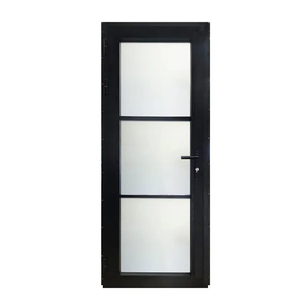
French Style Thermal Break Aluminium Hinged Glass Door
Inquire Now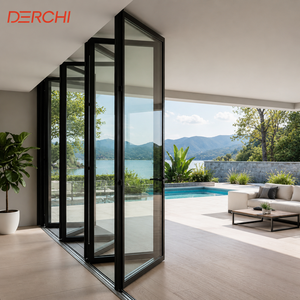
Thermal Break Impact Soundproof Aluminium Bifold Patio Doors
Inquire Now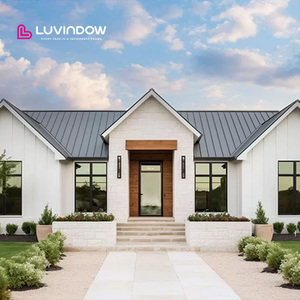
Slim Profile Ultra-Narrow View Soundproof Hinged Doors
Inquire Now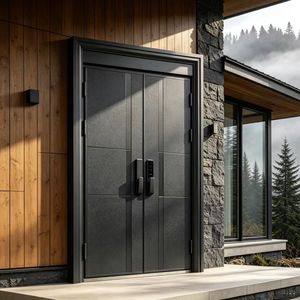
High-End Armored Security Minimalist Aluminium Main Door
Inquire Now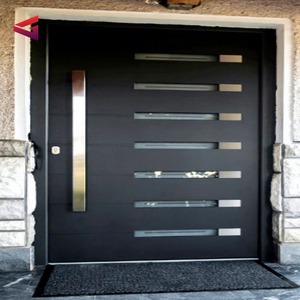
Heavy-Duty Architectural Pivot Aluminium Door with Sidelights
Inquire Now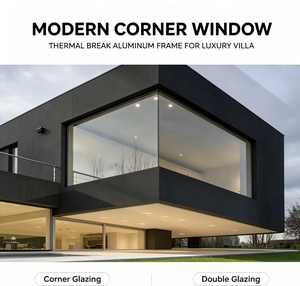
Minimalist Corner Bay Window & Integrated Thermal Door System
Inquire Now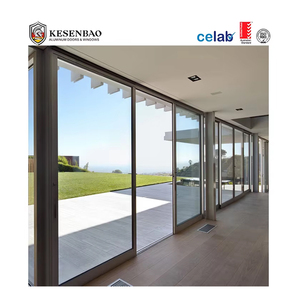
Australian Standard Double/Triple Glazed Aluminium Sliding Door
Inquire Now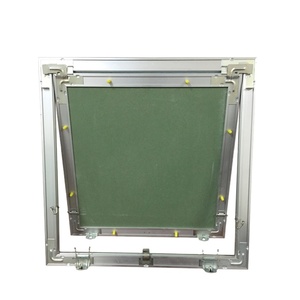
Precision Engineered Aluminium Ceiling & Interior Access Trap Door
Inquire Now1. Executive Technical Overview: The Evolution of Chinese Aluminium Interior Door Manufacturing
Over the past decade, the global architectural fenestration sector has undergone a structural paradigm shift. As international developers, architects, and procurement heads seek elevated acoustic isolation, sleek visual integration, and rigorous thermal efficiency, China’s industrial ecosystem has evolved from high-volume standardized processing into a world-leading hub for customized, ultra-high-precision architectural systems. When sourcing from China Best Aluminium Inside Doors Manufacturers & Suppliers, global procurement specialists are no longer simply looking at price-per-square-meter metrics; they are evaluating structural deflection values, hardware cycle testing, surface finish durability standards (such as AAMA 2605 PVDF coatings), and integrated acoustic engineering.
Aluminium interior doors, historically treated as simple visual partitions, are now recognized as vital functional components within modern residential villas, luxury commercial hospitality setups, and high-density urban office towers. The integration of narrow sightlines (often down to 20mm visible interlock or frame profile), micro-cellular EPDM gasket seals, and polyamide PA66GF25 thermal barrier strips has turned interior doors into active acoustic buffers capable of dampening sound transmissions up to STC 48dB while maintaining seamless design continuity.
2. Material Science & Metallurgy: Alloy Selection & Thermal Break Physics
The foundation of any high-performance interior or exterior door assembly resides in the metallurgical composition of its extrusions. Premier manufacturers in China utilize 6063-T5 or 6060-T66 aluminum alloys, treated via computerized quenching and artificial aging processes to achieve optimal hardness (Websler hardness ≥ 12) and yield strength (≥ 170 MPa).
Unlike standard interior timber or hollow-core steel doors, high-spec aluminum inside doors leverage engineered multi-chamber profile geometry. The structural cavities host thermal and acoustic barriers made of 25% glass-fiber reinforced polyamide (PA66GF25). This material matches the thermal expansion coefficient of aluminum ($2.3 \times 10^{-5} / \text{K}$), preventing structural warpage, seal degradation, or operational sticking under ambient temperature fluctuations within climate-controlled luxury environments.
| Engineering Property | Standard Grade Aluminium | Meric Premium 6063-T5 Specification | Architectural Benefit |
|---|---|---|---|
| Alloy Composition | Recycled Low-Grade Scraps | Primary Ingot 6063-T5 (Mg: 0.45-0.9%, Si: 0.2-0.6%) | Superior structural rigidity and flawless surface anodizing |
| Wall Thickness | 1.2mm - 1.4mm | 1.8mm - 3.0mm Heavy-Duty Wall Section | Resists deflection under high usage and glass weight loads |
| Thermal Barrier | PVC Insulated Strips | Polyamide PA66GF25 Technoform Insulation | High melting point, structural shear strength & lower U-value |
| Surface Coating | Basic Powder Coating (<40μm) | AkzoNobel / PPG PVDF Fluorocarbon (≥65μm) | 30+ year fade resistance, salt spray resistance & zero chalking |
| Acoustic Insulation | STC 20 - 25 dB | STC 38 - 48 dB (with acoustic laminated glass) | Studio-grade interior privacy for conference rooms & master suites |
3. Precision CNC Machining & Assembly Technology
Achieving millimeter-level tolerances across vast production orders requires automated manufacturing lines. Meric Window Systems Co., Ltd. implements 5-axis CNC machining centers that perform milling, drilling, and routing operations in a single clamping setup, maintaining dimensional precision within ±0.1mm. High-strength mechanical corner crimping—combined with dual-component structural epoxy injection—ensures that door sashes resist sagging over decades of dynamic cycling.
Global Procurement & Design Trends (2025–2030)
Understanding where the market is heading empowers procurement officers, architects, and importers to make future-proof technical choices for upcoming projects.
1. Ultra-Narrow Sightlines & Concealed Frame Systems
The market is rapidly shifting toward invisible frame architecture. Interlocks measuring under 21mm in visible width and fully concealed sub-frames recessed into floor-to-ceiling plasterlines dominate luxury residential and boutique commercial specs globally.
2. Smart Access & Automated Motorization Integration
Interior sliding and pivot doors are increasingly requested with embedded brushless DC motors, electromagnetic locking latches, and multi-modal bio-metric access control (facial recognition, smart-home automation protocols, automated sensor safety pads).
3. Acoustic Partitioning & Hybrid Material Integration
Beyond traditional glass infills, inside doors are adopting hybrid infills—combining smart electrochromic privacy glass, leather panel inserts, acoustically damped metal mesh, and real timber veneers bonded to structural aluminum sub-frames.
Enterprise Excellence: Why Meric Window Systems Co., Ltd. Leads Global B2B Supply
Selecting the right supplier among China Best Aluminium Inside Doors Manufacturers & Suppliers requires evaluating a factory's engineering verification capacity, export packaging security, and systemic quality assurance. Meric Window Systems Co., Ltd. operates a fully integrated extrusion, surface treatment, precision fabrication, and testing infrastructure tailored to overseas building codes (EN, ASTM/AAMA, AS2047).
Engineering-First Protocol
Every order undergoes rigorous CAD/BIM shop drawing review and structural calculations (wind load, glass dead load, frame deflection) before raw profile extrusion begins, preventing expensive site rework.
Systemic Hardware Matching
Partnered with tier-one international hardware suppliers (CMECH, Siegenia, Hoppe, Sobinco) alongside proprietary concealed heavy-duty pivots supporting single sash weights up to 450kg smoothly.
Export Container Packaging
Units are fully protected with laser-cut protective film, corner guards, water-impermeable shrink wrapping, and packed into reinforced ISPM-15 compliant fumigated wooden crates or custom steel racks.
Frequently Asked Questions (B2B Technical & Procurement FAQ)
Detailed technical answers addressing common engineering, logistics, and quality assurance inquiries from international developers and importers.
What alloy and thermal break configurations are recommended for acoustic interior doors?
We recommend 6063-T5 extruded aluminum profiles with a minimum wall thickness of 1.8mm to 2.0mm, fitted with PA66GF25 polyamide thermal insulation strips. For maximum sound dampening (STC ≥ 40dB), profiles should be paired with double-glazed acoustic laminated glass consisting of 5mm glass + 0.76mm acoustic PVB + 5mm glass, supported by multi-layer EPDM perimeter seals.
How does Meric Window ensure structural integrity on oversized pivot and sliding doors?
Oversized doors (e.g., height > 3.5 meters) utilize internal steel reinforcement splines inserted into the core aluminium chambers. We also utilize custom heavy-duty German/Italian floor spring hardware or bottom-loaded stainless steel carriage wheels capable of distributing up to 500kg sash weight without frame twisting or track indentation over time.
Can systems be custom anodized or powder-coated to match specific architectural color schemes?
Yes. We offer complete custom finish matching including Qualicoat Class 2 powder coating, PVDF fluorocarbon coatings (AAMA 2605 compliant for extreme UV conditions), hard-coat anodizing (up to 25 microns), and 3D woodgrain sublimation finishes backed by 15 to 30 year non-fading performance warranties.
What engineering documentation and test reports are provided during project procurement?
During the technical review and production phases, we provide comprehensive CAD shop drawings, structural calculation sheets, thermal U-factor simulation reports (WINDOW/THERM software), sound transmission loss test certificates, and factory pre-shipment dimensional inspection logs.
What is the standard lead time for wholesale architectural door production and export shipping?
Standard fabrication cycle is typically 25 to 35 days following formal CAD shop drawing approval and color sample sign-off. International containerized sea freight takes an additional 15 to 40 days depending on the destination port (e.g., North America, Europe, Australia, Middle East).
How are glass breakage and shipping damages mitigated for containerized shipments?
Finished door sashes and frame assemblies are individually foam-padded, wrapped in protective film, fitted with impact-resistant plastic corner guards, and secured inside heavy-duty closed plywood crates (ISPM-15 compliant). Crated units are blocked, braced, and strapped inside shipping containers using high-tensile steel banding to resist marine transportation forces.
Need Technical Drawing Verification or Factory Pricing?
Send your project window schedules, architectural elevations, or technical specifications directly to our senior engineering team for rapid quotation and structural feedback.
Inquire Now