Featured Architectural Aluminum Door & Window Systems
Factory-direct thermal break systems precision-engineered to meet stringent international building codes (ASTM, EN, AS2047) for luxury residential and commercial developments.
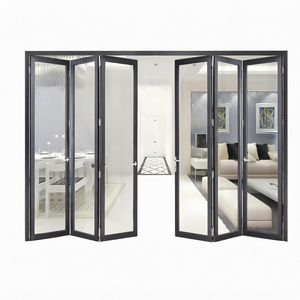
Soundproof Double Glazed Aluminum Foldable Glass Wall Patio Door Modern Waterproof Outdoor Bedroom Entry Balcony Porch Mall
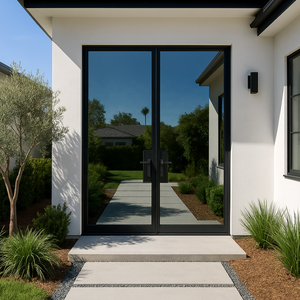
Customized Aluminum Double Glass Swing Doors Heavy Duty Thermal Break Soundproof Security Front Entrance Door for Hotel
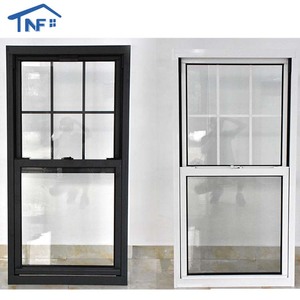
Foshan America Aluminum Tempered Glass Glass Waterproof French Black Windows and Doors Custom Design Doule Single Hung Windows
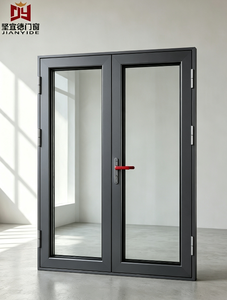
Thermal Break Aluminium Casement Doors Energy Efficient Waterproof Windproof for European Villas Custom OEM And ODM CE Certified
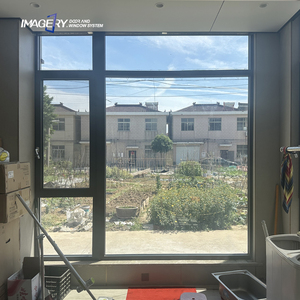
Imagery Durable Aluminium Casement Tempered Glass Windows Heat Insulation for School Hospital Building
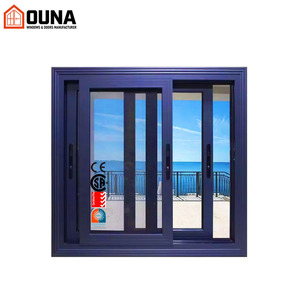
OUNA Aluminium Alloy Windows Doors House Exterior Aluminum Sliding Windows Soundproof Double Glazed Thermal Break Windows
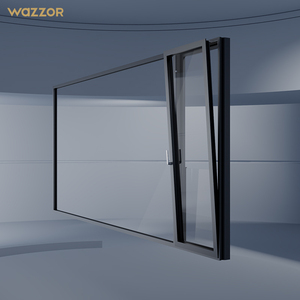
Wazzor Aluminum Window Manufacturers High-Quality Typhoon-Resistant And Energy-Saving Casement Windows Soundproof Windows
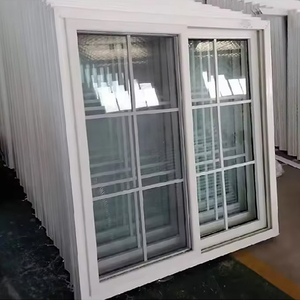
OUNA Modern Double Glazed Aluminum Slided Windows Screen Glass Soundproof Hurricane Proof Sliding Window for Villas
1. Executive Industry Insight: Sourcing Architectural Aluminum Doors from China
The global facade and architectural fenestration sector has undergone a profound paradigm shift over the past decade. China has evolved from a high-volume component exporter into the world’s premier epicenter for high-precision, thermally broken architectural aluminum envelope solutions. Modern aluminum exterior door systems manufactured in China now compete directly with European heritage brands in structural rigidity, thermal performance, airtightness, and ultra-narrow sightline elegance, while offering superior supply chain integration and cost efficiency.
Information Gain Principle for Specifiers: Meric Window Systems engineers profiles utilizing primary A00 virgin aluminum ingots extruded to 6063-T5 or 6063-T6 tempers. By incorporating multi-chambered polyamide (PA66GF25) thermal break strips and continuous EPDM weather gaskets, Chinese exterior aluminum door systems achieve U-factors matching passive house requirements down to 1.1 W/m²K without compromising dynamic wind load tolerances.
When international developers, architects, and procurement directors search for a premier China Best Aluminum Exterior Doors Supplier & Exporters, the critical decision criteria go beyond basic price-per-square-meter metrics. High-value procurement requires rigorous technical auditing across four structural pillars: profile metallurgy, thermal barrier engineering, structural glazing configuration, and precision multi-point locking hardware integration.
Core Technical Pillars of Meric Aluminum Door Systems
Structural Alloy Integrity
Extruded from high-grade 6063-T5 aluminum alloy with a nominal wall thickness of 2.0mm to 3.0mm for heavy-duty entry doors, ensuring extreme wind pressure resistance (ASTM E330 up to 5000 Pa).
Advanced Thermal Break
Features 24mm to 34mm German-engineered PA66GF25 (25% glass fiber reinforced polyamide) insulation strips, drastically reducing heat transfer and eliminating internal condensation risk.
Acoustic & Weather Sealing
Triple-sealed continuous EPDM rubber gaskets combined with precision multi-point gear locking mechanisms achieve sound attenuation up to STC 45 dB and water resistance up to 700 Pa.
2. Global Sourcing Trends & Future Development in Exterior Aluminum Fenestration
As international energy efficiency standards become more stringent—such as the European Union's Energy Performance of Buildings Directive (EPBD) and North American ASHRAE 90.1 standards—the architectural door manufacturing landscape is undergoing rapid technological evolution. Global procurement teams must align with suppliers capable of staying ahead of these four key trends:
Trend 1: Ultra-Narrow Sightlines & Panoramic Structural Glass Integration
Modern architectural aesthetics heavily favor minimal visible frame mass and maximal daylight penetration. The industry standard has shifted from heavy 90mm frame sightlines down to ultra-narrow interlocks measuring just 20mm to 25mm. Achieving structural integrity with such minimal framing requires structural silicone bonding and concealed perimeter tracking systems capable of supporting glass panel weights up to 500kg.
Trend 2: Low-E Triple Glazing & Warm-Edge Spacer Technology
Standard double glazing is rapidly being superseded in high-end projects by argon-filled triple insulating glass units (IGUs) incorporating double-layer Low-Emissivity (Low-E) coatings. When coupled with composite warm-edge spacers rather than traditional conductive aluminum spacers, thermal bridging across the glass perimeter is reduced by up to 65%.
Trend 3: Smart Fenestration & Heavy-Duty Motorized Automation
The integration of automated drive systems into large-span aluminum sliding and bi-folding doors is no longer a luxury option, but an architectural expectation. Future-proof Chinese exporters design profile chambers specifically to conceal motorized linear actuators, smart access control locks (biometric, RFID, smartphone app), and automated wind/rain sensor overrides.
Trend 4: Qualicoat Class 2 & PVDF Sustainable Surface Coatings
To withstand harsh coastal environments (high salinity, UV exposure, chemical pollution), top-tier Chinese manufacturers now offer Qualicoat Class 2 standard powder coatings and Fluorocarbon (PVDF) 3-coat finish systems. These treatments ensure color retention, gloss stability, and chalking resistance guaranteed for 20 to 30 years.
3. Technical Specification & Performance Matrix
To assist facade consultants, architects, and quantity surveyors in selecting the optimal aluminum exterior door system, the matrix below details key physical performance metrics based on standard lab testing procedures (EN 14351-1 / ASTM E283-E331-E330):
| System Category | Profile Depth | Thermal Value (Uf) | Air Permeability | Water Tightness | Wind Resistance | Optimal Application |
|---|---|---|---|---|---|---|
| Heavy Duty Swing Door | 75mm - 90mm | 1.3 - 1.6 W/m²K | Class 4 (EN 12207) | Class 9A (600 Pa) | Class C5 (2500 Pa) | Hotel Main Entrance, Luxury Villa Entry |
| Panoramic Slim Slider | 140mm - 160mm | 1.2 - 1.5 W/m²K | Class 4 (EN 12207) | Class E750 (750 Pa) | Class C5 (3000 Pa) | Living Rooms, Oceanfront Patios |
| Thermal Break Bifold Door | 75mm - 80mm | 1.4 - 1.8 W/m²K | Class 3 (EN 12207) | Class 8A (450 Pa) | Class C4 (2000 Pa) | Resort Balconies, Restaurant Terraces |
| Lift & Slide Heavy System | 150mm - 220mm | 1.1 - 1.4 W/m²K | Class 4 (EN 12207) | Class E1050 (1050 Pa) | Class E5000 (5000 Pa) | High-Rise Penthouses, Coastal Villas |
| Narrow Curtain Wall Unit | 140mm - 180mm | 1.0 - 1.3 W/m²K | AE Standard (ASTM) | 15 lbs/ft² (730 Pa) | 60 lbs/ft² (2880 Pa) | Commercial Facades, Villa Elevations |
4. Strategic Procurement Guide: Evaluating Chinese Suppliers for Global Projects
Direct sourcing of exterior aluminum doors from Chinese manufacturers offers significant total-cost-of-ownership (TCO) advantages, often yielding cost savings between 30% and 50% compared to Western European procurement without compromising quality. However, establishing a reliable B2B supply chain requires rigorous supplier auditing across the following operational domains:
A. Metallurgy & Raw Material Verification
Ensure that the supplier utilizes 100% primary aluminum ingots (A00 grade) rather than recycled scrap metal for structural door extrusions. Virgin 6063-T5 alloy guarantees uniform tensile strength (≥ 160 MPa) and yield strength (≥ 110 MPa), which prevents profile twisting or sagging over time when supporting multi-layer heavy glass panels.
B. Precision Machining & Automated Assembly
Leading manufacturers like Meric Window Systems deploy 5-axis German CNC machining centers capable of cutting, milling, and drilling profiles to tolerances within ±0.1mm. Precision corner crimping combined with dual-component structural corner adhesives ensures watertight frame connections that resist joint opening under thermal expansion cycles.
C. Integrated Export Packaging Standards
International freight handling presents severe risk to glass and powder-coated finishes if packaging is substandard. A certified exporter must implement ISPM-15 compliant heat-treated wooden crates, multi-layer protective film, foam edge guards, and desiccants within sealed plastic shrink wrapping to prevent moisture corrosion during containerized sea transit.
Meric Window Systems Enterprise Capabilities
A vertically integrated engineering and manufacturing enterprise tailored for global B2B procurement success.
In-House Technical Engineering
Our dedicated team of facade engineers reviews architectural CAD/BIM drawings, calculates structural wind loads, and provides custom shop drawings prior to production sign-off.
Global Hardware Ecosystem
We seamlessly integrate premium European hardware solutions (such as Siegenia, Hoppe, Sobinco, Roto) or reliable custom-engineered OEM multi-point locking systems.
Full Container Export Support
Every order is labelled according to the project's window/door schedule. We provide complete customs clearance documentation, installation manuals, and remote site support.
B2B Sourcing & Technical Procurement FAQ
Expert answers to common engineering, quality assurance, and international trade questions from overseas buyers.
What makes thermal break aluminum exterior doors superior to standard aluminum doors?
Standard aluminum is highly conductive, allowing heat to rapidly escape in winter and enter during summer. Thermal break exterior doors utilize a non-conductive polyamide strip (PA66GF25) inserted between the interior and exterior aluminum profile extrusions. This breaks the thermal path, lowering profile U-values by up to 60%, drastically improving building energy efficiency and eliminating frame condensation.
Can your exterior door systems meet local building codes in North America, Europe, and Australia?
Yes. Meric Window Systems engineers products to pass rigorous third-party performance testing. Our systems can be configured to comply with NFRC/AAMA/ASTM standards for North America, CE / EN 14351-1 standards for Europe, and AS2047 / AS1288 structural glass standards for Australia. Test documentation is provided during technical drawing review.
What information is required to get an accurate project quotation?
To provide a precise engineering quote, please share your architectural drawings or a window/door schedule detailing overall opening dimensions, opening configurations (sliding, bifold, swing), glass performance requirements (double/triple, Low-E, acoustic laminated), frame color finish (powder coating, anodized, PVDF), and project wind zone location.
What glass options are recommended for high-wind or hurricane-prone coastal regions?
For hurricane or high wind zones (ASTM E1996/E1886 compliance), we recommend tempered heavy-duty laminated glass configurations, such as 6mm Tempered + 1.52mm PVB/SGP Interlayer + 6mm Tempered IGUs. Utilizing SentryGlas (SGP) ionoplast interlayers provides 5 times the tear strength of standard PVB, keeping the envelope sealed even if glass fracturing occurs under missile impact.
How are door frames and large glass panels protected during international ocean transit?
Finished door units are wrapped with protective anti-scratch film, corner rubber guards, and high-density foam padding. They are anchored into ISPM-15 certified heat-treated wooden crates or steel transport racks designed specifically for container loading, ensuring zero movement or moisture damage during ocean shipping.
What is the typical manufacturing lead time for custom aluminum door orders?
Standard fabrication lead time is typically 25 to 35 days following final technical shop drawing approval and sample color sign-off. For complex high-rise commercial projects or specialized custom anodized finishes, timeline adjustments are coordinated during contract review.
Request a Technical Review & Project Quote
Send your architectural elevation drawings or window schedule to our engineering team. We deliver structural analysis, hardware recommendations, and factory-direct pricing tailored to your project.