Engineered Aluminum Half Glass & Architectural Door Systems
Explore our premier line of thermal break, narrow-frame, and custom-fabricated aluminum half glass doors engineered for residential, commercial, and structural envelope applications.
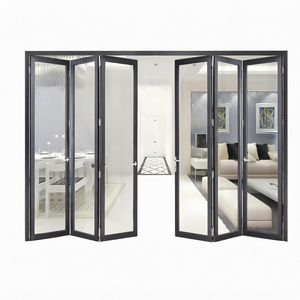
Soundproof Double Glazed Aluminum Foldable Glass Wall Patio Door
Inquire Now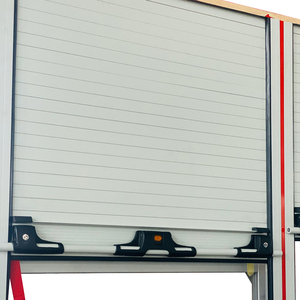
Best Priced Aluminum Roll-Up Doors for Cabinets Garages Sheds
Inquire Now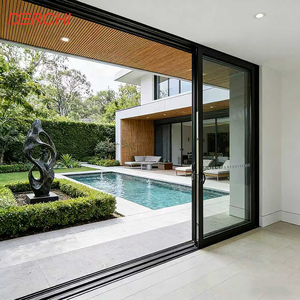
NFRC Exterior Conceal Stacking Sliding Patio Pocket Door System
Inquire Now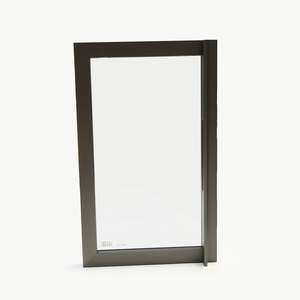
Italian Modern Elegant Aluminum Slim Frame Glass Doors for Kitchen
Inquire Now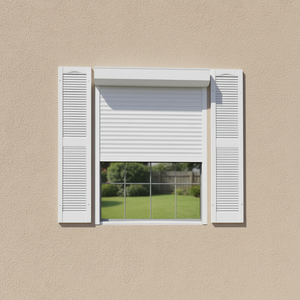
Electric Roller Shutters Triple Glazed Thermal Aluminum Profiles
Inquire Now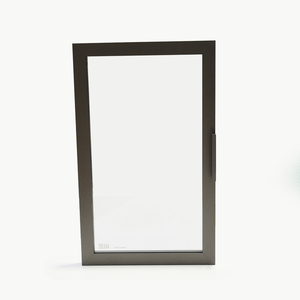
Air Smart 4mm Tempered Glass Base Frame Kitchen Aluminium Door
Inquire Now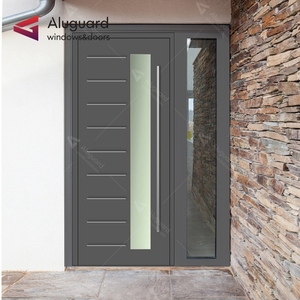
Luxury Minimalist Villa Exterior Main Entrance Aluminium Pivot Door
Inquire Now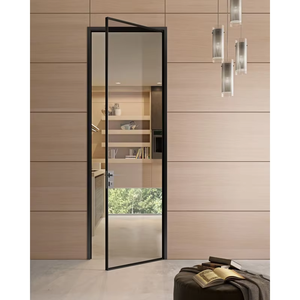
Modern Narrow Frame Aluminum Glass Hinged Casement Door with Mesh
Inquire Now1. Technical Engineering of Aluminum Half Glass Doors: Structural Anatomy & Physics
As modern architectural specifications place heightened demands on facade thermal efficiency, structural resilience, and natural daylighting, the aluminum half glass door has evolved from a simple utilitarian barrier into a highly engineered fenestration module. Characterized by a solid structural bottom panel (kickplate area) combined with an upper insulated glass unit (IGU), half glass aluminum doors deliver the optimal compromise between impact privacy, structural rigidity, and visual transmission.
From a metallurgical perspective, premium Chinese door manufacturing relies strictly on 6063-T5 extruded aluminum alloy profiles. Extruded to precise wall thicknesses ranging from 1.4 mm for interior partitions up to 2.0 mm–3.0 mm for heavy-duty commercial exterior entries, these profiles undergo solution heat treatment and artificial aging to achieve a Webster hardness of ≥12 and tensile strength exceeding 185 MPa. This structural frame handles high wind pressure loads (up to 5000 Pa, satisfying ASTM E330 testing standards) without structural deflection or permanent frame distortion.
PA66-GF25 Thermal Break
Eliminates thermal bridging by mechanically joining inner and outer extruded aluminum profiles with 25% glass fiber reinforced polyamide strips, lowering thermal transmittance significantly.
Composite Panel Kickplate
The bottom half integrates high-density polyurethane (PU) or rockwool core insulated aluminum sandwich panels, resisting mechanical impact while improving acoustical dampening (STC ≥ 38 dB).
Multi-Point Locking Systems
Equipped with German-engineered continuous gear transmission locks, heavy-duty stainless steel shoot-bolts, and anti-lift pin hardware for superior burglary resistance (RC2 / PAS 24 certified).
The thermal barrier physics of our half glass door systems relies on Polyamide PA66 GF25 thermal break strips. Standard non-thermal aluminum frames exhibit a high thermal conductivity of approximately 160 W/m·K. By severing the metal path with glass-fiber-reinforced polyamide (conductivity of just 0.3 W/m·K), the overall thermal transmittance ($U_f$) of the frame drops below 1.8 W/m²·K. When paired with double or triple Low-E insulated glass filled with 90% Argon gas, total door system values reach $U_w \le 1.4\text{ W/m}^2\cdot\text{K}$, drastically reducing building HVAC loads in extreme climates.
2. Technical Specifications & Performance Comparison Matrix
To assist architects, structural engineers, and commercial procurement directors in selecting the exact door configuration for project schedules, the following matrix outlines key technical performance parameters across our primary half glass and narrow-frame door series:
| Door System Series | Profile Alloy & Depth | Glazing Specification | Thermal Transmittance (Uw) | Acoustic Rating (STC) | Wind Load Resistance |
|---|---|---|---|---|---|
| Thermal Break Half Glass Entry Door | 6063-T5 / 70mm Depth | 5mm Low-E + 12Ar + 5mm Tempered | 1.4 - 1.6 W/m²·K | 38 - 42 dB | Class P3 (≥ 3000 Pa) |
| Slim Sightline Interior Half Glass | 6063-T6 / 45mm Depth | 4mm + 9A + 4mm Frosted/Clear IGU | 2.1 - 2.4 W/m²·K | 32 - 35 dB | Class P1 (≥ 1500 Pa) |
| Heavy Duty Pivot Entry System | 6063-T6 / 90mm Depth | 6mm Low-E + 16Ar + 6mm Laminate | 1.2 - 1.5 W/m²·K | 40 - 45 dB | Class P5 (≥ 4500 Pa) |
| Narrow Frame Patio Casement Door | 6063-T5 / 65mm Depth | 5mm Double Tempered + Warm Edge | 1.5 - 1.7 W/m²·K | 36 - 39 dB | Class P4 (≥ 3500 Pa) |
| Commercial Roll-Up / Fire Shutters | Extruded Slat 1.2-2.0mm | Solid / Acrylic Half Panel View | N/A (Uninsulated) | 28 - 30 dB | Class P2 (≥ 2000 Pa) |
3. Global Sourcing Trends & Architectural Future Analysis (2025–2030)
The global market for aluminum windows and doors is experiencing a structural pivot towards ultra-minimalist sightline profiles, decarbonized material sourcing, and smart building envelope integration. Procurement leaders sourcing from China must align their technical requisitions with these emerging international vectors:
A. Ultra-Narrow Sightlines with High Structural Inertia
Modern architectural aesthetics demand maximum glass visual areas with minimal profile visibility. The engineering challenge in half glass design involves reducing the mid-rail (transom profile dividing glass and solid panel) and side stile sightlines to 20mm–35mm without compromising moment of inertia ($I_x$). Chinese advanced manufacturers solve this by embedding structural steel stiffeners inside internal extrusion chambers or utilizing structural silicon bonding (IGU bonded directly to the aluminum sash), turning glass into a structural load-bearing element.
B. Smart Home & Automated Access Control Integration
Contemporary aluminum half glass doors are increasingly designed to host concealed electromechanical actuators, biometric fingerprint access, RFID readers, and motorized multi-point locks. Wiring channels are precision-milled within the thermal break cavity during factory extrusion, ensuring IP65 waterproof conduit paths and seamless integration into KNX, Zigbee, or Crestron building automation systems.
C. Low-Carbon Aluminum Billets & EPD Certification
With the implementation of the European Union's Carbon Border Adjustment Mechanism (CBAM) and global LEED v4.1 sustainability standards, top-tier factories in China are transitioning to primary aluminum smelted using hydropower (Green Aluminum) or incorporating recycled scrap aluminum (up to 75% post-consumer content). Environmental Product Declarations (EPD) and verified Life Cycle Assessments (LCA) are becoming mandatory procurement prerequisites for tier-1 international contractors.
4. Strategic Evaluation Guide for Sourcing Aluminum Doors from China
Evaluating OEM/ODM aluminum door factories in China requires rigorous auditing beyond surface-level aesthetic samples. To guarantee long-term field performance and minimize site claim risks, project buyers should evaluate manufacturers against five core quality control pillars:
1. Surface Finish & Coating Standards
Ensure coatings meet AAMA 2605 or Qualicoat Class 2 / Class 3 specifications. Fluorocarbon (PVDF) coatings should contain minimum 70% Kynar 500 resin to withstand 3000+ hours of salt spray testing without chalking, cracking, or color fading in coastal saline environments. Anodized profiles must maintain a minimum film thickness of 15–25 microns (AA15 to AA25).
2. Corner Joint Assembly Technique
Inferior doors rely solely on mechanical screw fasteners, leading to corner joint separation over time. Quality manufacturing requires heavy-duty cast aluminum corner cleats combined with dual-component polyurethane corner crimping adhesive. This pneumatic injection process ensures hermetic air-tightness and water-tightness under severe hydrostatic pressure.
3. Gasket Systems: EPDM vs. PVC
Insist on continuous vulcanized EPDM (Ethylene Propylene Diene Monomer) or co-extruded TPV seals. Cheaper PVC gaskets harden, shrink, and crack when exposed to UV radiation, leading to air filtration and water leakage. EPDM gaskets maintain elasticity across temperature ranges from -40°C to +120°C.
4. Glass Unit Integrity & IGCC Certification
IGUs must feature dual sealing: primary butyl sealant to prevent moisture vapor transmission, and secondary structural silicone sealant. Insulating glass must hold IGCC/SGCC (North America) or EN 1279 (Europe) compliance, featuring warm-edge stainless steel or Technoform spacers filled with molecular sieve desiccant.
5. Enterprise Advantages: Meric Window Systems Manufacturing Excellence
As a leading Chinese designer, extruder, and fabricator of high-performance architectural fenestration systems, Meric Window Systems Co., Ltd. offers unparalleled engineering expertise for complex global construction projects. Our integrated factory operations eliminate intermediary markups while maintaining total quality oversight from raw aluminum billet to final site delivery crate.
5-Axis CNC Precision Fabrication
Milling, drilling, corner-key slots, and hardware lock pockets are executed on automated 5-axis CNC machining centers, maintaining tolerances within ±0.1mm for perfect hardware engagement and thermal alignment.
Project-Specific Structural Calculations
Our in-house structural engineering team provides complete wind load analysis, thermal modeling (THERM & WINDOW software calculations), and shop drawing reviews tailored to local building codes prior to extrusion production.
Heavy-Duty Seaworthy Packaging
Every door sash and frame assembly is wrapped in protective blue film, padded with high-density EPE foam corner caps, and fully enclosed inside fumigated plywood crates or steel shipping racks optimized for FCL container loading.
6. Frequently Asked Questions (FAQ) for Global B2B Procurement
Partner with China's Premier Door Engineering Factory
Submit your project schedules, architectural drawings, or custom OEM specifications today. Our engineering team will return structural calculations, detailed shop drawings, and competitive factory-direct pricing within 24 hours.
Inquire Now