Featured Architectural Aluminum Window & Door Systems
Precision-engineered fenestration solutions combining 6060-T66/6063-T5 aluminum profiles, PA66GF25 polyamide thermal breaks, multi-layer EPDM seals, and advanced double/triple insulated glass packages for global residential and commercial projects.
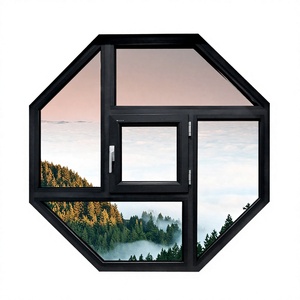
WEIDUN Haichuan 80 Flush System Thermal Break 6060-T66 Aluminum Double Glazed Soundproof Casement Window
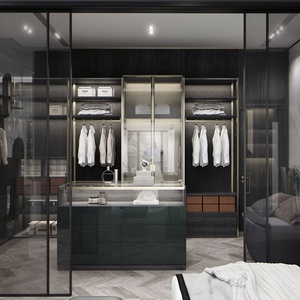
CBMmart Factory Supply Closet Aluminum Profiles Glass Door Walk in Closet System
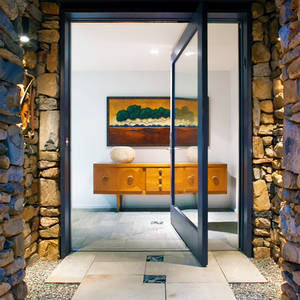
Florida Miami-Dade Approved NFRC North American Style Big Panel Tempered Glass Aluminium Modern Entry Front Pivot Doors
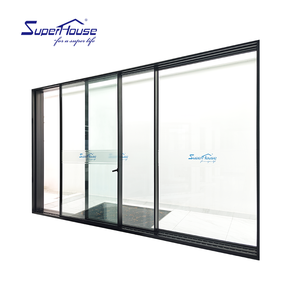
Ultra Narrow Frame Aluminum Sliding Door Double Glass Soundproof Waterproof Slim Frame Balcony Living Room Door
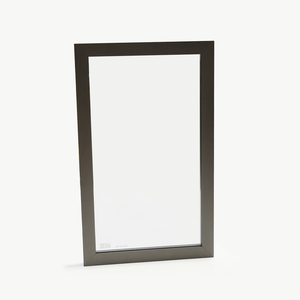
Italy Brand Aluminum Door And Window Frames For Bathroom Cabinets For Windows And Doors Kitchen Cabinet
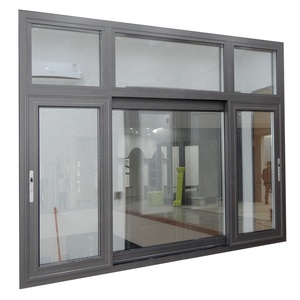
Hurricane Impact Aluminum Glass Customized Sliding Window Home Soundproofing Double Glazed Windows
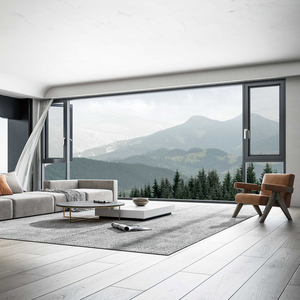
Thermal Break Casement Aluminum Windows with 27A Double Glazed Glass, Aluminium Window Awning for Houses Energy Efficient
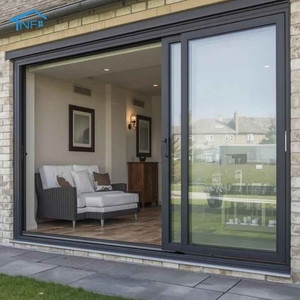
3 Tracks 4 Panels Patio Aluminum Sliding Door With Stainless Steel Fly Screen & Heavy Duty Rollers
Why Sourcing Architectural Aluminum Windows from China Defines Modern Building Performance
The global building envelope market is undergoing a seismic shift toward high-performance, minimalist, and energy-neutral architectural fenestration. As top-tier real estate developers, architects, and facade contractors seek structural integrity without sacrificing daylighting, China's advanced manufacturing ecosystem—led by industry leaders like Meric Window Systems Co., Ltd.—has evolved into the global epicenter for precision aluminum extrusion, custom thermal break engineering, and certified export supply chains.
Modern architectural specification requires much more than standardized frame dimensions. Today’s projects demand structural aluminum alloys (such as 6060-T66 and 6063-T5), multi-chambered polyamide thermal barriers (PA66GF25), structural silicone glazing (SSG), and rigorous compliance with international building standards including North American AAMA/WDMA/CSA 101/I.S.2/A440, NFRC thermal ratings, Australian AS2047/AS1288 certification, and Florida Miami-Dade High-Velocity Hurricane Zone (HVHZ) impact approvals.
Information Gain Benchmark: Meric Window Systems integrates automated CNC profile machining with zero-tolerance EPDM co-extruded gaskets, delivering air permeability performance exceeding Class 4 (EN 12207) and water tightness up to E1050 pressure levels.
Engineering Comparison: Standard Export Windows vs. Technical Architectural Systems
To make an informed procurement decision, technical buyers and structural engineers must evaluate key physical and mechanical parameters. Below is a engineering baseline breakdown comparison:
| Performance Criterion | Commercial Grade (Standard Export) | Meric Engineering Grade (Architectural Whitepaper Standard) | Building Code Impact |
|---|---|---|---|
| Alloy Metallurgy & Temper | Standard 6063-T5 (Tensile Strength ~185 MPa) | Precision 6060-T66 / 6063-T6 (Tensile Strength ≥ 215 MPa) | Higher wind load resistance & narrower sightline structural support |
| Thermal Break Insulation | Recycled PVC or short 14mm Polyamide strips | 24mm to 38mm Technoform PA66GF25 (25% Glass Fiber Reinforced) | Eliminates condensation, lowers U-factor below 1.2 W/m²K |
| Glass Package Options | Single 6mm or basic 5mm+9A+5mm IGUs | 27A/32A Warm Edge Air Spacers, Triple Glazed Low-E Argon, Laminated Impact | Meets IECC 2024 energy conservation codes & STC 42dB acoustic isolation |
| Hardware & Multi-Point Locks | Generic domestic hardware (Single-point lock) | German Siegenia / Roto Frank / Italian Giesse concealed multi-point mechanisms | Burglar resistance up to RC3 (EN 1627) & 100,000 cycle durability |
| Surface Finish Coating | Basic single-coat powder spray (5-year lifespan) | 3-Coat PVDF Fluorocarbon (AkzoNobel/PPG) or 25μm Hard Anodized finish | Salt spray exposure tested over 3,000 hours; resistant to coastal corrosion |
Future Sourcing & Technological Trends in Aluminum Fenestration (2025–2030)
The next decade of global building design demands unprecedented thermal efficiency, extreme weather resilience, and seamless indoor-outdoor integration. Procurement directors and project engineers who adjust their sourcing strategies to align with modern manufacturing innovations will gain a significant competitive advantage in build speed, cost management, and structural durability.
1. Ultra-Narrow Interlocks & Panoramic Sightlines
Traditional sliding doors with 80mm–100mm vertical sightlines are rapidly being replaced by minimal systems with interlocks as narrow as 20mm–25mm. By shifting the structural load to vertical steel-reinforced mullions and structural glass units, systems like the JW157 Panoramic Series provide up to 98% clear glass areas without sacrificing structural integrity against high wind pressures.
2. Deep Decoupling Thermal Cavities & Aerogel Inserts
As global energy codes enforce net-zero carbon goals, aluminum window frame thermal design has shifted from simple dual-chamber profiles to multi-cavity, polyamide-insulated systems. Modern extrusions feature polyurethane foam cavity filling and aerogel insulation strips, reducing frame thermal conductivity to values competitive with solid timber windows while retaining aluminum’s structural rigidity.
3. High-Velocity Hurricane Zone (HVHZ) Sourcing Trends
Extreme weather events have expanded the geographic demand for impact-rated fenestration beyond Florida and the Caribbean to coastal regions throughout Asia-Pacific and Europe. Modern impact windows utilize SentryGlas® (SGP) interlayer glass technology, combined with heavy-duty 6060-T66 structural framing, surviving cyclic wind pressure loads exceeding ±9000 Pa and large missile impact testing.
4. Motorized Concealed Automation & Smart Building (BMS) Integration
Sourcing trends indicate exponential growth in motorized lift-and-slide doors and automated curtain wall vent openings. Micro-actuators concealed within the aluminum profile chamber interface directly with smart home systems and commercial Building Management Systems (BMS), enabling rain-sensor auto-closure, motorized blinds, and automated night purging for low-energy ventilation.
5. Low-Carbon Billet Sourcing & EPD Environmental Certification
International developers increasingly mandate Environmental Product Declarations (EPDs). Leading Chinese exporters are now utilizing low-carbon primary aluminum smelted via hydropower, combined with up to 75% recycled scrap aluminum billets. This dramatically lowers the embodied carbon footprint of exported fenestration packages without compromising mechanical performance.
6. Factory-Assembled Unitized Modules vs. Knock-Down (KD) Shipping
To combat escalating on-site labor costs in Western markets, procurement is pivoting toward fully glazed, factory-tested unitized window modules. Pre-assembled units complete with factory-cured structural silicone, factory-installed hardware, and protective corner-crated packaging ensure zero site-assembly errors and cut installation timelines by up to 60%.
Frequently Asked Questions for B2B Importers, Developers & Architects
Clear, engineering-backed responses addressing key technical, compliance, and logistical considerations when importing custom aluminum windows and doors from China.
What distinguishes 6060-T66 aluminum alloy from standard 6063-T5 in architectural window manufacturing?
Alloy 6060-T66 undergoes a specialized artificial aging treatment that significantly elevates its yield strength, ultimate tensile strength, and modulus of elasticity compared to standard 6063-T5. This superior mechanical profile allows window engineers to design ultra-narrow frame profiles with thinner wall sections that still support heavy double and triple IGUs while maintaining structural deflection limits under severe wind loads (e.g., L/175 or L/240 deflection criteria).
How do Meric Window systems comply with regional energy codes such as NFRC, IECC, and European CE standards?
Our window systems are engineered using multi-chambered polyamide thermal breaks (PA66GF25) combined with high-performance glass configurations (such as double or triple Low-E coatings with argon gas fill and warm-edge spacers). Thermal modeling via THERM and WINDOW software allows us to calculate whole-window U-factors down to 0.18–0.24 BTU/h·ft²·°F (1.0–1.4 W/m²K), fully compliant with North American IECC 2024 and European Passive House performance baselines.
What performance documentation is provided during the engineering drawing review stage?
Prior to production, our engineering team submits comprehensive shop drawings detailing profile cross-sections, thermal break placement, EPDM gasket sealing layouts, glass build-up, anchor point positioning, and structural wind pressure calculations. For large commercial projects, we also provide physical mock-up test reports covering air infiltration (ASTM E283), water penetration resistance (ASTM E331), and structural performance under static pressure (ASTM E330).
What surface treatment finishes are recommended for harsh coastal environment exposure?
For coastal environments exposed to salt mist and high humidity, we strongly recommend a 3-coat PVDF (fluorocarbon) coating complying with AAMA 2605 specifications or a hard-anodized finish with a layer thickness of at least 25 microns (Class I anodize). These surface treatments resist chalking, pitting, and UV degradation, backed by salt spray testing exceeding 3,000 to 5,000 hours.
How are large motorized panoramic sliding doors and delicate glass units packaged for container freight transport?
Finished window and door frames are wrapped in protective polyethylene surface film, padded with corner guards, and encased in high-density foam. Complete units or oversized insulated glass panels are loaded into IPPC-certified ISPM-15 fumigated wooden crates or custom steel A-frame transport racks. Craters are engineered with internal shock absorption and vacuum moisture barrier packaging to prevent transit damage or glass seal failure during maritime container shipping.
What is the typical lead time for custom extrusion profiles and project fabrication?
Standard system profiles with stock finishes (such as matt black, dark bronze, or anodized silver) have a factory lead time of 25 to 35 calendar days from final shop drawing approval. Projects requiring custom profile extrusion dies, non-standard RAL colors, or specialized hurricane-impact glass build-ups typically require 40 to 50 days, inclusive of rigorous pre-shipment Quality Assurance (QA) testing.
Can Meric Window supply complete hardware packages from top European brands?
Yes. We work closely with leading international hardware manufacturers including Siegenia, Roto Frank, Hoppe, Sobinco, and Giesse. Factory pre-installation of multi-point locking gear, heavy-duty concealed hinges, and stainless steel rollers ensures seamless mechanical operation and guarantees compliance with burglar resistance standards (RC2/RC3).
What quality control protocols are applied before shipment release?
Every production batch undergoes a 5-stage QC inspection: raw billet chemical composition verification, extruded profile dimensional and wall thickness check, thermal break crimping shear strength testing, 100% pre-assembly operation test (checking latching, seal compression, and sash alignment), and water spray chamber spot testing on finished units before final export crating.
Partner with China's Premier Architectural Window Supplier & Exporter
Submit your architectural floor plans, elevation drawings, or window schedule today. Our structural engineering team will provide a comprehensive technical review, shop drawings, thermal calculations, and competitive factory-direct quotation within 48 hours.
Get Catalog