Engineered Architectural Product Range
Precision-extruded 6063-T5 aluminium alloy profiles combined with structural thermal break technology and architectural glazing solutions certified for global export standards.
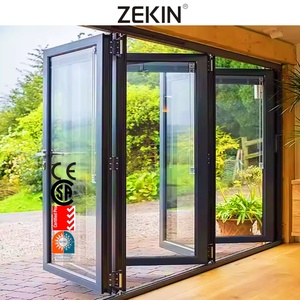
Aluminum Folding Doors Double Glass Bifold Patio Doors
Contact Us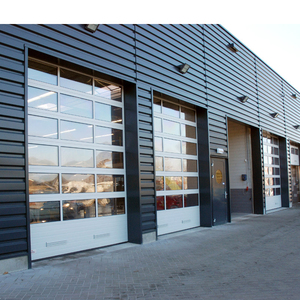
Aluminum Transparent Glass Overhead Sectional Doors
Contact Us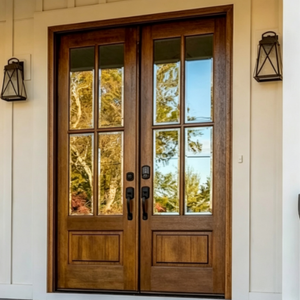
Triple Glass Aluminum Composite Clad Timber Casement Doors
Contact Us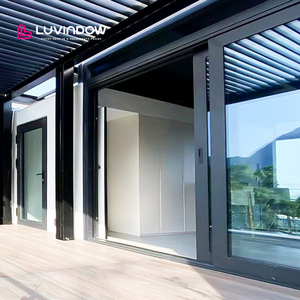
Custom Double Tempered Glass Lift & Sliding Patio Doors
Contact Us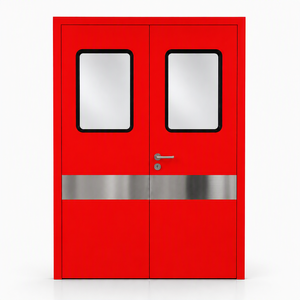
Fire Rated Double Swing Emergency Exit Doors (SS304)
Contact Us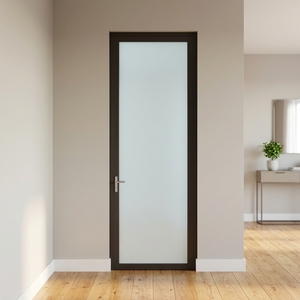
Modern Single-Pane Swing Door with Aluminium Internal Frame
Contact Us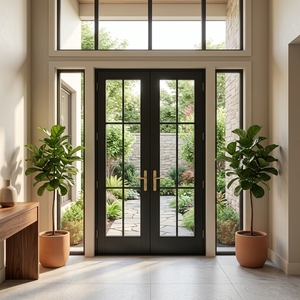
Crittall Style Modern Aluminium & Steel Framed French Doors
Contact Us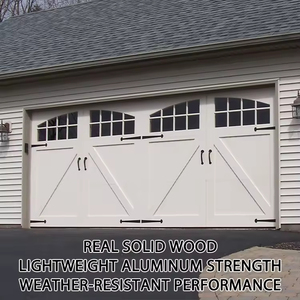
Storm-Proof Reinforced Solid Wood & Aluminium Garage Doors
Contact Us1. Executive Summary & Manufacturing Infrastructure in China
The global architectural sector is undergoing a rapid evolution toward net-zero building envelopes, extreme structural durability, and minimal sightline aesthetics. China’s manufacturing ecosystem for aluminium composite windows and structural fenestration systems has matured into a world-leading hub of engineering precision, advanced surface metallurgy, and integrated hardware supply chains.
As a leading Chinese manufacturer and direct global exporter, Meric Window Systems Co., Ltd. combines industrial-scale extrusion capabilities with bespoke engineering design. Utilizing premium 6063-T5 aluminium alloy billets, high-density Polyamide (PA66-GF25) thermal break barriers, and multi-layer structural insulated glazing units (IGUs), modern Chinese window systems deliver exceptional structural wind-load pressure performance, optimal U-factors, and strict compliance with international building standard frameworks including AS2047 (Australia), NFRC / AAMA (North America), and CE EN 14351-1 (Europe).
Structural Thermal Breaking
Incorporating 24mm to 34mm PA66 polyamide strips reinforced with 25% glass fiber to create a total thermal barrier, drastically reducing condensation risk and heat transfer coefficients.
Global Standards Compliance
Rigorous third-party testing according to ASTM E330 wind load, ASTM E283 air tightness, ASTM E331 water penetration, and acoustic attenuation ratings up to Rw 45 dB.
Qualicoat Powder Coating
AAMA 2604 and AAMA 2605 compliant fluorocarbon (PVDF) and architectural powder coatings providing 25+ years of anti-corrosion resistance in coastal and marine environments.
2. Structural Anatomy & Metallurgy of Aluminium-Wood Composite Windows
Aluminium-wood composite fenestration represents the pinnacle of hybrid material design. By merging the high tensile strength and weather resistance of exterior architectural aluminium extrusions with the natural insulating properties and interior aesthetic luxury of solid timber (such as White Oak, Larch, or Teak), composite systems deliver unrivaled performance metrics.
2.1 Exterior Profile Alloys & Corner Injection Technology
Standard architectural extrusions leverage 6063-T5 aluminium alloy with a nominal wall thickness ranging between 1.8mm to 3.0mm depending on dynamic structural loading requirements. To eliminate air and water infiltration at profile intersections, corner joints are constructed using heavy-duty cast aluminum corner keys combined with dual-component anaerobic adhesive injection (e.g., Weiss Cosmofen). This precise crimping mechanism ensures joint shear strength exceeding structural design pressure limits (DP60 - DP100).
2.2 Glass Engineering: IGU Configurations & Warm Spacer Technology
The glass unit constitutes over 80% of total window surface area. High-performance composite windows utilize double or triple glazed Insulated Glass Units (IGUs) incorporating low-emissivity (Low-E) soft coatings, argon gas filling (90% purity), and Technoform warm-edge composite spacers. This configuration significantly lowers Solar Heat Gain Coefficients (SHGC down to 0.22) and overall window U-values (down to 0.78 W/m²K / U-factor 0.14 BTU/h·ft²·°F), qualifying for Passive House and net-zero energy architectural specifications.
| Performance Parameter | Standard Specification | High-Performance / Passive House | Test Standard Reference |
|---|---|---|---|
| Frame Profile Alloy | 6063-T5 Aluminium (1.8 - 2.0mm) | 6063-T6 / Reinforced 3.0mm Profile | GB/T 5237 / ASTM B221 |
| Thermal Insulation (U-Value) | 1.4 – 1.8 W/m²K | 0.75 – 1.0 W/m²K | EN ISO 10077-2 / NFRC 100 |
| Air Infiltration Rating | Class 4 (≤ 0.5 m³/h·m) | Class 4 / AAMA Air Tested | EN 12207 / ASTM E283 |
| Water Tightness Pressure | 600 Pa (Class 9A) | 1050 Pa + High Threshold Drain | EN 12208 / ASTM E331 |
| Wind Load Resistance | P3 = 3000 Pa (Serviceability) | P3 ≥ 5000 Pa (Extreme Hurricane Zone) | EN 12210 / ASTM E330 |
| Acoustic Attenuation (STC) | Rw = 32 dB to 38 dB | Rw = 42 dB to 48 dB (Laminated IGU) | ISO 717-1 / ASTM E90 |
3. Future Global Procurement Trends in Fenestration (2025–2030)
Architectural buyers, commercial developers, and system distributors are navigating significant market shifts driven by decarbonization mandates, labor costs, and evolving occupant preferences. Understanding these macro trends is vital for sourcing decision-makers:
3.1 Ultra-Narrow Sightlines & Hidden Frame Integration
Contemporary modern architecture demands maximal daylight permeability. The industry is moving toward panoramic sliding doors and curtain wall windows with interlock sightlines slimmed down to 20mm – 25mm. Frame profiles are increasingly designed for structural embedment directly into floor slabs and perimeter drywall finishes, creating seamless indoor-outdoor architectural transitions.
3.2 Adoption of Vacuum Insulated Glazing (VIG)
While traditional triple-pane IGUs increase sash weight and require heavier structural rollers and hinges, Vacuum Insulated Glazing (VIG) technology achieves thermal insulation equivalent to a brick wall (U-values < 0.6 W/m²K) inside a ultra-thin 8mm–12mm total glass profile. Overseas buyers are increasingly requesting VIG-compatible composite frame profiles to decrease freight tonnage and hardware wear.
3.3 Smart Automation & Motorized Structural Sliders
Large-scale architectural panels weighing up to 500 kg per panel now integrate concealed motorized drive systems, smart sensor safety edges, and smart home IoT protocols (KNX, Zigbee, Crestron). Chinese manufacturers lead in pre-wiring and integrating silent linear actuators directly into top profiles during factory fabrication.
3.4 Supply Chain Transparency & Environmental Product Declarations (EPD)
Global procurement standards now mandate carbon footprint accounting across the manufacturing cycle. Top-tier Chinese exporters provide verified Environmental Product Declarations (EPD) detailing low-carbon primary aluminum sourcing (hydro-electric powered smelting) and recycled billet ratios (up to 75% recycled content), assisting developers in securing LEED and BREEAM green building certifications.
4. Manufacturer Selection & Enterprise Risk Mitigation
Procuring windows directly from Chinese manufacturing facilities requires evaluating technical capability beyond unit price. Importers must establish rigorous vetting criteria across four technical pillars:
2. Gasket Vulcanization: Use of continuous EPDM synthetic rubber seals with molded vulcanized corner boots, avoiding cut-and-butt perimeter seal failures.
3. Hardware Reliability: Integration of German-engineered multi-point locking mechanisms (Roto Frank, Siegenia-Aubi, GU, Hoppe) or certified high-load concealed hinges rated for 50,000+ opening cycles.
4. Export Packaging Rigor: Fumigated solid-wooden crates, protective polyethylene surface film, protective plastic corner caps, and vacuum-desiccant wrapping for ocean transport condensation protection.
Frequently Asked Questions (FAQ) for Global Buyers
Addressing essential technical, compliance, logistics, and customization queries for architectural procurement managers.
Ready to Partner with China's Premier Fenestration Manufacturer?
Send your architectural window schedule or CAD drawings to our facade engineering team for structural analysis, U-value calculations, and competitive direct factory pricing.