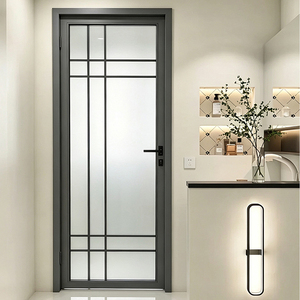
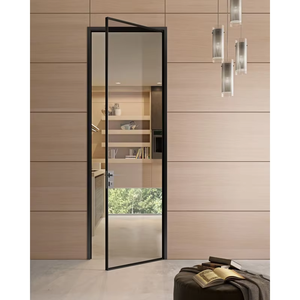
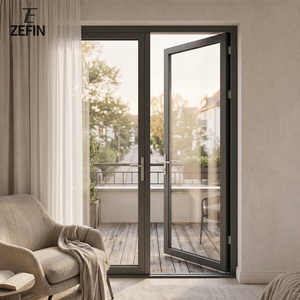
Featured Architectural Bathroom Door Systems
Explore our precision-engineered interior aluminium glass bathroom doors, manufactured in accordance with ISO9001 quality management systems, EN 12150 tempered glass standards, and AAMA architectural surface finishing specifications.
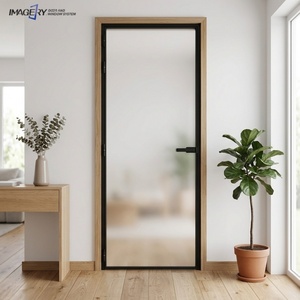
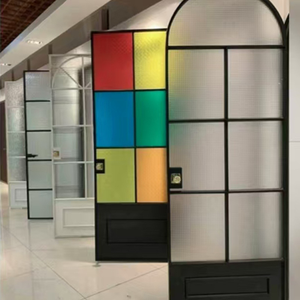
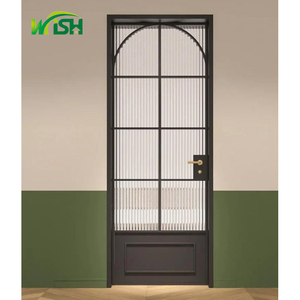
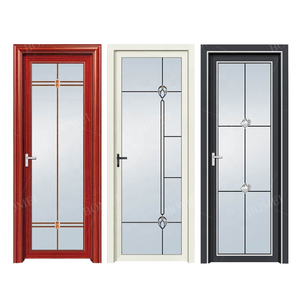
1. Executive Overview: China's Aluminium Glass Door Manufacturing Ecosystem
In global commercial real estate, high-end hotel construction, and residential architectural projects, the specification of interior fenestration has undergone a dramatic transformation. Traditional timber and low-grade PVC interior doors have increasingly given way to architectural-grade 6063-T5 aluminium glass bathroom door systems. The primary drivers behind this paradigm shift are dimensional stability in hyper-humid microclimates, acoustic isolation requirements, aesthetic minimalism, and lifecycle cost-efficiency.
China's manufacturing ecosystem—centered predominantly in industrial hubs like Foshan, Guangdong—accounts for over 60% of the world's high-precision extruded aluminium profiles and architectural glazing systems. Modern Chinese factories have evolved beyond basic OEM fabrication to fully integrated technology providers. Utilizing automated 5-axis CNC machining, robotic powder coating lines, automated glass tempering furnaces, and rigorous quality assurance labs, top-tier factories engineer door systems that comply with demanding global building codes including EN 14351-1, ASTM E330, and AS2047.
When evaluating a China Top Aluminium Glass Bathroom Door Factory, global procurement directors, general contractors, and facade engineers must look beyond superficial price-per-square-meter metrics. Technical evaluation must encompass alloy metallurgy, wall thickness tolerances (specifically adhering to GB/T 5237 / EN 755 standards), hardware cycle durability testing (classifying under EN 1191 for >200,000 opening cycles), glass tempering stress patterns, and environmental seal longevity against volatile organic compounds (VOCs) and cleaning agents.
2. Engineering & Material Specifications of Premium Bathroom Doors
The bathroom environment poses an aggressive microclimate: constant exposure to high relative humidity (RH > 85%), direct water splashing, temperature fluctuations between 15°C and 45°C, and chemical vapors from cleaning reagents. Standard door materials quickly degrade under these conditions: timber warps and delaminates due to moisture absorption, while raw steel corrodes. Architectural aluminium glass door systems resolve these challenges through precise metallurgical and mechanical engineering.
Aluminum Alloy Metallurgy & Surface Finishing
Leading Chinese factories utilize 6063-T5 or 6063-T6 magnesium-silicon aluminum alloys. The profile structural wall thickness for interior bathroom applications is engineered between 1.4mm to 2.0mm, providing an optimal balance between structural rigidity and frame weight. Premium profile extrusion relies on primary aluminum billets rather than scrap-blended aluminum, ensuring uniform grain structure and superior tensile strength (≥ 180 MPa yield strength).
Anodization yields an oxide layer of 15–25 microns, creating an integral metallic surface impervious to salt air, moisture corrosion, and scratching. Essential for high-end coastal hospitality projects.
Utilizing Kynar 500 resin coatings (AAMA 2605 certified), PVDF treatments offer ultimate resistance to color fading, acid rain, and harsh detergent exposure with a 20+ year aesthetic lifespan.
Electrostatic application complying with AAMA 2604 standard delivers textured matte, ultra-black, or custom RAL color finishes with high impact resistance and zero VOC off-gassing.
Safety Glazing Architecture & Acoustic Performance
Glass selection directly impacts both user safety and privacy. Direct source manufacturing requires glass units to conform strictly to global safety glazing mandates (ANSI Z97.1 in North America, EN 12150 in Europe, and AS/NZS 2208 in Australasia). Common glazing configurations include:
- Single Tempered Safety Glass (6mm - 10mm): Thermally toughened glass featuring surface compressive stress > 90 MPa. Upon impact failure, it fragments into small, blunt-edged cubical particles to eliminate injury risks.
- Laminated Glass (4mm + 0.76PVB + 4mm): Combines privacy frosted glass with an internal Polyvinyl Butyral (PVB) interlayer, providing enhanced sound insulation (STC 36-40 dB) and structural integrity even if fractured.
- Insulated Reeded/Fluted Double Glazing (5mm Low-E + 9A + 5mm Ceramic Fritted): Creates visual opacity while transmitting ambient daylight, paired with an air cavity to prevent warm moisture condensation inside cold bathroom zones.
| Door Profile System | Wall Thickness | Glazing Specification | Water Seal Mechanism | Target Acoustic Isolation |
|---|---|---|---|---|
| Ultra-Narrow Minimalist Swing | 1.6 mm (6063-T5) | 8mm Tempered Frosted / Fluted | Concealed Magnetic Gaskets | STC 30 - 32 dB |
| Heavy-Duty Soundproof Casement | 2.0 mm (6063-T6) | 5mm+0.76PVB+5mm Laminated | Triple EPDM Perimeter Seals | STC 38 - 42 dB |
| Concealed Frame Sliding System | 1.8 mm (6063-T5) | 8mm - 10mm Monolithic Toughened | Bottom Nylon Brush + Drain Track | STC 28 - 30 dB |
| Bifold Space-Saving Partition | 1.4 mm (6063-T5) | 6mm Tempered Silk-Screened | Interlocking Aluminum Flanges | STC 26 - 28 dB |
3. Future Sourcing & International Procurement Trends (2025–2030)
As global supply chains normalize and real estate developments focus on carbon reduction, digital procurement, and accelerated construction schedules, the methodology of sourcing aluminium glass bathroom doors from China is rapidly evolving. Key trends shaping future commercial procurement contracts include:
Pre-hung, pre-glazed door kits supplied as complete assemblies with factory-fitted hardware are replacing traditional multi-trade job site assembly. This reduces site installation labor costs by up to 65% for hotel and apartment tower developers.
With European CBAM (Carbon Border Adjustment Mechanism) and global ESG benchmarks, major Chinese factories are transitioning to hydro-powered primary aluminum smelting and using >75% recycled scrap content, reducing embodied carbon to below 4.0 kg CO2e/kg Al.
B2B buyers are increasingly specifying Polymer Dispersed Liquid Crystal (PDLC) switchable glass doors. Controlled via wall switches or smart room management systems (RMS), the glass transitions from opaque to clear in milliseconds, creating open luxury aesthetics in compact hotel layouts.
Additionally, standard purchase orders are moving toward BIM (Building Information Modeling) interoperability. Top China factories now supply native Revit files (.rfa) and IFC models complete with parametric metadata, allowing architects to seamlessly insert custom door schedules into digital twin workflows before issuing manufacturing drawings.
4. Design & Product Development Evolution in Interior Fenestration
Modern interior architecture prioritizes spatial continuity, daylight penetration, and clean visual geometry. Aluminum glass bathroom door designs have shifted from bulky, wide-framed traditional profiles toward ultra-narrow, hidden-frame configurations.
Aesthetic Minimalisms & Narrow Sightlines
Where traditional doors featured frame sightlines exceeding 60mm–80mm, current architectural designs utilize extremely narrow frames measuring between 10mm and 18mm. Achieving structural stability with such slim profiles requires advanced engineering: high-tensile 6063-T6 aluminum alloys, internal corner crimping with stainless steel corner cleats, and structural adhesive bonding (using Dow Corning or Sika structural silicone) between glass and aluminum frames to distribute dynamic loads.
Concealed Hardware & Ergonomic Integration
Next-generation hardware design emphasizes total invisibility of mechanical elements:
- 3D Adjustable Concealed Pivot Hinges: Fully recessed into the frame and floor/header, supporting door leaf weights up to 100 kg while maintaining 180-degree swing functionality and self-closing hydraulic damping.
- Magnetic Latch Lock Bodies: The latch bolt remains completely flush with the door leaf profile while open, extending silently into the strike plate via magnetic induction only when closed. This eliminates mechanical noise and prevents snagging clothing.
- Flush Integrated Pull Handles: CNC-machined directly into the aluminum vertical stile, maintaining a continuous vertical plane for seamless sliding or pocket door operation.
5. Comprehensive Procurement & Engineering FAQ
Below are technical answers to common questions raised by overseas commercial procurement officers, quality control engineers, and project developers when sourcing from Chinese door manufacturers.
6. Manufacturing Excellence: Meric Window Systems Infrastructure
As an industry leader in architectural aluminum doors, panoramic sliding systems, and ultra-narrow fenestration, Meric Window Systems Co., Ltd. provides comprehensive engineering solutions tailored specifically for international architectural firms, real estate developers, and high-end residential builders.
Every aluminum stile and rail undergo 5-axis CNC milling, drilling, and corner miter cutting to tolerances within ±0.1mm. This guarantees flawless frame alignment, tight miter joint seals, and effortless field installation.
100% of finished door leaves are mounted onto factory testing frames prior to packing. Operational smoothness, latch engagement, corner seal water tightness, and glass visual purity are inspected and logged in a digital QC report delivered to the buyer.
Our engineering desk provides architectural drawing review, wind load calculation, acoustic engineering consultancy, and custom installation shop drawings to streamline project execution from concept to completion.
Request Engineering Specifications & Custom B2B Quotations
Partner with China's premier manufacturer of architectural aluminum glass bathroom doors. Access full product catalogs, CAD profile details, test reports, and direct factory pricing for your upcoming commercial or residential developments.