Featured Engineering Systems & Profiles
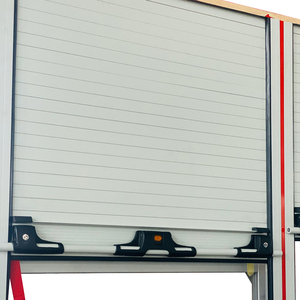
Best Priced Aluminum Roll-Up Doors for Cabinets Garages Sheds-Firefighting Equipment & Accessories
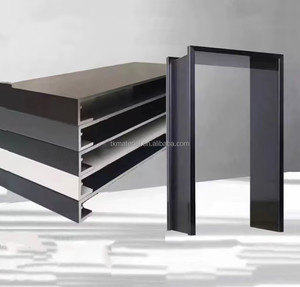
TK Modern Design Aluminum Alloy Matte Cover Extremely Narrow Integrated Balcony Pass Window Set with Window Frame Wrap Edge
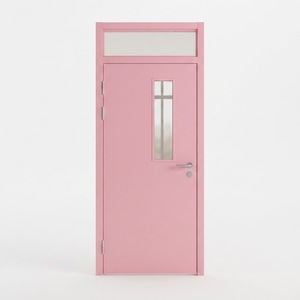
Fire Rated Aluminium Alloy Fireproof Interior Door With Contemporary Design For Residential Hospital Villa Use-Fire Prevention
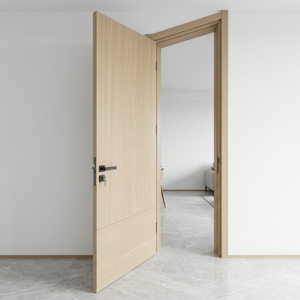
Modern Fire Resistant Rated Aluminum Alloy Fireproof Door Fiberglass Finished 5-Year Warranty for Interior Commercial Home Use
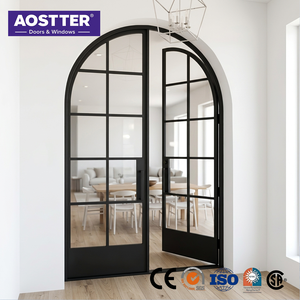
AOSTTER AS2047 Minimalist Black Aluminum Crittall French Door Interior Glass Partition Swing Door Office
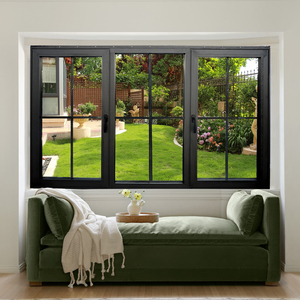
CSA Approved Thermal Break Aluminum windows Tilt and Turn Hurricane Window Double Glazed Aluminium Windows Casement Windows
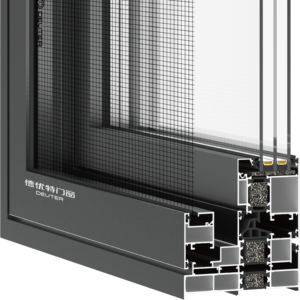
USA Villa Project Impact Resistant Outswing Aluminum Casement Window Double Glass Energy Efficient Hurricane Security Window
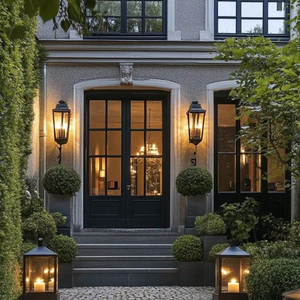
OUNA Modern Aluminum French Doors for Entrance Hurricane Proof and Soundproof with Double Glazed Tempered Glass Security
Industrial Scale & Production Benchmarks
As premier Chinese aluminium single window manufacturers, our integrated extrusion, anodizing, and CNC fabrication facility delivers high-precision architectural solutions to over 60 countries.
Executive Summary: Sourcing Aluminium Single Windows from China
The global demand for high-performance fenestration systems has shifted structural priorities toward thermal break aluminium single windows, minimalist single-hung operating units, and ultra-narrow sightline systems. China's manufacturing ecosystem—centered in regional metallurgical hubs like Guangdong and Shandong—accounts for over 50% of the world's architectural aluminium profile production. Modern real estate developers, facade contractors, and engineering specifiers increasingly leverage Chinese suppliers not merely for cost efficiency, but for advanced extrusion technology, customizable polyamide thermal break integration, and strict compliance with international building standards (such as NFRC, AS2047, CSA, and CE marks).
This technical whitepaper provides an authoritative overview of structural designs, alloy science, glazing specs, and international procurement strategies essential for purchasing premium aluminium single windows directly from tier-one Chinese manufacturers.
Thermal Break Innovation
Transitioning from traditional monolithic profiles to multi-cavity PA66-GF25 (25% fiberglass reinforced polyamide) thermal barriers, drastically cutting thermal conductivity and building operational HVAC energy consumption.
Ultra-Narrow Sightlines
Architectural demand for maximum natural daylighting has pushed interlock and sash profiles down to 20mm–35mm visible widths without sacrificing structural deflection limits under extreme wind loads.
Impact & Security Engineering
Integration of multi-point locking gear (ROTO, SIEGENIA) and PVB/SGP laminated hurricane-resistant glass capable of withstanding severe atmospheric pressure differentials and missile impact protocols.
Aluminium Alloy Metallurgy & Structural Performance
When evaluating China top aluminium single window suppliers, the foundational element of product reliability is profile metallurgy and cross-sectional geometry. Standard commercial specifications require primary ingot 6063-T5 or 6061-T6 architectural aluminium alloys. The structural integrity of a single window sash and frame depends heavily on nominal wall thickness, heat treatment tempering, and corner crimping methodology.
| Performance Parameter | Standard Specification | High-Performance / Coastal Specification | Testing / Compliance Metric |
|---|---|---|---|
| Alloy Grade & Temper | 6063-T5 Primary Aluminium | 6061-T6 Heavy Structural Alloy | GB/T 5237.1 / ASTM B221 |
| Profile Wall Thickness | 1.4mm – 1.8mm (Residential) | 2.0mm – 3.0mm (Commercial Curtain Wall) | AAMA / AS2047 Deflection Limit |
| Thermal Insulation (PA66) | 14.8mm PA66-GF25 Strip | 24mm – 34mm Multi-Cavity Insulating Strip | ISO 10077-2 / EN 12412-2 |
| Glazing Unit Structure | 5mm+12Ar+5mm Double Low-E | 6mm+1.52SGP+6mm Laminated Double Low-E | ASTM E2190 / EN 1279 |
| Surface Finishing | Powder Coating (60-80 microns) | Fluorocarbon PVDF (AkzoNobel/PPG 3-Coat) | Qualicoat Class 2 / AAMA 2605 |
| Air & Water Sealing | EPDM Continuous Gaskets | Co-extruded Vulcanized EPDM + Foam Core | ASTM E283 / ASTM E331 |
Acoustic Attenuation & Sound Insulation
Urban development projects demand elevated Sound Transmission Class (STC) ratings. By employing asymmetrical glass thickness configurations (e.g., 6mm outer glass + 12mm argon gap + 8mm inner glass) along with multi-layer EPDM perimeter gaskets, premium single casement and single-hung aluminium windows achieve acoustic reduction ratings up to STC 42 dB, effectively dampening low-frequency traffic noise.
Anodizing & Surface Longevity
For coastal developments exposed to high salinity and humidity, standard powder coating may suffer from filiform corrosion. Top Chinese manufacturers offer electrolytic anodizing (15-25 micron film thickness) and PVDF fluorocarbon coatings capable of passing 3,000-hour continuous salt spray tests (ASTM B117), preserving structural appearance for 25+ years without chalking or color shift.
How to Evaluate & Audit Chinese Manufacturers
Sourcing aluminium single windows from China requires a systematic approach to supplier evaluation. Overseas procurement managers must distinguish between pure trading intermediaries and direct original equipment manufacturers (OEM/ODM) equipped with complete fabrication lines.
1. Technical Shop Drawing Verification
Verify whether the factory’s engineering team generates Auto CAD/BIM shop drawings including wind-load stress calculations, drainage channels, expansion joints, and anchor placement before mass production starts.
2. Raw Material Traceability
Ensure the supplier uses certified primary aluminium billets (such as Chalco or Nanshan) and authentic PA66 nylon thermal break strips (e.g., Technoform or leading domestic equivalent) supported by mill test reports.
3. Export Protection & Logistics
Glass products require rigid seaworthy packaging. Confirm that units are wrapped with protective PE film, corner guards, fumigated wooden crates, or steel A-frame racks matching container loading dimensions.
Next-Generation Trends Shaping China's Window Industry
As international energy codes become increasingly strict (such as the EU Energy Performance of Buildings Directive and Net-Zero Energy Building goals in North America), the design and manufacturing of single aluminium windows are evolving rapidly:
Smart Motorized & Automated Systems
Integration of micro-actuators and smart home controllers into single-hung and casement frames allows automated climate control based on indoor air quality, rain sensors, and wind speed meters. Hidden actuators keep aesthetic frames clean while delivering mechanical reliability.
Photovoltaic Integrated Fenestration (BIPV)
Emerging commercial projects utilize transparent building-integrated photovoltaics within fixed single windows and spandrel glass. Chinese factories lead the way in embedding solar-harvesting thin films directly into insulated glass units (IGUs).
Frequently Asked Questions (FAQ)
Key technical and commercial answers regarding procurement, structural standards, and shipping procedures.
What makes 6063-T5 aluminium alloy superior for single window frame extrusion?
Alloy 6063-T5 contains magnesium and silicon as primary alloying elements, offering an optimal balance of tensile strength, surface smoothability for anodizing/powder coating, and intricate multi-cavity extrusion capability. T5 heat treatment (artificially aged after extrusion) ensures structural rigidity required for high wind-pressure locations.
How do thermal break single windows prevent condensation in cold climates?
Thermal break windows separate the interior and exterior aluminium profiles using a low-conductivity PA66-GF25 polyamide strip. This barrier breaks the thermal bridge, keeping the interior aluminium frame surface temperature close to ambient room temperature and eliminating dew condensation during freezing weather.
Can Chinese aluminium single window manufacturers meet Australian AS2047 or US NFRC standards?
Yes. Leading export-oriented manufacturers design profile walls, glazing pockets, and hardware configurations specifically to meet AS2047 (deflection, air infiltration, water resistance) and NFRC/AAMA ratings. Detailed laboratory test reports can be provided during technical reviews.
What information is required to receive an accurate factory quotation?
Buyers should provide architectural window schedules or drawings indicating opening dimensions, window operation type (fixed, single-hung, casement, tilt & turn), glass specification (e.g., 6mm Low-E + 12Ar + 6mm), profile surface finish, project geographic location, and target performance metrics.
What is the standard lead time for custom aluminium single window production and export?
Typically, sample drawing confirmation takes 3–5 days. Profile extrusion and CNC fabrication require 20–25 days, while surface powder coating or anodizing adds 5–7 days. Total factory production lead time generally averages 30–35 days prior to container loading.
How are high-end hardware systems (such as Siegenia or ROTO) integrated?
Factories utilize standard European groove profiles (C-groove or V-groove) that accept global hardware hardware brands like ROTO, SIEGENIA, HOppe, or Monticelli. This allows seamless multi-point locking gear installation and easy maintenance in destination countries.
How do factories guarantee glass safety during international ocean shipping?
Finished window units are protected with non-marking plastic film, wrapped in shock-absorbing corner foams, and packed into heavy-duty plywood crates or steel frame racks with internal padding. Individual units are numbered according to your project window schedule for rapid site identification.
Partner with China’s Leading Aluminium Window Engineers
Whether you are sourcing custom thermal break single windows for a high-rise residential complex or specialized impact-resistant systems for a luxury villa project, our engineering team provides complimentary CAD drawing analysis and factory-direct pricing.