Standard & Custom Architectural Aluminium Systems
Rigorous mechanical engineering, certified thermal breaks, and structural glass assemblies tailored for worldwide commercial and luxury residential projects.
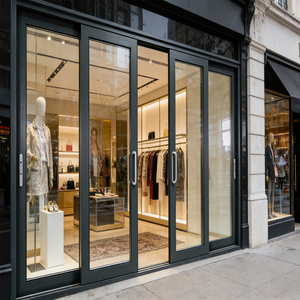
Thermal Break Aluminum Alloy Insulated Windproof Tempered Color Tint Sliding Stay Windows For Exterior Kitchen Staircase
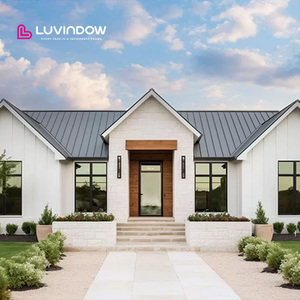
Soundproof Aluminum Exterior Doors Full View Design Slim Profile Hinged Doors for Apartments Bedrooms Entry Upscale Modern
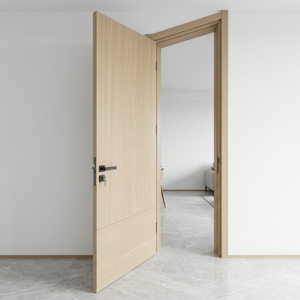
Modern Fire Resistant Rated Aluminum Alloy Fireproof Door Fiberglass Finished 5-Year Warranty for Interior Commercial Home Use
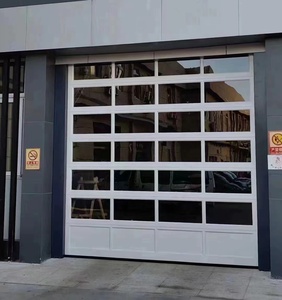
Modern Glass Aluminum Garage Door Automatic Roll up Rolling Shutter Motorized Residential Exterior Commercial Doors Price
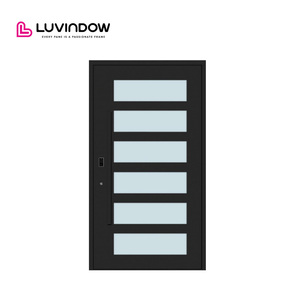
Secure Large Opening Aluminum Entry Pivot Doors for High End North American Residential Communities
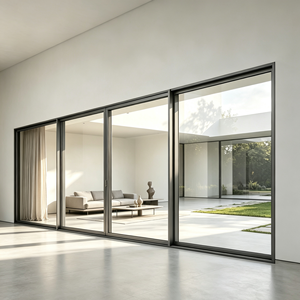
Australian Certificate AS2047 Thermal Break Aluminium Alloy Profile Double Glazed Tempered Glass Modern Horizontal Sliding Doors
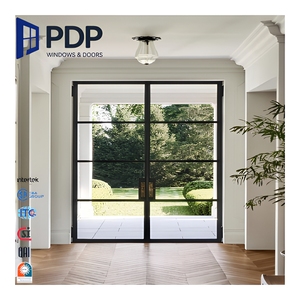
Modern Aluminum French Casement Door Anti-Theft Waterproof Tempered Glass Powder Coated Finish Custom Color for Hotel
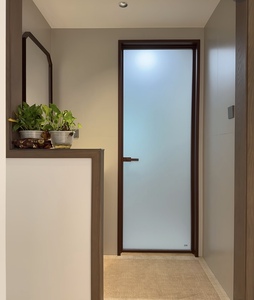
Modern Waterproof Aluminum Frame Glass Interior Swing Door for Bathroom Kitchen Toilet Room Divider Entry Door
Architectural Sourcing Analysis: Why Chinese Aluminium Door Suppliers Lead Global Construction
The global envelope engineering sector has experienced a profound shift over the last decade. As modern architectural design leans heavily into minimal sightlines, floor-to-ceiling fenestration, and stringent energy conservation mandates, the demand for precision-engineered aluminium door and window systems has reached an all-time high. China has transitioned from a high-volume manufacturing hub into a premier epicenter of high-performance architectural systems design, blending state-of-the-art extrusion metallurgy with automated European assembly robotics.
For international real estate developers, structural engineering consultants, and commercial main contractors, procuring standard and bespoke aluminium doors directly from top-tier Chinese manufacturers provides an indispensable competitive leverage: uncompromising structural performance paired with substantial cost efficiency. However, navigating the vendor landscape requires deep technical clarity into profile metallurgy, thermal insulation physics, hardware load dynamics, and international certification compliance.
Information Gain Metric: High-end Chinese aluminium standard doors utilize 6063-T5 or 6060-T66 aluminum alloys featuring dual-crimped PA66-GF25 (25% Glass Fiber Reinforced Polyamide) thermal breaks, enabling frame thermal transmittance values ($U_f$) as low as $1.2 \text{ W/m}^2\text{K}$.
1. Metallurgical Excellence & Structural Profile Integrity
At the core of every resilient standard door system is profile extrusions engineered to withstand high wind loads and dynamic deflection forces. Top Chinese exporters employ prime primary aluminum billets (avoiding low-purity scrap remelts) cast under strict ASTM B221 parameters. The 6063-T5 alloy provides an ideal balance of tensile strength ($\ge 180 \text{ MPa}$), yield strength ($\ge 110 \text{ MPa}$), and surface finish workability essential for high-durability anodizing and AAMA 2605 fluorocarbon PVDF powder coating.
For large-span residential openings, such as grand entrance pivot doors and panoramic slim-profile sliding systems, structural profiles incorporate internal multi-cavity web configurations and concealed structural steel or titanium-magnesium reinforcements. This structural geometry ensures the door leaves resist wind pressure loads exceeding $4.5 \text{ kPa}$ (equivalent to Category 5 hurricane pressures) without suffering permanent set or frame distortion.
2. Thermodynamics & Sound Insulation Physics
Energy efficiency standards, including ASHRAE 90.1, Australia's NCC (BCA), and Europe's EN 10077, require door assemblies to maintain strict thermal insulation. Standard aluminium profile systems without thermal barriers quickly act as thermal bridges, resulting in interior condensation, HVAC energy losses, and frame sweating.
Leading Chinese exporters solve this through advanced thermal break insertion. By severing the interior and exterior aluminum extrusions using precision-crimped PA66-GF25 structural polyamide strips, conductive heat transfer is interrupted. Combined with double or triple-glazed Insulated Glass Units (IGU) featuring Argon gas fill, warm-edge silicone spacers, and double-pass Low-E soft coatings, structural performance reaches supreme efficiency levels:
| System Configuration | Frame $U$-Value ($U_f$) | Overall $U$-Value ($U_w$) | Acoustic Rating (STC / R_w) | Optimal Project Application |
|---|---|---|---|---|
| Standard Non-Thermal Aluminium Swing Door | 5.8 W/m²K | 4.2 W/m²K | STC 28 dB | Interior Room Dividers & Mild Climates |
| Standard Thermal Break (14.8mm PA66) Hinged Door | 2.8 W/m²K | 2.1 W/m²K | STC 35 dB | Standard Residential & Urban Apartments |
| Advanced Multi-Cavity (24mm PA66) Sliding/Pivot Door | 1.7 W/m²K | 1.3 W/m²K | STC 42 dB | High-End Villas, Luxury Resorts & Coastal Zones |
| Ultra-Passive Double Thermal Break Triple Glazed Door | 1.1 W/m²K | 0.85 W/m²K | STC 48 dB | Extreme Cold Climates & Net-Zero Energy Buildings |
Sound reduction is achieved through asymmetrical glass unit laminations (e.g., 6mm toughened + 1.52mm PVB + 8mm toughened) paired with multi-layer continuous EPDM (Ethylene Propylene Diene Monomer) synthetic rubber compression gaskets. This dual-seal setup isolates high-frequency traffic noise, providing quiet interior environments even in dense metropolitan settings.
Enterprise Manufacturing & Quality Control Advantage
Our manufacturing infrastructure is designed to fulfill complex international project schedules with strict precision engineering.
CNC Automated Fabrication
German 5-axis CNC machining centers execute milling, drilling, and corner miter cutting to $\pm 0.1\text{mm}$ tolerances, guaranteeing airtight corner joint alignment.
Dual-Component Corner Injection
Corner miters are reinforced with cast aluminum corner cleats and injected with two-component polyurethane structural adhesive for waterproof joint sealing.
Global Compliance Certifications
Products are rigorously tested and compliant with Australian AS2047 / AS1288, North American AAMA/WDMA/CSA, and European CE EN 14351-1 standards.
Hardware Compatibility
Integrated with premium European hardware hardware systems (such as Siegenia, Hoppe, Sobinco, and GU) ensuring effortless operation over 100,000 operational cycles.
Export Packaging Ergonomics
Protective film wrapping, custom foam edge profiles, and fully enclosed IPPC heat-treated wooden crates prevent sea-freight oxidation and transit vibration damage.
Full BIM & CAD Engineering
Our in-house technical department provides complete Shop Drawings, Structural Wind Load Calculations, and Autodesk Revit BIM models for architectural submittals.
Future Procurement Trends in the Global Aluminium Door Market (2025–2030)
As international building regulations tighten regarding embodied carbon and operational energy efficiency, project procurement directors must look beyond immediate unit costs. Procurement strategies for fenestration systems are undergoing four structural transformations:
A. Low-Carbon Green Aluminium Extrusions (EPD Traceability)
Driven by the European Union's Carbon Border Adjustment Mechanism (CBAM) and global ESG investment mandates, top-tier Chinese manufacturers are adopting eco-certified primary aluminum refined via renewable hydroelectric power. Procurement specifications increasingly require Environmental Product Declarations (EPD) that detail the cradle-to-gate carbon footprint ($\text{kg CO}_2\text{e per kg of aluminium}$). Sourcing low-carbon profile series ensures compliance with future green building ratings such as LEED v4.1 and BREEAM.
B. Ultra-Slim Sightline Integration & Structural Bonding
Architectural preferences continue to favor ultra-narrow sightlines (interlock profiles as slim as $20\text{mm}$ to $25\text{mm}$) that blur interior-exterior boundaries. Achieving these structural feats requires shifting from mechanical glass retention to structural silicone adhesive bonding (using high-modulus structural sealants like Dow Corning 983). In this setup, the glass panel acts as a primary load-bearing structural component, allowing larger leaf dimensions while reducing frame visibility.
C. Motorized Automation & Smart Building Ecosystem Integration
Modern luxury residential and commercial developments demand automated accessibility. Standard aluminium sliding, lift-and-slide, and heavy entry pivot doors are progressively specified with concealed electromagnetic motor drives, radar safety sensors, and smart home protocol integration (KNX, Zigbee, or Crestron). Chinese suppliers are pioneering concealed motorized tracks capable of effortlessly sliding door sashes weighing up to $600\text{kg}$ with whisper-quiet acoustics ($<35\text{dB}$).
D. Off-Site Prefabrication & Unitized Standardized Modular Assembly
To combat rising site labor costs and skilled trade shortages across North America, Europe, and Australia, procurement models are moving from knock-down (KD) field assembly to factory-glazed, fully unitized door and window units. Ordering pre-glazed, pre-hung standard door modules ensures factory-controlled sealant curing, precise gasket placement, and rapid site installation, cutting jobsite installation time by up to 60%.
Frequently Asked Procurement & Technical Questions
Clear technical insights to streamline your engineering verification, vendor evaluation, and international logistics execution.
The distinction lies in the heat treatment and artificial aging process. 6063-T5 is rapidly cooled from an elevated temperature shaping process and artificially aged, providing excellent surface smoothness, superior corrosion resistance, and optimal workability for intricate extrusions. 6063-T6 undergoes solution heat treatment and artificial aging, resulting in higher tensile strength and yield strength. For standard residential sliding and hinged doors, 6063-T5 offers ideal structural integrity and superior powder coating adhesion. For oversized, high-load entrance pivot doors or high-rise curtain wall doors subjected to extreme wind pressure, 6063-T6 or reinforced multi-chamber designs are recommended.
Leading exporters maintain rigorous factory production control (FPC) systems and partner with NATA-accredited (Australia) or ILAC-recognized testing laboratories. Compliance with AS2047 requires fenestration products to pass mandatory physical testing: Deflection Test (AS4420.2), Operating Force Test (AS4420.3), Air Infiltration Test (AS4420.4), Water Penetration Resistance Test (AS4420.5), and Ultimate Strength Test (AS4420.6). High-grade suppliers provide project-specific NATA test reports, NFRC thermal simulation certificates, and engineering calculations stamped by certified structural engineers prior to volume production.
For installations located within 1,000 meters of salt-water coastlines or in regions with intense UV exposure and industrial pollution, standard architectural powder coatings are insufficient. We strongly advise specifying either Fluorocarbon PVDF coating (polyvinylidene fluoride) complying with AAMA 2605 (which carries a 20-year anti-fading, anti-chalking warranty) or Class 2 Qualicoat/Qualanod Anodized finishes with a film thickness of $\ge 25 \mu\text{m}$. These finishes resist saline oxidation, chemical corrosion, and UV-induced color degradation.
Export orders utilize fully tempered safety glass manufactured strictly to BS EN 12150 or ANSI Z97.1 specifications, which exhibit 4-5 times higher impact resistance than standard annealed float glass. Units are insulated using flexible EPDM gaskets and packaged in custom-built, heavy-duty wooden crates lined with waterproof plastic film and shock-absorbing EPE foam blocks. In the rare event of transit damage, each door frame and glass unit is tagged with a unique factory QR code corresponding to the project window schedule, allowing immediate factory re-fabrication and expedited air-freight replacement of identical components.
To generate an accurate engineering submittal and commercial proposal, your procurement team should provide: (1) Architectural elevation drawings or a detailed door schedule indicating opening dimensions and quantity; (2) Preferred opening typologies (e.g., thermal break slim slider, exterior hinged, large pivot, or bifold); (3) Glass configuration requirements (e.g., double low-E, soundproof laminated, or tinted glass); (4) Project location and design wind speed/pressure parameters; and (5) Hardware preference (standard high-grade domestic hardware versus imported European hardware systems like Roto or Siegenia).
Partner with China's Premier Aluminium Door Exporter
Streamline your project procurement with factory-direct engineering, certified thermal break performance, and comprehensive global project support. Contact our engineering team today for shop drawing reviews and competitive project quotes.