Engineered Aluminum Entry & Window Solutions
Explore our premium architectural facade elements engineered for extreme durability, energy performance, and high visual luxury.
Technical White Paper: Structural Engineering & Procurement Standards for Architectural Aluminum Entry Systems
In contemporary architectural design, the entrance door is no longer merely a point of ingress; it is a critical engineering component responsible for thermal envelope integrity, structural load dissipation, acoustic damping, and perimeter security. As global building codes move toward net-zero operational carbon standards, procurement teams, facade consultants, and master developers are replacing traditional timber and steel doors with high-performance thermal break aluminum entry door systems.
As a leading China top aluminum entry doors manufacturer and exporter, our engineering division integrates advanced alloy metallurgy, multi-chambered polyamide thermal isolation, CNC precision machining, and multi-point security locking systems. This technical guide outlines the physics, structural mechanics, and procurement metrics mandatory for sourcing high-end aluminum main entrance doors for global commercial and luxury residential developments.
1. Metallurgy & Structural Profile Design: 6063-T5 vs. 6061-T6 Alloys
The structural longevity of an aluminum entry door depends primarily on profile wall thickness and alloy heat treatment. Standard commercial entry systems utilize 6063-T5 aluminum alloy, which delivers superior extrusion surface finish, exceptional corrosion resistance, and optimal tensile strength for anodizing and powder coating finishes.
- Wall Thickness Rigidity: Standard entrance door profiles feature frame and sash wall thicknesses ranging from 2.0 mm to 3.0 mm, fulfilling ASTM B221 and EN 755 structural standards. Oversized luxury pivot doors utilize reinforced internal webbing reaching 4.0 mm thickness at load-bearing hinge junction points.
- Tensile & Yield Strengths: 6063-T5 alloy exhibits a minimum ultimate tensile strength of 180 MPa and a yield strength of 130 MPa, ensuring zero sash deflection under high wind pressure cycles (up to ASTM E330 structural loading limits).
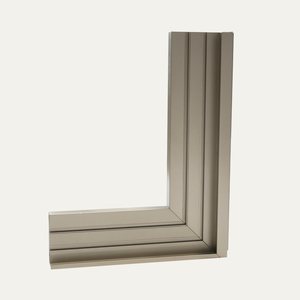
- Precision Extrusion Multi-Chamber Profiles: Multi-chamber internal geometry prevents profile twisting, enhances structural torsion resistance, and accommodates continuous co-extruded EPDM gaskets.
2. Thermal Break Mechanics: Polyamide Strip Technology (PA66GF25)
Uninsulated aluminum conducts thermal energy rapidly (conductivity coefficient ~ 200 W/m·K). To eliminate thermal bridging, high-performance entrance systems incorporate a physical structural separator known as a broken bridge (thermal break).
Our engineering matrix utilizes PA66GF25 (Polyamide 66 reinforced with 25% glass fiber) strips. Glass fiber reinforcement matches the linear coefficient of thermal expansion of aluminum (2.3 × 10⁻⁵ /K), preventing profile delamination under extreme atmospheric temperature swings from −30°C to +70°C.
| Performance Standard metric | Thermal Break Aluminum Entry Door | Standard Non-Thermal Aluminum | Solid Hardwood Door |
|---|---|---|---|
| U-Factor / Thermal Transmittance | 1.0 – 1.4 W/m²K (High Efficiency) | > 3.5 W/m²K (Poor Efficiency) | 1.8 – 2.4 W/m²K (Moderate) |
| Acoustic Insulation (STC Rating) | STC 38 – 45 dB (Double/Triple Glazed) | STC 25 – 28 dB | STC 30 – 32 dB |
| Wind Pressure Load (Pa) | Class P3 / Pn ≥ 4000 Pa (ASTM E330) | ≤ 2000 Pa | ≤ 1500 Pa (Warping risk) |
| Air Tightness (ASTM E283) | Class 4 / ≤ 0.1 cfm/ft² | Class 2 / Draft prone | Class 1-2 / Moisture expansion |
| Water Penetration (ASTM E331) | 750 Pa (No leakage under heavy rain) | 250 Pa | 300 Pa |
3. Surface Treatment Engineering: PVDF Fluorocarbon vs. Powder Coating
Exterior main entrance doors endure intense ultraviolet (UV) radiation, atmospheric pollution, humidity, and coastal salt spray. To ensure color retention and surface integrity over a 30-year operational lifecycle, specified surface treatments must comply with AAMA 2605 specifications:
- Fluorocarbon (PVDF) Spray Coating: Utilizing 70% Kynar 500 resin, PVDF coatings provide exceptional chemical resistance and chalking resistance, maintaining color variance (ΔE) under 5 units over 20 years in high-UV tropical environments.
- Thermally Transferred Wood Grain Finish: Combines the structural strength and non-warping stability of aluminum with the organic aesthetics of natural wood panels, utilizing polyurethane powder bases and vacuum heat transfer technology.
- Anodized Hard Coating (Class I): Creates an integral oxide layer with a thickness ≥ 25 microns, delivering scratch resistance (Mohs hardness ~ 7-8) ideal for contemporary minimalist entrance doors.
Why International Buyers Partner with Our Manufacturing Hub
Direct factory engineering strength, certified testing standards, and bespoke OEM/ODM production lines.
Precision CNC Fabrication
German-imported 5-axis CNC machining centers execute corner milling, lock-mortise slotting, and hardware drillings with tolerance precision within ±0.1mm.
Rigorous Pre-Shipment Quality Testing
Every customized main entry door undergoes 100% pre-assembly structural verification, locking operation checks, and pressurized water tightness testing prior to crating.
Export Reinforced Packaging
Heavy-duty multi-layer protection incorporating surface protective film, corner impact guards, high-density foam wrapping, and fully enclosed IPPC-certified plywood crates.
Future Architectural Procurement Trends for Aluminum Entry Doors (2025–2030)
As global real estate markets evolve toward ultra-luxury single-family estates, modern hospitality, and sustainable multi-family towers, commercial procurement managers must align their supply chains with four defining technological shifts in aluminum entry door manufacturing:
Trend 1: Heavy-Duty Hydraulic Floor-Spring Pivot Entrance Doors
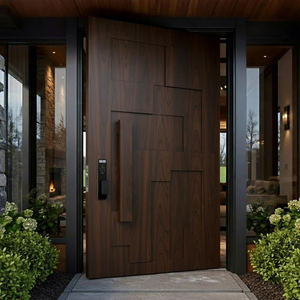
Traditional side-hinged entry doors are increasingly replaced by architectural aluminum pivot doors for grand entryways. Engineered with German concealed floor pivots and heavy-duty structural frames, these doors support single-sash leaf weights up to 500 kg and widths exceeding 2.5 meters. Pivot mechanisms distribute panel weight directly to the subfloor, eliminating frame sagging while enabling effortless finger-touch sash movement.
Trend 2: Smart Access Control & Biometric Hardware Integration
Future-ready entrance doors seamlessly integrate smart home automation directly into the aluminum extrusion profile during factory manufacturing. Features include:
- Concealed motorized multi-point lock actuators synchronized with facial recognition, Bluetooth keyless Entry, or 3D biometric fingerprint scanners.
- Embedded LED architectural accent lighting channels extruded directly into the door sash exterior or vertical pull handles.
- Hidden power-transfer conduits (cable carriers) within the door frame to preserve structural aesthetic and IP65 weatherproof integrity.
Trend 3: Double/Triple Insulated Vacuum & Smart Electrochromic Glazing
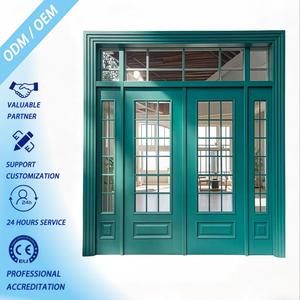
High-end entrance doors with glass side-lights or center glass panels are adopting low-E coated triple glazing units filled with 90%+ Argon gas. Furthermore, electrochromic (PDLC switchable) smart glass integration allows entry panels to transform instantly from crystal-clear transparency to total opaque privacy with simple remote or sensor controls.
Trend 4: Sustainable Low-Carbon Aluminum Extrusions & Circularity
Environmental Product Declarations (EPD) are becoming mandatory in European, North American, and Australian procurement tenders. Chinese manufacturers are transitioning to recycled aluminum (green aluminum) processed using hydroelectric energy, drastically reducing embodied carbon metrics to under 4.0 kg CO²/kg Al while maintaining identical T5 temper structural strengths.
Frequently Asked Questions: Global Procurement & Technical Specifications
Detailed engineering answers to clear your technical inquiries before issuing Purchase Orders (PO) or RFP documentation.
Partner with China's Premier Aluminum Door Manufacturer
Send us your architectural window/door schedule, project drawings, or technical RFQ specifications. Our engineering desk delivers shop drawings and competitive direct factory pricing within 24 hours.
Inquire Now