High-Performance Architectural Aluminum Door & Window Systems
Engineered to comply with stringent international standards including AS2047, NFRC, ASTM E330, and EN 14351-1. Manufactured with precision extruded 6063-T5/T6 structural aluminum alloy.
Engineering Evaluation: Sourcing Architectural Aluminum Entrance Systems from China
An in-depth analysis of structural integrity, thermal break technologies, surface finishing standards, and supply chain logistics for architects, general contractors, and global real estate developers.
The Evolution of Structural Aluminum Doors in Modern Architecture
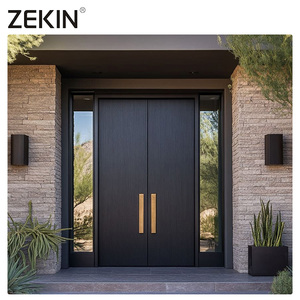
Over the past decade, aluminum front entrance doors have transcended their traditional role as simple security barriers to become central elements of high-performance building envelopes. The global demand for ultra-narrow sightlines, high thermal insulation, and extreme wind-load capacity has positioned Chinese manufacturers—specifically engineering hubs in Guangdong (Foshan) and Shandong—as primary innovators in custom aluminum extrusion and door system fabrication.
Engineered primary entryways must withstand rigorous mechanical stresses while satisfying stringent energy building codes such as Title 24 in California, the National Construction Code (NCC) in Australia, and the Energy Performance of Buildings Directive (EPBD) in Europe. Premium aluminum front doors utilize multi-chamber thermal break profiles that isolate interior and exterior metallic surfaces, substantially lowering structural thermal bridging.
Metallurgical Benchmarks and Profile Geometry
High-end structural front entrance systems strictly utilize 6063-T5 or 6063-T6 aluminum alloys, prized for superior tensile strength (minimum yield strength of 170 MPa for T6), high corrosion resistance, and exceptional anodic response. Profile wall thickness in load-bearing structural jambs ranges from 2.0mm to 3.0mm, exceeding generic residential window grades to ensure operational integrity under high wind pressure ratings (up to 4500 Pa structural test pressures under ASTM E330 standards).
Furthermore, internal core designs integrate 25% glass fiber reinforced polyamide (PA66GF25) thermal strips. This mechanical junction prevents shear deformation during structural flexing while keeping the total thermal conductivity of the frame assembly below 1.5 W/m²K when paired with low-emissivity double or triple insulated glass units (IGUs).
Technical Profile Specifications
- Alloy Composition: AlMg0.7Si (6063-T5 / T6)
- Structural Profile Wall: 2.0mm – 3.5mm Nominal
- Thermal Break Material: PA66GF25 Technoform Strips
- Surface Coating Standard: AAMA 2605 / AkzoNobel PVDF
- Water Tightness Rating: Class 9A (700 Pa, EN 12208)
- Security Standards: RC3 / PAS 24 / Multi-Point Lock
- Glazing Configurations: 5mm+12Ar+5mm Low-E to Triple
Product Development & Global Sourcing Trends
Key architectural paradigm shifts shaping the manufacturing and international procurement of luxury aluminum entrance systems over the next decade.
Ultra-Large Panel Hardware Engineering
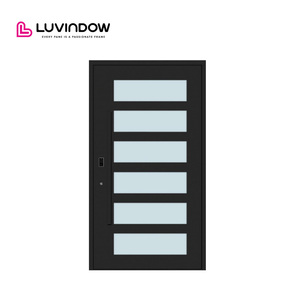
Architectural designs favor oversized openings exceeding 4 meters in height. Future procurement leans toward aluminum pivot and heavy-duty sliding systems equipped with concealed German hardware (such as Siegenia or HOPPE) and hydraulic floor pivots capable of smoothly supporting single leaf weights up to 500kg.
Smart Access & Biometric Integration
Modern entry doors feature integrated, flush-mounted biometric access modules, 3D facial recognition, and motorized multi-point electronic locks. Procurement standards require factories to pre-wire profiles with internal conduit passages and offer smart-home automation protocol compatibility (Zigbee, Matter, Z-Wave).
Decarbonization & Low Embodied Carbon
With strict EU CBAM carbon tariffs and global ESG benchmarks, top-tier Chinese aluminum suppliers are adopting recycled scrap aluminum inputs and renewable hydro-electric smelting processes to achieve lower embodied carbon metrics, supported by verifiable Environmental Product Declarations (EPDs).
Why Leading Architects & Global Developers Partner With Us
From initial shop drawing calculations to final export container packaging, our engineered manufacturing operations ensure zero-defect project delivery.
Precision CNC Machining
Our manufacturing line features 5-axis CNC machining centers capable of milling profile lock cavities, hinge positions, and drainage ports with tolerances within ±0.1mm. This automated precision guarantees perfect corner crimping and seamless gasket jointing.
Advanced Surface Finishing
Utilizing world-class AkzoNobel and PPG powder coatings, our anodizing and fluorocarbon (PVDF) finishing lines exceed AAMA 2605 specifications. This ensures 30-year resistance against salt-spray corrosion, UV fading, and chalking in severe coastal environments.
Custom Engineering Support
Every order is assigned a dedicated senior structural engineer who produces detailed AutoCAD shop drawings, structural wind load calculations, and thermal modeling analyses to ensure full compliance with regional building codes prior to mass extrusion.
Certified Performance Testing
In-house pressure testing chambers evaluate air infiltration (ASTM E283), water penetration resistance (ASTM E331), and structural performance under extreme positive and negative pressures up to 6000 Pa.
Heavy Export Crating & Logistics
Finished units undergo protective blue film wrapping, foam edge protection, and are secured inside fully enclosed ISPM 15 compliant fumigated plywood crates or steel A-frame racks for safe multi-modal sea freight transportation.
Complete Fenestration Package
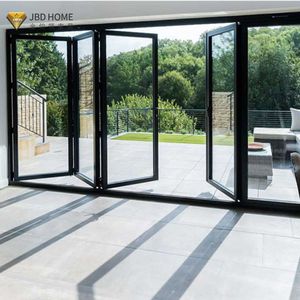
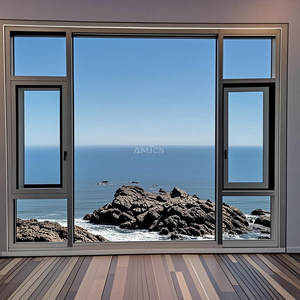
By supplying front entrance doors, panoramic sliding systems, bi-folding patio doors, and curtain wall windows from a unified factory source, project managers ensure color consistency and streamlined site installation.
System Selection Guide for Procurement Managers
Compare mechanical performance indicators across our core door configuration families to select the optimal solution for your building envelope requirements.
| Door System Type | Primary Application | Max Panel Height | Thermal U-Value | Wind Load Resistance | Acoustic Rating (STC) |
|---|---|---|---|---|---|
| Armored Security Front Door | Luxury Villa Main Entry | 3,000 mm | 1.1 W/m²K | 4,500 Pa (ASTM E330) | 42 dB |
| Heavy-Duty Architectural Pivot Door | Commercial & High-End Residence | 4,500 mm | 1.3 W/m²K | 3,800 Pa (AS2047) | 38 dB |
| Panoramic Lift & Slide System | Oceanfront Patio & Balcony | 3,500 mm | 0.85 W/m²K | 5,000 Pa (Hurricane Rated) | 44 dB |
| Heavy-Duty Bi-Fold Folding Door | Resorts & Indoor-Outdoor Transition | 3,200 mm | 1.4 W/m²K | 3,000 Pa (EN 12210) | 36 dB |
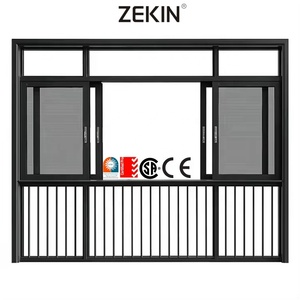
| Thermal Break Casement Door | Standard Exterior Access Points | 2,700 mm | 1.0 W/m²K | 4,000 Pa (PAS 24) | 40 dB |
Frequently Asked Questions by Global Buyers
Detailed answers regarding technical compliance, custom engineering, MOQ, and international freight logistics.
What structural certifications do your aluminum front doors hold for North American and Australian markets?
Our aluminum door and window systems are independently tested and engineered to comply with key regional standards. For Australia, products are certified under AS2047 (Windows and External Glazed Doors in Buildings) and AS1288 (Glass in Buildings). For North America, our thermal break profile series undergo NFRC testing for thermal performance (U-factor, SHGC) and are tested under AAMA/WDMA/CSA 101/I.S.2/A440 for structural wind load pressure and water tightness.
How do you guarantee color uniformity across different extrusion batches for large commercial projects?
We utilize automated powder coating lines operating strictly with certified AAMA 2604/2605 grade architectural powders supplied by AkzoNobel or Jotun. Each production batch undergoes spectrophotometer color measurement checks (Delta E < 0.5) and coating thickness verification (60 to 80 microns) to guarantee 100% color consistency between profiles, frame joints, and accessory trims.
Can custom aluminum pivot front entrance doors be equipped with Smart Access technology?
Yes. Our pivot entrance series features specialized internal wiring conduits designed into the thermal break extrusion profiles. We seamlessly integrate German-engineered motorized multi-point locks (such as GU or KFV) along with hidden frame sensors, biometric fingerprint readers, LED pull handle illumination, and keypad entry systems that connect directly with building automation controllers.
What documentation is required from the buyer to initiate a project technical drawing and cost quotation?
To provide an accurate technical assessment and factory-direct quotation, we request: 1) Architectural floor plans or structural door schedules detailing opening dimensions (width x height); 2) Preferred opening configuration (Pivot, Sliding, Bi-Fold, Casement); 3) Glazing performance specs (Double/Triple glazed, Low-E coating, Tinted); 4) Color finish (RAL color code or anodized finish); and 5) Project location for wind pressure calculations.
What protective measures are implemented during sea freight transport to prevent transit damage?
All door frame profiles and glass panels are wrapped with non-staining protective film and corner guards. Assemblies are placed into custom-built, heavy-duty plywood crates lined with shock-absorbing foam. Large-span glass units are shipped on engineered steel A-frame racks with heavy webbing straps, eliminating movement and preventing stress fractures inside shipping containers.
Ready to Source Architectural Aluminum Entrance Systems?
Contact our structural engineering team today for CAD shop drawing reviews, structural wind load analysis, and factory-direct project estimates.