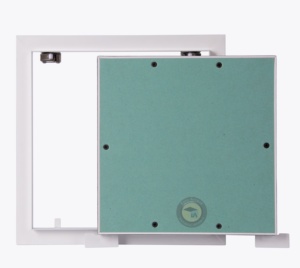
Factory-Direct Portfolio
Featured Aluminium Entrance & Glazing Systems
Explore our wholesale catalog of engineered aluminium doors, windows, and structural entrance profiles manufactured under certified ISO/CE quality standards.
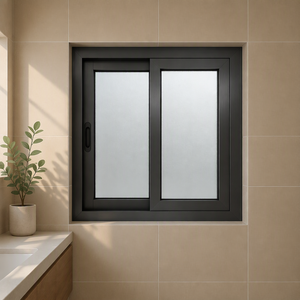
Profile Aluminum Doors and windows Factories in Foshan China
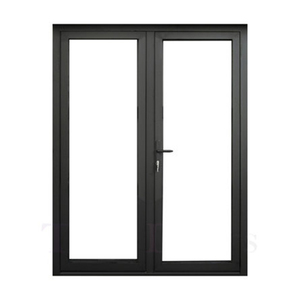
House Main Door Aluminium Security Door with Mesh System Doors and windows Catalogue
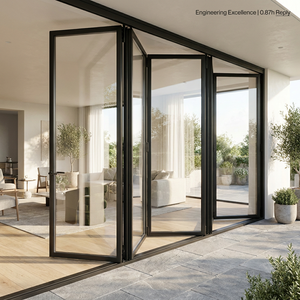
Modern Slim Profile Folding Patio Aluminum Bifold Doors CE Certified System
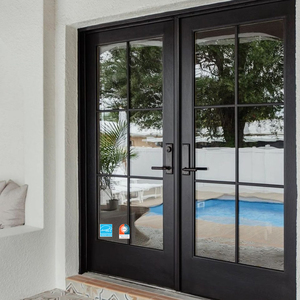
AMJ NFRC Excellent Quality Interior Door Tempered Glass USA Swing French Door Aluminum French Casement Door
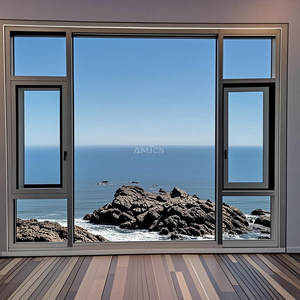
Australian Standard Window Hurricane Proof Impact Aluminium Frame Glass windows and Doors Aluminum Double Glazed Casement Window
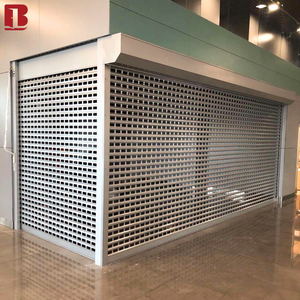
Bolang Aluminum Alloy Grill Roller Shutter Door Hollowed-out Remote Control Breathable Anti-theft Security Corrosion Resistant
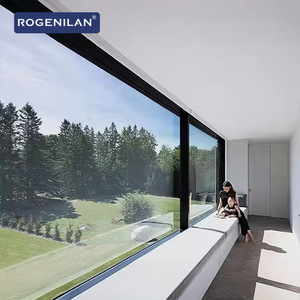
Rogenilan Modern Large Panoramic Fixed Picture House Window Double Tempered Glazed Casement Windows for Houses
Technical Whitepaper
Engineering Principles of Modern Wholesale Aluminium Front Entrance Doors
An authoritative analysis on material metallurgy, structural stability, thermal break physics, and multi-locking security mechanisms for commercial procurement.
In modern architectural design, the front entrance door serves as the primary aesthetic focal point and the initial barrier against environmental conditions and unauthorized access. As global demand shifts toward ultra-modern residences and high-performance commercial structures, sourcing China wholesale aluminium front entrance doors has evolved from a simple pricing transaction into a complex engineering procurement process. Leading manufacturers in Foshan and surrounding industrial clusters utilize advanced extrusion technologies, precision CNC machining, and high-performance thermal breaks to fulfill rigorous international building codes.
1. Metallurgical Composition: The Dominance of 6063-T5 Profile Alloys
The structural reliability of an entrance door is determined by the alloy composition of its extrusions. Premium entrance door systems utilize 6063-T5 architectural aluminium alloy. This material offers an optimal balance of tensile strength (yield strength ≥ 110 MPa), superior surface finish quality, and excellent corrosion resistance. For grand entrance doors—such as heavy pivot systems or high-frequency swinging main entrance doors—profile wall thicknesses are engineered between 2.0mm to 3.0mm, comfortably exceeding standard window profile thresholds to absorb dynamic mechanical loads and resist forced entry attempts.
2. Thermal Separation Physics: Polyamide PA66 GF25 Integration
Uninsulated aluminium profiles naturally possess high thermal conductivity ($k \approx 200 \text{ W/m}\cdot\text{K}$), making raw aluminium prone to thermal bridging, heat gain in hot climates, and interior condensation in cold climates. High-end wholesale entrance door systems mitigate this through continuous polyamide thermal break strips, specifically PA66 reinforced with 25% glass fiber (PA66 GF25).
By splitting the exterior and interior aluminium extrusions with a low-conductivity insulating strip ($k \approx 0.3 \text{ W/m}\cdot\text{K}$), modern thermal break entrance doors achieve impressive overall thermal performance values ($U$-values as low as $1.2\text{ to }1.8 \text{ W/m}^2\cdot\text{K}$). This thermal isolation preserves indoor climate control and minimizes HVAC energy consumption for commercial developments and private luxury villas alike.
Forced Entry Resistance
Integrated multi-point locking systems with anti-lift pins, hardened steel bolts, and European profile lock cylinders certified to PAS 24 and RC3 security standards.
Acoustic Attenuation
Multi-layered EPDM weatherstripping coupled with double or triple insulated glass units (IGU) achieves sound reduction ratings up to Sound Transmission Class (STC) 42 dB.
Surface Longevity
Fluorocarbon PVDF liquid spraying and Qualicoat Class 2 powder coating guarantee UV resistance, color retention, and salt-spray resistance exceeding 3,000 hours.
Market Foresight
Future Procurement Trends for Aluminium Entrance Systems
Key design shifts and technological advancements reshaping the international trade of residential and commercial entrance doors.
1. Massive Pivot Entrance Doors with Concealed Hardware
Global architectural preferences are shifting toward oversized main entrance portals exceeding 3.5 meters in height and 1.8 meters in width. Traditional side hinges are being replaced by heavy-duty floor-concealed hydraulic pivot hinges capable of smoothly supporting door leaves up to 500 kg. Chinese suppliers are rapidly innovating engineered aluminum honeycomb core panels to maintain extreme rigidity while keeping leaf weight manageable.
2. Smart Biometric & IoT Access Control Integration
The modern front door is no longer purely mechanical. Global procurement contracts increasingly require pre-engineered factory integration of concealed biometric fingerprint sensors, 3D facial recognition modules, motorized multi-point lock actuators, and smart home connectivity protocols (Z-Wave, Zigbee, Matter). Sourcing fully assembled smart aluminum door units from China drastically lowers site installation labor costs.
3. Ultra-Narrow Sightlines & Flush Threshold Transitions
Minimalist design aesthetics demand zero-barrier transitions. Procurement schedules now heavily prioritize flush-threshold track designs featuring concealed drainage channels. Micro-frame edge profiles maximize visible glass surfaces while meeting strict water tightness thresholds against wind-driven rain.
4. Decarbonization & Low Carbon Profile Extrusions
Environmental regulations across Europe, North America, and Australia are driving demand for environmental product declarations (EPD). Modern Chinese exporters are adapting by utilizing hydroelectric-smelted primary aluminum billets and increasing recycled aluminum ratios, helping global developers hit LEED and BREEAM sustainability targets.
Specification Matrix
Material Performance Evaluation for Front Entrance Systems
A side-by-side technical comparative analysis designed to assist architectural specifiers and import buyers in material selection.
| Performance Metrics | Thermal Break Aluminium Entrance Doors | Solid Hardwood Doors | Standard Hollow Steel Doors |
|---|---|---|---|
| Structural Longevity & Distortion | Zero warp, rot, or swelling; dimensional stability for 30+ years | Prone to moisture warping, swelling, and thermal cracking | Susceptible to internal joint rust and denting upon impact |
| Thermal Insulation ($U$-Value) | $1.2 - 1.8 \text{ W/m}^2\cdot\text{K}$ (PA66 Thermal Break + Low-E IGU) | $1.8 - 2.5 \text{ W/m}^2\cdot\text{K}$ (Varies by timber density) | $2.2 - 3.2 \text{ W/m}^2\cdot\text{K}$ (High thermal bridging unless foam-filled) |
| Weather & Water Resistance | Class-leading EPDM gaskets & pressure equalization channels | Absorbs humidity; finish degrades under direct rain | Requires frequent repainting to prevent seam corrosion |
| Maintenance Overhead | Virtually zero; simple clean with mild soapy water | High; periodic sanding, varnishing, and sealing required | Moderate; periodic surface rust treatment and repainting |
| Customization & Oversizing | Supports huge span pivot/swing designs with slim frames | Weight limits restrict height; costly for giant dimensions | Limited aesthetic options; heavy industrial look |
Enterprise Credentials
Why Source Entrance Systems via Meric Window Systems?
Combining deep engineering experience, advanced manufacturing infrastructure, and dependable global export support.
Meric Window Systems Co., Ltd. is a specialized manufacturer and global exporter of high-performance architectural aluminium window, door, and curtain wall systems. Built on a foundation of rigorous engineering review and advanced production standards, Meric serves property developers, general contractors, architectural firms, and wholesale importers across more than 50 countries.
Unlike standard trading suppliers, every contract fulfilled by Meric begins with a detailed engineering check. Structural engineers analyze local wind pressures, thermal performance criteria, building envelope movement, and opening dimensions to guarantee that each profile selection, thermal strip, and hardware specification is perfectly matched to the destination site.
10+
System Product Lines
6063-T5
Certified Alloy Grade
100%
Pre-Shipment Inspection
Global
Project Supply Coverage
Precision CNC Manufacturing
Automated double-head cutting machines, 5-axis CNC machining centers for hardware mortising, and computerized corner crimping ensure tight tolerances (±0.5mm).
Seaworthy Protective Packaging
Finished door units are wrapped in protective blue film, fitted with impact-resistant corner guards, buffered with foam sheets, and secured inside fully enclosed plywood crates.
International Code Compliance
Our window and entrance door configurations can be engineered and pre-tested to meet AS2047 (Australia), NFRC/AAMA (North America), and CE/EN standards.
Procurement Knowledgebase
Frequently Asked Questions for Bulk Importers & Developers
Detailed answers to technical, logistical, and commercial inquiries regarding factory-direct entrance door orders from China.
What is an ultra-narrow sightline aluminium entrance system?
An ultra-narrow sightline system is an architectural door or window layout where visible outer aluminum frames and vertical interlocking mullions are reduced to a minimal footprint (typically 20mm to 35mm). This maximizes daylight transmission and provides clear panoramic views while relying on structural structural glass bonding and reinforced internal steel or alloy stiffeners for overall load-bearing performance.
How do you verify aluminum alloy quality and profile wall thickness prior to shipment?
All raw aluminum extrusions come with Mill Test Certificates (MTC) verifying 6063-T5 alloy composition. During fabrication, our Quality Control team performs ultrasonic wall thickness measurements across structural stress points to ensure strict compliance with architectural shop drawings (minimum 2.0mm to 3.0mm for main entrance doors). Third-party inspection reports (e.g., SGS, TÜV) can also be arranged prior to container loading.
Which hardware brands are integrated into China-manufactured front entrance doors?
We provide full hardware flexibility depending on project specifications. Options include premium European hardware lines such as HOPPE, Siegenia, GU, and Sobinco, as well as top-tier Chinese hardware brands like KIN LONG and HOPO. All locks, handles, multi-point gearboxes, and concealed hinges undergo rigorous cycle testing (up to 100,000 operation cycles) to ensure long-term functionality.
Can aluminium main entrance doors be customized for coastal, high-salinity regions?
Yes. For projects located within coastal zones (within 5 km of seawater), standard anodizing or basic powder coatings are upgraded to fluorocarbon (PVDF) 3-coat spraying systems or Qualicoat Seaside certified powder coatings. Hardware components are upgraded to 316 stainless steel to prevent filiform corrosion and salt mist degradation.
What essential project details are required to generate an accurate architectural quotation?
To receive a detailed pricing schedule, please submit architectural floor plans or window/door elevation schedules containing: (1) Rough opening dimensions and door swing/pivot orientations; (2) Profile finish preferences (powder coat, anodized, PVDF, wood grain); (3) Glass performance requirements (single, double Low-E, laminated impact); and (4) Project location to enable wind load and thermal calculations.
Direct Factory Procurement
Ready to Engineer Your Architectural Front Entrance Doors?
Send your architectural drawings, door schedules, or wholesale procurement requirements directly to our engineering sales team for a complimentary technical review and factory-direct price quotation.