1. The Metallurgy & Structural Engineering of Modern Aluminium Sash Windows
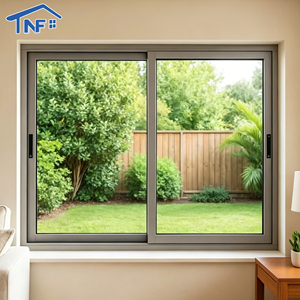
As international building codes push for higher energy efficiency, structural resilience, and architectural minimalism, sourcing high-performance window systems from specialized manufacturers in China has become a cornerstone strategy for global developers. Modern aluminium sash windows—encompassing both traditional vertical double-hung configurations and modern horizontal sliding/casement hybrids—are no longer simple framing elements; they are highly integrated building envelope solutions.
At the structural core of top-tier window systems produced by manufacturers like Meric Window Systems Co., Ltd. is the selection of primary alloys. Standard architectural profiles utilize 6063-T5 extruded aluminium alloy. The T5 temper designation signifies that the extrusion is artificially aged after elevated-temperature shaping, yielding an optimal balance of tensile strength (yield strength ≥ 110 MPa) and superior surface finish capability for protective coatings.
Thermal Break Technology: Polyamide vs. PVC Insulating Strips
To eliminate the natural thermal conductivity of raw aluminium ($\lambda \approx 160-200 \text{ W/m}\cdot\text{K}$), modern export-grade sash windows incorporate structural thermal breaks. The structural integrity of a thermally broken profile relies on the insulator type:
- PA66 GF25 (Polyamide 66 with 25% Glass Fiber): The global industry benchmark. Offers a thermal expansion coefficient ($2.3 \times 10^{-5}/\text{K}$) nearly identical to aluminium, ensuring structural stability under severe temperature fluctuations without joint shearing or delamination.
- PVC Substitutes (To be avoided): Low-cost alternatives often utilize PVC, which degrades under ambient UV exposure and possesses a significantly higher thermal expansion rate, causing frame warping and seal failure within 3-5 years.
Acoustic Insulation
Multi-chamber extrusions paired with asymmetric double or triple glazing reduce environmental sound transmission by up to 45 dB (STC 42 rating).
Hurricane Impact Rated
Laminated impact glass paired with reinforced sash interlocks withstand cyclic pressure tests up to ±4500 Pa (ASTM E1886/E1996 standards).
Micro-Daylight Sightlines
Ultra-narrow interlocks down to 20mm visible width maximize daylight harvesting while preserving high static structural moment of inertia ($I_x$).
2. Technical Performance Matrix: Window System Benchmarks
When sourcing custom aluminium windows and door packages for hotel developments, private villas, or multi-family residential projects, technical procurement teams must evaluate systems across standardized performance categories:
| System Type | Profile Depth | Thermal U-Value Range | Air Infiltration (ASTM E283) | Water Resistance (ASTM E331) | Primary Commercial Application |
|---|---|---|---|---|---|
| Ultra-Narrow Sash / Slider | 120mm - 157mm | 1.2 - 1.6 W/m²K | ≤ 0.15 L/s·m² | ≥ 450 Pa | Luxury Residential Villas, High-End Resorts |
| Thermal Break Casement / Tilt & Turn | 65mm - 75mm | 0.9 - 1.3 W/m²K | ≤ 0.05 L/s·m² | ≥ 700 Pa | Cold-Climate Apartments, Passive Houses |
| Heavy Duty Lift & Slide (120 Series) | 120mm - 140mm | 1.1 - 1.5 W/m²K | ≤ 0.10 L/s·m² | ≥ 600 Pa | Large Panel Patio Openings, Penthouse Terraces |
| Unitized Curtain Wall Window | 142mm - 160mm | 1.0 - 1.4 W/m²K | ≤ 0.08 L/s·m² | ≥ 1000 Pa | Commercial Office Towers, Hotel Facades |
3. Future Procurement & Technological Trends in Export Window Systems
The global window and door procurement landscape is undergoing a structural transition driven by strict environmental regulations, digitalized manufacturing, and evolving architectural preferences. Overseas importers and commercial developers must account for the following macro trends when establishing vendor partnerships with Chinese original equipment manufacturers (OEMs):
A. Decarbonization and Carbon Border Adjustment Mechanisms (CBAM)
As the European Union and North American jurisdictions roll out stricter carbon footprint reporting requirements, window manufacturers are migrating toward low-carbon recycled aluminium (secondary smelting utilizing clean hydroelectric power). Importers must verify that their manufacturing partners can provide Environmental Product Declarations (EPDs) tracing the embodied carbon of raw 6063 billets from ingot to finished anodized frame.
B. Smart Actuation and Concealed Motorization
The market for heavy-panel sliding sash doors and large-format awning windows is shifting rapidly toward automated home integration. Next-generation systems feature 24V DC brushless motors fully concealed within the upper head frame track, capable of driving sashes up to 400 kg via remote protocol, rain sensors, or smart home automation platforms (Zigbee/KNX/Wi-Fi).
C. Surface Finishing Advancement: Qualicoat Class 2 & PVDF Coatings
For coastal and high-salinity installations, standard powder coatings are being replaced by high-durability Fluorocarbon (PVDF / Kynar 500) three-coat spray applications or Qualicoat Class 2 super-durable powders. These surface treatments guarantee color retention and resistance to chalking/filiform corrosion for over 20 to 25 years under high UV exposure.
4. Manufacturer Selection & Enterprise Strengths: Meric Window Advantage
Selecting an export-focused manufacturer in China requires looking beyond product catalogs to evaluate core engineering capabilities, quality assurance protocols, and international supply chain logistics.
Meric Window Systems Co., Ltd. operates as a fully integrated engineering and production enterprise, specializing in ultra-narrow architectural profiles, curtain wall window systems, and custom door solutions. Enterprise capabilities that ensure high-yield project delivery include:
- In-House CNC Machining & Automated Assembly: Precision double-head mitre cutting saws and 5-axis CNC machining centers guarantee frame corner joint tolerances within ±0.2mm, preventing water leakage at frame mitres.
- Comprehensive Glass Integration: Direct partnership with certified glass processors (utilizing Saint-Gobain, AGC, or Xinyi raw float glass) allows factory assembly of double-glazed (IGU) and triple-glazed units featuring Argon gas filling, Low-E coatings (e.g., Sunguard double-silver), and warm-edge structural spacers.
- Structural Wind Load Verification: Every commercial window schedule submitted to Meric Window undergoes Finite Element Analysis (FEA) to calculate mullion deflection under site-specific wind loads ($P_z = 0.613 \times V^2 \times K_z \times K_{zt} \times K_d$), ensuring code compliance prior to extrusion tooling.
- Export-Ready Packaging & Logistics: Fully assembled window units are protected with peelable surface films, high-density foam corner wraps, and packed inside steel-reinforced wooden crates compliant with ISPM 15 phytosanitary shipping regulations.