Featured Wholesale Architectural Aluminum Windows & Systems
Explore our top-tier export configurations, featuring heavy-duty 6063-T5/T6 thermal break profiles, insulated multi-layer glazing, and storm-rated structural integrity built for global commercial and luxury residential projects.
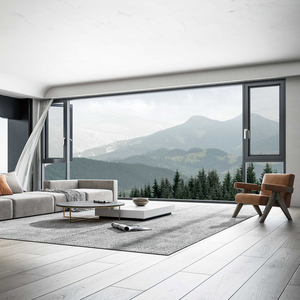
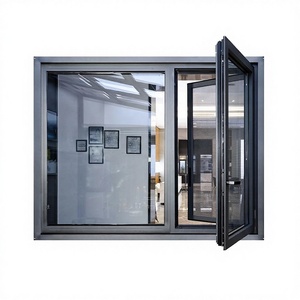
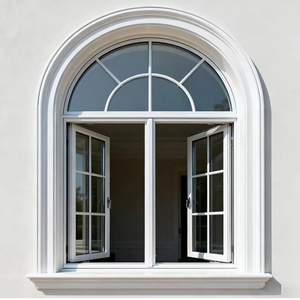
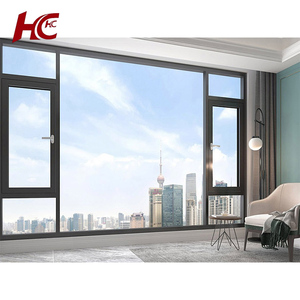
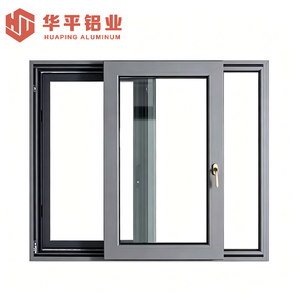
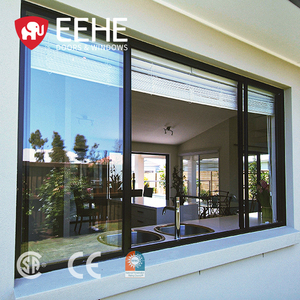
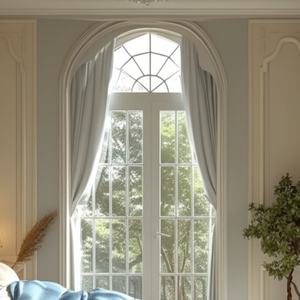
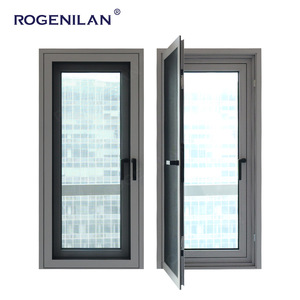
Executive Benchmark: Sourcing Wholesale Aluminum Windows from China Manufacturers
In modern fenestration architecture, the term "Aluminum Around Windows" represents the holistic integration of structural aluminum extrusions, perimeter perimeter sub-frames, thermal break barriers, and integrated perimeter waterproofing flashings. Sourcing architectural aluminum windows directly from China’s premier manufacturing hubs allows international developers, general contractors, and facade consultants to achieve an optimal balance between structural rigidity, high-efficiency thermal performance, and factory-direct cost structures.
High-performance aluminum window systems are no longer simple metallic frames holding single panes of glass. Modern commercial fenestration demands engineering excellence capable of handling coastal gale-force wind pressure, extreme freeze-thaw thermal stress, and stringent urban acoustic isolation standards. Premium China manufacturers utilize state-of-the-art 6063-T5 and 6063-T6 primary aluminum billets, processed through multi-stage automated extrusion lines, precision CNC machining, and automated corner-crimping routines utilizing two-component polyurethane structural adhesives.
Core Enterprise Manufacturing Capabilities & Technical Standards
As an authority in ultra-narrow aluminum window frames, panoramic sliding doors, and unitized curtain wall windows, our manufacturing infrastructure operates under ISO 9001, ISO 14001, and CE certification protocols. We enforce rigorous quality control checklists across every stage of profile extrusion, thermal break insertion, surface coating, glazing assembly, and pre-shipment structural testing.
PA66GF25 Thermal Break Barriers
We utilize imported Technoperform Polyamide (PA66) reinforced with 25% glass fiber. This creates a resilient thermal barrier between the inner and outer aluminum extrusions, preventing thermal bridging and drastically lowering condensation risks under severe temperature differentials.
AAMA 2605 Fluorocarbon (PVDF) Finish
Our surface treatment facilities offer PVDF coatings enriched with Kynar 500 resins, meeting AAMA 2605 standards. This guarantees 20+ years of resistance against color fading, salt spray corrosion in coastal zones, and intense atmospheric ultraviolet degradation.
Structural Hurricane & Acoustic Engineering
By combining heavy-duty multi-point locking hardware (German Siegenia/Roto systems) with PVB/SGP laminated insulated safety glass, our custom impact windows withstand gale-force winds exceeding 5000 Pa and deliver acoustic noise attenuation up to STC 45 dB.
Future Procurement Trends in Global Aluminum Window Sourcing
As commercial developers navigate strict net-zero carbon mandates, energy codes, and shifting architectural aesthetics, B2B procurement strategies for aluminum windows and perimeter systems are evolving rapidly. Importers and specifiers must realign their supply chain requirements with the following four micro-trends shaping global fenestration between 2025 and 2030:
1. Passive House & Ultra-Low U-Factor Directives
Traditional double-glazed windows with aluminum frames ($U$-values around $2.8 \text{ W/m}^2\text{K}$) are being phased out in North American and European green zones. Procurement orders are shifting heavily toward triple-glazed, warm-edge spacer units filled with 90%+ Argon gas, integrated into 75mm to 90mm multi-chamber thermal break profiles that achieve total system $U$-factors $\le 0.8 \text{ W/m}^2\text{K}$.
2. Ultra-Narrow Sightlines & Concealed Sash Engineering
Architectural preference heavily favors invisible sightlines. Modern factories are re-engineering frame geometries so that operable casement sashes align seamlessly with fixed frames. Vertical interlocks on sliding systems are shrinking to 20mm–25mm while preserving structural load resistance through embedded high-tensile steel reinforcements.
3. Low-Carbon Recycled Aluminum Billet Sourcing
With the implementation of carbon border adjustment mechanisms (CBAM) and LEED v4.1 certifications, major commercial procurement contracts now demand Environmental Product Declarations (EPD). Leading Chinese factories are adopting low-carbon aluminum billets produced via hydroelectric smelters, reducing embodied carbon emissions by over 60% compared to traditional coal-fired extrusion processes.
4. Smart Building Automation & Concealed Motorization
The convergence of home automation and commercial facade management requires window systems with pre-installed internal wiring pathways, motorized chain actuators, concealed rain/wind sensors, and electronic multi-point locking mechanisms compatible with central Building Management Systems (BMS).
Architectural Horizons: Technical Developments in Profile Fabrication
The window manufacturing sector in China has completed a dramatic shift from high-volume standardized fabrication to high-precision, customized engineering. Understanding the technological breakthroughs in profile design allows global purchasing agents to formulate superior RFQ specifications:
Isobaric Pressure Equalization
Modern profile cavities utilize three-tier EPDM sealing gaskets combined with an internal pressure-equalized rain screen chamber. This design uses atmospheric pressure differentials to prevent water from being sucked across internal gaskets, ensuring 100% watertight integrity even during 100-year storm events.
Automated Corner Injection Technology
Rather than relying purely on mechanical screw joints, high-end factories utilize pneumatic dual-component corner crimping combined with pressurized glue injection channels. Weiss Cosmogran polyurethane glue expands within the miter joint, locking profile corners structurally and permanently sealing moisture entrance points.
High-Performance Acoustic Glazing
Acoustic attenuation in aluminum windows requires asymmetrical glass thickness (e.g., 6mm outer + 12A argon + 8mm inner) or acoustic SGP/PVB laminated glass panels. This breaks sound wave harmonic resonance, reducing urban traffic noise, aircraft sound, and high-frequency disturbance by up to 85%.
Frequently Asked Questions (FAQ) for B2B Procurement
Key technical answers compiled by our chief facade engineers to assist international buyers, architectural specifiers, and procurement directors during project evaluation.
Accelerate Your Architectural Project with Factory-Direct Engineering
Submit your project window schedule, CAD elevation drawings, or wind load performance specifications to our engineering team for instant technical evaluation, profile selection, and factory-direct wholesale pricing.