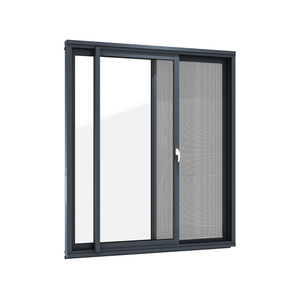
Direct Manufacturing Line
Architectural Grade Commercial & Bathroom Door Systems
Precision-engineered aluminum alloy swing, sliding, casement, and hurricane-rated entrance doors manufactured to international EN, ASTM, and AS/NZS performance standards.
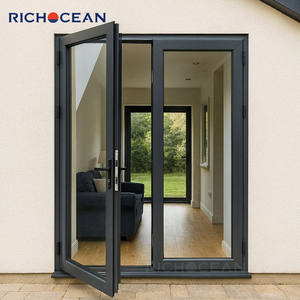
RICHOCEAN Hotel Commercial Hurricane Impact Aluminum Triple Glass French Swing Door Patio Entrance Double Doors
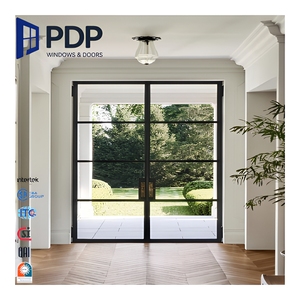
Modern Aluminum French Casement Door Anti-Theft Waterproof Tempered Glass Powder Coated Finish Custom Color for Hotel
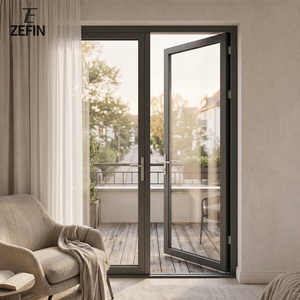
Factory Custom Modern Aluminum Alloy Swing Door, Waterproof Tempered Glass Bathroom Hinged Door for Interior Project
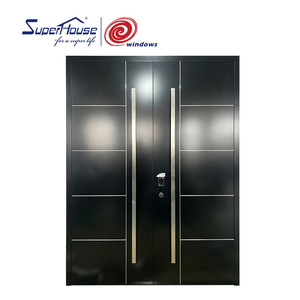
Modern Style Aluminum Double Entry Door Custom Design Exterior Front Door With Smart Lock Long Pull Handle for Luxury Villa
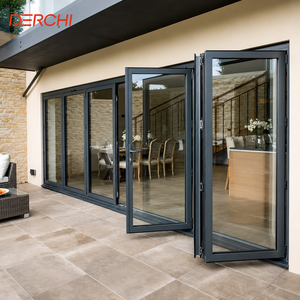
Hurricane Proof Aluminum Exterior Door Balcony Patio Lowe Soundproof Glass Garden Aluminum Bifold Folding Door
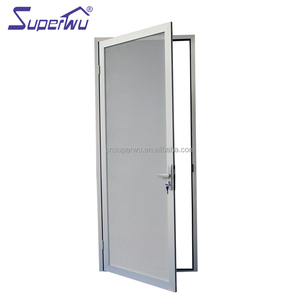
Silvery Aluminum Stainless Steel Mesh Hinged Door As Security Door
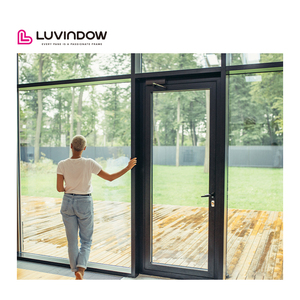
Modern Style Coastal Home Entry Doors Premium Hurricane-Resistant Double Glass Aluminum Swinging Exterior Shutters
Industry White Paper
Engineering Standards for Sourcing Aluminum Bathroom Doors from China
A comprehensive analysis of metallurgy, moisture sealing, acoustic ratings, and long-term durability in high-humidity architectural environments.
When procurement directors, hotel developers, and architectural specifiers source interior door systems for moisture-intensive environments, traditional materials such as solid wood, Medium-Density Fiberboard (MDF), and basic UPVC present significant operational liabilities. Wood-composite doors absorb ambient humidity over time, resulting in frame warping, surface delamination, hinge sagging, and bacterial growth. In contrast, China wholesale aluminum bathroom door manufacturers have engineered advanced architectural profile systems leveraging high-tensile 6063-T5 aluminum alloys, integrated polyamide thermal breaks, multi-cavity sealing channels, and tempered safety glass to guarantee zero structural degradation across decades of commercial use.
Information Gain Insight: Modern aluminum bathroom doors engineered in China are no longer merely functional dividers. They are structural acoustic barriers engineered to maintain dimensional stability under 100% relative humidity while providing acoustic isolation (STC ratings up to 38 dB) and minimal sightline aesthetics (down to 20mm-35mm frame profiles).
Material Science & Metallurgical Specifications of Aluminum Bath Systems
The foundation of premium aluminum interior and bathroom doors lies in raw material metallurgy. China's top-tier manufacturers enforce strict billet chemistry standards before extrusion:
- Alloy Composition (6063-T5): Comprising Magnesium (0.45%–0.9%) and Silicon (0.2%–0.6%), heat-treated to a T5 temper to achieve an ultimate tensile strength of ≥160 MPa and a yield strength of ≥110 MPa. This structural rigidity allows narrow frames to support heavy 8mm to 12mm double-tempered acoustic glass panels without frame deflection.
- Wall Thickness Standards: Commercial projects require a structural wall thickness between 1.4mm and 2.0mm for hinged swing doors, ensuring screw-threads in hardware mounting plates maintain high pull-out resistance under high cycle use.
- Corrosion Resistance & Surface Treatments: Wet-zone exposure demands Qualanod-certified anodizing (≥15 microns thickness) or Qualicoat-certified electrostatic powder coating (≥60 microns thickness). This prevents galvanic corrosion, filiform corrosion, and chemical degradation caused by bathroom cleaning agents.
Material Performance Matrix: Bathroom & Wet-Zone Applications
| Material Type | Moisture Absorption | Dimensional Stability | Acoustic Isolation (STC) | Expected Lifespan | Maintenance Index |
|---|---|---|---|---|---|
| 6063-T5 Aluminium Alloy | 0.00% Zero Water Absorption | Absolute (±0.1mm expansion) | 32 dB – 42 dB (IGU Glass) | 30+ Years | Minimal (Wipe Down) |
| Engineered Solid Wood | 4.5% – 12.0% (High risk) | Poor (Swells & Warps) | 28 dB – 34 dB | 5 – 10 Years | High (Re-sealing needed) |
| WPC (Wood-Plastic Composite) | 0.5% – 1.8% | Moderate (Heat sensitive) | 22 dB – 26 dB | 8 – 12 Years | Low |
| Standard UPVC Profiles | 0.05% | Poor (Thermal expansion) | 25 dB – 30 dB | 10 – 15 Years | Moderate (Discolors) |
Innovation Roadmap
Key Technology & Development Trends in Aluminum Interior Doors
How Chinese factories are driving architectural shifts toward ultra-narrow sightlines, magnetic hardware, and acoustic glazing integration.
Ultra-Narrow Frame & Hidden Hinge Architecture
Modern minimalist interior design favors minimal visible aluminum. Modern factories utilize hidden 3D adjustable 304-stainless steel hinges concealed within the frame rebate, providing clean lines without sacrificing structural weight capacity (supporting up to 80kg per leaf).
- 20mm to 35mm visible profile width
- Concealed 180° swing hinges
- Flush frame-to-wall architectural integration
Silent Magnetic Latch & Drop-Down Bottom Seals
To enhance acoustic privacy in luxury hotel suites, manufacturers integrate magnetic latch locks that remain flush when the door is open, engaging silently upon closure. Automatic drop-down bottom seals seal frame gaps up to 15mm when closed to block sound transmission and steam migration.
- Zero mechanical latch friction noise
- Concealed automatic acoustic drop seal
- Child-safe, corrosion-proof lock bodies
Architectural Glass & Privacy Treatments
Aluminum frame bathroom doors incorporate specialized insulated or laminated safety glass configurations. Double-glazed units utilize decorative privacy interlayers, patterned fluted/reeded glass, smart electrochromic glass, or sandblasted acid-etched surfaces.
- Fluted Moru, Changhong, or Frosted Tempered Glass
- Dual-glazed acoustic air gaps with argon gas
- Shatter-proof PVB/EVA safety lamination
Strategic Procurement
Future Sourcing & Procurement Trends for Wholesale Buyers
Essential trends shaping global supply chains, container density engineering, and ESG compliance for 2025–2030 project procurement.
1. Transition from Finished Assemblies to Flat-Pack / KD Systems
Shipping fully assembled pre-hung doors incurs high ocean freight expenses due to volumetric airspace loss inside shipping containers. Leading Chinese exporters have standardized precision CNC-machined Knock-Down (KD) frame kits. By shipping pre-cut, pre-drilled frames with corner crimping keys and pre-gasketed channels, buyers increase container loading capacity by up to 280%, drastically reducing freight cost per unit.
2. Rigorous ESG & Low-VOC Surface Coating Demands
International building codes (such as LEED, BREEAM, and WELL standards) require interior materials to emit zero volatile organic compounds (VOCs). Wholesale exporters are adopting chrome-free pre-treatment washing lines combined with solvent-free thermosetting powder coatings. This eliminates heavy metal residues and formaldehydes from interior door packages.
3. BIM & CAD Shop Drawing Automation
Enterprise buyers no longer accept simple paper catalogs. Modern B2B procurement workflows demand parametric Revit BIM objects and 2D CAD cross-sectional detailing for exact wall-thickness matching (sub-frame installations, dry-wall drywall trim adapters, and wet-plaster installations). Top manufacturers provide customized shop drawings within 24–48 hours of project schedule submission.
Factory Direct Assurance
Meric Window Systems Engineering & Production Capabilities
Combining state-of-the-art aluminum extrusion lines, CNC machining precision, and rigorous export quality assurance protocols.
In-House Extrusion & CNC Milling
Meric Window Systems Co., Ltd. controls the manufacturing process from raw 6063-T5 aluminum billet extrusion to multi-axis CNC milling. Lock pockets, hinge recesses, and drainage ports are machined with ±0.1mm tolerances, ensuring seamless assembly on site.
100% Pre-Shipment Inspection (QC)
Every batch of aluminum bathroom doors undergoes strict quality testing prior to export packing: dimensional checks, diagonal tolerance verifications, salt-spray corrosion chamber tests, glass tempering clarity checks, and hardware operational cycle verification.
Heavy-Duty Container Export Crating
Finished door systems are protected with scratch-resistant protective film, corner impact guards, high-density polyethylene foam buffers, and packed in reinforced plywood crates or steel rack containers designed for easy forklift unloading.
Procurement Guidance
Frequently Asked Questions for Wholesale Sourcing
Clear, direct answers regarding technical specifications, MOQs, custom hardware, and international shipping logistics.
What makes aluminum bathroom doors superior to wood or WPC options in hotel projects?
Aluminum bathroom doors made from 6063-T5 alloy feature zero water absorption, rendering them completely immune to swelling, rot, surface peeling, and warping under continuous humidity. Additionally, aluminum offers non-combustible fire resistance, higher structural strength, and seamless integration of minimalist glass designs, vastly lowering hotel maintenance costs across a 20+ year lifecycle.
What surface finishes are recommended for high-salinity or coastal regions?
For coastal hotels or tropical environments, we recommend either Qualanod-certified anodized finishes (15–25 microns) or PVDF (fluorocarbon) liquid coatings (≥40 microns). These surface coatings successfully pass 2,000+ hours of continuous neutral salt spray (NSS) testing without blistering, chalking, or pitting corrosion.
Can doors be customized to fit non-standard rough opening dimensions and wall thicknesses?
Yes. Meric Window operates as an OEM/ODM direct manufacturer. We produce aluminum door frames with adjustable telescopic sub-frames or custom jamb extensions capable of fitting wall thicknesses ranging from 75mm up to 300mm. Profile dimensions, glass specs, and colors (RAL color matching) are tailored to project drawings.
What glass options are available for privacy and acoustic control in interior bathroom doors?
We offer single tempered safety glass (5mm to 10mm), double insulated glass units (5mm + 9A/12A + 5mm) with frosted or acid-etched finishes, fluted/reeded architectural glass (Moru glass), laminated smart electrochromic privacy glass (switchable opaque to clear), and tinted acoustic PVB laminated glass options.
How are project quotations generated and what documentation is required?
To provide an accurate FOB/CIF factory quote, please submit your architectural window and door schedule detailing opening sizes, glass types, surface finish requirements, quantity per size, hardware preferences, and target project destination. Our technical sales engineers will return full shop drawings and unit pricing within 24 hours.
Submit Your Project Schedule for Engineering Review
Partner directly with a premier Chinese wholesale manufacturer. Get instant pricing, CAD shop drawing support, and factory-direct technical consultations for your commercial or residential developments.