Engineered Aluminum Brown Door & Window Series
Factory-direct structural glazing solutions manufactured to international standards (AS2047, AAMA/ASTM, EN 12207). Custom anodized bronze, coffee brown, and PVDF architectural finishes available for global export.
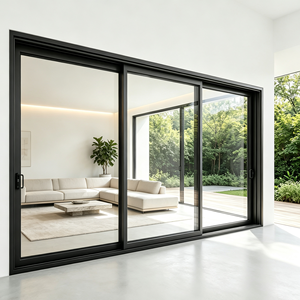
AS2047 Load-bearing Aluminium Alloy Profile And Double Glazed Tempered Glass Large Modern Sliding Doors
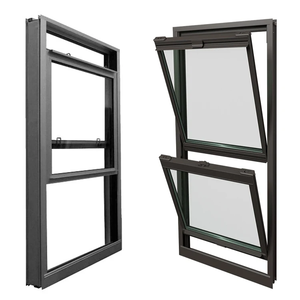
Customized Double Glazed Simple Design Aluminum Narrow Frame Balcony Window Casement House Windows
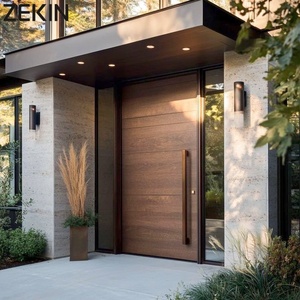
ZEKIN Modern American Design House Heat Insulation Fire Prevention Luxury Entrance Pivot Door
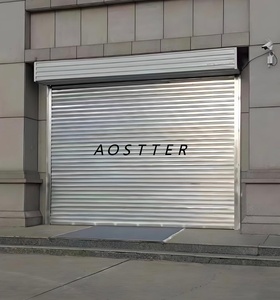
Steel Electric Rolling Shutter Hurricane Storm Proof Remote Control for Warehouse Store Garage Roller Door
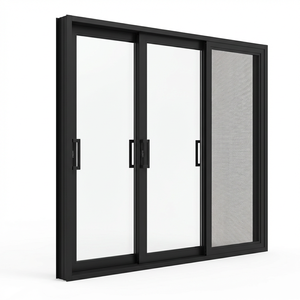
High Quality Three Track Six Panel Sliding Door Screen Mesh Insect Net Aluminum Tempered Glass Slim Profile
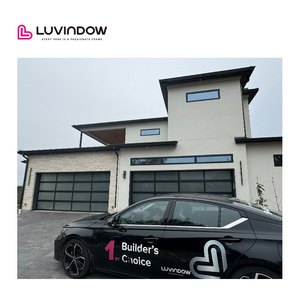
Insulated Security Easy Operate Aluminum Sliding Garage Doors for Residential Modern Homes
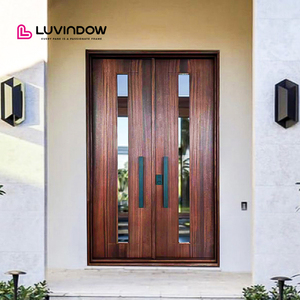
Luvindow Custom USA Villa Modern Design Exterior Solid Wood Main Entry French Door Pivot Aluminum Doors
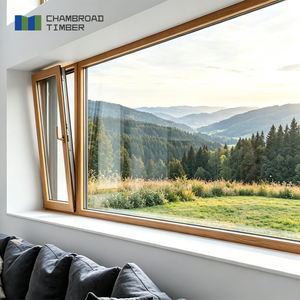
Aluminum Clad Wood Windows Triple Glazed Low-E Glass Hurricane Resistant Impact Tested Factory Wholesale
Architectural Mechanics & Material Science of Wholesale Aluminum Brown Doors
In modern architectural facade engineering, brown aluminum doors—ranging from deep anodized bronze, dark metallic brown, mocha, to specialized RAL 8019 / RAL 8028 powder coatings—have evolved beyond pure aesthetic choices. They represent a sophisticated synthesis of structural metallurgy, surface polymer science, and extreme climate insulation engineering. As global architectural trends favor earthy tones, warm luxury, and seamless transitions between organic surroundings and urban facades, sourcing top-tier aluminum brown doors from China manufacturers has become a strategic priority for structural engineers, project developers, and wholesale importers worldwide.
The core structural advantage of commercial-grade aluminum brown door systems lies in their high strength-to-weight ratio. Utilizing 6063-T5 and 6061-T6 prime aluminum alloys, these systems offer a tensile strength exceeding 185 MPa and yield strength beyond 150 MPa. Unlike legacy timber doors that warp under relative humidity fluctuations or unreinforced vinyl systems that succumb to thermal degradation under solar UV loads, extruded aluminum profile systems provide absolute dimensional stability over a 50+ year operational lifespan.
Information Gain Benchmark: Photothermal & Delta E Integrity
Brown aluminum profiles absorb a significantly higher solar infrared spectrum compared to clear anodized or white powder-coated profiles. Under direct sunlight, surface temperatures on brown door extrusions can reach 65°C to 80°C. Standard manufacturers fail to account for thermal expansion differential. Meric Window Systems Co., Ltd. incorporates PA66 GF25 polyamides with customized thermal expansion coefficients matching the 6063-T5 extrusion precisely, preventing profile bowing (the "bimetallic effect") and maintaining a color variance of ΔE < 0.8 across multi-year exposure cycles.
Chemical Composition & Mechanical Performance Comparison
| Performance Standard / Metric | Architectural Grade 6063-T5 Profile | Structural Grade 6061-T6 Profile | Wholesale Target Specification |
|---|---|---|---|
| Ultimate Tensile Strength | ≥ 185 MPa | ≥ 290 MPa | ASTM B221 / GB 5237.1 Compliance |
| Yield Strength (0.2%) | ≥ 150 MPa | ≥ 240 MPa | High Wind-Load Resistance (up to 5000 Pa) |
| Polyamide Thermal Strip | PA66 GF25 (25% Glass Fiber) | PA66 GF25 (25% Glass Fiber) | DIN 16941 / EN 14024 Compliant |
| Surface Finish Micro-Hardness | Webster Hardness ≥ 12 HW | Webster Hardness ≥ 15 HW | Qualicoat Class 2 / AAMA 2604 Standard |
| Thermal Conductivity (Frame) | 1.6 – 2.2 W/(m²·K) with PA66 | 1.8 – 2.4 W/(m²·K) with PA66 | Passivhaus Level U-Factor Options Available |
Factory Engineering Capabilities & OEM/ODM Excellence
As a leading China wholesale aluminum brown door manufacturer, Meric Window Systems Co., Ltd. operates state-of-the-art extrusion lines, vertical powder coating towers, and automated CNC fabrication facilities.
Precision CNC Processing
Corner joints, hardware mortises, and drainage weeping slots are machined via 5-axis CNC centers with tolerances controlled within ±0.1mm. This guarantees airtight corner crimping and zero water infiltration under extreme hurricane conditions.
Advanced Surface Treatment
Equipped with Swiss Gema automated powder coating guns and fluorocarbon (PVDF) triple-bake systems. Surface finishes pass 3,000-hour salt spray testing (ASTM B117), maintaining color integrity against UV fade and coastal air oxidation.
Systemized Quality Assurance
Every batch undergoes strict multi-stage testing including thermal cycling, wind pressure resistance, glass seal integrity check, and operational cycle testing up to 100,000 continuous opening/closing operations.
Global Sourcing & Procurement Trends for Wholesale Brown Aluminum Doors
Key structural shifts, purchasing priorities, and architectural specifications shaping international supply chain decisions over the next decade.
1. Ultra-Narrow Interlock Sightlines
B2B buyers are moving away from bulky 90mm frame profiles toward ultra-narrow panoramic sightlines (18mm – 25mm visible interlocks). In brown anodized or PVDF finishes, these slim sightlines blend into surrounding timber or stone cladding, expanding daylighting ratios while maintaining structural wind-load loadability.
2. High-Performance Thermal Breaks
Energy codes across North America (Title 24, IECC), Europe (EPBD), and Australia (NCC/AS2047) demand lower frame U-factors (Uf ≤ 1.4 W/m²K). Sourcing trends mandate multi-cavity PA66 polyamide strips filled with aerogel insulation, alongside warm-edge glass spacers and argon-filled double/triple Low-E glazing units.
3. Smart Hardware & Concealed Motorization
Modern commercial and residential developments require integration with building automation systems (BAS). Procurement orders increasingly include hidden electric motor drives, motorized multi-point locking mechanisms, bio-metric access entry control, and heavy-duty concealed hinges rated for panel weights up to 400kg.
Future Technological & Material Development Trends
How China's leading window and door manufacturers are advancing material science, sustainability, and surface durability for next-generation architectural demands.
A. Bio-Based & High-Recycled Content Alloys
To satisfy stringent LEED and BREEAM decarbonization mandates, top manufacturers are adopting low-carbon aluminum billets refined using renewable hydropower. Recycled post-consumer aluminum content is being engineered up to 75% without compromising structural yield strengths, significantly lowering embodied carbon footprints (Scope 1 and Scope 2 emissions) for global project tenders.
B. Superdurable Qualicoat Class 3 & Nano-Ceramic Coatings
Next-generation brown aluminum finishes utilize hyper-durable fluoro-polymer powder technology and nano-ceramic conversion coatings. These advancements eliminate chromatic shift under intense solar radiation, providing scratch resistance up to 3H pencil hardness and resisting environmental micro-cracking in extreme temperature ranges (-40°C to +85°C).
C. Vacuum Insulated Glass (VIG) & Slim Frame Integration
The development of ultra-thin Vacuum Insulated Glass (VIG)—providing U-values as low as 0.60 W/(m²·K) in a total glass thickness under 10mm—allows brown aluminum door profiles to dramatically reduce depth. This technology enables ultra-slim 50mm profile depths that out-perform traditional 90mm triple-glazed systems in thermal and acoustic efficiency.
Why Source Aluminum Brown Doors from Meric Window Systems
Factory-direct engineering control, end-to-end customization, and rigid export logistics tailored for global distributors and project contractors.
Full-Spectrum Customization
From architectural shop drawings (CAD/BIM) to custom RAL brown shade matching, anodizing micron depth, and specialized hardware configuration (Hoppe, Siegenia, CMECH, GU), we tailor every unit to your project's precise specifications.
International Compliance
Tested and certified to Australian Standard AS2047 / AS1288, North American AAMA/WDMA/CSA 101/I.S.2/A440, and European CE standards, ensuring effortless customs clearance and local building code compliance.
Heavy-Duty Export Packaging
Units are protected with blue protective film, corner impact guards, bubble-wrap casing, and packed inside fully enclosed fumigated plywood crates or steel shipping racks to guarantee zero transit damage during sea transport.
Wholesale Procurement FAQ: Technical Answers for Buyers
Direct answers from our structural engineering and export compliance team regarding specifications, custom finishes, testing, and shipping.
Anodized bronze/brown surface treatment involves an electrochemical process that converts the aluminum surface into a durable, integrated aluminum oxide layer (typically 18–25 microns thick). It offers an authentic metallic sheen, exceptional hardness, and organic depth that cannot peel or chip. PVDF (Fluorocarbon) powder coating is a resin-based liquid spray coating (typically 3-coat/2-bake, 35–45 microns) offering superior color uniformity across large batches, higher resistance to harsh chemical pollutants, and exact RAL color matching (e.g., RAL 8019 Grey-Brown or RAL 8028 Terra Brown). Anodized finishes are preferred for high-end modern minimalist designs, while PVDF is ideal for extreme coastal or high-pollutant commercial environments.
Color variation in brown profiles is a common issue for non-specialized factories. Meric Window Systems enforces strict raw billet lot control, utilizing single-batch primary aluminum extrusions for each project. For powder coating, we utilize automated Swiss Gema electrostatic coating lines with continuous computer-controlled temperature sensors across the curing oven. Every production run is measured using X-Rite spectrophotometers to confirm Delta E (ΔE) color deviation remains strictly below 0.8 compared to the approved master sample before assembly.
We exclusively utilize precision-extruded PA66 GF25 (Polyamide 66 reinforced with 25% glass fiber) thermal break strips crimped into dual-chamber profile slots via mechanical knurling and rolling machines. PA66 GF25 features a thermal expansion coefficient identical to aluminum (2.3 × 10⁻⁵ /K), preventing structural shear failure or air leakage under high thermal differentials. This setup achieves frame thermal transmittance values (Uf) as low as 1.4 to 1.8 W/(m²·K), dramatically reducing heating and cooling loads.
Yes. Our heavy-duty sliding, casement, and pivot brown door series are engineered with reinforced internal mullions, multi-point lock hardware, and high-tensile stainless steel corner cleats. Systems designated for hurricane zones can be equipped with SentryGlas (SGP) laminated impact glass, reaching design pressure ratings up to ±5000 Pa (equivalent to Category 5 hurricane wind forces), fully compliant with ASTM E1886/E1996 and AS2047 structural requirements.
For standard architectural brown profiles (such as RAL 8019, RAL 8028, or anodized bronze), our MOQ starts at 50 square meters or a minimum of 10 door units. Standard manufacturing lead time is 25 to 35 calendar days from CAD shop drawing approval and deposit receipt. For specialized custom extrusions or custom color-match samples, initial tooling and sample approval adds 10 to 14 days.
Partner with China's Premier Aluminum Door Manufacturer
Whether you are sourcing custom anodized bronze pivot doors for luxury villas or high-volume wholesale brown aluminum sliding doors for commercial developments, our engineering team provides complete technical support, CAD detailing, and factory-direct pricing.