Featured Aluminum Window & Door Systems
Precision-engineered casement, sliding, tilt-turn, and bi-fold structural aluminum profiles manufactured under ISO9001 and CE certification standards.
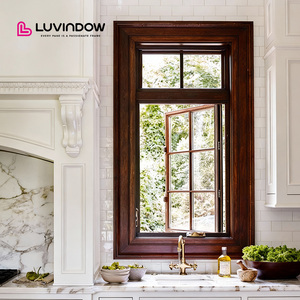
Wholesale Traditional Custom Aluminum Wooden Window Frames Design Tripple Glazed Wood Windows
Contact Us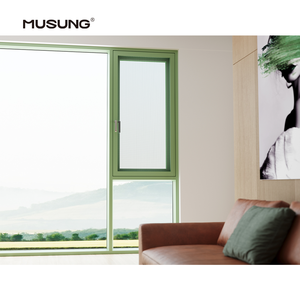
Ultra Narrow Glass Windows And Doors Double Glazed Aluminum Alloy Line Slimline Window Casement Windows
Contact Us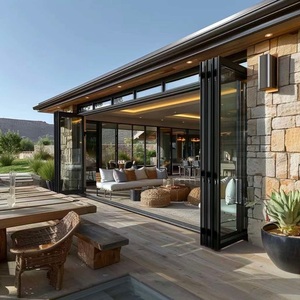
Aluminum Bi Fold Door for Terrace Insulated Glass With Window Grill Luxury Wide Waterproof Custom Made
Contact Us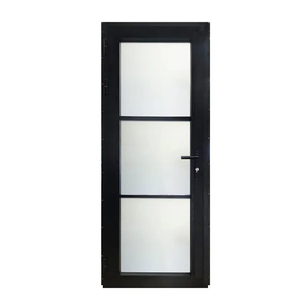
French Style Mainly Export to American Black Color Thermal Break Aluminum Doors Glass Hinged Front Door Exterior Patio
Contact Us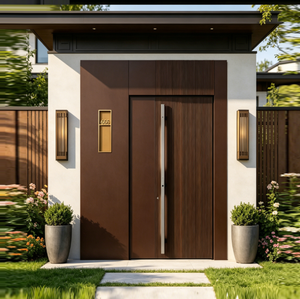
Modern Luxury Villa Hotel Main Entrance Pivot Door Exterior Security Anti-theft Front Entry Door Glass Panel Custom Living Room
Contact Us
HUACAI Luxury Villa Aluminum Clad Red Oak Wood Tilt Turn Window Triple Glazed Soundproof German Roto Hardware Custom Design
Contact Us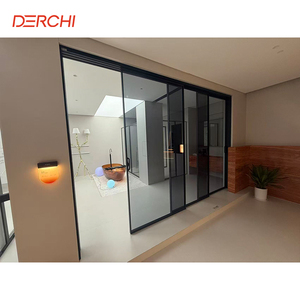
DERCHI Contemporary Interior Partition CE Certified Narrow Slim Aluminium Triple Glass Sliding Doors
Contact Us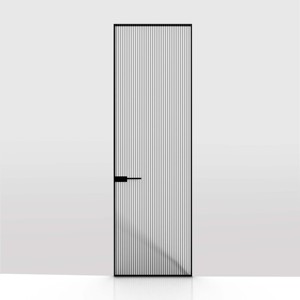
Modern Style 55mm Aluminium Frameless Interior Door with Invisible Glass Durable Windproof Finished Surface ISO9001 Certified
Contact UsEngineering Excellence in Aluminum Fenestration
State of the Art in Wholesale Aluminum Casement Door Manufacturing
In modern architectural fenestration, the aluminum casement door represents the apex of structural integrity, operational longevity, and weatherproofing capability. As global building codes shift toward near-zero energy consumption (NZEB) and extreme wind-load resistance, Chinese aluminum door exporters have evolved from low-cost component suppliers into advanced facade systems integrators.
Specifying high-performance aluminum casement doors from leading OEM/ODM exporters requires an in-depth understanding of extrusion metallurgy, thermal barrier physics, surface treatment chemistry, and hardware engineering. At Meric Window Systems Co., Ltd., every casement door configuration undergoes strict finite element analysis (FEA) to verify stress distribution, frame deflection, and thermal conduction paths prior to extrusion tooling approval.
1. Metallurgy & Extrusion Profile Parameters
The foundation of structural reliability lies in profile extrusion selection. Commercial and luxury residential projects utilize 6063-T5 or 6063-T6 aluminum alloys. The primary extruded profiles feature wall thicknesses ranging from 1.8mm for high-end residential patio doors up to 3.0mm for heavy-duty structural entrance swing doors and curtain wall systems. T5 artificial aging ensures tensile strengths exceeding 160 MPa, delivering exceptional wind-load resistance without structural fatigue.
2. Thermal Break Technology: Polyamide PA66-GF25
To eliminate the thermal conductivity inherent in raw aluminum (approx. 200 W/m·K), modern thermal-break aluminum casement doors incorporate multi-chambered polyamide strips (PA66 reinforced with 25% glass fiber). This reduces profile conductivity to less than 0.3 W/m·K. Combined with aerogel or polyolefin thermal foam inserts inside the profile cavities, frame U-values drop to as low as 1.1 - 1.4 W/m²K, satisfying rigid European Passive House standards and North American NFRC thermal metrics.
| Performance Parameter | Standard Specification | Advanced Thermal Break Series | Test Standard Compliance |
|---|---|---|---|
| Structural Wind Pressure | Class 5 (3000 Pa) | Class 9 (≥ 5000 Pa / E5400) | ASTM E330 / EN 12210 / AS 2047 |
| Air Infiltration Rate | Class 3 (≤ 1.5 m³/m·h) | Class 4 (≤ 0.5 m³/m·h) | ASTM E283 / EN 12207 |
| Water Penetration Resistance | 450 Pa | 750 Pa - 1050 Pa Static Pressure | ASTM E331 / EN 12208 |
| Overall U-Factor (W/m²K) | 1.8 - 2.2 W/m²K | 1.0 - 1.3 W/m²K (Low-E Triple IGU) | ISO 10077-2 / NFRC 100 |
| Acoustic Rating (STC / Sound) | STC 32 - 35 dB | STC 42 - 48 dB (Laminated IGU) | ASTM E90 / ISO 10140 |
3. Glazing Units & Acoustic Attenuation
Casement doors ordered from elite Chinese factories are engineered to accommodate double-glazed or triple-glazed Insulated Glass Units (IGU). Configured with toughened safety glass (EN 12150 / ANSI Z97.1), warm-edge composite spacers, and argon gas filling (90%+ purity), these glass panels block solar heat gain while ensuring maximum acoustic damping. Double-laminated acoustic interlayers (PVB or SGP) further dampen low-frequency urban sound waves.
Future Procurement & Development Trends in Aluminum Casement Doors
Emerging architectural preferences, regulatory imperatives, and material innovations defining the next decade of wholesale procurement from China.
Ultra-Narrow Sightlines & Concealed Hardware
Architectural demand is heavily skewing toward ultra-narrow visible sightlines (20mm-35mm profile width) combined with 180-degree concealed 3D-adjustable hinges. This minimalist trend maximizes daylight transmission while maintaining high load-bearing capacities up to 300kg per sash.
Smart Building & Motorized Actuation
Casement door systems are increasingly incorporating integrated micro-actuators for motorized opening, automatic multi-point lock engagement, and smart home connectivity (Zigbee/KNX protocols), enabling automated smoke evacuation and climate-responsive ventilation.
Low-Carbon & Recycled Aluminum Profiles
Global procurement contracts now explicitly require Environmental Product Declarations (EPDs). Leading exporters are transitioning to low-carbon aluminum produced using hydropower extrusions, reducing embodied carbon metrics to under 4.0 kg CO2e per kg of raw aluminum profile.
Why Global Specifiers Partner with Meric Window Systems
A comprehensive manufacturing ecosystem built on precision engineering, rigorous compliance, and end-to-end export logistics support.
Full CNC Precision Machining & Assembly
Utilizing 5-axis German-imported CNC milling and corner-crimping centers, profile joints are welded and mechanically locked with dual-component glue injection, guaranteeing structural rigidity and zero corner water leakage.
Advanced Surface Treatment Coatings
Exporters provide certified Qualicoat Class 2 fluorocarbon (PVDF) powder coating and AkzoNobel electro-anodizing (up to 25 microns), providing superior salt-spray corrosion resistance required for coastal building projects.
Rigorous Factory Acceptance Testing (FAT)
100% of finished casement door assemblies undergo pre-shipment inspections covering dimensional tolerances, hardware cycling endurance (over 100,000 operation cycles), and air/water chamber testing prior to crating.
Heavy-Duty International Export Packaging
All glazed doors are secured using multi-layer surface protective films, EPDM corner shields, and customized A-frame steel racks or fully enclosed fumigated plywood crates designed for safe ocean container handling.
Frequently Asked Questions for Importing Aluminum Casement Doors
Detailed engineering and commercial answers to simplify your supply chain decision-making.
Leading exporters manufacture products compliant with international testing codes including North American NFRC / AAMA / WDMA / CSA 101/I.S.2/A440, European CE marking (EN 14351-1), and Australian AS 2047 / AS 1288. Project-specific physical test reports for air infiltration, water tightness, structural wind deflection, and seismic drift can be issued by independent accredited testing laboratories (such as Intertek, SGS, or TUV) during the shop drawing phase.
Profile depth selection depends on the design wind pressure (DP) and maximum door height. Standard residential sashes typically utilize 55mm to 75mm profile depths. For coastal high-rise applications or extreme wind zones (over 3000 Pa wind load), profile depths of 90mm to 120mm with structural wall thicknesses of 2.2mm to 3.0mm are required. Our engineering team calculates exact structural moments of inertia (Ix and Iy) based on your wind zone data to ensure profile stability.
We supply top-tier international hardware options including German premium brands such as ROTO Frank, Siegenia, HOPPE, and GU, as well as European Sobinco and CMECH systems. For cost-optimized OEM contracts, high-grade domestic architectural hardware brands (KAPEO, Kin Long) certified to pass 100,000+ opening cycles are available, complete with multi-point anti-theft locking pins and heavy-duty 3D adjustable hinges.
Yes. Aluminum-clad wood casement doors combine the exterior weather-resistance and low maintenance of extruded aluminum with the interior warmth of solid timber (such as imported Red Oak, Teak, or Larch). The wooden inner lining is attached using snap-in composite clips that allow for independent thermal expansion and contraction between the materials, preserving structural integrity across extreme ambient temperature swings.
Standard lead times range from 25 to 35 calendar days following CAD shop drawing approval and color swatch verification. Packaging consists of a four-layer protective system: PE surface film, corner buffer pads, bubble wrapping, and loading into custom fumigated steel-framed wooden crates. Each door frame is tagged with a unique building elevation code corresponding to the project window schedule for rapid site identification.