
1. Technical Engineering of European-Style Tilt & Turn Fenestration Systems
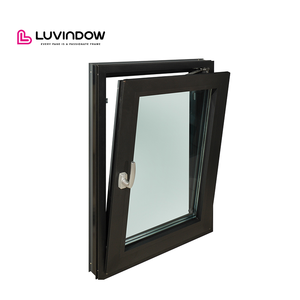
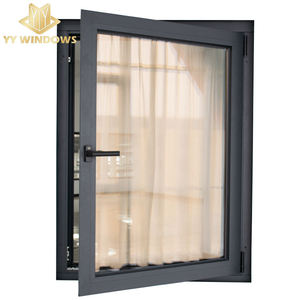
Aluminum tilt and turn window systems represent the pinnacle of modern architectural building envelopes. Originating in Western Europe and now mass-engineered across premier manufacturing hubs in China, these multi-functional fenestration systems utilize dual-action gear mechanisms that permit two distinct sash operations: inward tilting from the top for secure, draft-free ventilation, and side-swinging inward turning for maximum airflow and effortless interior glass maintenance. Understanding the structural mechanics, metal alloy chemistry, thermal break thermodynamics, and hardware kinematics is paramount for architects, building envelope consultants, and international wholesale procurement managers seeking optimal project efficiency.
Key Information Gain Insight: Pressure Equalization & Rain Screen Principles
High-end China wholesale aluminum tilt and turn windows integrate a specialized 3-stage EPDM (Ethylene Propylene Diene Monomer) sealing system based on the rain-screen principle. By creating an interior pressure equalization chamber between the outer profile extrusion and the primary gasket, water infiltration is physically prevented even during extreme wind-driven storm events matching hurricane conditions (ASTM E331 testing standard exceeding 700 Pa).
1.1 Profile Metallurgy & Extrusion Precision
Premier Chinese manufacturers enforce strict metallurgical standards, employing high-grade 6063-T5 or 6063-T6 aluminum alloy extrusions. The nominal profile wall thickness ranges from 1.6 mm to 2.2 mm for residential luxury applications, extending up to 3.0 mm for high-rise curtain wall integration, complying fully with EN 755-2 and GB/T 5237 standards. Aluminum frame profiles are subjected to advanced multi-cavity thermal breaking employing glass-fiber reinforced Polyamide strips (PA66GF25). These polyamide strips possess an identical coefficient of thermal expansion to aluminum (2.3 x 10⁻⁵ /K), preventing structural delamination under extreme seasonal temperature variations spanning from -40°C to +80°C.
1.2 Kinematic Hardware Integration (German Engineering Compatibility)
The operational longevity of a wholesale tilt and turn system relies heavily on its gear drive multi-point locking hardware. Chinese manufacturers collaborate directly with Tier-1 global hardware developers—such as Roto Frank, Siegenia-Aubi, Hoppe, and G-U (Gretsch-Unitas)—as well as proprietary heavy-duty domestic hardware solutions engineered for sashes weighing up to 300 kg. The gear drive transmission operates via a continuous perimeter drive rod, engaging multiple mushroom head locking cams into heavy-duty zinc-alloy keep plates situated around the frame boundary. This delivers uniform gasket compression, achieving Class 4 air permeability (EN 12207) and Class E1050 water tightness (EN 12208).
Multi-Cavity Thermal Break
PA66GF25 polyamide insulation strips separate interior and exterior aluminum frames, creating insulated thermal pockets that minimize heat transference and condensation formation.
Perimeter Multi-Point Locking
Heavy-duty gear transmission locks the window sash across 6 to 10 points along the frame perimeter, guaranteeing air-tight seals and superior anti-burglary security (RC2/RC3 ratings).
Acoustic Dampening Matrix
Triple-sealed insulated glass units (IGU) with argon gas filling and acoustic PVB laminated glass reduce noise transmission by up to 45 decibels for urban and airport-adjacent zones.
2. Structural Performance Matrix & International Compliance Standards
When sourcing aluminum tilt and turn windows from China manufacturers, verifying third-party certification against target export region building codes is critical. OEM/ODM suppliers in China design system extrusions to comply with North American (AAMA/WDMA/CSA 101/I.S.2/A440), European (CE - EN 14351-1), and Australian (AS 2047) performance thresholds.
| Performance Criterion | Testing Standard | Achieved Technical Rating | Architectural Impact |
|---|---|---|---|
| Thermal Transmittance (U-Factor) | NFRC 100 / ISO 10077-2 | 0.14 - 0.22 BTU/h·ft²·°F (0.8 - 1.2 W/m²K) | Exceeds Passive House energy code demands; cuts HVAC load. |
| Air Infiltration Resistance | ASTM E283 / EN 12207 | < 0.01 cfm/ft² (Class 4 Air Tightness) | Eliminates drafts, air leakage, and thermal energy dissipation. |
| Water Penetration Resistance | ASTM E331 / EN 12208 | 15 PSF / 700 Pa (Class E1050) | Prevents structural leaks during extreme storm conditions. |
| Structural Wind Load | ASTM E330 / EN 12210 | ± 60-100 PSF (Class C5 High-Rise Capable) | Resists structural deformation in coastal & hurricane zones. |
| Sound Transmission Class (STC) | ASTM E90 / ISO 717-1 | STC 38 - STC 48 (Triple Glazed Laminated) | Provides high-level acoustic isolation in commercial projects. |
| Forced Entry Security | EN 1627 / ASTM F588 | RC2 / RC3 Compliance Level | Heavy-duty protection against mechanical break-in tools. |
3. Global Procurement & Sourcing Trends (2025–2030)
The global facade and fenestration industry is undergoing rapid technological transition driven by modern energy codes, decarbonization mandates, and digitized manufacturing. B2B buyers sourcing tilt and turn windows from Chinese wholesale suppliers are leveraging key emerging trends:
3.1 Micro-Sightline & Concealed Sash Architectural Trends
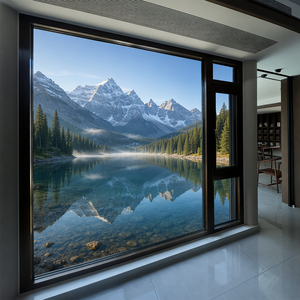
Modern luxury architecture heavily favors ultra-slim profile sightlines that maximize daylight intake and unobstructed panoramic views. The traditional tilt and turn window profile, historical known for robust bulky frames, has evolved into ultra-narrow concealed sash designs. In these systems, the operable sash frame is completely hidden behind the outer frame structure when viewed from the exterior, achieving a seamless fixed-window aesthetic while retaining full dual-action functionality.
3.2 Integration of Vacuum Insulated Glass (VIG) & Low-E Triple Glazing
With global green building certifications (LEED, BREEAM, DGNB) requiring strict carbon footprint reductions, high-end Chinese wholesale manufacturers are integrating advanced Vacuum Insulated Glass (VIG) units into aluminum tilt-turn frames. A 10.3 mm VIG pane offers equivalent thermal insulation to a 50 mm thick triple-glazed argon-filled IGU, drastically reducing window frame depth and total sash weight without sacrificing energy efficiency.
3.3 Smart Automation & Motorized Tilt Operation
Commercial building management systems (BMS) are increasingly integrating motorized tilt-and-turn actuators. Micro-chip controlled hidden actuators permit automated micro-ventilation cycles driven by indoor air quality (CO₂ concentration) sensors, weather monitoring systems, or smart home protocols (Zigbee/KNX), transforming passive window units into active HVAC-integrated ventilation nodes.
4. Complete B2B Sourcing & Engineering FAQ
5. Meric Window Systems: Factory Authority & Manufacturing Capabilities
As a global pioneer in slim-frame aluminum architectural fenestration, Meric Window Systems Co., Ltd. operates state-of-the-art extrusion, anodizing, thermal break insertion, and CNC assembly facilities. Our specialized engineering division supports commercial contractors, real estate developers, and wholesale importers across North America, Europe, Australia, and the Middle East.
Precision CNC Machining
German-imported 5-axis CNC machining centers guarantee corner crimping tolerances within ±0.2mm for watertight frame joints.
In-House Testing Laboratory
Every profile batch undergoes physical testing for tensile strength, hardness (Barcol/Vickers), gasket elasticity, and air/water infiltration resistance.
Full Global Certification Compliance
Our tilt and turn series hold NFRC, CE, CSA, and AS2047 certifications, backed by official lab test documentation for hassle-free building permits.
End-to-End BIM & Shop Drawing Support
Our structural engineering team provides full CAD elevation drawings, structural wind load calculations, and BIM models for seamlessly integrated building design.