High-Performance Architectural Fenestration Systems
Explore our certified range of custom aluminum-wood composite entrance doors, thermal lift-slide patio doors, and hurricane-rated storefront solutions tailored for global developers and architects.
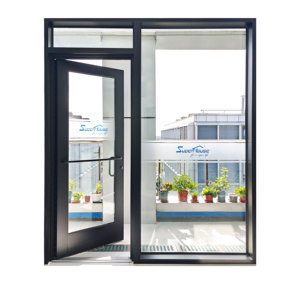
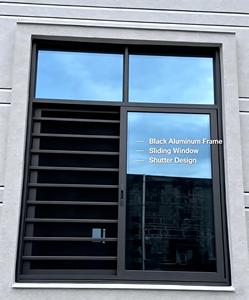
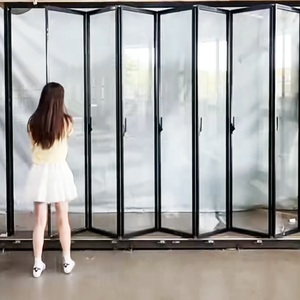
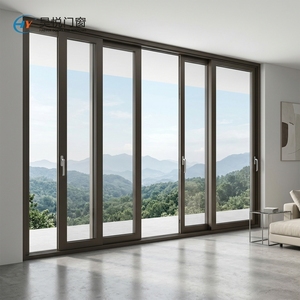
Engineering Precision & OEM Customization Capabilities
Meric Window Systems Co., Ltd. integrates advanced European structural design with high-volume precision manufacturing to produce high-end custom OEM aluminium and wood front doors.
Hybrid Thermal Engineering
Utilizing high-tensile 6063-T5/T6 extruded aluminium exterior shells coupled with solid interior hardwoods (Oak, Teak, Walnut) via PA66GF25 polyamide thermal break clips. This structure ensures zero thermal bridging and unmatched structural stability.
Extreme Climate Protection
Engineered to withstand coastal salt-fog spray, high solar ultraviolet exposure, and tropical hurricane impact pressures up to +/- 5500 Pa. Certified to meet NFRC, AAMA, Florida Product Approval (FPA), and Australian AS2047 standards.
Full OEM / ODM Customization
From CAD shop drawings to customized anodized, PVDF, or timber-stain finishes. We offer tailored dimensions, multi-point lock integrations (German Siegenia/GU), embedded smart access control systems, and custom architectural glass.
Technical Architecture of Custom OEM Aluminium & Wood Front Doors
In modern architectural design, front entrance doors serve as the crucial envelope interface between exterior environmental stresses and interior luxury ambiance. Standard single-material doors—whether pure timber or pure metal—present inherent material trade-offs. Timber entry doors offer unmatched natural beauty and tactile warmth, yet they are susceptible to warping, moisture absorption, solar degradation, and high maintenance when directly exposed to rain and sun. Conversely, pure aluminum entry doors offer exceptional weather resistance, structural strength, and low maintenance, but can suffer from high thermal conductivity if not properly insulated and lack the biological warmth required in luxury residential interiors.
As a leading custom OEM manufacturer and exporter, Meric Window Systems Co., Ltd. resolves this trade-off by engineering structural hybrid entrance doors. These systems combine an extruded aluminum structural exterior shell with a interior solid wood core separated by engineered polyamide thermal breaks.
1. The Exterior Extruded Aluminium Frame & Coating System
The exterior cladding of our custom front doors utilizes extruded 6063-T5 or 6063-T6 aluminum alloys, formulated for superior structural rigidity and corrosion resistance. Profile wall thicknesses strictly adhere to 2.0mm to 3.0mm structural standards to support large-scale architectural door panels up to 4 meters in height.
- PVDF Fluorocarbon Coating: Formulated with 70% Kynar 500 resin to provide a minimum 20-year color retention guarantee against intense UV degradation, chalking, and salt spray exposure in coastal regions.
- Anodized & Powder Coating Options: Available in micro-textured matte black, bronze, metallic titanium, and custom RAL color matching to match project facade aesthetics.
- Integrated Water Drainage & Pressure Equalization: Hidden multi-chambered internal weep holes ensure that wind-driven rainwater drains rapidly outward without back-siphoning into the building structure.
2. The Interior Solid Hardwood Core
The interior wood component of our hybrid front doors is not a thin veneer, but rather kiln-dried, multi-laminated solid hardwood sections. Lamination mitigates natural timber tension, eliminating warping, bowing, or splitting under humidity changes.
- Timber Species Selection: FSC-certified European White Oak, North American Black Walnut, Burmese Teak, and Premium Mahogany.
- Kiln-Drying & Moisture Control: Timber is vacuum-dried to a precise moisture content of 8% to 12%, stabilizing the organic material prior to precision CNC machining.
- Eco-Friendly Water-Based Coatings: Multi-layer German Adler non-toxic waterborne lacquers enhance natural grain clarity while providing anti-bacterial and scratch-resistant interior surface protection.
3. PA66GF25 Polyamide Thermal Separation
To join the exterior aluminum profile with the interior solid timber without creating a direct thermal path, we utilize high-density PA66GF25 polyamide structural insulating strips (25% fiberglass reinforcement). These strips allow independent thermal expansion and contraction between metal and wood, preventing structural stress during extreme winter-summer temperature swings.
Material Performance Matrix: Comparative Analysis
Technical evaluation of entrance door material compositions for commercial and high-end residential applications.
| Performance Parameter | Aluminium & Wood Hybrid (Meric OEM) | Solid Natural Hardwood | Standard Non-Thermal Aluminium | Composite Steel Entrance Door |
|---|---|---|---|---|
| Thermal Transmittance (U-Value) | 0.75 – 1.1 W/m²K | 1.4 – 1.8 W/m²K | 2.8 – 3.5 W/m²K | 1.5 – 2.0 W/m²K |
| Exterior Weathering / Maintenance | Zero refinishing needed (20+ yrs) | High (requires refinishing every 2 yrs) | Low (resistant to moisture) | Moderate (susceptible to rust over time) |
| Structural Wind Load (ASTM E330) | DP60 – DP100 (Hurricane Rated) | DP30 – DP45 | DP40 – DP60 | DP50 – DP70 |
| Acoustic Insulation (STC Rating) | 40 – 45 dB | 32 – 36 dB | 28 – 32 dB | 30 – 35 dB |
| Interior Aesthetic Luxury | Solid Timber (Oak/Walnut/Teak) | Solid Wood | Metallic Finish Only | Imitation Stamped Grain |
| Burglary & Security (PAS 24 / RC3) | Class RC3 Multi-point Locking | Class RC2 | Class RC2 | Class RC2 – RC3 |
Future Procurement Trends in Architectural Entrance Doors
Key technological shifts shaping global B2B procurement for commercial developers, luxury villa builders, and architectural importers over the next decade.
1. Motorized Smart Biometric Access
Commercial and luxury buyers are shifting rapidly toward fully integrated electro-mechanical locking systems. OEM specifications now demand concealed motorized multi-point locks (such as GU-SECURTY Automatic or Siegenia Genius) compatible with facial recognition, fingerprint biometrics, RFID, and smart home automation platforms (KNX, Crestron, Control4).
2. Zero-Threshold Flush Transitions
Modern architectural trends demand seamless continuity between exterior courtyards and indoor foyer entryways. Future-proof front doors utilize concealed magnetic drop seals and sub-floor continuous drainage channels that achieve zero-threshold barrier-free access without compromising water-tightness or air infiltration ratings.
3. Passive House (Passivhaus) Standard Compliance
With tightening carbon offset regulations across North America, Europe, and Australia, entrance door procurement now requires strict overall thermal coefficients ($U_d \le 0.8\text{ W/m}^2\text{K}$). This is achieved by introducing aerogel insulation infills within the aluminum extrusions and utilizing triple-pane Low-E insulated glass units (IGUs) filled with 90%+ Argon gas.
4. Large Oversized Pivot Doors
Grand architectural entrances are favoring single-panel pivot door systems reaching widths up to 2.5 meters and heights up to 4.5 meters. Manufacturing these massive panels requires offset heavy-duty floor pivots capable of supporting loads over 500kg while offering fingertip push opening and soft-close hydraulic braking.
5. Full BIM & Digital Twin Specification Integration
International architectural procurement workflows increasingly demand Revit BIM (Building Information Modeling) objects containing full thermal, structural, and hardware metadata. Meric Window provides standardized CAD/BIM model files to streamline specification writing during the early schematic design phase.
6. Sustainable Carbon-Neutral Material Sourcing
Global developers are enforcing strict LEED and BREEAM sustainability metrics. Sourcing low-carbon recycled aluminum profiles extruded using hydroelectric power alongside FSC-certified timber reduces the embodied carbon footprint of building entrances by up to 45% compared to traditional manufacturing processes.
Frequently Asked Questions for Global Door Procurement
Expert guidance on structural testing, custom OEM parameters, shipping safety, and technical hardware integration.
Our standard manufacturing lead time for custom OEM orders is 30 to 45 calendar days following the formal sign-off of final CAD shop drawings and hardware confirmation. For large-scale commercial projects requiring specialized extrusion dies, custom PVDF color matching, or glass structural calculation testing, sample approval may add 10 to 15 days to the initial phase.
All finished door units undergo a multi-stage export packaging protocol. First, frames and sashes are sealed with anti-scratch protective film and fitted with heavy-duty EPE foam corner protectors. Next, units are wrapped in moisture-resistant plastic sheeting and encased in fully enclosed fumigated plywood crates or welded steel transport racks equipped with rubber shock isolation pads. This ensures 100% protection against ocean transit vibration, moisture ingress, and container handling forces.
Yes. We manufacture heavy-duty hurricane impact front doors specifically engineered for coastal storm zones such as Florida, the Caribbean, and coastal Australia. These systems feature heavy-gauge 6063-T6 reinforced aluminum extrusions, multi-point stainless steel locking gear, and SentryGlas (SGP) laminated safety glass. Our impact systems are tested to meet Florida Product Approval (FPA), NFRC, ASTM E1886/E1996, and Miami-Dade County impact standards.
Our interior solid hardwood components are engineered using multi-layer cross-laminated timber (CLT) processing. Kiln-drying reduces moisture content to 8–12%. The wood is mounted to the exterior aluminum profile using floating PA66GF25 polyamide nylon clips rather than rigid gluing. This floating connection allows the timber to expand and contract naturally across seasons without placing mechanical strain on the door frame or causing joint separation.
As a premium OEM manufacturer, we standardize on high-performance European hardware systems, including German-made Siegenia, GU (Gretsch-Unitas), Hoppe, and Winkhaus multi-point locking gear. We offer electronic multi-point locks compatible with motorization, keypads, biometric readers, and smart-home automation. Custom hardware specified by clients can also be factory-fitted during production.
We supply comprehensive technical packages for every OEM project, including detailed CAD elevation drawings, cross-sectional joinery details, structural wind-load calculation reports, thermal simulation ($U$-factor) certificates, factory QC inspection checklists, and material finish test documentation (AAMA 2605 / PVDF spray logs).
Accelerate Your Project Procurement
Partner directly with Meric Window Systems for factory-direct engineering, custom OEM CAD development, and competitive export pricing on premium aluminum and wood entrance doors.
Contact Us