Engineered Aluminium Systems & Door Configurations
Explore our export-ready architectural systems manufactured under strict ISO9001 and EN standards. Custom OEM/ODM specifications available for worldwide project sourcing.
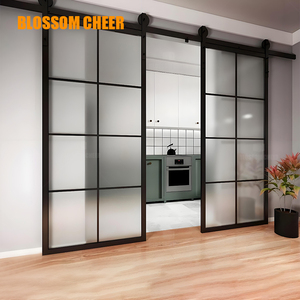
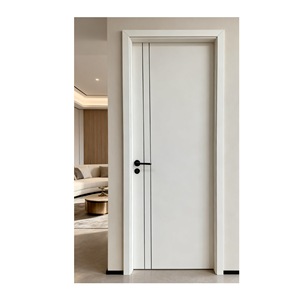
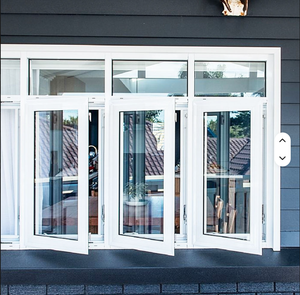
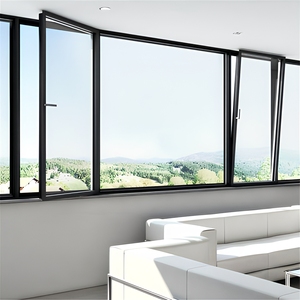
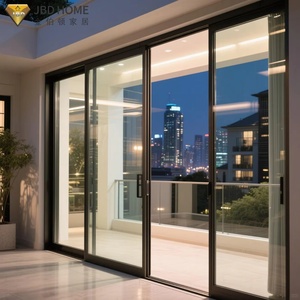
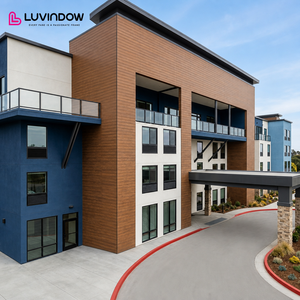
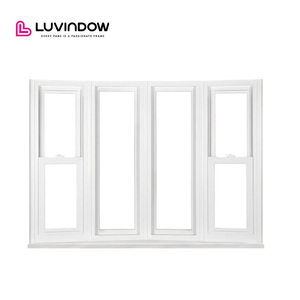
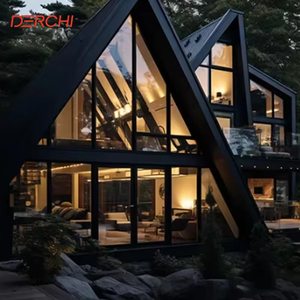
Engineering Excellence in Custom OEM External Aluminium French Doors
A comprehensive technical analysis for architects, structural engineers, real estate developers, and global fenestration buyers.
Structural Alloy Integrity & Profile Geometry
When sourcing from custom OEM aluminium external French doors factories, structural rigidity is non-negotiable. High-grade external French doors utilize 6063-T5 or 6061-T6 extruded aluminium alloys with profile wall thicknesses ranging between 2.0mm and 3.0mm depending on opening spans and design pressure (DP) mandates.
Unlike standard timber or UPVC entry points, aluminium profile geometry engineered by top-tier OEMs incorporates multi-chambered internal webbing. This structural cross-section drastically elevates moments of inertia (Ix and Iy values), ensuring large-scale double French swing doors remain dimensionally stable under intense wind shear loads reaching 3500 Pa or higher.
Thermal Break Science & Polyamide PA66 Technology
Historical criticisms of aluminium door frames centered on metal's natural thermal conductivity. Modern OEM manufacturing neutralizes this thermal bridge through advanced Polyamide PA66-GF25 (25% Glass Fiber reinforced) thermal break strips inserted between external and internal aluminum extrusions.
By decoupling the metallic heat conduction path, external French doors engineered by specialized factories achieve framework U-factors as low as 1.1 W/m²K when combined with Low-E insulated glass units (IGU). The glass fiber reinforcement matches the linear thermal expansion coefficient of the aluminum profiles, preventing thermal shear fatigue during aggressive seasonal temperature swings.
Acoustic Dampening & Water Tightness Architecture
A crucial metric in user intent mining for external doors is outdoor-to-indoor acoustic isolation. High-end external French doors utilize continuous triple EPDM (Ethylene Propylene Diene Monomer) gasket systems along both primary and secondary rebates.
In combination with multi-point locking mechanisms that pull the active sashes tightly against compression seals, acoustic transmission loss ratings exceed STC 42 dB. For water penetration resistance, factory engineers craft hidden pressure-equalized drainage tracks with non-return flap valves, preventing wind-driven rain from bypassing the sill threshold under severe storm conditions.
Future Procurement Trends in External Aluminium French Doors
How technological innovation, sustainability compliance, and architectural design shifts are transforming OEM manufacturing and global procurement strategies.
Ultra-Narrow Sightlines & Flush Profiles
Architects are demanding minimal frame visibility to maximize natural light and unobstructed views. OEM factories are responding by integrating structural glass-bonding techniques, reducing visible sash stiles to under 35mm while maintaining wind load capacity.
Biometric & Motorized Multi-Point Systems
B2B buyers increasingly specify French doors pre-routed for electronic multi-point locking. Smart integration includes motorized lock actuators, concealed magnetic sensors, and seamless compatibility with home automation systems via encrypted protocols.
Low-Carbon Aluminium & EPD Certification
International building codes prioritize Environmental Product Declarations (EPD). Future procurement favors factories utilizing recycled aluminium billets melted via green hydrogen or hydropower, reducing embodied carbon by up to 70%.
Qualicoat Class 3 & PVDF Coatings
For seaside resort projects, marine-grade corrosion resistance is mandatory. Procurement trendlines show a rapid shift toward hyper-durable PVDF fluorocarbon coatings and Qualicoat Class 3 powder finishes tested to endure 10,000+ hours of salt spray exposure.
Custom OEM Aluminium Door System Matrix
Direct comparison of technical parameters across primary OEM external door series for project engineers and procurement officers.
| System Series | Profile Depth | Thermal U-Value | Acoustic Rating | Max Glass Thickness | Air / Water / Wind Rating |
|---|---|---|---|---|---|
| OEM 75 Ultra-Narrow French | 75 mm | 1.2 W/m²K | STC 38 dB | 32 mm (Double IGU) | Class 4 / 9A / E2400 |
| OEM 90 Heavy Duty Thermal French | 90 mm | 0.9 W/m²K | STC 44 dB | 48 mm (Triple Glazed) | Class 4 / E1050 / E3000 |
| Minimalist Fluted French Door | 65 mm | 1.6 W/m²K | STC 35 dB | 24 mm (Single/Double) | Class 3 / 7A / C3 |
| Curtain Wall Integrated French Unit | 142 mm System | 0.85 W/m²K | STC 45 dB | 52 mm (Triple Low-E) | Class 4 / E1200 / E3600 |
Enterprise OEM/ODM Manufacturing Advantages
Derived from decades of dedicated engineering, rigorous internal testing, and direct supply chains to global construction markets.
5-Axis CNC Precision Fabrication
Every extrusion frame and sash undergoes high-speed 5-axis CNC routing for hardware mortising, weep hole drainage, and corner jointing. Tolerances are held strictly within ±0.3mm across entire frame spans.
Comprehensive QC Matrix
From raw ingot billet chemistry analysis to pre-shipment assembly mock-ups, our internal quality control inspects profile powder thickness (80-120 microns), thermal strip crimp shear force, and operational smoothness.
Global Standards Testing
Our doors are engineered to comply with EN 12207 / EN 12208 (European Union), ASTM E283 / E330 / E331 (North America), and AS2047 (Australia) fenestration requirements. Test documentation is furnished for project submittals.
Export-Grade Protective Packaging
Finished door units are wrapped in peelable surface protection films, protected with rubber corner guards, bubble wrapped, and secured in fully enclosed IPPC heat-treated wooden crates or custom steel shipping racks.
Frequently Asked Procurement Questions (FAQ)
Expert answers addressing structural design, factory customization, shipping logistics, and performance compliance.
Request a Custom OEM Quotation & Engineering Review
Send us your project drawings or window schedules today. Our experienced fenestration engineers will analyze your specifications and provide shop drawings, thermal calculations, and factory-direct pricing.