Featured OEM Aluminium Room & Entrance Door Systems
Explore our precision-engineered aluminium door systems manufactured for high-end residential, hotel hospitality, and commercial building developments worldwide.
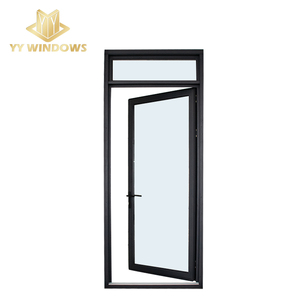
YY Windows High Quality Aluminium Double Tempered Glass Energy Efficient Casement Door
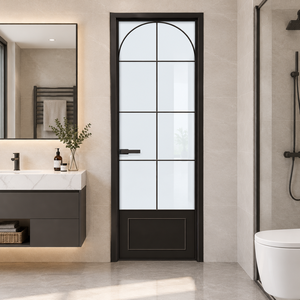
Hihaus Aluminum Casement Door Interior Bathroom Waterproof and Moisture-proof Glass Door
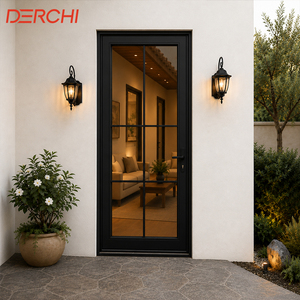
Waterproof Soundproof Aluminum French Door For Balcony Living Room And Villa Project
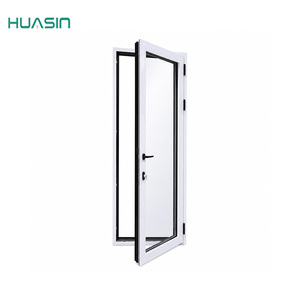
Huasin Customized Modern Design Lowe Double Tempered Glass Sound Heat Insulation Swing Aluminum Casement Door
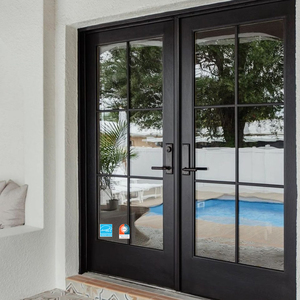
AMJ NFRC Excellent Quality Interior Door Tempered Glass USA Swing French Door Aluminum French Casement Door
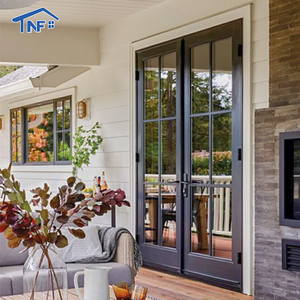
Aluminum Lowes Interior Swing Interior American Dutch Door
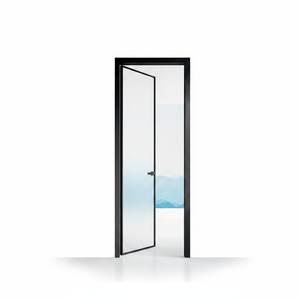
Eloyd Outdoor Aluminum Single Swing Door Apartment Bathroom Waterproof Soundproof Casement Doors
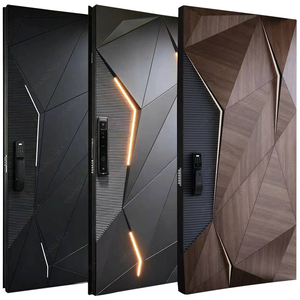
Foshan Factory Customized Modern Villa Aluminum Alloy Security Pivot Swing Doors Security Aluminum Entry Exterior Entrance Doors
Industrial Customization Capabilities for International Buyers
As a specialized custom OEM aluminium room door manufacturer and exporter, our engineering facilities bridge the gap between complex architectural concepts and real-world industrial production. Modern commercial buildings and luxury residential compounds demand custom interior room doors, bathroom casement systems, and heavy-duty entrance pivot assemblies that deliver uncompromised structural integrity, acoustic privacy, and energy efficiency. By strictly adhering to international manufacturing protocols, we supply tailored window and door packages for tier-one contractors, developers, and global distributors.
Our OEM workflow begins with precision profile extrusion using high-grade 6063-T5 aluminium alloy billets. This material profile ensures superior tensile strength, excellent corrosion resistance, and flawless surface finish receptivity. Whether your project demands standard anodized finishes, ultra-durable PVDF fluorocarbon coatings for coastal environments, or fine-textured powder coatings matching RAL color standards, our automated surface treatment lines maintain exact micron-layer tolerances (AAMA 2605 & AAMA 2604 compliance).
Custom Extrusion Die Engineering
Full OEM/ODM tooling flexibility. We transform architectural CAD/BIM drawings into customized profile dies with wall thicknesses ranging from 1.4mm to 3.0mm, allowing bespoke structural mullions and minimal visible sightlines.
Thermal & Acoustic Isolation
Integrating German-engineered polyamide PA66GF25 thermal barrier strips alongside double and triple-glazed insulated glass units (IGU) filled with Argon gas to achieve U-values down to 1.4 W/m²K and STC ratings up to 45 dB.
Export Quality Assurance
Every door assembly undergoes 100% pre-shipment inspection. From CNC corner crimping accuracy to EPDM multi-chamber gasket compression and hydrostatic pressure testing, we guarantee seamless jobsite installation.
Engineering Deep-Dive: Thermal Break vs. Non-Thermal Break Room Doors
Selecting the correct structural profile configuration is essential for maximizing acoustic isolation and climate control performance in commercial projects.
| Performance Parameter | Thermal Break Aluminium Profile | Standard Non-Thermal Aluminium | Architectural Impact |
|---|---|---|---|
| Thermal Transmittance (U-Factor) | 1.4 – 2.0 W/m²K | 3.8 – 5.5 W/m²K | 55% reduction in interior HVAC energy loss. |
| Acoustic Isolation (STC Rating) | STC 38 – 45 dB (Double Low-E + Argon) | STC 25 – 30 dB (Single Glass) | Prevents noise leakage between hotel/office suites. |
| Condensation Prevention | Eliminates dew point bridging up to 90% RH | Prone to surface condensation in winter | Protects interior flooring and wall finishes from moisture. |
| Structural Wind Load Resistance | High Moment of Inertia (6063-T5) | Standard Structural Capacity | Ideal for high-rise balcony and exterior entrance openings. |
Design Evolution & Structural Innovation in Modern Aluminium Doors
The contemporary architectural landscape has fundamentally shifted toward minimalist aesthetic geometries, continuous daylighting, and spatial flexibility. Standard timber and composite interior room doors are rapidly being replaced by slim-frame aluminium glass doors in modern luxury villas, high-end apartments, and boutique commercial offices. This transformation is driven by several key technological developments:
Ultra-Narrow Sightlines
Reducing visible frame sightlines to as narrow as 16mm–25mm while using heavy-duty hidden steel reinforcing cores. This maximizes natural daylight transmission while providing a frameless floating glass visual effect.
Concealed Hardware Systems
Integration of 3D-adjustable concealed hinges, invisible magnetic latch locks, and automated soft-closing hydraulic pivots. Hardware is entirely integrated within the frame pocket for clean architectural elevation lines.
Smart Biometric Integration
Incorporating motorized multi-point locks compatible with facial recognition, keypad access, and building management systems (BMS), ensuring robust security for main entrance pivot and office doors.
Future Procurement Trends for Global B2B Door Importers (2025–2030)
Global fenestration procurement is undergoing a major paradigm shift. B2B buyers, real estate developers, and international trading companies are no longer evaluating suppliers solely on unit price. Instead, procurement strategies focus on total lifecycle cost, supply chain resilience, and environmental compliance. Key trends shaping future OEM aluminium door procurement include:
Low-Carbon Recycled Aluminium
Demand for primary extruded billets produced using hydroelectric power and post-consumer recycled content (up to 75%). International projects increasingly require Environmental Product Declarations (EPD) for LEED/BREEAM green building points.
BIM & Digital Twin Integration
Leading OEM manufacturers must supply high-precision Revit and IFC 3D parametric models. Providing standardized BIM objects allows architects to seamlessly integrate product specs directly into early building design phases.
Modular Knock-Down (KD) Packaging
To optimize containerized maritime freight logistics and lower tariff impacts, OEM buyers prefer precision CNC pre-drilled Knock-Down (KD) door frame kits that assemble quickly on site with zero field fabrication errors.
Frequently Asked Questions (FAQ) for B2B Sourcing
Q1 What aluminium alloy grade and wall thickness are used in custom room doors?
We primarily use extruded 6063-T5 aluminium alloy, which delivers an ideal balance of structural yield strength, surface smoothness, and corrosion resistance. Profile wall thickness ranges from 1.4mm for interior bathroom/bedroom doors up to 2.0mm–3.0mm for heavy-duty exterior swing, pivot, and balcony casement doors, fully meeting ASTM and EN 12020 standards.
Q2 How do thermal break profiles prevent interior condensation and reduce energy costs?
A thermal break system places a low-thermal-conductivity polyamide strip (PA66GF25) between the exterior and interior aluminium profile chambers. This structural barrier breaks thermal bridging, preventing cold or heat transfer. As a result, interior surface temperatures remain stable, eliminating condensation risk and reducing room HVAC energy consumption by up to 45%.
Q3 What surface finish options are available for custom OEM door orders?
We offer an extensive selection of surface treatments: Qualicoat-certified architectural powder coating (AkzoNobel / Tiger Drylac), anodizing (Class 15 and Class 25), PVDF fluorocarbon spraying for harsh marine environments, and realistic wood-grain heat transfer finishes. Custom RAL color matching is standard across all production runs.
Q4 Can your door systems meet local building code certifications (NFRC, AAMA, CE)?
Yes. Our OEM manufacturing processes are ISO 9001 certified. We work closely with third-party testing laboratories (Intertek, SGS, TUV) to verify performance against AAMA/WDMA/CSA 101/I.S.2/A440 for North America, CE marking (EN 14351-1) for Europe, and AS2047 for Australia/New Zealand.
Q5 What is the lead time for custom OEM profile die tooling and sample approval?
Custom profile die tooling typically requires 10 to 14 working days from CAD sign-off. Sample extrusion and surface finishing take an additional 5 to 7 days. Once first-article samples are approved by the client, mass production lead time is generally 25 to 30 days depending on total order volume.
Q6 How are door products packed to prevent shipping damage during ocean transit?
Finished door units are wrapped with protective adhesive scratch film, fitted with heavy-duty corner guards, wrapped in multi-layer foam, and secured inside custom IPPC-certified fumigated plywood crates or steel shipping racks. Each crate is clearly labeled according to the project's window/door schedule for rapid jobsite distribution.
Ready to Elevate Your Architectural Project Specifications?
Connect directly with our senior OEM engineering team. We provide structural wind load calculations, custom profile CAD drawings, thermal simulation reports, and detailed factory-direct pricing for your project door schedule.