Featured Aluminium Windows & Doors Systems
Explore our structural thermal break window and door series engineered to rigorous international building codes (AAMA, AS2047, CE) for residential, villa, and commercial high-rise projects.
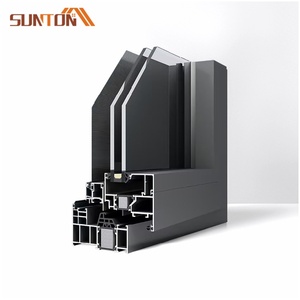
Commercial Heavy Duty Thermal Break Aluminum Casement Window Low E Energy Saving Soundproof Waterproof Factory Direct
Inquire Now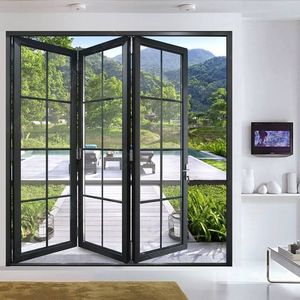
Windproof Bi-fold Doors Aluminum Glazing Double Glass Panels Low E Folding Door Aluminum Windproof For Houses
Inquire Now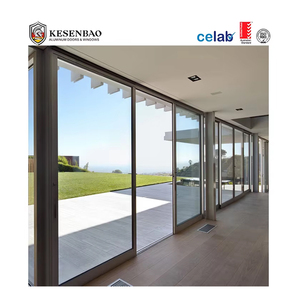
Australian Standard Aluminum Exterior Glass Sliding Door System Aluminium Double Triple Glazed Sliding Door And Window Design
Inquire Now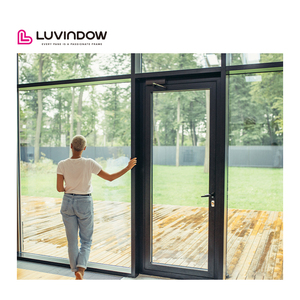
Modern Style Coastal Home Entry Doors Premium Hurricane-Resistant Double Glass Aluminum Swinging Exterior Shutters
Inquire Now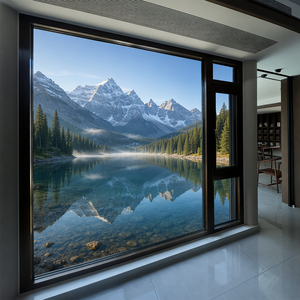
HUACAI Luxury Villa Aluminum Clad Red Oak Wood Tilt Turn Window Triple Glazed Soundproof German Roto Hardware Custom Design
Inquire Now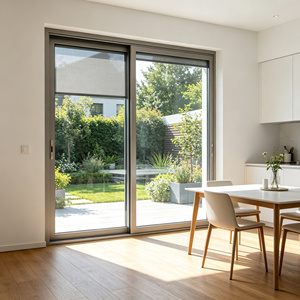
Gray Aluminum Sliding Window with Built-In Integral Blinds & Waterproof Modern House Balcony Living Room Design
Inquire Now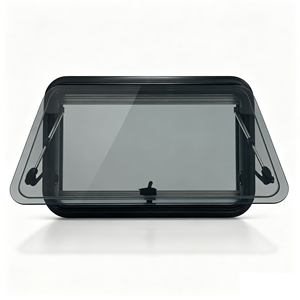
700*400mm Factory Price MayGood Radius Corner Flat Window with Black High Quality Powder Coated Aluminum Frame for RVs
Inquire Now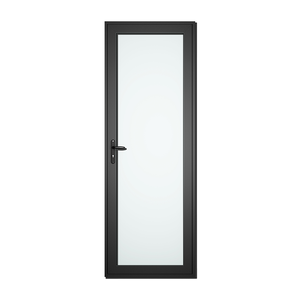
Top Manufacturer Aluminum Alloy Casement Doors Latest Design Exterior Main Casement Hinged Door Aluminium Door with Mesh
Inquire NowArchitectural Whitepaper: Engineering Criteria for Powder Coated Aluminium Sliding Windows
In modern architectural fenestration, the specification of powder-coated aluminium sliding window systems represents a critical intersection between structural integrity, building envelope thermal efficiency, and long-term exterior durability. As global energy efficiency standards evolve—such as the EU Energy Performance of Buildings Directive (EPBD) and North American ASHRAE 90.1 standards—b2b importers, commercial developers, and facade engineers require detailed manufacturing metrics to evaluate OEM/ODM suppliers.
1. Metallurgy & Structural Profile Design
High-performance sliding windows depend primarily on the mechanical properties of extruded aluminium alloy billets. Premium manufacturers strictly utilize 6063-T5 or 6061-T6 temper aluminium profiles. Alloy 6063 offers an ideal surface finish for electrostatic powder application while delivering tensile yield strength exceeding 170 MPa. Profile wall thickness for heavy-duty commercial sliding doors and panoramic windows must strictly measure between 1.4mm to 2.0mm, ensuring deflection resistance under extreme wind pressure (P3 design pressure ratings reaching up to 4500 Pa).
2. Electrostatic Powder Coating & Surface Protection Standards
The lifetime corrosion resistance of exterior aluminium fenestration relies heavily on the surface treatment methodology. Standard liquid painting fails to offer the structural impact resistance demanded by coastal or high-salinity microclimates. Our OEM/ODM production lines adhere strictly to Qualicoat Class 1 & Class 2 standards, utilizing thermosetting architectural polyester or fluorocarbon (PVDF) powder resins.
| Performance Parameter | Standard Specification | Qualicoat Class 2 / AAMA 2604 Benchmark |
|---|---|---|
| Dry Film Thickness (DFT) | ISO 2360 / ASTM B499 | 60 µm – 80 µm minimum mean thickness |
| Adhesion Rating | ISO 2409 / ASTM D3359 | Cross-cut rating GT0 (0% flaking) |
| Salt Spray Resistance | ISO 9227 NSS / ASTM B117 | 1,000 to 3,000 Hours (No blistering or creep) |
| Impact Resistance | ISO 6272 / ASTM D2794 | 2.5 Nm direct/indirect impact without cracking |
| Gloss Retention | ISO 2813 (60° geometry) | > 50% gloss retention after 5-year Florida exposure |
3. Thermal Break Polyamide Strip Technology (PA66-GF25)
Unbroken aluminium profiles exhibit high thermal conductivity ($K \approx 200 \text{ W/m}\cdot\text{K}$), causing severe energy loss and condensation risk in extreme hot or cold climates. To counteract this, modern thermal break sliding windows integrate precision-extruded PA66-GF25 (Polyamide 66 reinforced with 25% glass fiber) thermal barrier strips. These strips separate the interior and exterior aluminium chambers, dramatically dropping overall thermal transmittance (U-factor) down to 1.2 – 1.6 W/m²K when combined with low-emissivity double or triple insulated glass units (IGUs).
4. Water Tightness, Air Permeability & Drainage Engineering
Water infiltration remains one of the primary failure modes of low-tier sliding window systems during storm conditions. Superior sliding system engineering incorporates multi-stage continuous EPDM weatherstripping, stepped drainage channels with anti-backflow gravity caps, and heavy-duty stainless steel (SUS304/SUS316) double-wheel tandem rollers capable of carrying glass panel loads up to 400 kg per sash without track deformation.
Engineered Features for Professional Specifiers
Every custom profile system produced in our extrusion facilities undergoes rigorous material science testing and numerical simulation before tooling fabrication.
Qualicoat Powder Coating
Automated vertical powder coating lines ensure 360-degree uniform film distribution without drip marks or thin edges.
- AkzoNobel / PPG architectural powder
- Zero-VOC environmentally safe process
- Custom RAL palette & textured finishes
- Anti-scratch & UV resistant formulation
Structural Thermal Breaks
Integrated PA66-GF25 thermal insulation strips eliminate thermal bridges, preventing condensation and energy waste.
- Shear-tested crimping technology
- Low heat expansion matching alloy
- Passivhaus standard compliance options
- Multi-chamber insulation cavity
Precision Hardware & Security
Equipped with multi-point stainless steel locking gear, anti-lift security blocks, and concealed heavy-duty rollers.
- German Roto / SIEGENIA hardware options
- Smooth glide < 15N initial push force
- Burglar resistance class up to RC2/RC3
- Flush sill & barrier-free tracks
Future Procurement & Manufacturing Trends (2025–2030)
How global architectural demands and regulatory shifts are reshaping the OEM/ODM aluminium window supply chain.
1. Decarbonization & Low-Carbon Recycled Aluminium Billets
Global developers are aggressively mandating Environmental Product Declarations (EPD) and Low Carbon Aluminium (smelted via hydroelectricity or using recycled content > 75%). Future B2B sourcing will prioritize suppliers capable of certifying carbon footprint metrics under 4.0 kg CO2e per kg of aluminium.
2. Ultra-Narrow Interlock Sightlines (18mm - 25mm)
Architectural minimalism continues to dominate modern luxury residential design. The trend towards structural glass loading—where structural silicone transfers wind load directly to the IGU—allows visible frame interlocks to shrink to a ultra-slim 20mm while maintaining 3-meter panel heights.
3. Motorized Smart Integration & Concealed Automation
Commercial and luxury buyers are standardizing smart building integration. Future-proof sliding windows feature concealed brushless DC motors, magnetic levitation drive systems, rain sensors, and smartphone-controlled automation compatible with KNX and Zigbee protocols.
4. Extreme Weather & Hurricane Resistance Specifications
Driven by climate instability, coastal markets across North America, the Caribbean, and Australia require stringent impact-resistant laminated glazing systems (PVB/SGP interlayers) capable of passing cyclic wind pressure and large missile impact tests (ASTM E1886 / E1996).
Why Global Importers Partner With Us
From raw aluminium billet casting to precision CNC fabrication and international sea-freight packing, our end-to-end quality assurance eliminates project risk.
In-House Extrusion
Multiple extrusion presses up to 3500 tons, supporting custom profile dies and complex structural geometries.
Strict QC Protocol
100% pre-assembly inspection, coating thickness gauge verifications, and air/water pressure chamber testing.
Full OEM/ODM Scope
Bespoke shop drawings, custom color matching, private-label hardware branding, and custom glass build-ups.
Export Crating
Heavy-duty steel-reinforced wooden crates, protective surface film, and container load optimization for zero sea-transit damage.
Frequently Asked Questions for B2B Procurement
Get authoritative answers to key engineering, logistical, and commercial inquiries regarding our custom window systems.
Ready to Request a Technical Proposal & Factory Quote?
Submit your architectural elevation drawings or project window schedule. Our engineering team will return profile recommendations, thermal calculations, and factory-direct pricing within 24 hours.
Inquire Now