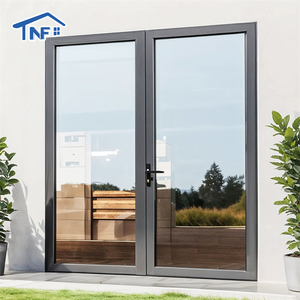
Verified Export Systems
High-Performance Architectural Glazing Portfolio
Engineered with 6063-T5 structural aluminium, thermal break technology, and certified multi-point locking systems.
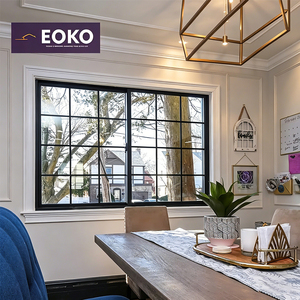
EOKO French Style Sliding Windows NFRC Certified Heat Insulation Sliding Glass Windows
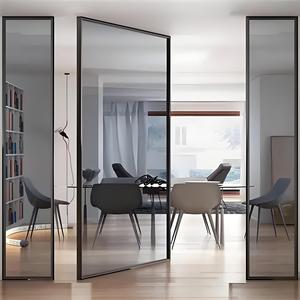
Modern Design Aluminium Alloy Pivot Door Hurricane Impact Resistant With Screen Netting
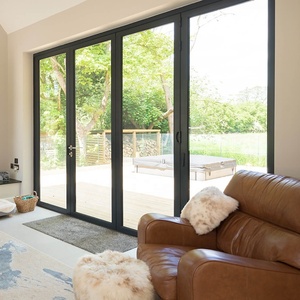
AMJ American Style NFRC Aluminium Bifold Doors with Retractable Mosquito Screen Integrated
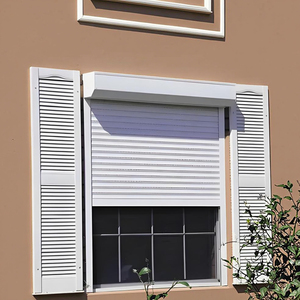
Outdoor Electric Remote Control High Quality Rolling Shutter Windows Aluminium Alloy Quick Lift
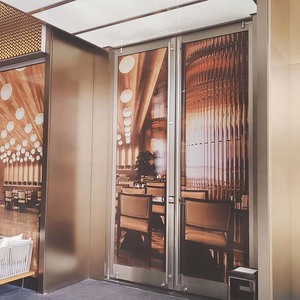
Exterior Entry Crittal Doors Aluminium Alloy Tempered Glass French Double Glass Doors
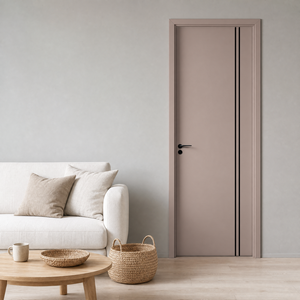
Modern Aluminium Interior Door Aluminium Alloy Door Wood Grain Finish Eco-friendly Recyclable
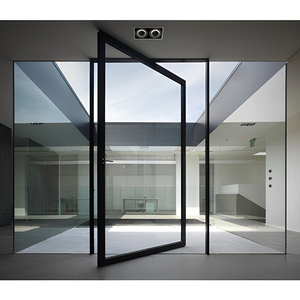
Modern Heavy-Duty Aluminium Pivot Doors with Double Glass Soundproof Finished Surface
Manufacturing Rigor & EEAT Standards
Engineering Excellence in Architectural Fenestration
Providing global procurement directors, architects, and developers with verified technical parameters, structural integrity, and custom profile extrusions.
Polyamide Thermal Barriers
Equipped with PA66-GF25 (25% glass fiber reinforced) thermal break strips to eliminate thermal bridging and deliver extreme energy savings.
- Prevents interior condensation
- Meets NFRC & Passive House benchmarks
- Maintains structural stiffness under thermal stress
Hurricane & Impact Strength
Engineered heavy-duty profiles featuring multi-point locking systems and laminated glass options tested against extreme storm pressures.
- ASTM E1886 / E1996 Impact Certified
- Monolithic structural silicone glazing
- Deflection resistant up to 5000 Pascals
Ultra-Narrow Sightlines
Architectural minimal frame designs reducing visible aluminium mullions to as low as 20mm, maximizing natural daylight penetration.
- Concealed frame outer tracks
- Flush floor threshold transitions
- High moment of inertia ($I_x$) profile engineering
Executive Industry Whitepaper
Navigating Global Sourcing: The 2025–2035 Horizon for Aluminium Fenestration
As commercial developers, architectural master-planners, and procurement executives navigate increasingly strict global decarbonization standards and evolving building envelope codes, selecting the Top 10 Aluminium Windows & Doors Supplier & Exporters requires a deep evaluation beyond superficial pricing. Modern fenestration serves as the active interface between interior environmental management and structural exterior resistance.
1. Metallurgical Integrity: Why 6063-T5 Profiles Dominate Precision Engineering
In high-performance facade engineering, profile alloy specification directly dictates structural deflection limits, anodizing clarity, and long-term joint integrity. Premier global exporters rely on prime-ingot 6063-T5 extrusion billets over scrap-blended metals. The T5 heat treatment process—rapidly cooled from an elevated shaping temperature and artificially aged—yields an optimal balance between tensile strength (minimum yield strength $\ge 110\text{ MPa}$) and intricate section design capability.
Inferior alloys exhibit micro-porosity and non-uniform grain boundaries, leading to premature coating degradation, poor screw retention under repeated wind loads, and frame racking. Top manufacturers utilize state-of-the-art CNC machining lines operating with tolerances within $\pm 0.1\text{mm}$, ensuring corner crimping and mechanical joints form seamless hydrostatic seals.
2. Future Procurement Trends: Decarbonization, Low-Carbon Billet, and EPD Transparency
Global architectural procurement is undergoing a paradigm shift driven by Environmental Product Declarations (EPDs) and embodied carbon limits. Procurement directors operating in North America, Western Europe, and Australasia now systematically evaluate suppliers based on:
- Low-Carbon Recycled Aluminium: Integrating post-consumer scrap and hydro-powered smelting processes to reduce carbon intensity below $4.0\text{ kg CO}_2\text{e/kg Al}$ (compared to global averages of $16.5\text{ kg CO}_2\text{e/kg}$).
- Off-site Industrial Prefabrication: Transitioning from field-glazed stick curtain walls to unitized, pre-glazed window units that drastically cut installation timelines and jobsite safety risks.
- Smart Actuation & Building Management Integration: Incorporating motorized hidden actuators, smart tinting electrochromic glass, and automated sensor arrays compatible with KNX and BACnet protocols.
Structural & Thermal Performance Matrix
The matrix below outlines key engineering criteria when selecting fenestration systems across various climatic conditions and architectural scales:
| System Classification | Frame Profile Depth | Thermal Break Tech | Air/Water Tightness | Target Application |
|---|---|---|---|---|
| Ultra-Narrow Panoramic Sliding | 140mm – 160mm System | PA66-GF25 Struts + Insulation Foam | ASTM E331 (750 Pa Water) | Luxury Coastal Villas, Penthouse Balconies |
| Heavy-Duty Tilt & Turn | 75mm – 90mm System | Multi-Chamber Polyamide Strips | EN 12207 Class 4 / EN 12208 Class 9A | Cold Climate Residential & High-Rise Apartments |
| Hurricane Impact Pivot Doors | 100mm Heavy Wall (3.0mm) | Reinforced Steel Core + Polyamide | TAS 201/202/203 Large Missile Impact | Grand Entrance Elevations & Commercial Lobbies |
| Architectural Bifold Doors | 70mm – 80mm System | Continuous Thermal Barrier | AS2047 Weather Seal Certified | Hospitality Resorts, Indoor-Outdoor Terraces |
3. E-E-A-T Sourcing Compliance: Rigorous Export Logistics and Structural Quality Control
A supplier’s authority is measured not only by factory capacity, but by their international logistics execution. Shipping heavy, glass-laden architectural assemblies across sea routes presents severe transport dynamic challenges. Market-leading exporters utilize customized steel-framed packaging crates, vapor-barrier wrapping, and protective corner armors engineered to withstand multi-axis container vibrations and high humidity shifts during oceanic transits.
Furthermore, full traceability—from mill test certificates (MTC) of raw extrusions to glass batch stress testing reports—guarantees that every frame installed on-site conforms strictly to local structural engineering compliance.
Technical Clarifications
Frequently Asked Questions for Project Procurement
Addressing essential engineering, testing, and logistical inquiries raised by global buyers and structural consultants.
What distinguishes 6063-T5 aluminium alloy from standard commercial-grade metals?
6063-T5 is an architectural-grade silicon-magnesium alloy engineered specifically for smooth surface finishes, superior anodizing response, and precise extrusion complex geometries. T5 heat treatment ensures optimal yield strength to resist wind-induced deflection while preserving flexibility against cracking under structural loads.
How do polyamide thermal break strips prevent thermal bridging?
Polyamide (PA66-GF25) strips mechanically join outer and inner aluminium extrusions. Because polyamide has a thermal conductivity rate roughly 500 times lower than raw aluminium, it creates a thermal barrier that curtails conductive heat loss in winter and heat gain in summer, preventing interior frame sweating.
What structural drawings and calculations are provided prior to mass production?
Before fabrication, structural engineers provide full shop drawings including elevation schedules, glass bite depths, anchor spacing calculations, structural silicone contact widths, and wind pressure deflection analysis tailored to local building code requirements.
Can these aluminium window and door systems achieve compliance with NFRC, CE, and AS2047 standards?
Yes. Systems can be configured with specific glass build-ups (e.g., Low-E coatings, Argon gas, warm-edge spacers) and tested profile assemblies to meet thermal U-factors, Solar Heat Gain Coefficients (SHGC), and air/water infiltration benchmarks required by NFRC (USA), CE (Europe), and AS2047 (Australia).
How are ultra-narrow sliding doors engineered to withstand severe rain and water penetration?
Ultra-narrow sliding doors feature hidden cascading drainage channels, dual EPDM weather seals, and sub-track sill trays with check valves. Gravity-assisted drainage paths quickly discharge rainwater away from the frame even under high wind pressure environments.
What are the export packaging protocols to ensure zero glass breakage or surface scratches during transit?
Finished units are protected with peelable protective film, wrapped in shock-absorbing foam layers, fitted with rigid plastic corner guards, and secured inside fully enclosed plywood crates or custom iron transport racks designed for safe forklift and crane handling on job sites.
Request a Custom Engineering Consultation & Quotation
Submit your project window schedules, architectural elevations, or target performance criteria. Our technical engineering team provides detailed profile recommendations, shop drawings, and competitive export pricing within 24 hours.