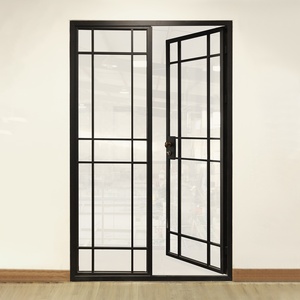
Global Architectural Aluminum Door Sourcing Benchmark
An authoritative, technical whitepaper examining export capabilities, extrusion metallurgical integrity, and thermal performance parameters for commercial and luxury residential projects.
The global demand for high-performance architectural fenestration has driven the international aluminum alloy door market into an era of rapid technological convergence. Commercial developers, facade engineers, and procurement directors are no longer merely comparing price-per-square-meter quotes. Modern architectural specifications mandate ultra-narrow sightlines, stringent wind pressure resistance (ASTM E330 / AS2047 standard compliance), exceptionally low thermal transmittance ($U_w \le 1.4 \text{ W/m}^2\text{K}$), and lifetime corrosion resistance in coastal microclimates.
Selecting a top-tier aluminum alloy door supplier requires evaluating the core manufacturing pipeline—from raw billet metallurgical grade selection to thermal break strip insertion and CNC-machined corner-joint crimping. This whitepaper systematically evaluates the criteria that define the global top 10 aluminum alloy door suppliers and exporters while offering actionable procurement insights for architects, structural engineers, and international facade contractors.
6063-T5
Standard Extrusion Grade
PA66-GF25
Polyamide Thermal Barrier
AS2047
Certified Structural Testing
100%
Pre-Shipment Inspection
Featured Architectural Aluminum Door Systems
Engineered for high-end residential villas, luxury resorts, and high-rise commercial entryways.
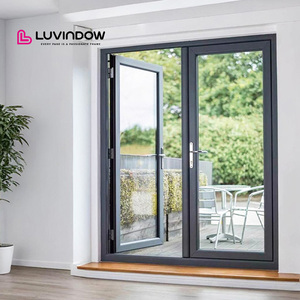
Hotel Commercial Hurricane Impact Aluminum Triple Glass French Swing Doors Patio Entrance Double Doors
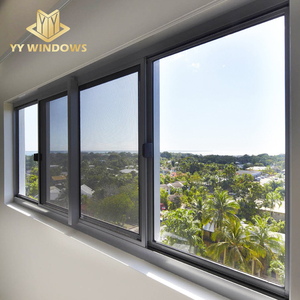
Double Glazed Aluminum Sliding Window Aluminium windows And Doors
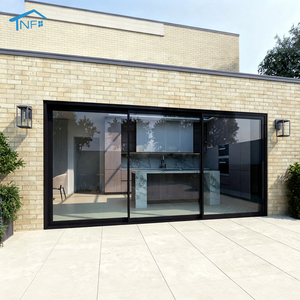
Glass Aluminum Doors Customized Stainless Steel SLIDING DOORS Modern Aluminium Profile Wall Exterior Villa Partition Doors NF
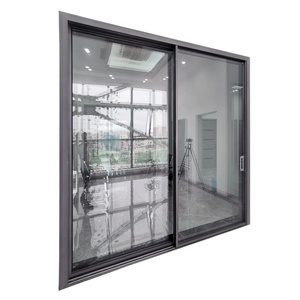
Wholesale Bulk Luxury Manufacturing Aluminum Exterior Double Glass Sliding Entry Door Sliding Door Others Doors
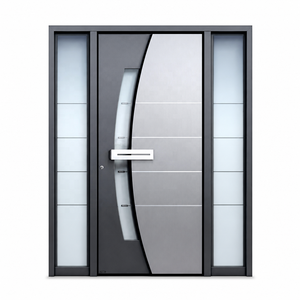
Modern Aluminum Security Entry Door System Multi-Point Locking Exterior Front Entrance Door with Privacy Sidelights Graphite
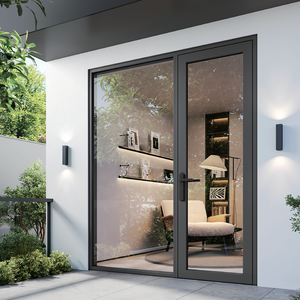
Australian Standard AS2047 Certificated Luxury Swing Door Thermal Break Double Glazed Tempered Glass Casement Aluminum Doors
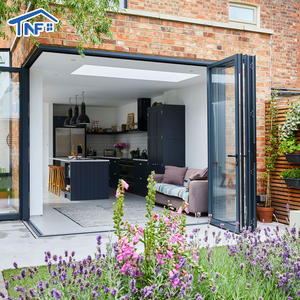
Impact Resistant Aluminum Alloy Double Tempered Glass Folding Exterior Waterproof Patio Door Modern Design Finished For Villa
Evaluation Benchmarks for Premier Aluminum Door Suppliers & Exporters
When auditing tier-1 global door exporters, enterprise procurement managers focus on 5 crucial structural, chemical, and operational competencies. The distinction between standard commercial grade and high-performance architectural systems lies in profile metallurgy, glass processing precision, and hardware hardware cycle longevity.
1. Alloy Metallurgy & Wall Thickness
Top manufacturers utilize primary 6063-T5 or T6 grade aluminum alloy with wall thicknesses exceeding 2.0mm for doors, adhering to EN 755-2 and GB/T 5237 standards. High purity ensures maximum tensile strength ($R_m \ge 200 \text{ MPa}$) and superior structural deflection resistance under wind loads.
2. Thermal Barrier Architecture
Leading exporters replace cheap PVC strips with high-performance Polyamide PA66-GF25 (25% Glass Fiber reinforced) strips. These thermal breaks prevent thermal bridging, withstand high-shear stresses, and maintain mechanical stability across extreme temperatures (-40°C to +80°C).
3. Surface Treatment Durability
Exporters supplying harsh coastal environments require AkzoNobel or PPG Qualicoat Class 2 / Class 3 fluorocarbon (PVDF) powder coating or anodizing above 25 microns. This guarantees color fastness and prevents filiform corrosion under salt spray testing exceeding 3,000 hours.
4. Glazing & Sound Insulation
Modern architectural glass units (IGU) incorporate double or triple toughened safety glass with argon gas filling and Low-E soft coatings. High-end systems deliver sound reduction indices up to STC 45 dB and solar heat gain coefficients (SHGC) tailored for tropical or arctic climates.
5. Multi-Point Hardware Integration
Structural reliability requires precision hardware partnerships (e.g., German Siegenia, Hoppe, GU, or Sobinco). Multi-point locking mechanisms resist forced entry, guarantee even gasket pressure, and ensure anti-burglary ratings up to RC2 / RC3.
6. Container Logistics & Criting
Export survival depends on packaging engineering. Premier suppliers wrap profiles in protective film, fit solid corner guards, and place fully assembled units into heavy-duty fumigated wooden crates or steel A-frame containers engineered for crane unloading.
Engineering Specification Matrix by Door Typology
Different architectural openings demand specific structural frame configurations. The comparison table below highlights technical specifications used by contract engineers when writing project tenders.
| Door Typology | Profile Depth | Thermal Break Strip | Max Glass Thickness | Wind Load Resistance | Target U-Factor ($W/m^2K$) |
|---|---|---|---|---|---|
| Ultra-Narrow Sliding Door | 140mm - 160mm | 24mm PA66-GF25 | 8mm + 12A + 8mm Low-E | Class 4 (3.0 kPa) | 1.4 - 1.6 |
| Heavy Lift & Slide Door | 150mm - 220mm | 34mm PA66 Thermal Strip | 10mm + 16A + 10mm Triple | Class 5 (4.5 kPa) | 1.1 - 1.3 |
| Bifold / Folding Patio Door | 75mm - 85mm | 20mm PA66-GF25 | 6mm + 12A + 6mm Double | Class 3 (2.5 kPa) | 1.6 - 1.8 |
| Hurricane Impact Swing Door | 90mm - 100mm | Structural Solid Insulation | 8mm + 1.52PVB + 8mm Laminated | Florida High Velocity (6.0 kPa) | 1.5 - 1.7 |
| Crittall Style Interior Door | 40mm - 50mm | Non-Thermal / Slim Break | 8mm - 10mm Monolithic Tempered | N/A (Interior Partition) | N/A |
Manufacturing Excellence & Enterprise Infrastructure
As exemplified by industry pioneers like Meric Window Systems Co., Ltd., top aluminum door exporters operate vertically integrated fabrication facilities designed to bridge high-volume output with custom architectural tailoring.
From initial shop drawing approvals to final container shipping, a world-class manufacturing workflow incorporates advanced automation to minimize tolerance stack-up errors:
- Automated CNC Machining Centers: 5-axis German CNC milling equipment performs hinge mortising, keyhole drilling, and water drainage slotting with sub-millimeter precision, eliminating manual alignment variance.
- Corner Crimping & Glue Injection: Structural corner keys are reinforced with dual-component corner adhesive injected under hydraulic pressure. This prevents joint gap opening and guarantees long-term frame rigidity and watertight seals.
- Continuous EPDM Gasket Vulcanization: Dual and triple weather-stripping utilizes seamless continuous EPDM gaskets (synthetic rubber) resistant to UV degradation, ozone exposure, and permanent compression set.
- Documented Factory Acceptance Testing (FAT): Before export packing, finished assemblies undergo air infiltration (EN 12207), water tightness under static pressure (EN 12208), and smooth hardware operation verification.
Global Industry Trends: 2025–2030 Architectural Outlook
The global aluminum door market is undergoing a seismic shift driven by strict decarbonization goals, modern aesthetic demands, and smart building integration. Exporters leading the industry are actively adopting the following innovations:
1. Ultra-Narrow Sightline Minimalism
Architectural preference has decisively moved toward hidden frame profiles, flush floor transitions, and ultra-thin interlocking stiles. Interlocking mullion widths have decreased from traditional 80mm profiles down to 20mm–25mm extreme narrow sightlines without sacrificing structural wind resistance. Structural load is increasingly transferred to high-modulus silicone sealant bonding directly to tempered glass units.
2. Low-Carbon Recycled Aluminum Billets
With Europe’s Carbon Border Adjustment Mechanism (CBAM) and strict LEED v4 certification rules, major exporters are migrating to low-carbon primary aluminum refined using hydroelectric energy, or secondary billets containing over 75% post-consumer recycled content. This drastically reduces the embodied carbon of aluminum door systems from 18kg $CO_2/kg$ to under 4.0kg $CO_2/kg$.
3. Motorized Automation & Smart Home Sync
Large-span sliding doors weighing up to 500kg per sash are increasingly paired with concealed motorization systems. Synchronized linear drives connected to smart home automation (Zigbee, KNX, Crestron) allow whisper-quiet opening via smartphone apps, wall sensors, or voice commands, integrated with safety obstacle-detection radar.
4. Vacuum Insulated Glass (VIG) Integration
The next frontier in thermal performance involves replacing standard double glazing with Vacuum Insulated Glass (VIG). Achieving U-values as low as $0.40 \text{ W/m}^2\text{K}$ in an ultra-thin 10mm glass profile, VIG allows ultra-slim aluminum frames to achieve passive house thermal insulation performance historically reserved for bulky timber-clad profiles.
Strategic Procurement Insights for B2B Importers
Navigating cross-border procurement for large construction projects requires mitigating technical risk and supply chain friction. Top international buyers implement the following sourcing protocols when negotiating with aluminum door suppliers:
BIM & Digital Twin Coordination
Require suppliers to provide native Revit BIM families with accurate thermal parameters, structural weight data, and anchor detail configurations to avoid job site clashing during facade installation.
Third-Party Quality Audits (SGS/TÜV)
Stipulate mandatory mid-production mill certificate verification (EN 10204 3.1) and randomized container loading inspections to verify powder coating thickness and glass strain tolerance before final wire transfer.
Frequently Asked Sourcing & Technical Questions
Expert solutions to common procurement, engineering, and export logistics queries.
What is an ultra-narrow sightline aluminum door system, and how does it handle structural wind loads?
An ultra-narrow sightline aluminum system reduces the visible face width of the vertical interlocking profiles down to 20mm–30mm, maximizing natural daylight and daylight ratio. Structural wind load capacity is maintained by increasing profile depth inwards (perpendicular to glass), incorporating internal steel or high-tensile alloy stiffener inserts, and utilizing structural glazing adhesive that binds the glass panel to the frame as a single structural diaphragm.
Can Chinese aluminum door suppliers supply certified products compliant with AS2047, NFRC, or European CE standards?
Yes, leading export-oriented manufacturers routinely engineer systems specifically to meet Australian AS2047 (NATA laboratory tested), North American NFRC/AAMA, and European CE (EN 14351-1) requirements. Project managers should request official lab test reports covering air infiltration, water penetration resistance, and ultimate limit state wind pressure testing during the bidding phase.
What is the difference between Polyamide PA66 thermal breaks and standard PVC insulation strips?
Polyamide PA66-GF25 is engineered from nylon reinforced with 25% glass fiber, matching the coefficient of thermal expansion of aluminum alloy. This prevents delamination, structural failure, or degradation under thermal cycling. PVC strips have a much lower melting point, poor shear strength, and deteriorate rapidly under high temperatures, leading to frame warping and loss of air tightness.
What technical documentation is required to receive an accurate factory quotation for custom doors?
To receive a precise bill of materials (BOM) quote, provide: 1) Architectural elevation drawings or window schedules showing rough opening dimensions; 2) System configuration (sliding, bifold, casement); 3) Glass specifications (e.g., 6mm Low-E + 12Argon + 6mm Clear); 4) Surface finish requirements (powder coating color code or anodizing depth); and 5) Project location for structural wind load calculation.
How are finished aluminum glass doors packed to prevent sea freight transit damage?
Tier-1 exporters utilize a 5-layer protective packing protocol: First, protective anti-scratch film is applied to all aluminum surfaces; second, corners are enclosed in shock-absorbing PE foam guards; third, units are wrapped in bubble film; fourth, assembled frames are loaded into heavy-duty fumigated plywood crates or welded steel transport racks; and fifth, moisture-absorbing desiccant bags are sealed inside containerized shipping loads to prevent condensation staining.
Accelerate Your Project Sourcing Today
Connect directly with senior architectural engineers to review window schedules, request factory pricing, or request custom profile samples.