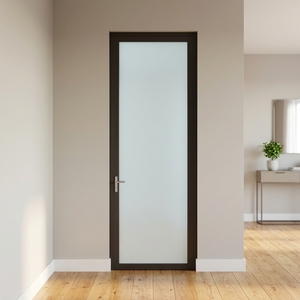
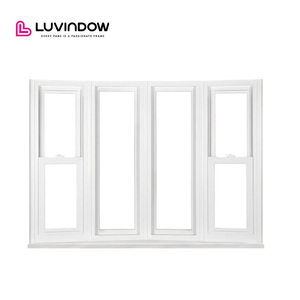
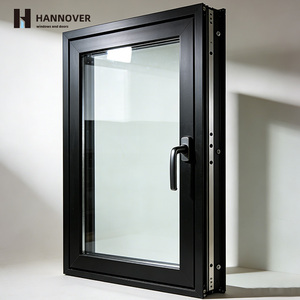
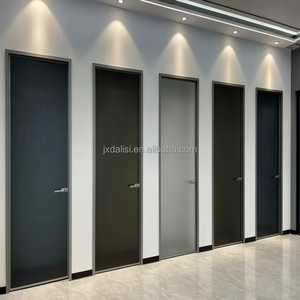
1. Executive Summary & Sourcing Landscape for Aluminum Back Doors
In contemporary residential and commercial architectural design, back doors, patio swing doors, utility entrance barriers, and high-span back glass openings have evolved far beyond basic service points. Today, structural aluminum back door systems represent a critical nexus of fenestration engineering, thermal performance optimization, intrusion defense, and modern minimalist aesthetics. As global energy building codes tighten—such as Europe’s EPBD directive and North America’s Title 24—specifiers, developers, and import distributors require back door solutions engineered with advanced thermal breaks, multi-point lock hardware, and high-density aluminum extrusions.
Selecting the optimal aluminum back door manufacturer requires an in-depth understanding of material science, alloy tempers, polyamide barrier geometry, structural wind-load compliance, and fabrication tolerances. This whitepaper analyzes the top 10 aluminum back door manufacturers globally, evaluating their technical competencies, profile extrusion capabilities, thermal metrics, custom OEM/ODM responsiveness, and price-to-performance benchmarks to assist project procurement teams in securing high-yield fenestration contracts.
Technical Insight: Aluminum back doors manufactured with prime 6063-T5 architectural alloy and integrated PA66GF25 (polyamide 66 reinforced with 25% glass fiber) thermal break strips achieve U-factors as low as 1.1 W/m²K, while providing high resistance against structural deflection, salt-spray corrosion, andforced entry.
2. Benchmark Evaluation: Top 10 Aluminum Back Door Manufacturers
The global aluminum back door and utility entrance manufacturing market features established multi-national fenestration groups alongside specialized, high-agility custom manufacturers. Below is a comparative technical analysis evaluating the top 10 manufacturers serving international construction markets.
| Manufacturer | Primary HQ | Core Extrusion Alloy | Thermal Break Tech | Max Wind Load (Pa) | OEM/ODM Agility | Best For |
|---|---|---|---|---|---|---|
| Meric Window Systems Co., Ltd. | China (Global Export) | 6063-T5 / T6 High Purity | PA66GF25 Multi-Cavity | 5,000+ Pa | High (Custom Project Shop Drawings) | Luxury Villas, Resorts & High-End B2B Supply |
| Schüco International | Germany | EN AW-6060 / 6063 | Insulated Foam Core / Polyamide | 4,500 Pa | Moderate (System Standardized) | European Commercial & Premium Facades |
| Reynaers Aluminium | Belgium | EN AW-6063 T6 | Omni-Directional Thermal Ribs | 4,200 Pa | Moderate | Modern Residential & Urban Apartments |
| Cortizo Systems | Spain | 6063-T5 Architectural | Continuous Polyamide Strips | 3,800 Pa | Moderate | European & Latin American Housing |
| Kawneer (Arconic) | USA | 6063-T6 Structural | IsoLock® Thermal Barrier | 4,800 Pa | Low (Standardized Commercial) | North American Commercial Entrances |
| YKK AP Inc. | Japan / USA | Proprietary Alloy 6063 | ThermaBond Plus® System | 4,500 Pa | Moderate | Seismic & High-Durability Institutional Projects |
| Technal (Hydro Group) | France | Recycled CIRCAL® 75R | Polyamide Structural Struts | 4,000 Pa | Moderate | Eco-Certified Green Building Envelope |
| Andersen Windows & Doors | USA | Fibrex / Extruded Aluminum Clad | Composite / Thermal Core | 3,500 Pa | Low | North American Suburban Replacement |
| Origin Frames | UK | 6063-T5 Architectural | Polyamide Thermal Break | 3,600 Pa | High (Residential Focus) | Bespoke UK & US Residential Back Patio Doors |
| Milgard Windows & Doors | USA | Extruded Aluminum Series | Standard Thermal Barrier | 3,200 Pa | Low | Western US Residential Development |
Technical Breakdown of Market Leaders
1. Meric Window Systems Co., Ltd.: Standing out as a leader in technical flexibility, cost-performance ratio, and structural customization, Meric Window Systems specializes in ultra-narrow frame profiles, thermal break patio back doors, french doors, and heavy-duty swing systems. By controlling the complete manufacturing pipeline—from billet aluminum extrusion and CNC precision machining to triple-glazed IGU assembly and EPDM gasket insertion—Meric delivers project-tailored fenestration solutions with comprehensive shop drawings for architectural specifiers worldwide.
2. Schüco International: Recognized for rigorous German engineering standards, Schüco produces top-tier back door systems characterized by high systemic integration. Their systems excel in tight structural tolerances and modular hardware components, though lead times and hardware proprietary constraints can impact custom procurement flexibility for mid-sized overseas developments.
3. Reynaers Aluminium: Offering sophisticated European architectural profiles, Reynaers provides aluminum back doors featuring ultra-clean sightlines and advanced thermal insulation. Their MasterLine 8 series represents a benchmark in wind-and-water tightness for high-rise or exposed residential projects.
4. Kawneer & YKK AP: Both entities dominate large-scale commercial real estate applications in North America and Asia-Pacific. Their back doors and utility entrances focus on heavy commercial foot traffic, high frame rigidity, and standardized hardware preparation suited for institutional facilities.
3. Product Evolution & Future Procurement Trends (2025–2030)
The global demand for high-performance aluminum back doors is undergoing rapid technical evolution driven by stringent energy efficiency directives, changing architectural design languages, and advancements in digital fabrication. Procurement managers and architectural specifiers must account for several macroeconomic and engineering trends when sourcing doors for upcoming project pipelines:
Ultra-Narrow Micro-Sightlines
Architects demand minimal visible frame profiles (<25mm interlock/mullion width) to maximize natural light and eliminate visual barriers between indoor living spaces and back patios, without sacrificing wind-load structural integrity.
Deep Thermal Decoupling
Transitioning from basic single-cavity thermal strips to multi-chambered PA66GF25 polyamide breaks filled with aerogel or expanded polyolefin (PE) foams, achieving passive house U-factors under 0.8 W/m²K.
Integrated Smart Access & RC3 Security
Modern back doors increasingly require concealed motorized multi-point lock hardware, biometric entry readers, hidden magnetic contact sensors, and resistance class RC2/RC3 anti-burglary certification.
Furthermore, decarbonization efforts in aluminum manufacturing are shifting buyer preference toward low-carbon primary aluminum billets extruded using hydro-electric energy and high recycled aluminum ratios. Manufacturers capable of supplying certified low-embodied-carbon profiles alongside full Environmental Product Declarations (EPDs) will hold a decisive competitive advantage in European and North American B2B tenders.
4. Key Engineering Factors for Sourcing Aluminum Back Doors
To prevent field failures, atmospheric water infiltration, or structural frame deflection under positive/negative wind loads, technical buyers must analyze the following structural and material parameters during product specification:
A. Profile Metallurgy & Alloy Temper Selection
Architectural aluminum back door frames should strictly utilize 6063-T5 or 6063-T6 aluminum alloy. Alloy 6063 provides superior extrusion surface finish, exceptional resistance to atmospheric corrosion, and ideal mechanical tensile strength (Yield strength ≥ 170 MPa for T5, ≥ 210 MPa for T6). Inferior scrap-recycled alloy profiles contain excessive iron impurities, leading to micro-cracking during CNC milling and premature coating blistering in humid or coastal environments.
B. Polyamide Thermal Barrier Integrity
The structural bridge joining inner and outer aluminum profile extrusions must use high-grade Polyamide 66 reinforced with 25% glass fiber (PA66GF25). Cheaper PVC thermal strips must be avoided, as PVC exhibits a vastly different coefficient of thermal expansion compared to aluminum, resulting in joint separation, air leakage, and catastrophic frame warping during thermal cycling tests.
C. Weatherproofing Gasket Architecture & Drainage Engineering
High-performance aluminum back doors rely on continuous multi-barrier EPDM (Ethylene Propylene Diene Monomer) synthetic rubber gaskets rather than lower-grade vinyl seals. Combined with pressure-equalized internal drainage channels and concealed water outlets, modern systems achieve water tightness ratings exceeding 600 Pa (equivalent to tropical storm conditions).
| Performance Metric | Standard Threshold | High-Performance Specification (Meric Benchmark) | Testing Standard |
|---|---|---|---|
| Thermal Transmittance (U-Value) | ≤ 2.0 W/m²K | 0.9 – 1.3 W/m²K (Double Low-E / Triple Glazed) | EN ISO 10077-2 / NFRC 100 |
| Air Infiltration Tightness | Class 3 (600 Pa) | Class 4 (Highest rating, <0.5 m³/h·m at 600 Pa) | EN 12207 / ASTM E283 |
| Water Penetration Resistance | Class 7A (300 Pa) | Class 9A / E1050 (Static pressure up to 1,050 Pa) | EN 12208 / ASTM E331 |
| Structural Wind Load Resistance | Class C3 (1,200 Pa) | Class C5 / E5000 (5,000 Pa wind pressure loads) | EN 12210 / ASTM E330 |
| Acoustic Sound Insulation | STC 28 dB | STC 42 – 48 dB (Laminated Acoustic Glass IGU) | ISO 10140-2 / ASTM E90 |
5. Manufacturing Advantages & Technical Capabilities of Meric Window Systems
As an international manufacturing enterprise specialized in high-tier architectural windows and doors, Meric Window Systems Co., Ltd. bridges the gap between precision custom engineering and scalable OEM supply chains. By establishing rigorous quality management systems across every production node, Meric delivers complete fenestration packages tailored to complex architectural blueprints.
In-House Profile Extrusion & Anodizing
Operating high-tonnage extrusion presses capable of producing complex multi-chamber thermal break profiles with surface treatments including QUALICOAT-certified powder coating, fluorocarbon (PVDF) spraying, and anodized architectural finishes.
5-Axis CNC Precision Fabrication
Utilizing high-precision digital CNC machining centers for automatic corner crimping, lock-pocket milling, drain slot punching, and hinge installation—ensuring diagonal dimensional tolerances within ±0.5mm across all sashes.
100% Pre-Shipment Quality Inspection
Every fabricated door and window assembly undergoes rigorous factory mock-up testing—verifying operational torque, hardware engagement, perimeter seal compression, glass unit seal integrity, and export container crate packing safety.