Featured Export Products
Explore top-tier architectural aluminium-clad timber and heavy-duty structural doors engineered to rigorous international standards.
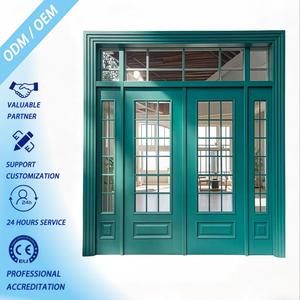
Finished Anti-Theft Aluminum Entrance Door with Waterproof Nylon Mesh and Complete One Year Quality Warranty for Commercial Use
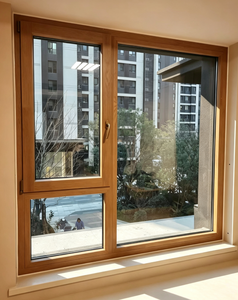
European High Energy Saving Triple Tempered Low-E Aluminum Wood Tilt Turn Windows Heat Insulation Waterproof Exterior Bedroom
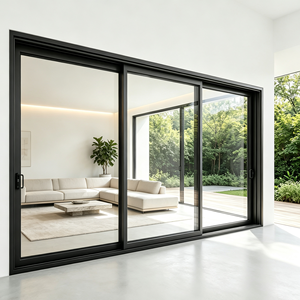
AS2047 Load-bearing Aluminium Alloy Profile And Double Glazed Tempered Glass Large Modern Sliding Doors For Australian Houses
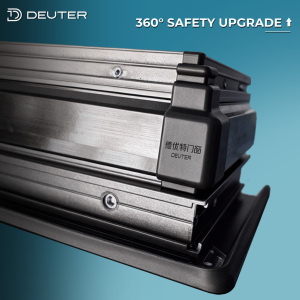
Child-Safe Full-Cover Rounded Corner Tlit and Turn Aluminum Windows Triple Sealing Soundproof Multi-family Housing Construction
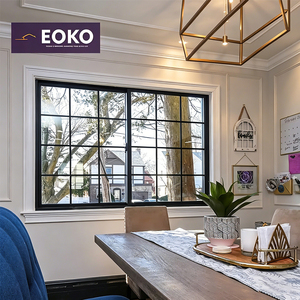
EOKO French Style Sliding Windows NFRC Certified Heat Insulation Sliding Glass Windows for Residential Hotel Balcony
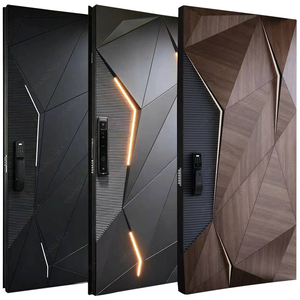
Foshan Factory Customized Modern Villa Aluminum Alloy Security Pivot Swing Doors Security Aluminum Entry Exterior Entrance Doors
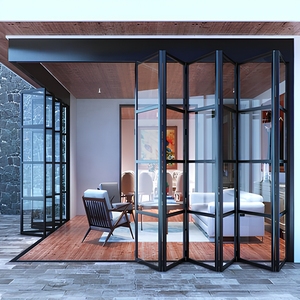
NFRC AS2047 Heavy Duty Aluminum Folding Patio Doors For Villa Waterproof Accordion Glass Patio Door Exterior Bifold Doors
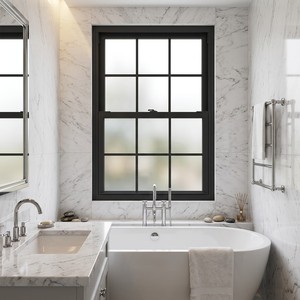
Modern Single Hung Aluminium Alloy Window Small Size Vertical Slide Design New Construction Waterproof Hung Windows for Home
1. Executive Overview: Sourcing Aluminium-Clad Timber Windows from China
In high-end architectural design, Aluminium Clad Timber Windows (Alu-Clad Wood Windows) represent the pinnacle of fenestration engineering. By combining the internal warmth, acoustic insulation, and timeless beauty of natural timber with the extreme weather resistance, structural integrity, and zero-maintenance profile of exterior extruded aluminium cladding, this hybrid system satisfies both rigorous Passive House energy criteria and luxury aesthetic expectations.
China has rapidly evolved into the world's primary manufacturing hub for advanced fenestration systems. Premier OEM/ODM manufacturers, such as Meric Window Systems Co., Ltd., operate automated CNC extrusion, wood-milling, and assembly lines across major industrial clusters in Foshan, Shandong, and Zhejiang. Modern Chinese factories provide global developers, architectural firms, and fenestration importers with exceptional structural engineering, custom architectural customization, and cost efficiencies without compromising compliance with strict international codes such as Australia’s AS2047, North America’s NFRC/AAMA, or Europe’s EN 14351-1.
2. Technical Anatomy & System Engineering Breakdown
To evaluate high-performance timber-aluminium fenestration manufacturers, commercial procurement officers must examine five fundamental structural pillars:
Laminated Solid Timber Core
High-tier factories utilize 3-layer or 4-layer finger-jointed laminated wood (such as FSC-Certified Larch, Northern European Pine, Red Oak, or Teak). Lamination eliminates internal tension, preventing warping, twisting, or cracking under fluctuating indoor humidity. Moisture content is strictly controlled via automated kiln drying between 8% and 12%.
6063-T5 Aluminium Outer Shell
The exterior extruded cladding features primary 6063-T5 architectural aluminium alloy with a wall thickness exceeding 1.4mm to 2.0mm. Exterior surfaces are finished with fluorocarbon (PVDF) spraying or AkzoNobel powder coating, delivering resistance against UV degradation, acid rain, salt-spray corrosion, and impact.
Floating Nylon Snap-Clip Connection
Because wood and aluminium possess significantly different thermal expansion coefficients, premier Chinese manufacturers join the two materials using high-strength PA66 nylon floating clips. This creates a 5–8mm ventilated pressure-equalization air gap, eliminating condensation buildup between wood and metal.
Material Comparison & Engineering Matrix
| Performance Specification | Aluminium-Clad Timber (Alu-Wood) | Thermal Break Aluminium | Solid Timber Windows |
|---|---|---|---|
| Thermal Transmittance ($U_w$) | 0.75 - 1.1 W/m²K (Ultra-Low) | 1.4 - 2.2 W/m²K (Moderate) | 0.9 - 1.3 W/m²K (Low) |
| Acoustic Insulation (STC Rate) | 38 - 45 dB (Excellent) | 30 - 36 dB (Moderate) | 35 - 40 dB (Good) |
| Exterior Maintenance Requirement | Zero Maintenance (PVDF Aluminium) | Zero Maintenance | High (Repainting every 3-5 yrs) |
| Air & Water Sealing System | Triple EPDM Continuous Gaskets | Double/Triple EPDM Gaskets | Double Seal Gaskets |
| Architectural Aesthetic Value | Luxury Natural Interior Timber | Modern Industrial Metallic | Traditional Classic Wood |
3. Future Sourcing & Procurement Trends (2025–2030)
As global building codes mandate near-zero energy consumption (NZEB) and carbon footprint transparency, procurement strategies for high-end residential and commercial projects are undergoing rapid shifts:
Shift to Vacuum & Triple Low-E Argon Glazing
Standard double glazing is rapidly being replaced in luxury procurement schedules by triple-pane tempered glass units filled with 90%+ Argon gas and warm-edge Technoform composite spacers. Vacuum Insulated Glass (VIG) is also gaining traction, offering $U_w$ values under 0.6 W/m²K while reducing panel profile depth.
Smart Hardware & Concealed Motorization
Architects are increasingly specifying fully concealed hinges, multi-point lock drives, and integrated electric chain actuators capable of syncing with smart home automation (KNX, Zigbee). Motorized lift-and-slide or tilt-turn systems allow touchless remote ventilation control for high-wall or curtain-wall applications.
Sustainable Sourcing & FSC Chain of Custody
International project developers now require raw material traceability. Top Chinese suppliers provide full FSC (Forest Stewardship Council) certification for all timber species and utilize low-VOC, water-based German environmentally safe wood coatings (such as Sikkens or Remmers) that prevent off-gassing indoors.
4. Architectural & Production Technology Development Trends
The window and door manufacturing landscape in China is undergoing a massive technological transition driven by automation and high-precision structural design.
A. Ultra-Narrow Sightlines with Concealed Frame Integration
Modern minimalist architecture demands maximum glass expanse and minimal visible frames. Industry developments include ultra-narrow mullion profiles (down to 20mm-35mm interlock sightlines) where the timber subframe is partially embedded inside the building's outer insulation envelope, creating an unobstructed panoramic glass wall effect.
B. Seamless Laser Welding of Outer Aluminium Cladding
Traditional mechanical mitered joints in exterior aluminium frames often develop micro-gaps over time due to weather exposure. Advanced Chinese factories have introduced seamless continuous laser welding for aluminium cladding corners. Post-weld powder coating ensures 100% watertight corner seal protection and a continuous smooth metal finish.
C. Automated 5-Axis CNC Timber Processing
Leading factories utilize German and Italian 5-axis CNC machining centers (e.g., Homag) to process solid timber profiles. Machining tolerances are maintained within $\pm 0.1\text{mm}$, ensuring exact mortise-and-tenon joints, multi-point lock housing slots, and continuous multi-channel EPDM rubber gasket grooves.
5. Factory Competence & Manufacturing Quality Control
When partnering with a premier Chinese fenestration manufacturer such as Meric Window Systems Co., Ltd., buyers gain access to end-to-end industrial quality control backed by rigorous engineering verification:
- Structural Wind Load Calculation: Every order undergoes finite element structural engineering analysis to verify mullion moment of inertia ($I_x$) against local wind zones and installation heights.
- Hardware Systems Integration: Premium European multi-point locking hardware (ROTO Frank, Siegenia-Aubi, GU, Hoppe) is fitted to guarantee smooth operation, anti-burglary security (RC2/RC3 grade), and high compression sealing.
- Full-Scale Factory Mockup Testing: Prior to bulk production, project-specific window mockups undergo rigorous air permeability, water tightness under pressure (up to 700 Pa), and structural deflection testing matching ASTM E283, ASTM E331, ASTM E330, and AS4420 standards.
- Container Shipping Packaging: Finished window units are wrapped with anti-scratch protective film, corner guard cushions, sealed in vacuum foil for ocean humidity control, and secured in fully enclosed reinforced plywood crates or heavy-duty steel A-frames designed for crane or forklift unloading at building sites.
6. Frequently Asked Questions (FAQ) for B2B Procurement
Answers to technical and logistical questions commonly raised by international importers, developers, and general contractors.
In an Aluminium-Clad Timber window, the load-bearing structural frame is constructed from solid multi-layer laminated wood, which provides superior thermal insulation and natural wood interior beauty. The exterior metal shell is a protective cover connected via nylon clips. In contrast, Wood-Clad Aluminium utilizes an aluminium alloy frame as its structural core, with thin cosmetic wood strips clipped onto the inside. Alu-Clad Timber provides significantly better overall thermal energy insulation ($U_w$ value).
Yes. Top-tier manufacturers design profiles and glass assemblies specifically to comply with regional standards. Systems can be ordered with NFRC (National Fenestration Rating Council) energy certification and AAMA structural testing for North America, or AS2047 and AS1288 certification for Australia. Test reports and engineering calculation packages are provided during the shop drawing review phase.
Timber undergoes automated vacuum drying to stabilize moisture content between 8% and 12%. Before assembly, individual wood components are submerged in deep-penetrating bio-based preservatives, anti-fungal treatments, and termite inhibitors. They are then finished with 3 to 4 coats of flexible, water-based eco-friendly paints (such as German Remmers or Sikkens) that expand and contract with the wood without peeling.
Standard factory lead time for custom aluminium-clad timber windows is typically 30 to 45 days after CAD shop drawing approval and deposit receipt (longer for rare wood species or custom RAL color matching). Ocean shipping takes approximately 14-20 days to West Coast North America/Australia, and 28-35 days to Europe or East Coast USA.
To provide a precise quotation, our engineering team requires: (1) Architectural window and door schedule or CAD elevation drawings; (2) Opening dimensions and quantity; (3) Preferred opening types (Tilt-Turn, Sliding, Casement); (4) Glass specification (Double/Triple glazed, Low-E coating, Tinting); (5) Project site location for structural wind load calculation.