Engineered Architectural Window Systems
High-performance thermal break aluminium profile solutions custom-crafted for North American, European, and Australian project standards.
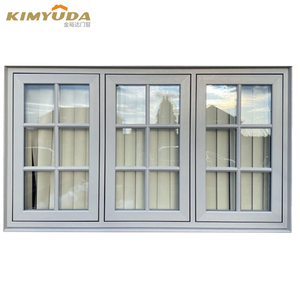
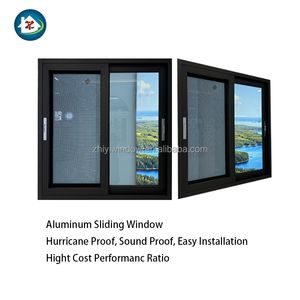
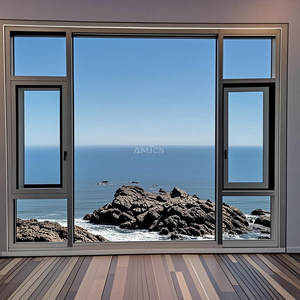
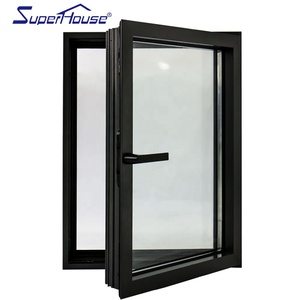
1. Technical Industry Whitepaper: The Evolution of China’s Architectural Aluminium Windows Sector
The international fenestration industry has undergone a radical structural shift. Architectural design mandates have transitioned from conventional, heavy-frame fenestration toward ultra-narrow sightlines, high thermal resistance, and extreme wind-load capabilities. China has emerged as the global epicenter for advanced architectural aluminium window and door fabrication, leveraging vertically integrated supply chains, automated CNC profile machining, and sophisticated surface coating technologies.
As global building energy codes tighten—such as Europe’s EPBD directives, North America’s NFRC / IECC updates, and Australia’s NCC (National Construction Code)—procurement directors and architectural engineering firms require more than standard manufacturing. They require systemic engineering validation, verifiable U-factors, frame structural calculation models, and rigorous laboratory certification (AS2047, NFRC, CSA, and CE).
Leading Chinese exporters utilize premium 6063-T5 and 6061-T6 structural aluminium alloys with wall thicknesses spanning 1.4mm to 3.0mm depending on building elevation and structural pressure requirement ($P_3 = C_p \cdot q_z$). Combining these alloys with Polyamide PA66 GF25 (25% Glass Fiber Reinforced) thermal barrier strips reduces frame conductivity to less than $1.6 \text{ W/m}^2\text{K}$.
PA66 Thermal Break Tech
Precision-extruded polyamide insulation strips physically decouple inner and outer aluminium profiles, eliminating thermal bridges and drastically lowering condensation risks in cold climates.
Structural Hurricane Rating
Engineered with multi-point hardware locking systems and laminated impact glass units (SentryGlas® interlayers) capable of resisting TAS 201/202/203 missile impact standards.
Sub-Slim Sightlines
Ultra-narrow interlocks down to 20mm visible sightlines maximize glass surface areas while transferring wind load directly into structural glass bonding channels.
2. Corporate Infrastructure & Export Competencies (Meric Window Benchmark)
As demonstrated by industry-leading manufacturers such as Meric Window Systems Co., Ltd., true manufacturing leadership relies on vertical integration. Modern China aluminium window factories do not merely assemble components; they manage the entire engineering lifecycle:
- In-House Die Design & Profile Extrusion: Custom profile geometries tailored to specifier wind load requirements and specific wall thickness ratios.
- Advanced Surface Treatment Lines: AkzoNobel and PPG certified Fluorocarbon (PVDF) spray coating, AkzoNobel powder coating, and specialized Architectural Anodizing conforming to AAMA 2605 specifications.
- Automated Insulated Glass Units (IGU): Dual-seal automated lines processing Low-E coatings, warm-edge spacers (TGI/Technoform), and Argon gas purging with sealing levels meeting EN 1279 and ASTM E2190.
- CNC Precision Machining: 5-axis CNC machining centers performing corner crimping, lock-pocket milling, and water-drainage slots with 0.1mm dimensional tolerance.
3. Future Sourcing Trends in Architectural Fenestration (2025–2030)
Strategic sourcing of aluminium windows from China is shifting beyond unit pricing toward whole-lifecycle value, decarbonization compliance, and modular logistics optimization. Developers and facade consultants must account for the following macro trends:
A. Decarbonization & Embodied Carbon Tracking (CBAM Ready)
With the implementation of the European Union's Carbon Border Adjustment Mechanism (CBAM) and similar ESG mandates globally, top Chinese exporters are transitioning to low-carbon primary aluminium smelted using hydroelectric power. The use of recycled aluminium billet (end-of-life and scrap integration up to 75%) significantly cuts embodied carbon ($kg CO_2e / kg Al$) without compromising yield strength.
B. Vacuum Insulated Glass (VIG) & Triple-Glazed Performance Integration
As Passive House standards (Passivhaus Institut Darmstadt) become mainstream across North America and Europe, standard double glazing is being replaced by triple-glazed unitized frames and hybrid Vacuum Insulated Glass (VIG). VIG technology provides an incredible center-of-glass U-value of $0.60 \text{ W/m}^2\text{K}$ ($0.10 \text{ BTU/h}\cdot\text{ft}^2\cdot^\circ\text{F}$) in a profile thickness of under 10mm, enabling slim frame window designs with unprecedented thermal isolation.
C. Smart Automation & Motorized Drive Integration
Modern architectural residential projects increasingly incorporate large-format sliding wall systems (weighting up to 800 kg per panel). Sourcing trends demonstrate exponential demand for concealed electric motor drives, smartphone integration, smart home automation (KNX/Zigbee protocols), and automated weather sensors that close windows dynamically during high-wind or heavy-rainfall events.
| Window System Type | Structural Profile Alloy | Thermal Break Tech | Thermal U-Factor Range | Acoustic Rating (STC) | Target Export Market |
|---|---|---|---|---|---|
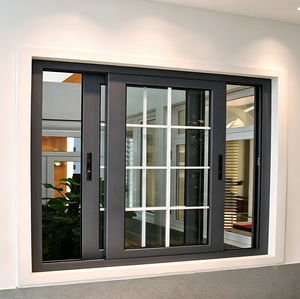
| Ultra-Narrow Sliding Door (JW157) | 6063-T5 / T6 Profile | Polyamide PA66 24mm Strip | 1.4 - 1.8 W/m²K | STC 38 - 42 dB | Australia, USA, UAE |
| Tilt & Turn Window | 6063-T5 Structural | Multi-Chamber PA66 Strips | 0.8 - 1.2 W/m²K | STC 40 - 45 dB | Germany, Canada, UK |
| Hurricane Impact Casement | 6061-T6 High Yield | Structural Pour & Debridge / PA66 | 1.5 - 2.0 W/m²K | STC 42 - 48 dB | USA (Florida/Texas), Caribbean |
| FW142 Narrow Curtain Wall | 6063-T6 Structural Frame | Continuous EPDM & Polyamide | 1.1 - 1.5 W/m²K | STC 36 - 40 dB | Global Commercial Projects |
4. Industry Development Trends & Engineering Innovations
The manufacturing ecosystem in key hubs like Foshan and Guangdong has evolved through heavy investment in automated hardware fitting lines, robotized silicone structural glazing, and thermal simulation software (LBNL THERM & WINDOW). Key technical vectors include:
Structural Silicone Bonding
Direct glazing bonding transfers lateral wind loads seamlessly across the glass sheet, allowing aluminum profiles to shrink in visual thickness without structural failure.
Concealed Hinge Hardware
Heavy-duty 180° opening concealed hinges manufactured from stainless steel SUS304/SUS316 eliminate visible hardware, enhancing minimalist room interior designs.
Advanced Drainage Systems
Sub-surface floor level concealed drainage tracks manage water pressure differential up to 1000 Pa, preventing water ingress under severe storm conditions.
5. Rigorous 4-Step Quality Control & Global Logistics Protocol
To eliminate damages during ocean freight and ensure seamless site assembly, premier China exporters employ an end-to-end Quality Control and packaging pipeline:
Raw Material Audit
Spectrometer alloy verification for 6063-T5 billets; glass flatness and optical distortion inspection prior to cutting.
CNC Milling & Crimping
Sub-millimeter CNC notch cut precision. Pneumatic corner crimping with structural corner keys and dual-component epoxy glue injected into internal chambers.
Assembly & Water Testing
100% pre-assembly of sashes within outer frames. Mockup water tightness and air filtration testing conducted in internal factory test rigs.
ISPM 15 Export Crating
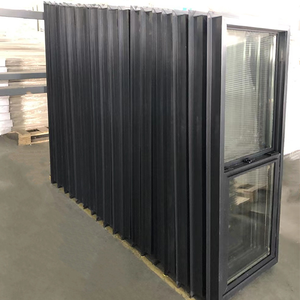
Protective anti-scratch film, corner bumpers, wrapped in waterproof film and secured inside fumigated steel-reinforced plywood A-frames.