Industry Whitepaper & Technical Analysis
Engineering Excellence in Aluminum Bedroom Window Fabrication
In modern architectural engineering, the bedroom represents the most sensitive thermal and acoustic zone of any residential or hospitality structure. Selecting the right fenestration package requires balancing aesthetic minimalism with rigorous physical performance. As a top China aluminum bedroom windows manufacturer and factory, Meric Window Systems Co., Ltd. integrates advanced metal extrusion metallurgy, precision thermal break geometry, and high-performance acoustic glass build-ups to deliver OEM/ODM supply chain solutions for global architects, real estate developers, and fenestration importers.
Core Procurement Insight: Bedroom windows require an acoustic rating of at least STC 38 to STC 42 (Rw 40dB) and an overall U-factor below 1.4 W/m²K to ensure circadian sleep environment optimization and thermal equilibrium in climate-controlled environments.
1. Profile Metallurgy & Structural Integrity: 6063-T5 vs. 6063-T6 Alloys
The foundation of long-term operational stability in aluminum bedroom windows lies in profile extrusion selection. China’s manufacturing ecosystem utilizes premium 6063-T5 and 6063-T6 architectural grade aluminum alloys. Aluminum-Magnesium-Silicon alloys provide superior yield strength, exceptional surface finish quality, and corrosion resistance under marine atmospheric conditions.
Profile wall thickness is strictly governed by building codes. While standard residential windows often utilize 1.4mm profiles, high-load bedroom fenestration—especially wide-span tilt-and-turn windows, panoramic casement systems, and hurricane-rated louvres—requires profile wall thicknesses ranging from 1.8mm to 3.0mm. Precision CNC mitering and hydraulic corner-crimping with dual-component structural epoxy adhesives eliminate micro-gaps, preventing frame distortion under cyclic wind loads exceeding 5.0 kPa.
PA66GF25 Thermal Break
Polyamide 66 reinforced with 25% glass fiber creates an unbreakable thermal barrier, minimizing heat transfer between exterior and interior profile chambers.
Multi-Point Locking
Integrated European-standard hardware grooves accommodate continuous perimeter locking cams, providing burglar resistance up to RC2/RC3 levels.
EPDM Triple Sealing
Co-extruded automotive-grade EPDM continuous weatherstripping guarantees air permeability ratings meeting Class 4 standards (EN 12207).
2. Thermal Break Mechanics & Energy Efficiency Physics
Uninsulated aluminum exhibits high thermal conductivity (K ≈ 200 W/m·K). To prevent thermal bridging across bedroom wall envelopes, engineered profiles incorporate multi-chamber polyamide thermal break strips (PA66GF25). By dividing the aluminum frame into distinct exterior and interior structural extrusions connected via glass-fiber-reinforced polyamide bridges, the thermal path is effectively disrupted.
Advanced bedroom window configurations incorporate expanded thermal insulation foams (PE/PU foam inserts) within the frame's central dead-air chambers. Combined with double or triple Low-E insulated glass units (IGU) containing 90%+ Argon gas fills and warm-edge composite spacers, system U-values can drop to 0.8–1.2 W/m²K, satisfying Passive House and zero-energy building mandates worldwide.
3. Acoustic Mitigation Technology for Restful Bedroom Sleep
Acoustic isolation is a non-negotiable metric for bedroom windows, particularly in high-density urban corridors, airport flight paths, or hotel developments. Sound waves transfer through window systems via structural vibration and air leakage. China's leading factories address sound dampening through asymmetric glazing configurations and airtight gasket compression.
Combining glass panes of differing thicknesses (e.g., 6mm exterior + 12mm Argon space + 8mm interior or 6.38mm PVB laminated glass) prevents coincidence frequency dips where sound waves easily bypass uniform glass units. Acoustic PVB (Polyvinyl Butyral) interlayers absorb vibrational kinetic energy across low-frequency city traffic sound bands (100 Hz to 500 Hz), achieving sound attenuation ratings up to 45 dB.
Future Sourcing & Engineering Trends in Aluminum Bedroom Windows (2025–2030)
As global architectural preferences evolve and energy codes become more stringent, international B2B buyers must align their procurement strategies with emerging manufacturing trends coming out of China's premier fenestration hubs.
Trend 1: Ultra-Narrow Sightlines with Concealed Sash Hardware
Minimalist architecture demands maximum natural daylight with minimal visible metal frame. Future bedroom window designs favor ultra-narrow sightline casement and sliding systems where visible frame profiles are reduced to 20mm–35mm. Concealed hinges, hidden drainage slots, and recessed frame tracks create seamless wall-to-glass transitions while maintaining wind-load structural specs.
Trend 2: Micro-Ventilation & Smart Air Exchange Integration
Maintaining indoor air quality (IAQ) and CO2 equilibrium during sleep without compromising building security or acoustic barriers has led to the adoption of micro-ventilation systems. Advanced bedroom aluminum windows now feature engineered frame-integrated trickle vents with multi-stage HEPA/carbon filtration and smart motorization compatible with home automation systems (Zigbee/Matter protocols).
Trend 3: Electrochromic Smart Glass & Built-In Motorized Shading
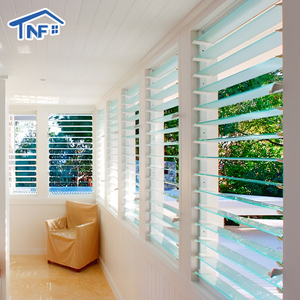
Traditional heavy curtains are increasingly being replaced by integrated fenestration technologies. Double-glazed louvre windows with integrated motorized Venetian blinds situated inside sealed, dust-free IGU chambers provide instant privacy control. Furthermore, PDLC (Polymer Dispersed Liquid Crystal) switchable glass and electrochromic tinting allow bedroom occupants to adjust light transmittance dynamically from a smartphone or wall switch.
Trend 4: Carbon-Neutral Extrusion & Circular Material Sourcing
Western procurement mandates increasingly require Environmental Product Declarations (EPDs). Top Chinese manufacturers are transitioning to low-carbon aluminum extruded using hydroelectric power sources, coupled with 100% recyclable alloy scraps, satisfying LEED and BREEAM sustainability scoring metrics.
Aluminum Bedroom Window Technical Performance Matrix
Compare the engineering metrics of primary aluminum bedroom window opening typologies to determine the exact specification for your architectural project:
| Window Typology |
Thermal U-Value (W/m²K) |
Acoustic Rating (STC / dB) |
Air Tightness (Class) |
Water Resistance (Pa) |
Ideal Application |
| Tilt & Turn Casement |
0.8 – 1.3 |
40 – 45 dB |
Class 4 (Highest) |
700 – 1000 Pa |
Urban Master Bedrooms, Cold Climates |
| Outward Swing Casement |
1.2 – 1.6 |
35 – 40 dB |
Class 4 |
600 – 900 Pa |
Luxury Villas, Coastal Resorts |
| Slim Thermal Sliding |
1.4 – 1.8 |
30 – 35 dB |
Class 3 |
450 – 600 Pa |
Bedroom Terraces, Balconies |
| Vertical Glass Louvre |
2.0 – 2.5 |
28 – 32 dB |
Class 2 |
300 – 450 Pa |
Tropical & Micro-Ventilated Bedrooms |
| Panoramic Fixed Facade |
0.7 – 1.1 |
42 – 48 dB |
Class 4 (Sealed) |
1200+ Pa |
High-Rise View Rooms, Feature Walls |