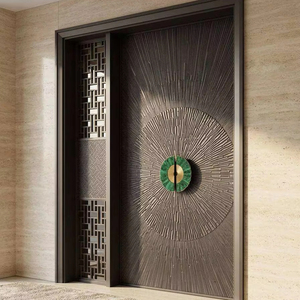
Factory Direct Fenestration Systems
Featured Architectural Aluminum Systems
Precision-engineered aluminum doors and thermal windows designed for high-end residential, villa, and commercial facades.
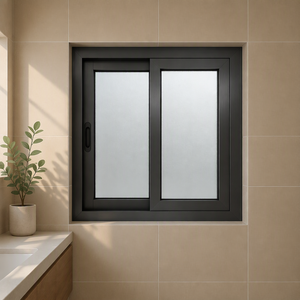
Profile Aluminum Doors and windows Factories in Foshan China
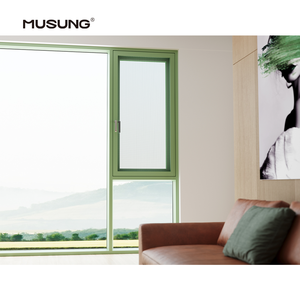
Ultra Narrow Glass Windows And Doors Double Glazed Aluminum Alloy Line Slimline Window Casement Windows
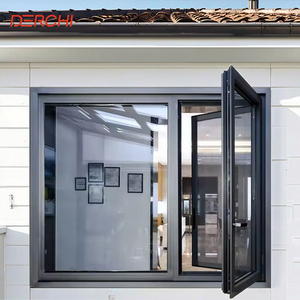
NFRC Hurricane Proof Impact Window Energy Saving Low E Glass Thermal Break Casement Aluminum windows And Doors For House
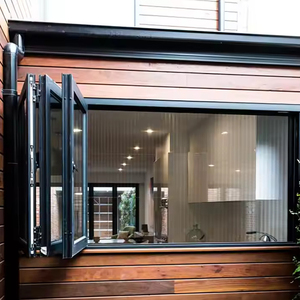
Thermal Break Modern Horizontal Aluminium Windows and Doors with 2.0mm Frame Multi Panel Folding for Kitchen Villa Patio Shop
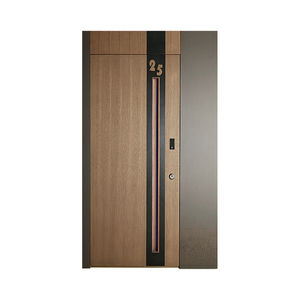
Exterior Aluminium Front Aluminium Main Entrance Door Double House Main Door Modern Designs
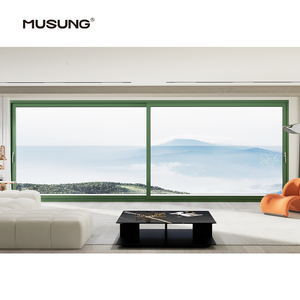
Thermal Break Sliding Patio Doors Exterior Aluminum Lift Sliding Door Aluminium Sliding Glass Doors
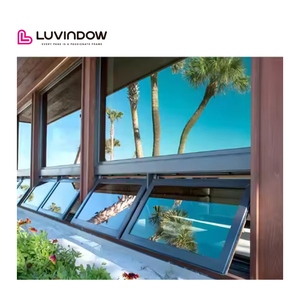
Luvindow As 2047 Customized Folding Glass Thermal Break Aluminum Awning Window for Residential Homes
1. Executive Market Intelligence: Why Sourcing Aluminum Stable Doors from China Dominates Global Fenestration Supply
The global demand for high-performance architectural door systems has experienced a paradigm shift over the last decade. Historically rooted in traditional timber construction, stable doors—also widely recognized in international architectural specifications as Dutch split doors—have undergone a material revolution. Contemporary residential, equestrian, luxury villa, and hospitality developments are rapidly replacing timber and hollow steel with precision-engineered extruded aluminum alloy systems.
As architects, developers, and trade importers analyze global manufacturing nodes, China—and specifically the Foshan architectural hardware and profile industrial cluster—stands out as the worldwide epicenter for high-precision aluminum door manufacturing. Leading manufacturers like Meric Window Systems Co., Ltd. have pioneered advanced thermal break integration, multi-point interlock mechanisms, and weatherproofing sealing technology that elevate aluminum stable doors from decorative entrance features to ultra-durable, energy-efficient building envelope components.
Information Gain Metric: Aluminum stable doors manufactured with 6063-T5 high-grade extrusions offer up to 400% greater dimensional stability under extreme humidity and temperature differentials compared to premium hardwoods, completely eliminating warping, sagging, and seal degradation over a 30-year lifecycle.
Structural Dynamics of Split-Sash Aluminum Systems
An aluminum stable door functions via a dual independently operable sash system divided horizontally across the mid-rail. This allows the top leaf to open independently for ambient ventilation, natural daylighting, and airflow control while the lower leaf remains securely locked to prevent unauthorized entry, child exit, or animal ingress. Sourcing these specialized systems from top-tier Chinese OEMs offers significant technical advantages:
- Integrated Interlocking Perimeter Seals: Unlike timber Dutch doors that suffer from air leakage at the horizontal split seam, modern Chinese aluminum stable doors utilize continuous dual EPDM gaskets with interlocking aluminum rebates.
- Concealed Heavy-Duty Gear Synchronizers: Specialized hardware allows the top and bottom sashes to be coupled effortlessly into a unified single entrance door or decoupled into split operation via a single ergonomic lever turn.
- High-Density Thermal Polyamide Strips: Integration of PA66-GF25 (25% glass fiber reinforced polyamide) thermal barriers prevents thermal bridging in harsh northern or tropical climates.
Engineering Excellence
Core Manufacturing Capabilities & Engineering Breakthroughs
CNC Precision Fabrication
Every profile frame undergoes 5-axis CNC milling for hardware pocketing, drainage slots, and corner key crimping, guaranteeing dimensional tolerances within ±0.5mm across massive door elevations.
Qualicoat Surface Treatments
Advanced surface finishing including AkzoNobel powder coating (60-80μm thickness) and anodic oxidation (15-25μm) providing certified salt spray resistance exceeding 2,000 hours for marine environments.
Thermal & Acoustic Isolation
Multi-chambered profile designs combined with double/triple Low-E insulated glass units (argon filled, warm edge spacers) achieve thermal U-factors as low as 1.2 W/m²K and STC sound reduction of up to 42 dB.
2. Global Procurement & Architectural Development Trends (2025–2030)
The fenestration sector is moving rapidly toward sustainable, zero-carbon building materials and high-security smart home integrations. For global procurement officers, B2B wholesale buyers, and architectural specifiers, understanding the trajectory of aluminum stable door manufacturing in China is vital for maintaining a competitive edge.
Trend A: Ultra-Narrow Sightlines & Flush Threshold Engineering
Modern architectural aesthetics demand maximum glass visual areas with minimal frame sightlines. Manufacturers are redesigning profile extrusions from traditional 70mm visible mullions down to ultra-narrow 20mm–35mm sightlines. In stable door systems, this trend manifests in flush mid-rail joints where the horizontal separation line between upper and lower sashes is visually seamless from the exterior. Furthermore, barrier-free thermal break flush thresholds with concealed multi-stage drainage channels are replacing high step-over sills, ensuring ADA compliance and smooth indoor-outdoor transitions.
Trend B: Smart Hardware Integration & Biometric Split Control
The integration of motorized hardware, concealed electric strikes, and smart biometric sensors directly into the aluminum door profile is transforming stable doors into high-tech security portals. Future procurement schedules increasingly specify factory-fitted smart access controls that allow users to remotely unlatch the top sash for package deliveries or pet ventilation while keeping the lower sash structurally locked into the multi-point security system.
Trend C: Decarbonization & Low-Carbon Recycled Aluminum Extrusions
With Europe’s Carbon Border Adjustment Mechanism (CBAM) and North America’s Buy Clean Acts taking effect, Chinese manufacturers are transitioning from high-carbon primary smelting to renewable hydropower-extruded aluminum (utilizing over 75% recycled scrap content). This shift dramatically reduces the embodied carbon footprint of aluminum stable doors to below 2.0 kg CO2e/kg Al, satisfying stringent BREEAM and LEED v4 certification criteria.
Technical Benchmarking
Architectural Specification & Performance Decision Matrix
Compare technical parameters across primary aluminum door systems engineered by top Chinese factories.
| Door System Type | Profile Alloy & Wall | Thermal Isolation | Air Tightness (ASTM E283) | Water Resistance (ASTM E331) | Wind Pressure (ASTM E330) | Target Applications |
|---|---|---|---|---|---|---|
| Thermal Break Aluminum Stable Door | 6063-T5 / T6 2.0mm – 2.5mm |
PA66-GF25 24mm Strip |
Class A4 (≤0.5 m³/m·h) | Class 9A (≥600 Pa) | Class C5 (≥5000 Pa) | Luxury Villas, Coastal Homes, Equestrian Resorts |
| Ultra-Narrow Panoramic Sliding Door | 6063-T5 2.0mm Frame |
Polyamide Insulated 18mm Strip |
Class A3 (≤1.5 m³/m·h) | Class 7A (≥450 Pa) | Class C4 (≥4000 Pa) | Patio Exits, Balconies, Living Rooms |
| Heavy-Duty Lift & Slide Door | 6063-T6 Structural 2.5mm Profile |
Multi-Chamber PA66 30mm Barrier |
Class A4 (≤0.2 m³/m·h) | Class E1050 (≥1050 Pa) | Class C5 (≥5500 Pa) | High-Rise Penthouses, Extreme Weather Zones |
| Commercial Double Glazed Folding Door | 6063-T5 Alloy 2.0mm Profile |
Polyamide Break 20mm Strip |
Class A3 (≤1.0 m³/m·h) | Class 6A (≥350 Pa) | Class C3 (≥3000 Pa) | Storefronts, Kitchen Patios, Restaurants |
3. Enterprise Factory Advantages: Structural Rigor, OEM Customization & QA Protocols
When evaluating top China aluminum stable doors manufacturers, global buyers must look beyond surface aesthetics and examine the operational infrastructure of the production facility. Leading factories in the Foshan manufacturing hub operate under rigorous ISO 9001 quality management systems and ISO 14001 environmental standards, backing their export solutions with verified engineering documentation.
Raw Material Verification & Metallurgical Integrity
The integrity of an aluminum stable door hinges on the purity of the extrusion billet. Top-tier factories strictly utilize primary ingot AA6063-T5 aluminum, refraining from the use of contaminated scrap metal. The T5 heat treatment process ensures optimal tensile strength (≥160 MPa) and yield strength (≥110 MPa), giving door sashes the structural stiffness required to span heights up to 2.8 meters without bowing under thermal stress or heavy wind loading.
Precision Corner Assembly & Dual Injection Technology
A key differentiator in premium manufacturing is the corner joint assembly methodology. Inferior doors rely on simple mechanical screws that loosen over time, leading to frame sag and water infiltration. Premium manufacturers like Meric Window Systems utilize heavy-duty cast aluminum corner cleats combined with hydraulic corner crimping. German-formulated two-component polyurethane corner adhesive (such as Weiss Cosmovoll) is pressure-injected into the internal corner chambers. This creates a monolithic, hermetically sealed bond that guarantees lifetime squareness and watertight performance.
5-Stage Export Packaging Protection Protocol
Containerized ocean shipping presents severe risks of surface abrasion, denting, and moisture condensation. Experienced Chinese manufacturing exporters employ a comprehensive 5-stage protective packaging workflow:
- Electrostatic Surface Film: Applied directly over anodized or powder-coated profile faces to protect against scratch damage during assembly and transport.
- Custom Corner Edge Guards: High-density polyethylene plastic or thick corrugated corner blocks installed on all four frame corners.
- Multi-Layer Bubble Wrapping: Sealed PE foam wrapping providing shock absorption and vibration damping.
- Fumigated Solid Wooden Crating: Heavy-duty plywood or steel-reinforced pallets built to exact crate dimensions for forklift loading.
- Desiccant Pack Insertion: Silica gel packs placed inside sealed crate wrapping to absorb atmospheric moisture during multi-week ocean transit.
Procurement Knowledgebase
Frequently Asked Questions (FAQ) for B2B Procurement
Direct technical answers to common questions from architectural importers, general contractors, and trade buyers.
What is the structural lead time for custom aluminum stable door OEM orders?
Standard production lead times range between 25 to 35 calendar days following shop drawing approval and deposit receipt. For complex custom anodized finishes or non-standard powder coat colors (such as custom RAL matches), additional extrusion preparation may require 7 to 10 extra days. Fast-track prototyping schedules are available for commercial project tenders.
How do aluminum stable doors perform against water penetration in hurricane-prone zones?
When engineered with multi-point perimeter locking systems, stepped internal rebates, and triple EPDM compression gaskets, thermal break aluminum stable doors achieve water resistance up to 600 Pa (equivalent to wind-driven rain at 110 mph). For extreme tropical storm zones, hurricane-impact laminated glass (SGP interlayer) profiles are specified to pass ASTM E1886/E1996 missile impact testing.
What minimum order quantities (MOQ) apply for B2B containerized factory shipments?
While custom architectural projects are accommodated starting from a single villa door schedule (minimum 20 sq.m), optimum sea freight cost efficiency is achieved at a 20ft Full Container Load (FCL, approx. 150-200 sq.m of mixed door/window units). LCL crate shipping is fully supported with heavy-duty fumigated wooden box reinforcement.
Can Chinese manufacturers provide certified engineering shop drawings for local building code approvals?
Yes. Leading engineering manufacturers provide comprehensive CAD and BIM (Revit) models, elevation cross-sections, structural wind load calculation sheets, and factory performance test reports (EN 14351-1, AS2047, NFRC) required by local structural engineers and municipal building inspectors worldwide.
What specialized hardware brands are compatible with aluminum Dutch stable doors?
Factory doors are engineered to accommodate premium global hardware systems including Siegenia, Hoppe, GU, Roto, as well as high-grade Chinese precision hardware (HOPO, KIN LONG). Hardware finishes include PVD anti-corrosion matte black, brushed stainless steel, anodized bronze, and custom brass powder coats.
How does the thermal break polyamide PA66-GF25 prevent interior condensation?
Aluminum is a natural thermal conductor. By physically separating the outer aluminum extrusion profile from the inner profile using a non-conductive PA66-GF25 glass-fiber reinforced polyamide bridge, internal profile face temperatures remain close to room ambient levels. This eliminates dew point condensation formation even during freezing winter temperatures down to -30°C.
Request Complete Technical Catalog & Project Price Quote
Partner directly with China's premier aluminum stable door and fenestration engineering factory. Submit your window schedule or architectural CAD drawings for an instant engineering review.
Get Catalog