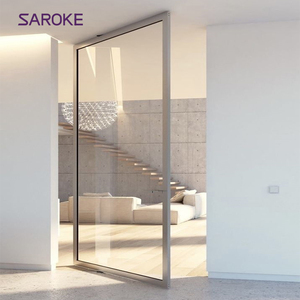
Largest Glass 2.5m Oversized Custom Impact Electronic Pivot Door
Request Specifications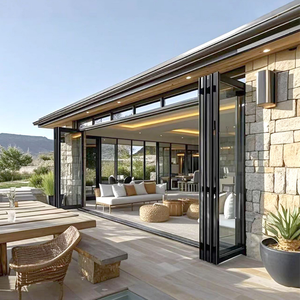
NFRC Thermal Break Aluminium Folding Door System with Screen
Request Specifications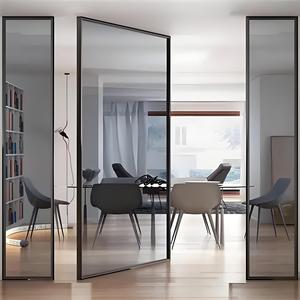
Modern Villa Security Aluminium Alloy Pivot Door with Fiberglass Net
Request Specifications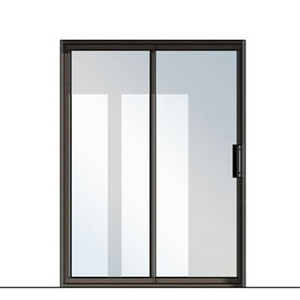
Partition Aluminium Fiber Glass Exterior Sliding Door System
Request Specifications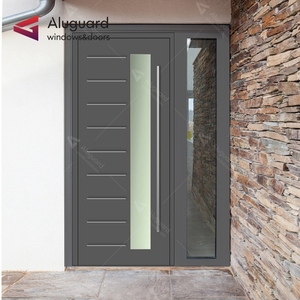
Luxury Minimalist Villa Entrance Aluminium Fibreglass Entry Door
Request Specifications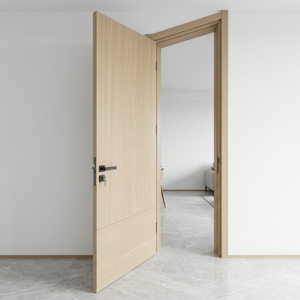
Fire-Resistant Rated Aluminium Alloy Door with Fiberglass Finish
Request Specifications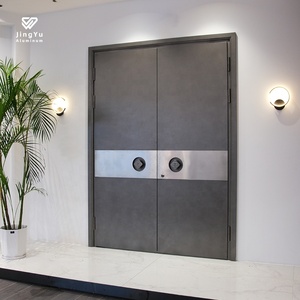
Modern Aluminium Front Entry Door with Triple Insulated Glass
Request Specifications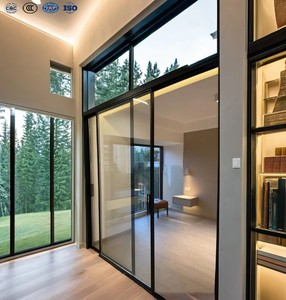
Minimalist Aluminium Partition Door with Soundproof Fiberglass
Request SpecificationsThe Strategic Rise of Hybrid Aluminium-Fiber Systems in Italy
How structural aluminium extrusions integrated with high-performance fiberglass composites are redefining fenestration standards across Italian residential and commercial developments.
The Italian architectural and construction sector is experiencing a monumental transition driven by stringent European Union environmental mandates, evolving aesthetic preferences, and strict thermal insulation regulations. Italy's adoption of the Energy Performance of Buildings Directive (EPBD) "Case Green" initiative requires structural retrofitting and high-efficiency building envelopes across historical villas, urban apartment blocks in Milan, and coastal resort complexes in Liguria and Sicily. Within this regulatory climate, traditional timber fenestration faces durability challenges, while conventional PVC lacks the structural integrity required for large-format modern apertures.
As a specialized manufacturer and global exporter, Meric Window Systems Co., Ltd. supplies advanced structural Aluminium Fiber Door Systems engineered specifically for Italian building requirements. By combining high-tensile 6063-T5 aluminium alloy extrusions with high-density fiberglass reinforced polymers (FRP/GRP) and polyamide (PA66) thermal breaks, our systems achieve an unprecedented balance of mechanical strength, ultra-slim sightlines, structural longevity, and exceptional thermal resistance ($U_w$ values easily reaching under $1.0 \text{ W/m}^2\text{K}$).
Why Aluminium-Fiber Technology Superiorly Outperforms Legacy Fenestration Materials
Italian architectural design demands minimal sightlines to maximize natural daylight (illuminanza naturale) without compromising energy rating requirements across diverse climatic zones (Zone A through Zone F). Standard aluminium doors, while mechanically robust, traditionally exhibited higher thermal conductivity if not properly insulated. Conversely, fiberglass composites boast extremely low thermal conductivity ($\approx 0.3 \text{ W/mK}$) and low linear expansion coefficients ($\alpha \approx 8 \times 10^{-6}/\text{K}$), matching float glass properties and preventing frame warping caused by dramatic temperature swings in Alpine or Mediterranean climates.
Structural Rigidity & Slim Profiles
Our 6063-T5 aluminium alloy profiles allow narrow interlocks down to 20mm, supporting massive glass panels up to 2.5m wide and 4m tall without structural deflection under Italian EN 12210 wind load parameters.
Thermal Integrity & Condensation Prevention
Multicellular PA66 polyamide thermal breaks infused with high-grade structural fiberglass layers eliminate thermal bridging, preventing interior surface condensation during harsh northern Italian winters.
Engineering Comparison: Aluminium Fiber Door Systems vs. Standard Market Alternatives
To assist Italian architects, general contractors, and trade importers in specifying the correct door configurations for commercial tender documents, the technical parameters below outline the performance metrics of Meric Window Systems' exported products.
| Performance Metric | Meric Aluminium Fiber Systems | Standard Thermal Break Aluminium | High-End Structural Wood | Standard Multi-Chamber PVC |
|---|---|---|---|---|
| Thermal Transmittance ($U_w$) | 0.85 – 1.10 W/m²K | 1.40 – 1.80 W/m²K | 1.20 – 1.50 W/m²K | 1.30 – 1.60 W/m²K |
| Acoustic Insulation ($R_w$) | 38 dB – 45 dB | 32 dB – 38 dB | 35 dB – 40 dB | 30 dB – 35 dB |
| Interlock Sightline Width | 20mm – 35mm (Ultra-Slim) | 50mm – 85mm | 90mm – 120mm | 80mm – 110mm |
| Saline Corrosion Resistance | Qualicoat Class 2 / Marine Anodized | Standard Powder Coat | Poor (Requires Frequent Varnishing) | Moderate (Discolors Under UV) |
| Fire Rating Compliance | EI30 / EI60 (EN 16034 Rated) | Non-Fire Rated Standard | Combustible (Needs Coating) | Melts under high heat |
| Expected Service Life | 50+ Years (Zero Maintenance) | 25–30 Years | 15–20 Years (High Upkeep) | 15–20 Years |
Localized Architectural Application Scenarios in Italy
From Tuscan countryside restorations to high-exposure Tyrrhenian coastlines, our specialized systems cater precisely to regional Italian architectural challenges.
1. Modern Residential Upgrades in Lombardy & Veneto (Milan & Verona)
Challenge: Urban residential redevelopments demand strict compliance with acoustic isolation (UNI EN ISO 717-1) against city traffic while maximizing daylight in compact building footprints.
Solution: Our Minimalist Invisible Aluminium Frame Partition Doors with Integrated Soundproof Fiberglass provide seamless acoustic separation ($R_w > 42 \text{ dB}$) between living areas and exterior balconies while maintaining ultra-clean, flush aesthetic alignments favored by Milanese interior designers.
2. Coastal Luxury Villas in Liguria, Sardinia & the Amalfi Coast
Challenge: Salt spray, humidity, and intense summer sun cause oxidation, pitting, and frame expansion on standard metallic entryways.
Solution: Meric's Exterior White Aluminium Pivot Doors and Sliding Systems are treated with Qualicoat Class 2 fluorocarbon/powder finishes and Marine-Grade anodization. Combined with non-corrosive fiberglass mesh netting, they withstand severe marine environments without surface degradation.
3. Rustic Villa Conversions & Heritage Estates in Tuscany & Umbria
Challenge: Blending modern thermal efficiency with historic architectural guidelines (Soprintendenza Archeologia, Belle Arti e Paesaggio).
Solution: Custom-finished Aluminium Fiber Folding and Patio Doors feature custom anodized bronze or textured matte finishes, custom glazing bars, and high-impact fiberglass screens that deliver $U_w < 1.0 \text{ W/m}^2\text{K}$ performance while respecting local heritage aesthetics.
4. Alpine Chalets & Resorts in Trentino-Alto Adige & Aosta Valley
Challenge: Severe winter freezing, heavy snow loads (Class C5 wind/load endurance), and large thermal differentials between indoor heated spaces and sub-zero outdoor weather.
Solution: Heavy-duty Triple-Insulated Glass Lift & Slide Doors with Structural Polyamide Fiber Thermal Breaks. The continuous structural fiberglass inserts absorb thermal stress, eliminating freeze-thaw frame distortion.
Regulatory Landscape & Market Trends Driving Italian B2B Demand
Navigating fenestration supply chains into Italy requires strict adherence to European Union standards and Italian national building legislation. Importers, distributors, and general contractors cannot risk non-compliant materials that fail municipal building inspections or disqualify property owners from tax incentives.
UNI 11673 Installation Compliance
Italian regulations mandate seamless thermal seal continuity during door frame installation. Our profiles feature dedicated internal gasket tracks designed specifically for expansion foam tapes, liquid membranes, and structural EPDM seals to achieve certification.
Superbonus & Casa Green Incentives
Property renovations in Italy rely on thermal transmittance values ($U_w$) meeting region-specific climate thresholds (Zone A to Zone F). Meric's insulated aluminum fiber doors comply directly with maximum allowed thermal transmittances down to $U_w = 0.90 \text{ W/m}^2\text{K}$.
CE Marking & Mandatory EN 14351-1
All exported product series undergo factory production control (FPC) and carry official Declaration of Performance (DoP) documentation for air permeability (EN 12207), watertightness (EN 12208), and resistance to wind load (EN 12210).
Why Italian Importers & Contractors Partner with Meric Window Systems
A direct manufacturer built upon engineering precision, strict quality assurance, and seamless international project delivery.
1. Vertical Integration & In-House CNC Precision Fabrication
From primary alloy extrusion of 6063-T5 aluminium to automated CNC profile cutting, corner crimping, and automated gasket installation, Meric manages the entire manufacturing chain under ISO 9001 certified protocols. This ensures sub-millimeter dimensional tolerances across every custom door schedule.
2. Premium International Hardware Compatibility
Recognizing the hardware preferences of Italian installers, our profile systems are engineered to integrate seamlessly with European standard groove (Euro-groove) hardware, including Italian top-tier brands such as Savio, Giesse, AGB, and Master, as well as German Siegenia and GU hardware options.
3. Comprehensive Pre-Shipment Quality Inspection (100% Verified)
Prior to crating, every door unit is fully assembled on our factory test frames to verify smooth roller glide, multi-point lock engagement, corner seam integrity, and diagonal squareness. Complete photo and video inspection reports are provided to our Italian partners prior to loading.
4. Export-Grade Protective Packaging for Ocean Transit
Shipping fenestration to major Italian ports like Genoa, Livorno, Venice, and Naples requires reinforced protection. Finished units are wrapped in peelable protective surface film, fitted with impact-resistant corner guards, insulated with thick foam cushioning, and secured within ISPM-15 compliant heat-treated fumigated wooden crates or steel transport racks.
Frequently Asked Questions by Italian B2B Procurement Managers
Clear technical details covering logistics, structural customization, compliance testing, and ordering workflows.
Fiberglass serves a dual role: structurally, embedded fiberglass composite plates reinforce profile thermal breaks, preventing profile warping caused by intense temperature variations between internal heating and external Mediterranean heat. Secondarily, our integrated insect screen netting utilizes ultra-durable PVC-coated fiberglass mesh, providing high tear resistance, high optical transparency, and excellent ventilation.
Yes. For colder regions in northern Italy (Zone E like Milan/Turin and Zone F in Alpine areas), we supply triple-glazed units featuring Warm Edge spacers, double Low-E coatings, and Argon gas filling ($90\%+$ concentration). This enables total door assembly thermal transmittance ($U_w$) to reach down to $0.85 \text{ W/m}^2\text{K}$, comfortably surpassing the strict legislative limit of $1.0 \text{ W/m}^2\text{K}$.
We supply a comprehensive export dossier with every shipment, including: CE Marking Declaration of Performance (DoP) under EN 14351-1, raw material mill test certificates for 6063-T5 aluminium, glass safety certificates (EN 12150 tempered glass), packed commercial invoices, packing lists matching your site window schedule, and ISPM-15 wooden crate fumigation certificates.
We work under flexible Incoterms including FOB, CIF, or DDP (Delivered Duty Paid) to all primary Italian ports including Genoa, Livorno, Venice, La Spezia, and Naples. Our logistics team handles container stowage optimization to prevent freight movement during ocean transit.
Yes. Our oversized external pivot doors up to 2.5m wide feature fully integrated concealed motorization options, electric strike locks, keyless keypad access, finger-print identification, and smart home automation compatibility (e.g., Somfy, KNX interfaces).
Partner with a Leading Aluminium Fiber Door Manufacturer
Whether you are sourcing for a luxury villa project in Lake Como, a hotel renovation in Amalfi, or commercial imports for regional distribution across Italy, our engineering team is ready to analyze your drawings and provide a competitive factory-direct quote.
Send an Inquiry