Engineered Aluminum Swing & Panoramic Systems for South American Projects
Explore our flagship export-ready aluminum swing windows, casement systems, and thermal break sliding doors optimized for Argentina's distinct bioclimatic zones—from the humid Pampas to wind-swept Patagonia.
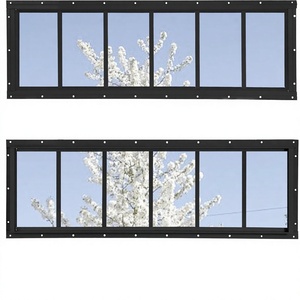
Windproof Hurricane Impact Aluminum Alloy Flush Single Double Glass Swing Windows with Transom
Contact Us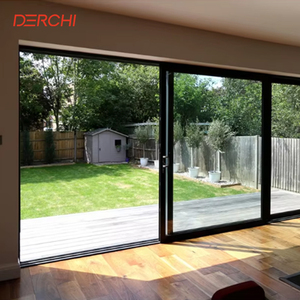
Residential House Sliding Panoramic Tempered Low-E Glass Metal Door Patio System
Contact Us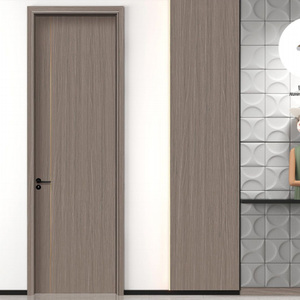
Modern Inlaid Metal Line Full Aluminum Interior Swing Door with Honeycomb Core & Wood Grain Finish
Contact Us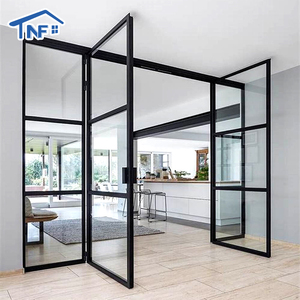
Modern Interior Aluminium Glass Arched French Doors NFRC Casement Swing System
Contact Us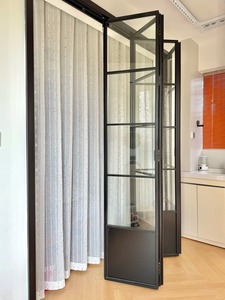
Professional Customized Soundproof Aluminum Glass Doors for Hotel & High-End Villa Use
Contact Us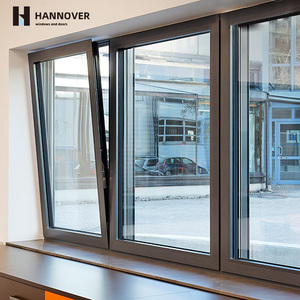
Passive House Standard Double Glazed Casement Swing Window Thermal Break Aluminum System (Uw < 0.8)
Contact Us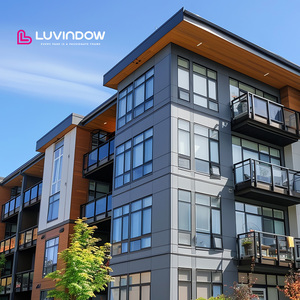
High Performance Thermal Break Aluminum Double Glazed Soundproof Swing Windows for Urban Apartment Projects
Contact Us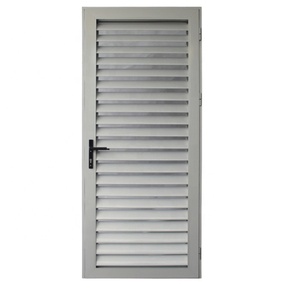
Aluminum Swing Windows and Fixed External Aluminum Louvres Hurricane Proof System Package
Contact UsEngineering High-Performance Aluminum Swing Windows for the Argentine Built Environment
In contemporary South American architecture—particularly within Argentina's rapidly evolving commercial and luxury residential sectors—the window profile is no longer viewed merely as a passive daylight opening. It is a critical structural element responsible for building energy envelope conservation, structural integrity under extreme wind loads, and acoustic isolation. As premier B2B direct manufacturers of advanced fenestration systems, Meric Window Systems Co., Ltd. engineered this comprehensive technical guide to assist architects, structural consultants, real estate developers, and façade importers across Argentina (Buenos Aires, Córdoba, Rosario, Mendoza, and Bariloche) in specifying precision-built aluminum swing windows (ventanas de batiente y oscilobatientes).
Information Gain Note: Beyond Basic Profiles
Unlike legacy sliding systems (líneas tradicionales de aluminio) which exhibit inherent perimeter seal vulnerabilities under differential air pressure, side-hinged swing and tilt-and-turn systems utilize compression gasket dynamics. When closed, multi-point gear locking pins pull the sash sash firmly against continuous EPDM seals, eliminating up to 98% of perimeter air infiltration.
1. Compliance with Argentine National Standards: IRAM 11507 Benchmark Analysis
For building products entering the Argentine Republic, adherence to local testing protocols governed by IRAM (Instituto Argentino de Normalización y Certificación) is essential. Structural engineers in Buenos Aires and Southern Patagonia consistently require window schedules to fulfill IRAM 11507-1 (Airtightness), IRAM 11507-2 (Watertightness), and IRAM 11507-4 (Thermal Performance in Buildings).
- Airtightness Classification (IRAM 11507-1): Our aluminum swing windows achieve Class A3 performance (air permeability < 1.5 m³/h·m² at 100 Pa test pressure). This is achieved through dual-compound co-extruded EPDM weatherstripping along both the frame rebate and sash perimeter.
- Watertightness Rating (IRAM 11507-2): In coastal zones like Mar del Plata or high-exposure river basins along the Paraná, driving rain generates severe hydrostatic pressure. Our systems utilize pressure-equalized drainage cavities with dynamic outer baffle caps, certified to withstand water entry up to Class P5 (600 Pa).
- Wind Resistance Dynamics (IRAM 11507-3): Structural deflection limits under peak wind speeds. Meric's heavy-duty 6063-T5 aluminum extrusions feature internal structural reinforcement chambers capable of resisting wind pressures exceeding 3,500 Pa (Class V5), satisfying the rigorous demands of Patagonian mountain gusts and high-rise developments in Puerto Madero.
Technical Matrix: Meric Thermal Break Swing Window vs. Standard Market Alternatives
| Performance Metric | Standard Non-Thermal Aluminum | PVC Swing Windows | Meric Thermal Break Swing System |
|---|---|---|---|
| Structural Alloy / Material | Recycled Al 6063 (T4) | Unreinforced uPVC | Primary 6063-T5 Architectural Aluminum |
| Thermal Transmittance (Uw) | 5.8 – 6.2 W/m²K | 1.8 – 2.4 W/m²K | 0.79 – 1.4 W/m²K (Low-E Double/Triple IGU) |
| Thermal Barrier Material | None (Solid Profile) | Internal Air Chambers | 24mm – 34mm Polyamide PA66 GF25 Strip |
| Acoustic Isolation (Rw) | 22 – 26 dB | 32 – 36 dB | 42 – 48 dB (Acoustic Laminated Double IGU) |
| Frame Sightline Thickness | 65mm – 95mm | 110mm – 140mm (Bulky) | 28mm – 45mm (Ultra-Narrow Sightlines) |
| Max Sash Weight Capacity | 45 kg | 80 kg | 180 kg per sash (Heavy-Duty German Friction Stays) |
2. Microclimate Engineering: Tailoring Systems across Argentina’s Bioclimatic Zones
Argentina possesses one of the world's most diverse geographical thermal distributions, spanning from sub-tropical environments in the North to sub-Antarctic conditions in Tierra del Fuego. A standardized window frame cannot perform optimally across all these regions without custom glazing and profile configuration.
Zone A: Metropolitan Buenos Aires & Rosario (Humid Temperate & High Acoustic Stress)
In urban dense centers like the Autonomous City of Buenos Aires (CABA) and Rosario, real estate projects face two main challenges: high summer humidity combined with extreme urban noise pollution. Legacy single-pane or basic sliding aluminum windows fail to damp low-frequency traffic rumble. Meric’s acoustic-rated swing windows incorporate asymmetrical double glazing (e.g., 6mm Toughened + 12mm Argon Cavity + 8.38mm Sound Acoustic Interlayer Laminated Glass) paired with multi-point perimeter locks. This setup achieves up to 48 dB sound dampening, creating serene indoor sanctuaries along busy avenues like Avenida 9 de Julio or Avenida Libertador.
Zone B: Patagonia & Southern Andes (Extreme Thermal Demands & High Gusts)
In Bariloche, Ushuaia, and San Martín de los Andes, winter temperatures drop far below freezing while fierce westerly winds generate continuous structural stress. Standard window frames act as thermal bridges, resulting in severe interior condensation, frame icing, and high HVAC heating energy consumption. Our Passive House compliant thermal break swing series utilizes imported 34mm Technoform Polyamide PA66 GF25 insulating struts, filled with high-density polyurethane (PU) foam cores. When combined with triple-pane Low-E glass units containing warm-edge spacers, overall frame thermal transmittance drops to Uw < 0.8 W/m²K, eliminating condensation risks and cutting heating loss by up to 65%.
Zone C: Cuyo Region - Mendoza & San Juan (High Solar Radiation & Seismic Activity)
In the wine capital of Mendoza and adjacent agricultural estates, intense solar ultraviolet (UV) radiation accelerates paint degradation, while high daily temperature fluctuations cause thermal expansion stresses in window frames. Meric uses 100% virgin 6063-T5 aluminum extrusions finished with AkzoNobel or PPG QUALICOAT Seaside Class 2 architectural powder coatings. These electrostatically applied coatings withstand intense solar degradation without chalking or fading for over 25 years. Furthermore, our friction hinges and corner crimped joints incorporate internal stainless-steel corner cleats, preventing frame rack and sag during thermal cycles or minor seismic movements.
Where Meric Aluminum Swing Systems Excel in Argentina
Versatile architectural integrations engineered for luxury residential, commercial, and hospitality sector requirements.
Luxury Gated Estates (Barrios Privados)
Widely specified in private developments across Nordelta, Pilar, and Córdoba Hills. Featuring full-height floor-to-ceiling aluminum swing french doors and turn windows with integrated tilt functionality for safe overnight ventilation without compromising security.
High-Rise Residential Towers
Designed for urban mid-to-high-rise residential developments in Puerto Madero and Rosario waterfront. Structural heavy-mullion swing windows handle extreme upper-floor wind pressure loads while providing tilt-in access for effortless interior glass cleaning.
Boutique Hotel & Vineyard Resorts
Tailored for hospitality developments along the Mendoza Wine Route and Southern Lake District. Ultra-narrow sightlines maximize panoramic views, while specialized weather sealing keeps dust, sand, and mountain winds completely outside guest suites.
Why Leading Argentine Developers Partner Directly with Meric Window Systems
Importingfenestration packages into South America requires a manufacturing partner with strong technical capabilities, transparent quality assurance, and experienced export logistics capabilities. Meric Window Systems Co., Ltd. operates a state-of-the-art 35,000 square meter automated manufacturing facility equipped with German CNC double-head cutting saws, automated corner crimping centers, and robotic gasket insertion lines.
100% Pre-Shipment Testing
Every batch of swing windows undergoes factory water chamber testing and air infiltration validation prior to container loading. Test certificates are issued with detailed window schedules.
Custom Packaging Protection
Windows are encased in peel-off protective films, corner plastic guards, thick PE foam wrapping, and secured inside steel-reinforced plywood crates designed to resist ocean container humidity.
Shop Drawing Support
Our dedicated bilingual structural engineering team collaborates with your local architect to generate comprehensive AutoCad shop drawings, wind load calculations, and anchor detailing.
3. Argentina Import Logistics & Trade Compliance (SEDI / Customs Procedures)
Navigating maritime shipments into Argentine ports such as Buenos Aires (Puerto Nuevo / Dock Sud) or Zarate requires strict operational accuracy regarding documentation. Our export department works closely with Argentine customs brokers (despachantes de aduana) to prepare all commercial invoices, packing lists with individual item labeling, certificates of origin, and bill of lading (B/L) descriptions aligned with local SEDI import registrations.
Whether you are importing under FCL (Full Container Load) for large residential towers or LCL (Less than Container Load) for private villa construction, Meric provides structured unit tagging. Each crate and window unit is marked with the corresponding architectural elevation tag matching your project window schedule, simplifying on-site handling for local installation crews.
Argentine Procurement & Technical Specification FAQ
Clear answers addressing technical specifications, logistics, hardware customization, and regional compliance for window procurement.
Q1 How do Meric aluminum swing windows comply with Argentine IRAM standards?
Our swing windows are manufactured to exceed IRAM 11507 performance standards for airtightness (Class A3), watertightness (Class P5), and structural wind load resistance (Class V5). We utilize primary 6063-T5 aluminum extrusions, PA66 polyamide thermal breaks, and multi-point hardware systems that seal tightly under high wind pressure. Factory test reports are provided during shop drawing approval.
Q2 What is the recommended glazing specification for windows in Patagonia vs. Buenos Aires?
For Patagonia (Bariloche, Neuquén, Tierra del Fuego), we recommend double or triple-glazed units with double Low-E coatings, argon gas fill, and warm-edge spacers to achieve a thermal transmittance of Uw ≤ 0.8 to 1.1 W/m²K. For urban Buenos Aires, we recommend asymmetric double glazing with acoustic laminated glass (e.g., 6mm Low-E + 12A + 4.4.2 Sound Acoustic Laminated) to prioritize sound attenuation (Rw ≥ 42 dB) and solar heat control.
Q3 What are the standard production and container shipping lead times to Argentina?
Typical factory manufacturing time for customized architectural project packages is 25 to 35 calendar days following final CAD shop drawing sign-off and deposit receipt. Ocean transit time from our main port directly to Buenos Aires (Puerto Nuevo) generally ranges from 35 to 45 days. We provide comprehensive tracking and shipment milestone updates throughout transit.
Q4 Can Meric supply custom colors and anodized finishes suitable for coastal salt corrosion?
Yes. We offer complete customization using RAL architectural powder coatings certified by QUALICOAT (including Seaside Class 2 for high salinity areas like Mar del Plata or Pinamar), as well as anodized finishes up to 25 microns (Anodized Class 25). Micro-textured matte finishes, anodized metallic bronzes, and dual-color profiles (different interior and exterior colors) are fully supported across all swing window lines.
Q5 Why choose swing / casement opening mechanisms over traditional sliding window profiles?
Sliding windows rely on brush weatherstripping, which inherently permits micro air leakage, dust infiltration, and sound penetration along the track rails. In contrast, swing windows (ventanas de batiente) press continuous rubber EPDM gaskets tight against the frame upon closure via multi-point locking cams. This produces significantly higher thermal insulation, superior watertightness against heavy rainstorms, and much stronger acoustic performance.
Request a Comprehensive Engineering Review & Project Quotation
Send your architectural drawings, window schedules, or project specifications directly to our senior structural engineers. We provide CAD shop drawings, U-value estimations, and factory-direct pricing tailored for your developments in Argentina.
Contact Us