Certified High-Performance Aluminium Window & Door Systems
Explore our export-ready architectural profiles manufactured specifically for New Zealand residential, commercial, and multi-unit development projects.
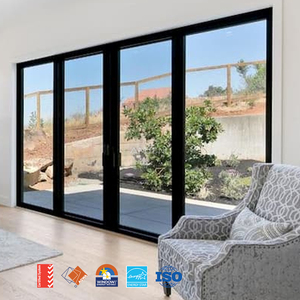
AMJ AS2047 Australian Pocket Stacker Windows & Doors Commercial Panoramic Sliding Doors
Inquire Now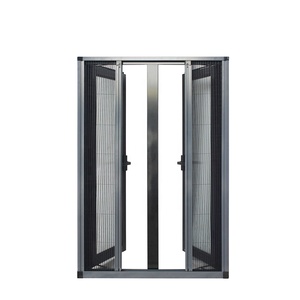
High-Impact Resistance Aluminum Glass Hinged Exterior Doors with Integrated Mesh Screen
Inquire Now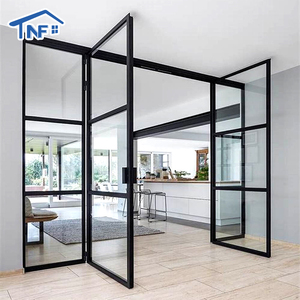
Modern Architectural Aluminium Glass Arched French Doors & NFRC Casement Systems
Inquire Now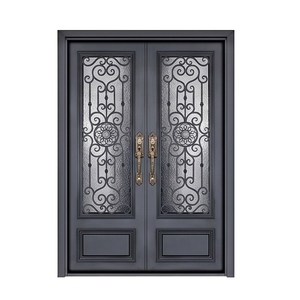
European Dark Grey Decorative Cast Aluminum Art Glass Double Front Entry Doors
Inquire Now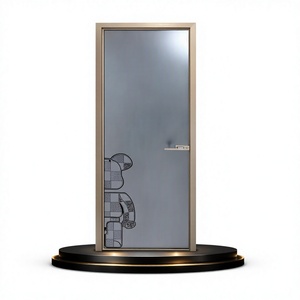
Frosted Glass Sliding Partition System 60mm Ultra-Slim Frame Interior Divider
Inquire Now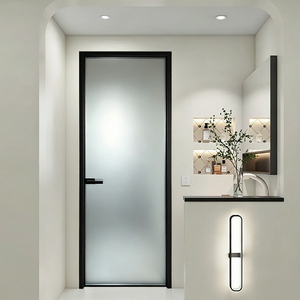
Customizable Aluminium Frame Sanded Frosted Glass Interior & Utility Door Units
Inquire Now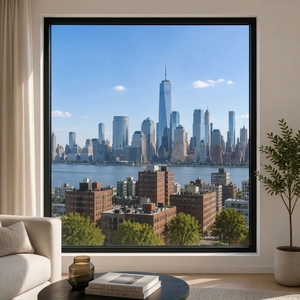
Fixed Panel Thermal Break Double Glazed Aluminum Louver Invisible Picture Windows
Inquire Now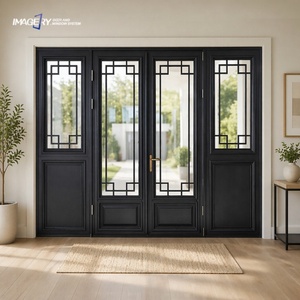
Architectural Aluminium Double Casement Glazed Doors with Integrated Internal Grilles
Inquire NowExecutive Summary: Sourcing Chinese Aluminium Tilt & Turn Windows for New Zealand Infrastructure
The New Zealand building sector is undergoing a structural transformation driven by the stringent updates to the New Zealand Building Code (NZBC) Clause H1 (Energy Efficiency). With construction projects requiring significantly enhanced thermal resistance values (minimum R-value thresholds elevated to R0.46 m²K/W for residential housing across Climate Zones 1 through 6), traditional single-glazed or basic non-thermally broken aluminium framing systems have become completely obsolete.
For New Zealand property developers, structural engineers, architects, and window importers, sourcing high-performance Aluminium Tilt & Turn Windows from elite Chinese export manufacturers presents a high-gain strategic advantage. By pairing state-of-the-art European automated extrusion technology with Chinese manufacturing scale, key exporters deliver thermal-break systems that effortlessly meet and exceed AS/NZS 2047 (Windows and external glazed doors in buildings) and NZS 4211 (Specification for performance of windows) at competitive wholesale cost points.
Technical Insight for NZ Specifiers: Meric Window Systems Co., Ltd. integrates German-engineered Technoform Polyamide PA66 GF25 thermal break strips and multi-chamber extruded profiles to eliminate cold bridging, effectively controlling internal dew-point condensation—a critical requirement in humid, ocean-influenced New Zealand microclimates such as Auckland and Northland.
Localized Engineering Challenges in the New Zealand Market
Building envelopes in New Zealand must endure some of the most aggressive environmental pressures on earth: high atmospheric ultraviolet (UV) radiation due to thin atmospheric ozone, severe maritime salt-spray corrosion along extensive coastlines, intense seismic activity requiring dynamic structural flexibility, and localized wind pressures that frequently reach Extra High (EH) and Specific Design (SED) wind zones under NZS 3604.
NZBC H1 Energy Compliance
Under H1/AS1 5th Edition requirements, window systems must maintain low overall thermal transmittance (U-value ≤ 1.9 W/m²K, equivalent to R-values ≥ 0.52 m²K/W depending on frame-to-glass ratio). Our tilt & turn windows utilize 24mm to 34mm multi-cavity polyamide thermal barriers combined with double/triple Low-E argon-filled IGUs to satisfy all NZ climate zones.
Severe Maritime Salt Protection
Coastal environments within 500 meters of sea spray zones (e.g., Wellington Harbour, Bay of Plenty) require high-grade surface passivation. We utilize Qualicoat Seaside Class 2 powder coatings (60-80 microns thick) and anodized surface finishes exceeding 25 microns, alongside marine-grade 316 stainless steel hardware components.
Seismic & Structural Integrity
Designed to accommodate inter-story drift during seismic events in active fault lines across Wellington and Christchurch. Reinforced corner crimping, structural silicone bonding, and heavy-duty 6063-T5 aluminium alloy frame walls (up to 2.2mm thickness) prevent frame racking and preserve weather-tight sealing.
Technical Performance Matrix: Tilt & Turn vs. Traditional NZ Window Profiles
Architects and project engineers evaluating facade packages for commercial multi-family residential towers or high-end luxury villas can review the comparative structural and energy data table below.
| Performance Standard / Metric | Meric Thermal Tilt & Turn | Standard NZ Awning Window | Standard Aluminium Sliding Window | Compliance Reference |
|---|---|---|---|---|
| Overall System R-Value (m²K/W) | R0.48 - R0.62 (High Thermal Pass) | R0.33 - R0.40 (Borderline H1) | R0.26 - R0.35 (Non-Compliant H1) | NZBC H1 / AS/NZS 4218 |
| Wind Pressure Resistance (Pa) | Up to 3000 Pa (Extra High / SED) | 1500 - 2000 Pa (High / Very High) | 1200 - 1600 Pa (Medium / High) | NZS 4211 / AS/NZS 2047 |
| Water Penetration Resistance (Pa) | 600 - 900 Pa (Triple EPDM Gasket) | 300 - 450 Pa | 150 - 300 Pa (Brush Seal Risk) | NZS 4211 Test Procedure |
| Air Infiltration Rate (L/s·m²) | < 0.1 L/s·m² (Airtight Pressure Seal) | 0.5 - 1.0 L/s·m² | 1.5 - 3.0 L/s·m² | ASTM E283 / AS 2047 |
| Acoustic Insulation Rating (Rw) | Rw 38 - 44 dB (Double/Laminated) | Rw 28 - 32 dB | Rw 25 - 30 dB | ISO 717-1 / NZBC G6 |
*Values subject to exact IGU specification (e.g., 6mm Low-E + 16Ar + 6mm Toughened Glass Matrix) and profile frame depth (70mm - 90mm series).
Localized Architectural Application Scenarios Across New Zealand
Our engineered tilt and turn window configurations are custom-built to resolve site-specific environmental conditions across New Zealand's distinct geological and meteorological zones.
Subtropical Moisture & High-Density Urban Living
Auckland’s rapid high-density urban development demands superior acoustic isolation from traffic noise along highway corridors (e.g., State Highway 1) combined with effective ventilation. The micro-tilt mode permits continuous 24-hour background ventilation, discharging indoor humidity without letting in wind-driven sub-tropical rainfall or compromising security.
Alpine Freezing Conditions & High Solar Radiation
Central Otago experiences severe winter frosts with temperatures plunging below sub-zero levels, contrasted by harsh summer sunlight. Our dual-break 90mm window series, outfitted with argon gas filled triple-pane Low-E glazing, prevents thermal loss, eliminates room draughts, and resists structural timber framing thermal movement.
Extreme Wind Gusts & Salt Spray Resistance
Known for heavy wind funnels through the Cook Strait, Wellington buildings require windows capable of handling extreme cyclic pressure loading. Meric’s multi-point locking gearboxes engage up to 8 locking points around the perimeter frame, compressing the continuous EPDM rubber seals into a hermetic barrier against gale-force driving rain.
Seismic Resilience & Modern Reconstruction
Rebuilding projects in Christchurch require certified structural performance under seismic load parameters. Frame corner joints engineered with injected dual-component corner adhesive and heavy gauge corner keys ensure dynamic flexible memory without glass edge contact or frame cracking.
Manufacturing Rigor: Meric Window Systems Factory Process
As one of China’s top aluminium window manufacturing facilities and direct exporters, Meric Window Systems Co., Ltd. operates under strict ISO 9001 quality management protocols to ensure zero-defect delivery for ocean shipping packages destined for New Zealand ports.
Shop Drawing & PS1 Review
Detailed CAD/BIM elevation drawings and structural load calculations reviewed for compliance with local engineering specs.
Precision CNC Milling
German 5-axis CNC machining centers drill, slot, and miter aluminium profiles with zero-tolerance precision.
Thermal Strip Crimping
Mechanical knurling and polyamide strip insertion validated with shear strength tensile testing.
Mockup Air/Water Test
In-house chamber testing for air tightness, water tightness, and structural deflection prior to mass assembly.
Export Crate Packing
Units wrapped in protective film, heavy foam corner blocks, and sealed in fumigated steel-reinforced wooden crates.
Direct Container Freight Service available to Port of Auckland, Port of Tauranga, Lyttelton (Christchurch), and Wellington with comprehensive customs clearance documentation (Certificate of Origin, Bill of Lading, Glazing Test Certificates).
Frequently Asked Questions by New Zealand Buyers
Direct answers regarding certification, logistics, compliance documentation, and hardware specifications.
Yes. We work closely with independent New Zealand registered Chartered Professional Engineers (CPEng) to provide project-specific PS1 producer statements, structural calculations, and glass compliance certificates required by local District Councils (such as Auckland Council, Wellington City Council, or Christchurch City Council) for Building Consent approval.
All glass units exported to New Zealand are processed using grade-A safety toughened or laminated glass stamped with certified compliance marks matching AS/NZS 2208:1996 standards. Test certificates from accredited laboratories (such as Intertek or SGS) are included in every shipment document package.
We strictly utilize primary 6063-T5 or T6 grade extruded virgin aluminium. For coastal environments within 500 meters of the ocean, we recommend surface finishes certified under Qualicoat Seaside Class 2 powder coating or minimum 25-micron high-density anodizing to prevent salt-corrosion pitting.
We integrate premium German hardware systems such as Siegenia, Roto Frank, or HOPPE concealed hinges and multi-point locking gearboxes. These mechanisms are tested for over 25,000 continuous opening cycles and offer severe weather sealing alongside multi-stage micro-ventilation capabilities.
Production and shop drawing sign-off typically take 25 to 30 days depending on custom powder coating colors and project volume. Ocean shipping from China ports (Ningbo/Shanghai/Shenzhen) to Auckland or Christchurch takes approximately 14 to 20 transit days, allowing a total project window of around 6 to 8 weeks.
Request a Technical Quote & Profile Sample Kit
Partner with China’s premier window export manufacturer. Send your architectural window schedule or CAD drawings today for a rapid, engineering-backed quotation compliant with NZBC H1 standards.
Inquire Now