High-Performance Aluminum Systems Supplied to Japan
Engineered with thermal breaks, structural lamination, and heavy-duty hurricane wind load resistance.
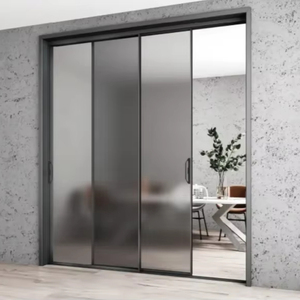
Minimalist Aluminum Alloy Sliding Doors for Houses, Interior Doors for Houses with Frames, Suitable for Apartment Hotel
Get a Quote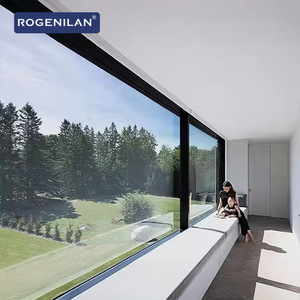
Rogenilan Modern Large Panoramic Fixed Picture House Window Double Tempered Glazed Casement Windows for Houses
Get a Quote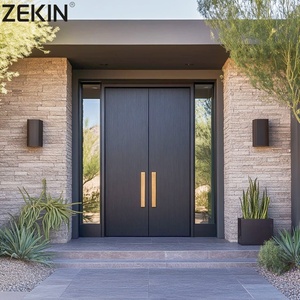
ZEKIN Aluminum Double House Front Entry Luxury Glass Door Anti-theft Front Entry Double Exterior Doors Double Entry Door
Get a Quote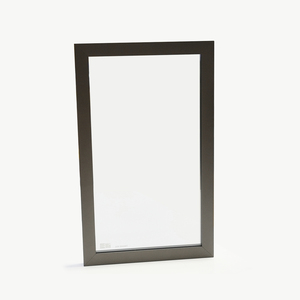
Air Smart 4mm Tempered Glass, Base Frame, Handle-Less Design Kitchen Aluminium Glass Cabinet Door
Get a Quote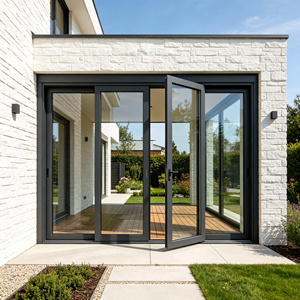
120 Series Heavy Duty Aluminum Lift Sliding Door Double Glazed Tempered Glass Large Panel Patio OEM ODM Factory Direct
Get a Quote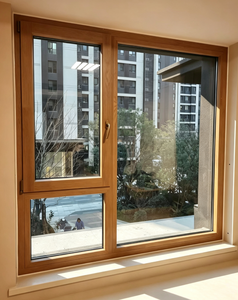
European High Energy Saving Triple Tempered Low-E Aluminum Wood Tilt Turn Windows Heat Insulation Waterproof Exterior Bedroom
Get a Quote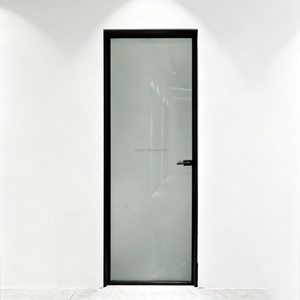
Design The Space Price Of Aluminum Bathroom Flat Door Glass And Other Frosted Glass Doors
Get a Quote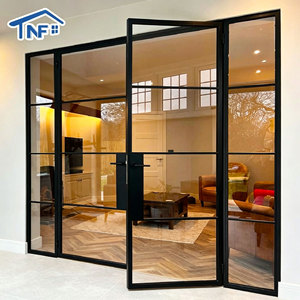
NFRC AS2047 Thermal Break Casement Door Custom Color And Size Double Glazed Swing French Doors Interior And Exterior
Get a QuoteWhite Paper: Engineering China's Top Aluminum Hurricane & Typhoon-Resistant Windows for the Japanese Construction Market
The Japanese architectural landscape presents one of the most demanding environmental and regulatory challenges for structural envelope systems worldwide. Situated directly along the Northwestern Pacific typhoon belt and subjecting coastal regions—such as Okinawa, Kagoshima, Yokohama, and the Tokyo Bay coastline—to violent seasonal weather, Japan demands windows and sliding doors capable of withstanding extreme wind velocities ($V_0$ values exceeding $46\text{ m/s}$ to $62\text{ m/s}$) while satisfying stringent Japanese Industrial Standards (JIS A 4702 and JIS A 4706).
As Japanese general contractors, architectural firms, and real estate developers increasingly seek cost-effective, high-precision supply chains, leading China aluminum hurricane windows factories and suppliers have stepped up to fulfill this demand. By combining state-of-the-art CNC machining, high-tensile 6063-T5/T6 aluminum alloy extrusion, polyamide thermal break integration, and advanced SGP structural laminated glazing, top Chinese OEMs provide turnkey envelope systems tailored explicitly for Japan’s residential (ZEH) and commercial sectors.
Key Takeaway for Importers & Structural Engineers: Standard commercial aluminum profiles often fail under Japan's cyclical wind loads and driven-rain pressures. China's top-tier export suppliers engineer bespoke extrusions featuring reinforced mullion wall thicknesses up to $3.0\text{mm}$, multi-chamber polyamide thermal breaks (PA66 GF25), and dual-seal EPDM gaskets capable of passing S-6 wind load resistance ($\ge 3600\text{ Pa}$) and W-5 watertightness testing ($\ge 500\text{ Pa}$).
1. Technical Specification & Performance Benchmark Matrix
To assist Japanese buyers in evaluating manufacturing standards, the matrix below outlines the baseline parameters engineered by elite Chinese factories compared against standard commercial fenestration offerings.
| Performance Category | Standard Export Window | Hurricane & Typhoon Grade for Japan | JIS Equivalent Standard |
|---|---|---|---|
| Wind Load Resistance ($W_p$) | 1600 Pa – 2400 Pa | 3600 Pa – 5000+ Pa (S-6 to S-7 Grade) | JIS A 4702 S-6 |
| Watertightness ($W_c$) | 250 Pa (Low rain barrier) | 500 Pa – 750 Pa Dynamic Pressure (W-5 Grade) | JIS A 4706 W-5 |
| Air Tightness ($A_c$) | A-2 Grade | A-4 Grade (Permeability < 2.0 m³/h·m²) | JIS A 4706 A-4 |
| Thermal Insulation ($U$-Value) | 2.8 – 3.2 W/m²K | 1.1 – 1.6 W/m²K (Triple Low-E + Argon) | ZEH Standard Ready |
| Aluminum Alloy Profile | 6063-T5 (1.4mm Wall) | 6063-T5 / T6 High Tensile (2.0mm – 3.0mm Wall) | JIS H 4100 |
| Glazing Interlayer | Standard PVB (0.76mm) | SGP (SentryGlas® 1.52mm) Laminated Impact | High Impact Resistance |
| Surface Coating Durability | Standard Powder Coating | Fluorocarbon PVDF / CASS 72h Salt Spray Anodizing | JIS H 8601 / H 8602 |
2. Localized Application Scenarios Across Japan
Japan’s distinct climate zones require customized physical parameters for window and door assemblies. China's top OEM manufacturers customize profile depths, glass specifications, and hardware components according to the precise job site location in Japan:
Scenario A: Okinawa & Southern Islands (Subtropical Severe Typhoon Zone)
In Okinawa and the Amami Islands, wind velocities regularly peak during summer typhoon surges, driving ocean salt spray directly into building envelopes.
Recommended Engineering: Heavy-duty 120 Series Lift & Slide Doors and FW142 Curtain Wall Systems with 2.5mm profile wall thickness, 1.52mm SGP laminated double-tempered Low-E glass, and PVDF 3-coat fluorocarbon surface treatments to completely prevent salt-fog aluminum oxidation.
Scenario B: Tokyo Bay, Yokohama & Osaka Urban High-Rises (Wind Pressure & Acoustic Isolation)
Urban waterfront towers face concentrated aerodynamic wind loads along elevated floors, coupled with urban noise pollution.
Recommended Engineering: European-style Tilt & Turn Windows and Ultra-Narrow Panoramic Fixed Windows equipped with acoustic laminated glass ($D-35$ sound reduction rating) and multi-point perimeter locking hardware designed to absorb dynamic high-rise structural movement.
Scenario C: Hokkaido & Tohoku Regions (Sub-Zero Cold & Coastal Wind Combo)
Northern coastal Japan requires an absolute barrier against freezing ambient temperatures without compromising structural resistance to heavy snowfall and wind.
Recommended Engineering: Triple-glazed insulated aluminum-wood composite tilt-turn units featuring dual polyamide PA66 thermal break strips, warm-edge spacers, and argon gas filling to achieve thermal performance $U \le 1.1 \text{ W/m²K}$.
Key Market Trends Driving Japanese Procurement
Understanding the shift toward zero-energy architecture, minimal visual sightlines, and resilient fenestration.
1. ZEH (Zero Energy House) Compliance
The Japanese Ministry of Land, Infrastructure, Transport and Tourism (MLIT) has accelerated ZEH adoption. Top Chinese suppliers incorporate advanced polyamide thermal breaks to fulfill lower $U$-value thresholds demanded by Japanese energy-saving mandates.
2. Ultra-Narrow Sightline Aesthetics
Modern Japanese architects favor minimalist interior-exterior transitions. System designs like the JW157 Panoramic Sliding Door minimize visible aluminum interlocks to 20mm–26mm while keeping heavy structural load capacity intact.
3. SGP Impact & Seismic Safety
Post-seismic resilience and debris protection are paramount. China factories integrate Kuraray SentryGlas® (SGP) interlayers to ensure glass panels remain structurally glued to frames even when fractured under catastrophic conditions.
Why Leading Japanese Buyers Partner with Meric Window Systems
Combining primary aluminum extrusion precision, advanced CNC engineering, and rigorous international quality assurance.
In-House Profile Extrusion
Direct control over 6063-T5/T6 alloy composition ensures uniform grain structural integrity, preventing frame warping under wind loads up to 5000 Pa.
5-Axis CNC Precision Fabrication
Automated corner crimping, lock recess milling, and drainage channel slotting ensure joint tolerances within ±0.5mm for flawless water seal integrity.
Pre-Shipment Mockup Testing
Every batch undergoes rigorous factory air-water-wind chamber testing, complete with detailed English/Japanese window schedules and crated protection.
Procurement & Engineering Insights for Japanese Buyers
Addressing core technical, compliance, and logistical inquiries from general contractors and importers in Japan.
How do Chinese factory structural calculations conform to Japanese Building Standard Law (BSL)?
Our engineering division calculates structural wind pressure resistance based on Japan's AIJ (Architectural Institute of Japan) formulas and BSL guidelines. We evaluate the project's specific velocity pressure ($q$), wind directionality factors, and regional basic wind speed ($V_0$) to specify profile depth, wall thickness (up to 3.0mm), and internal steel reinforcements. Full calculation sheets can be submitted during architectural drawing approval.
Can your aluminum windows pass JIS A 4702 and JIS A 4706 certification tests?
Yes. Our hurricane and heavy-duty window series are engineered to meet or exceed JIS performance grades: S-6 for wind load resistance, W-5 for watertightness, A-4 for air tightness, and T-3/T-4 for acoustic insulation. Third-party testing documentation (AAMA/ASTM, EN, and JIS equivalent standard reports) is available upon request prior to contract signing.
What surface treatment is best suited for severe ocean salt spray in Japanese coastal regions?
For coastal developments in Okinawa, Tokyo Bay, or Fukuoka, we recommend Fluorocarbon PVDF coating (minimum 3-coat system, ≥ 40 microns) or high-grade Anodized finishes compliant with JIS H 8601. These finishes withstand Copper-Accelerated Acetic Acid Salt Spray (CASS) testing for over 72 hours without blistering, chalking, or edge corrosion.
What glass configurations are used to resist hurricane flying debris and thermal stress?
We typically supply double or triple insulated glass units (IGU) featuring an outer panel of fully tempered Low-E glass, an argon gas cavity, and an inner panel of SGP (Kuraray SentryGlas®) laminated safety glass. SGP interlayers offer 5 times the tear strength and 100 times the stiffness of standard PVB, preventing glass blowout under extreme hurricane pressure spikes.
How are custom window units packaged and shipped to major Japanese ports like Yokohama, Kobe, or Osaka?
Finished window assemblies undergo multi-layer protection: peelable protective film on profiles, rubber corner caps, shock-absorbent foam wrap, and heavy-duty ISPM-15 compliant fumigated wooden crates or steel A-frame racks. Each crate is tagged according to the project’s elevation schedule for effortless site sorting upon arrival at Kobe, Tokyo, Nagoya, or Yokohama ports.
What lead times should Japanese developers plan for custom OEM/ODM orders?
Standard engineering drawing approval takes 5–7 business days. Custom extrusion die fabrication (if required) takes 10–14 days. Production and assembly require 25–35 days depending on project volume. Shipping from coastal Chinese ports (Ningbo/Shanghai/Shenzhen) to main Japanese ports takes only 3–6 ocean transit days, enabling total lead times under 45 days.
Request Engineering Support & Project Quote for Japan
Send your architectural drawings, window schedules, or target performance standards. Our senior structural engineers will review your wind load requirements and supply a comprehensive quotation within 24 hours.