Featured Thermally Broken Aluminum Systems for Export
Engineered to exceed European Union EN 14351-1 standards and tailored for cold climate performance across Poland.
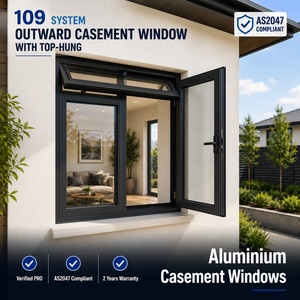
AS2047 Aluminum Casement Windows Compliant Top Hung Waterproof Double Glazed
Send an Inquiry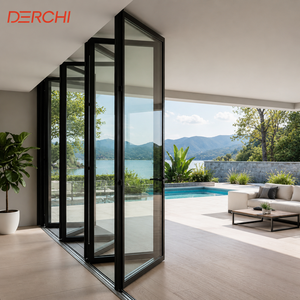
Thermal Break Aluminum Impact Proof Soundproof Exterior Bi Folding Doors
Send an Inquiry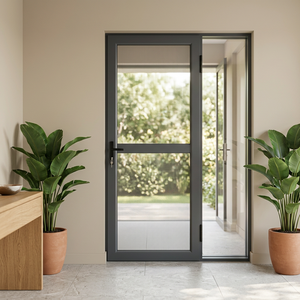
Aluminum Security Screen Door Alu Frame 304 Stainless Steel Diamond Mesh
Send an Inquiry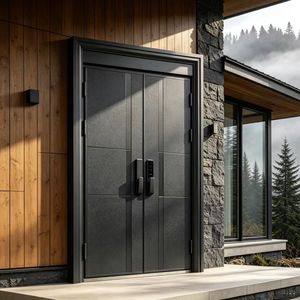
High-End Aluminum Armored Security Door Modern Villa Front Entry Systems
Send an Inquiry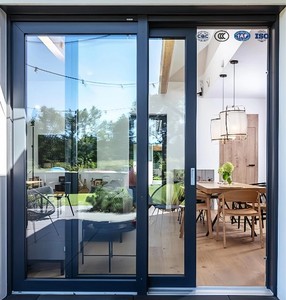
Modern Aluminum Alloy Sliding Windows & Doors With Tempered Glazing
Send an Inquiry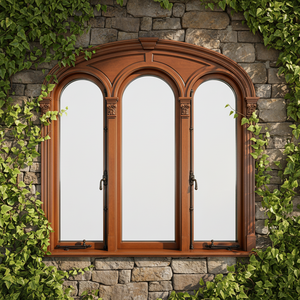
Aluminum-Clad Wood Casement Windows With Integrated Louvers
Send an Inquiry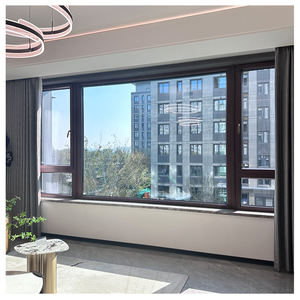
Aluminum-Clad Timber Window PHI EnerPHit Ready Uw≤0.8 W/m²K ROTO Hardware
Send an Inquiry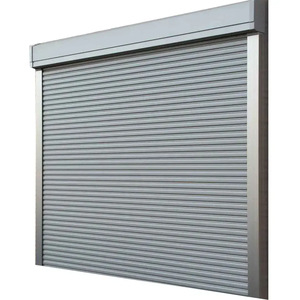
Factory Direct Aluminum Commercial Roller Shutter Door Automatic Electric
Send an InquiryStrategic Macro Context: Why Polish Developers Are Partnering with Tier-1 Chinese Manufacturers
Poland has firmly established itself as the manufacturing powerhouse of the European joinery sector. However, the rapidly surging demand for modern architectural aesthetics—specifically ultra-narrow sightline minimalist sliding doors, high-span curtain wall casements, and specialized armored thermal security entry doors—has created a supply shortfall in locally fabricated high-end aluminum extrusion systems. Domestic European suppliers often face prolonged lead times exceeding 16 to 24 weeks alongside steep premium pricing.
To maintain aggressive project schedules in major urban growth hubs such as Warsaw (Warszawa), Kraków, Wrocław, Poznań, and Tri-City (Gdańsk-Gdynia-Sopot), Polish general contractors, architectural studios, and commercial glazing distributors are increasingly sourcing custom-engineered fenestration solutions directly from premier Chinese OEMs like Meric Window Systems Co., Ltd. By leveraging advanced 6063-T5 aluminum alloy extrusion lines, automated European-standard CNC machining, and direct factory-to-site containerized logistics, Chinese exporters deliver exceptional cost-performance ratios without sacrificing rigorous EN regulatory compliance.
Regulatory Benchmark (WT 2021): In accordance with Poland’s updated Warunki Techniczne 2021 (WT 2021) building regulations, all newly installed exterior vertical windows in residential and public infrastructure must achieve an overall thermal transmittance coefficient ($U_w$) not exceeding 0.9 W/(m²·K). Chinese suppliers providing systems for the Polish market must furnish triple-glazed insulated glass units (IGU) equipped with warm-edge composite spacers and multi-cavity polyamide (PA66 GF25) thermal break barriers.
Localized Application Scenarios Across Poland
Tailoring window specs to distinct Polish micro-climates, urban architectural codes, and building topologies.
Urban High-Rise & Commercial Facades (Warsaw & Kraków)
Densely populated metropolis developments require high acoustic damping (Sound Reduction Index $R_w \ge 42 \text{ dB}$) to counteract heavy traffic noise, alongside sleek, narrow mullions. Systems like the FW142 Ultra-Narrow Curtain Wall Window integrate hidden sashes that preserve uniform exterior visual profiles while ensuring Class 4 air tightness per PN-EN 12207 standards.
Baltic Coastal Harsh Environments (Gdańsk, Gdynia, Kołobrzeg)
Coastal installations face relentless wind-driven salt spray, elevated humidity, and intense winter gales. Aluminum frames bound for Northern Poland receive surface finishes meeting Qualicoat Class 2 / Seaside pretreatment specifications with anodized undercoats. Multi-point locking tilt & turn systems engineered with continuous EPDM rubber gaskets resist wind loads up to Class C5/B5 (PN-EN 12210).
Low-Energy Suburban Villas & Passive Houses (Silesia, Podhale)
In colder southern and eastern mountainous sub-regions, heat conservation is paramount. Aluminum-Clad Timber Windows and ultra-deep thermal break casement profile series utilizing triple Low-E glass units filled with 90% Argon gas deliver ultra-low $U_w \le 0.8 \text{ W/m}^2\text{K}$, eliminating cold-bridge condensation during sub-zero Polish winters (-20°C).
Key Fenestration Development Trends in Poland
Anticipating engineering shifts driven by European Green Deal mandates and modern architectural trends.
Transition from PVC to Thermally Enhanced Aluminum
While PVC historically dominated the Polish residential window market, modern architectural designs favoring oversized floor-to-ceiling glass dimensions (exceeding 3.5 meters in height) necessitate the structural rigidity of extruded 6063-T5 aluminum alloy. Multi-cavity polyamide thermal breaks have effectively erased the historical thermal insulation gap between PVC and aluminum.
Minimalist Sightlines & Flush Track Panoramic Systems
Architectural preferences across Polish luxury developments favor seamless indoor-outdoor transitions. Panoramic sliding doors like the JW157 series, featuring visible center interlock sightlines slimmed down to just 20mm–25mm and recessed floor tracks flush with internal parquet/tile surfaces, have become standard requisites for high-end residential bidding.
Smart Home Automation & Integrated Safety Systems
Modern Polish home construction emphasizes automated building management systems (BMS). Exporters must supply windows integrated with concealed electrical chain actuators, magnetic reed switches for alarm monitoring, motorized lift-and-slide doors, and high-security anti-burglary hardware conforming to European RC2 and RC3 resistance classes (EN 1627).
Technical System Selection Matrix for Polish Procurement Directors
To assist general contractors, quantity surveyors, and façade engineers in selecting optimal window and door configurations, the following matrix cross-references structural parameters with EU/PN performance classifications:
| System Series Category | Frame Depth / Profile | Thermal Transmittance ($U_w$) | Air Permeability (EN 12207) | Water Tightness (EN 12208) | Ideal Polish Project Segment |
|---|---|---|---|---|---|
| FW142 Ultra-Narrow Curtain Wall | 142 mm Structural Frame | 0.85 – 0.95 W/m²K | Class 4 (600 Pa) | Class E1050 (1050 Pa) | Commercial Facades, Villa Atriums |
| JW157 Panoramic Sliding Door | 157 mm Multi-Track System | 0.90 – 1.10 W/m²K | Class 3 (600 Pa) | Class 9A (600 Pa) | Terraces, Resort Lounges, Penthouse Patio |
| Tilt & Turn Thermal Casement | 75 mm / 85 mm Multi-Cavity | 0.78 – 0.88 W/m²K | Class 4 (600 Pa) | Class E1200 (1200 Pa) | Residential Apartments, Public Schools |
| Aluminum-Clad Timber PHI | 90 mm Hybrid Structure | 0.72 – 0.80 W/m²K | Class 4 (600 Pa) | Class E1050 (1050 Pa) | Passive Houses, Podhale Luxury Chalets |
| Armored Security Entry Door | 100 mm Reinforced Leaf | 1.00 – 1.20 W/m²K | Class 3 (600 Pa) | Class 8A (450 Pa) | Villa Main Entrance, Boutique Hotel Suites |
Why Meric Window Systems is the Preferred B2B OEM Partner
Precision engineering, direct factory pricing, and end-to-end quality control tailored for international exports.
1. Pure 6063-T5 Virgin Aluminum Alloys
We strictly utilize primary 6063-T5 aluminum extrusions, guaranteeing uniform tensile strength, superior structural rigidity, and optimal surface smoothness for anodizing or PVDF/powder coatings. Scrap aluminum or contaminated recycled billets are strictly forbidden in our foundry lines.
2. Premium European Thermal Insulation Strips
Our thermally broken systems are fitted with Technoform or domestic top-tier PA66 GF25 (25% fiberglass reinforced polyamide) multi-cavity insulation strips. This structure minimizes heat dissipation, eliminates internal frame sweating, and ensures full compliance with European energy efficiency standards.
3. CNC Automated Processing & Corner Crimping
Every sash and frame profile is cut and processed on automated double-head CNC saws and machining centers. Frame corner joins feature heavy-duty cast aluminum corner cleats glued with two-component polyurethane corner adhesive, providing complete water impermeability and structural integrity under heavy wind shear.
4. 100% Factory Pre-Assembly Inspection & Export Crating
Prior to shipment, 100% of custom window and door units are mounted on test rigs in our factory to verify sash alignment, lock gear engagement, weather seal compression, and smooth movement. Finished units are wrapped in protective film, corner-guarded, and secured in heavy-duty sea-freight wooden crates.
Frequently Asked Questions by Polish Procurement Teams
Technical, regulatory, and logistical considerations when importing Chinese aluminum windows into Poland.
Ready to Source High-Performance Aluminum Systems for Your Next Polish Project?
Whether you are bidding on a commercial facade in Warsaw, a residential apartment block in Kraków, or a luxury private villa in Gdańsk, our engineering team is ready to review your architectural drawings and deliver competitive factory-direct pricing.
Send an Inquiry